

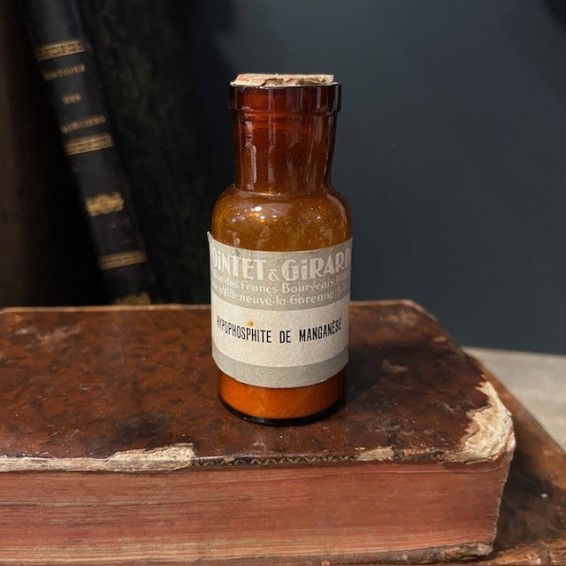
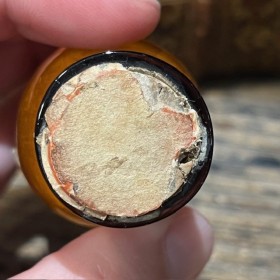
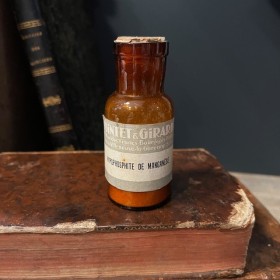
Hypophosphite de Manganèse
Antique pharmacy bottle
Apothecary vial
Antique pharmacy bottle
Hypophosphite de Manganèse
Apothecary flask
Height with stopper: 8.5cm - Diameter: 3.5cm
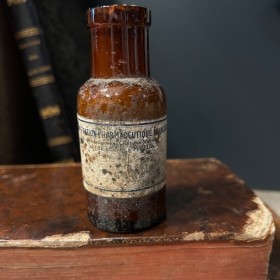
Unknown bottle from Coopération Pharmaceutique Française
Antique pharmacy bottle
Apothecary vial
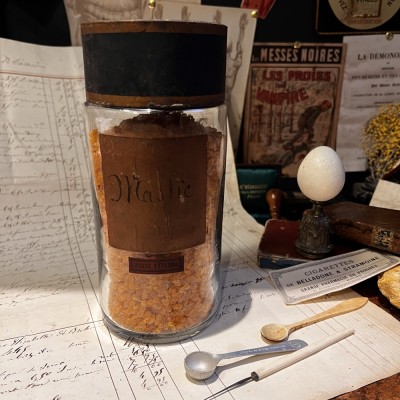
Mastic of Chios
Antique pharmacy bottle - Wide-mouth apothecary jar.
19th-century mouth-blown glass
There is still some product left inside
A fascinating artifact from the history of pharmacology
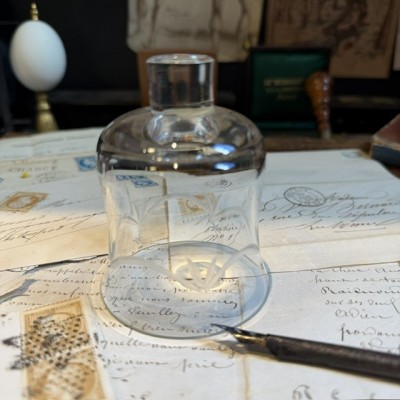
Small antique engraved glass bell
I believe these are antique glass pieces that were originally intended to be placed on a stand.
Repurpose them as small bells to showcase your small objects, such as a small skull, as shown here.
Sold individually
EMPTY
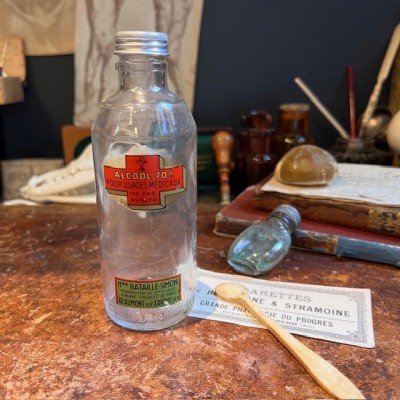
70° alcohol
Antique pharmacy bottle - Apothecary
Mrs Bataille-Simon, First Class Pharmacist in Beaumont sur Sarthe - Tel 9
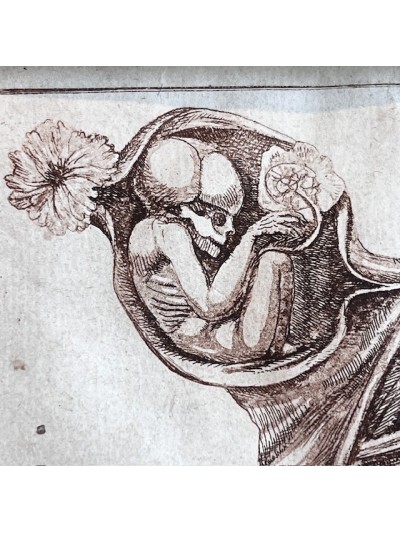
L'art de procréer les sexes à volonté - The art of procreating sexes at will
By Millot - With illustrated plates
Antique book from 1802 (Year X of the Republic) - Third edition
The author explains how to procreate boys and girls, and gives his recipes for treating sterility and malformations...
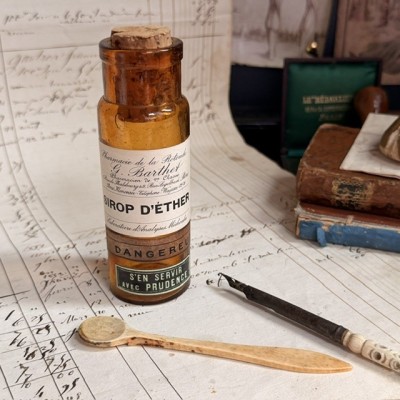
Ether syrup
Antique pharmacy bottle
EMPTY
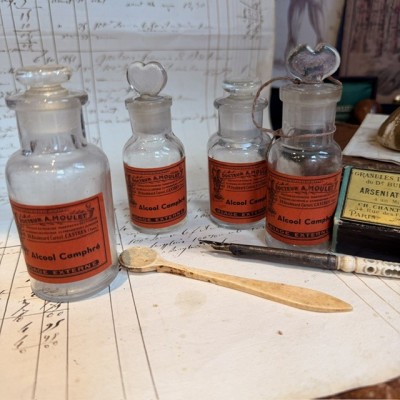
Alcool camphrée
Antique pharmacy bottle
EMPTY
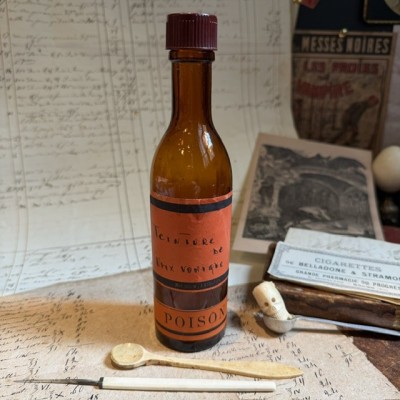
Nux Vomica Tincture – Strychnine
Antique amber glass bottle
Red ‘POISON’ label
Indicating to the pharmacist that it must be stored separately from other substances in the cabinet for toxic substances, the famous ‘poison cabinet’.
It comes from the former cellar-laboratory of a Parisian pharmacy. The bottles had not been moved from the shelves since the late 1950s. The cellar had served as a medical analysis laboratory and a laboratory for the pharmacy’s compounded preparations from 1900 until around 1950.
EMPTY
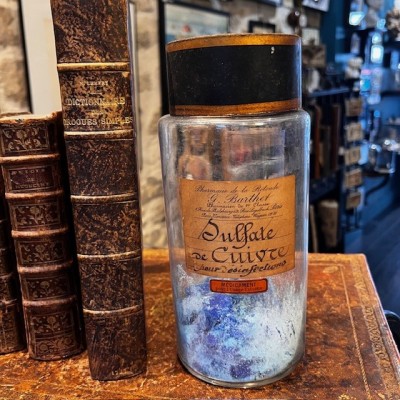
Copper Sulfate
Antique pharmacy bottle - Wide-mouth apothecary jar.
19th-century mouth-blown glass
There are still some beautiful blue crystals inside.
A fascinating artifact from the history of pharmacology
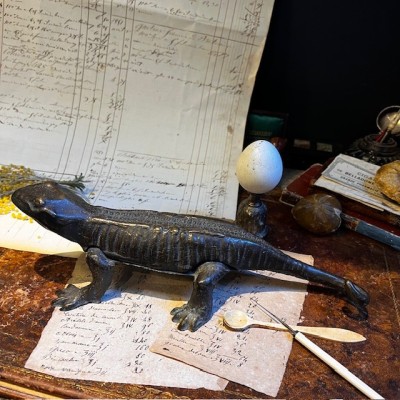
Salamander - Pharmacy corkscrew in bronze
XIXth century
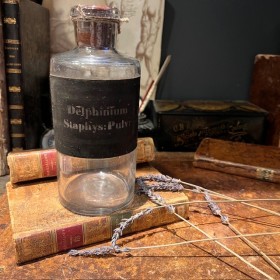
Delphinium staphisagria - Stavesacre
Pharmacy jar - Herbalism - Apothecary bottle
Late 19th century, early 20th century.
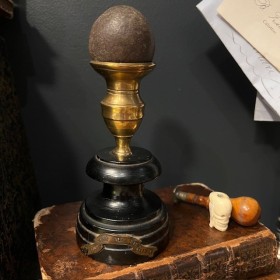
Antique bezoar - Antipoison - Antidote
Once sold by the apothecary, bezoar, also known as gallstone, was reputed to have the same anti-poison properties as the legendary unicorn's horn, hence its excessively high price, also due to its great rarity.
An important piece in a cabinet of curiosities
Sold alone - Without stand, sold separately
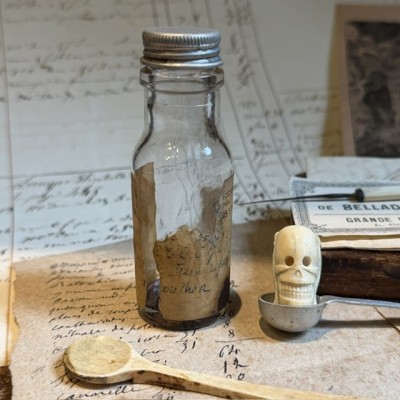
A avaler aux repas To be taken with meals (as far as can be made out from the torn label)
Antique pharmacy bottle
Torn label
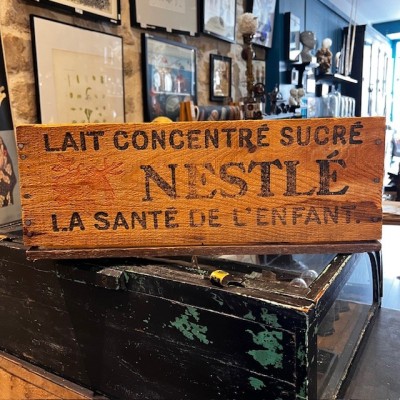
Antique wooden advertising case for Nestlé concentrated infant milk
Found in Parisian cellars that served as laboratories and storage rooms for pharmacists preparing their masterful concoctions from 1900 to 1950.
It was used to store products, glass bottles, etc.
Period: Circa 1910–1930
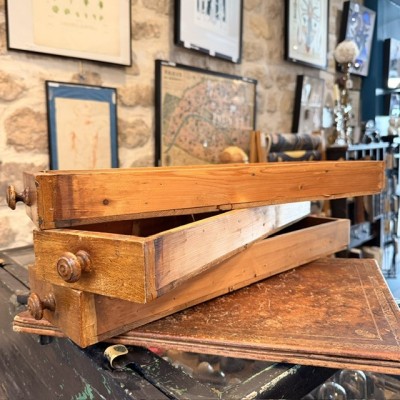
The apothecary’s Drawer - Size L
Antique wooden pharmacy drawer that can be used as a storage box - Craft Furniture Drawer
To be diverted on the shelf or niche for your curiosities
Antique hand-crafted manufacturing with dovetail joints and turned wooden pull knob
Width: 13cm - Length: 49cm - Height: 5cm
Sold empty, without accessories
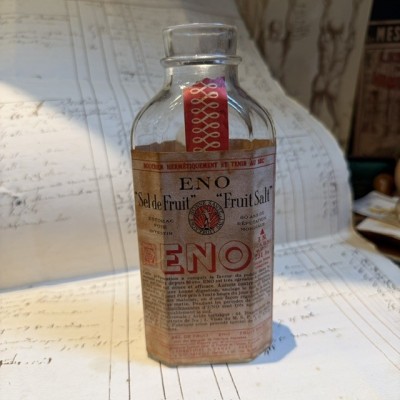
Sel de Fruit ENO - ENO Fruit Salt
Antique pharmacy bottle
EMPTY
Hypophosphite de Manganèse
Antique pharmacy bottle
Apothecary vial