

- New
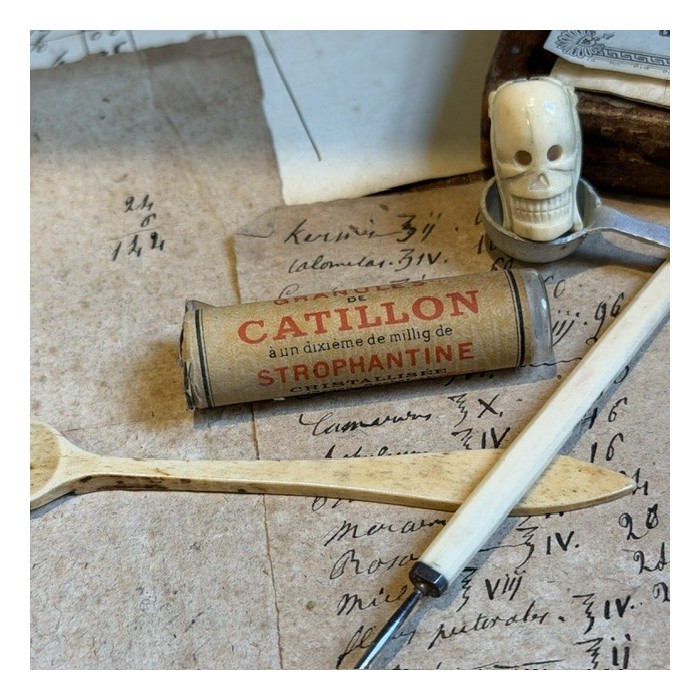
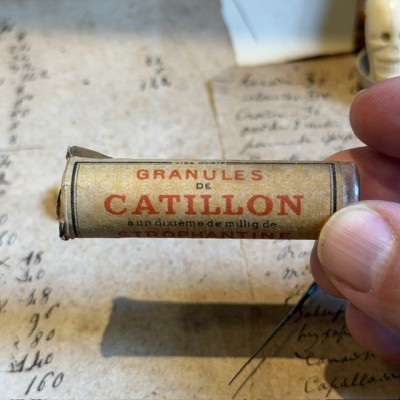
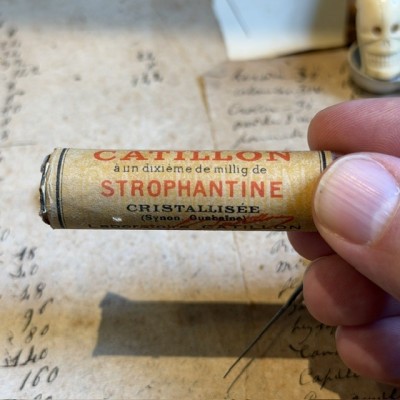
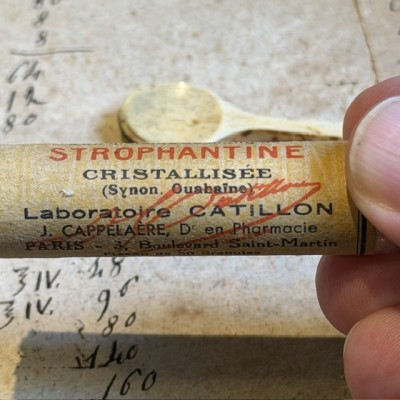
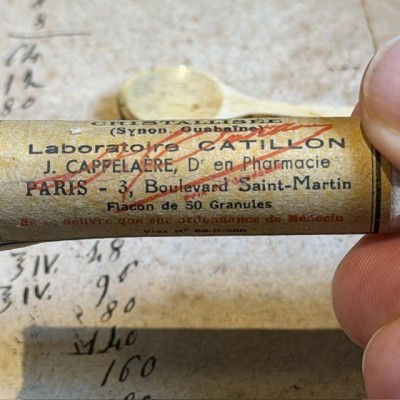
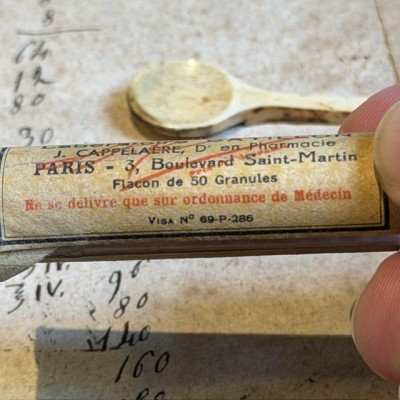
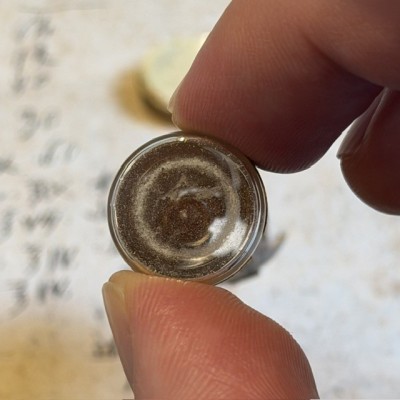
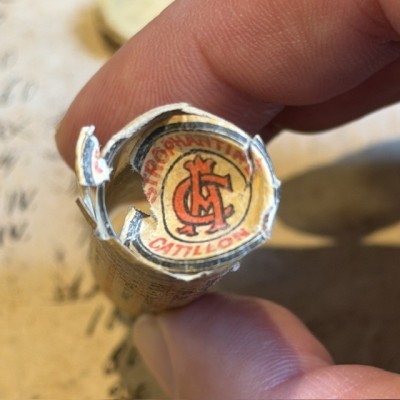
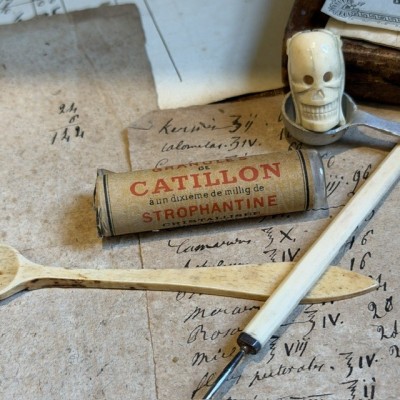
Catillon Granules – Strophanthin – Containing Ouabain
POISON
Antique tube of pharmaceutical granules – Apothecary
EMPTY
Catillon Granules – Strophanthin – Containing Ouabain
POISON
Antique tube of pharmaceutical granules – Apothecary
At the end of the 19th century, the chemist Léon Arnaud received poison-coated arrows from Somalia from a famous traveller of the time, Bénédict-Henry Révoil. One of them was coated with waba, a deadly poison derived from a plant known as Ouabaïo.
In 1888, he isolated the compound responsible for the poison’s effects, which he named ouabain, a potent cardiac toxin that was once used therapeutically as a cardiotonic. However, due to its toxicity, its use has since been abandoned in favour of more manageable synthetic molecules or digoxin.
In the late 19th and first half of the 20th century, this product was prescribed as a powerful cardiac stimulant, mainly to treat acute heart failure and arrhythmias. It acted in a similar way to digitalis, but with an effect often considered to be faster.
However, its strophanthin or ouabain tends to accumulate in the body if doses are taken too close together. A patient taking these granules without strictly adhering to the prescription could, after a few days, unwittingly reach a toxic total dose in the blood, leading to a heart attack!
During the 20th century, accidents linked to this type of granule were well known...
Tube length: 5cm
It comes from the old cellar-laboratory of a Parisian pharmacy. The bottles had not been moved from the shelves since the late 1950s. The cellar had served as a medical analysis laboratory and a laboratory for the pharmacy’s compounded preparations from 1900 until around 1950.
Empty
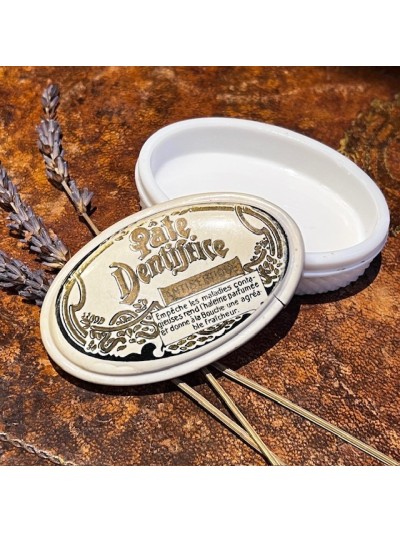
Toothpaste - Antique apothecary
Porcelain pot with illustrated plastic lid
Antiseptic
Early 20th century - Caution the lid is cracked
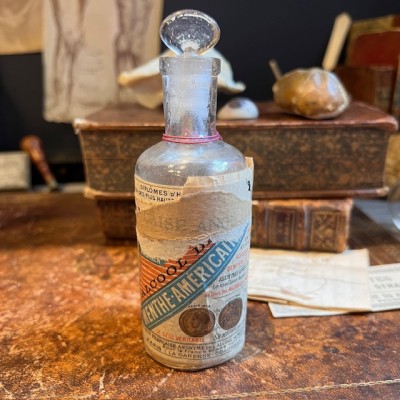
American mint alcohol
Antique pharmacy bottle
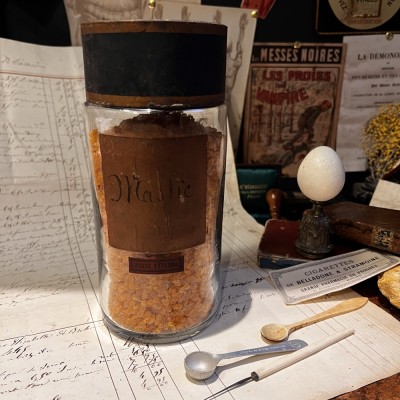
Mastic of Chios
Antique pharmacy bottle - Wide-mouth apothecary jar.
19th-century mouth-blown glass
There is still some product left inside
A fascinating artifact from the history of pharmacology
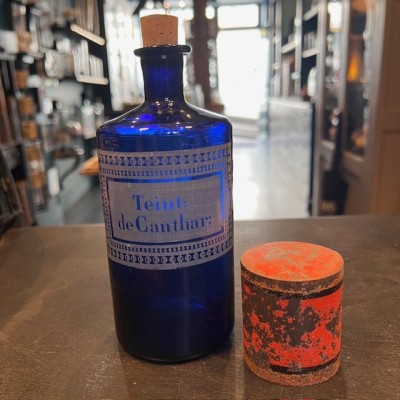
Teinture de Cantharides - POISON
Lytta vesicatoria - Spanish fly
Antique blue glass pharmacy bottle - Apothecary
Early 20th century - Blown glass.
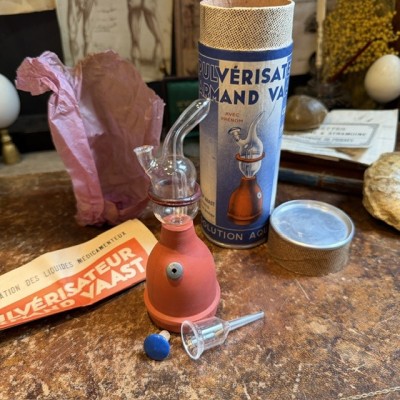
Armand Vaast nasal spray - Oil vaporizer - Antique remedy
In its box
Used in otolaryngology, it was intended for nasal or oral sprays in the treatment of colds and antiseptic treatment of the respiratory tract.
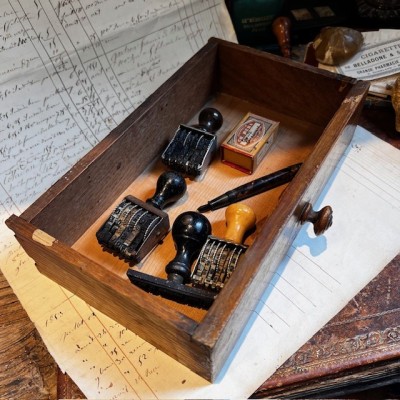
The Pharmacist's Drawer
Small antique wooden pharmacy drawer that can be used as a storage box
A true time capsule!
Sold with its contents, just as they were found when discovered in the basement of this Parisian pharmacy.

Antique brown glass bottle with integrated pipette - Ref B
Apothecary - Pharmacy
The pipettes have either been broken or shortened because they are too short

Aqua Piris - Pear water
Antique pharmacy jar
Apothecary
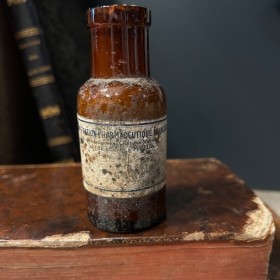
Unknown bottle from Coopération Pharmaceutique Française
Antique pharmacy bottle
Apothecary vial
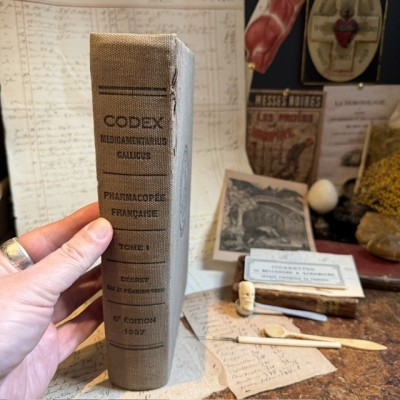
1937 Codex – French Pharmacopoeia
6th Edition – Decree of 21 February 1937
Volume I only
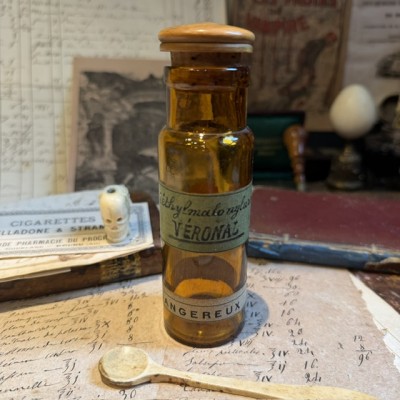
Veronal - Barbiturates - Diethylmalonylurea
Antique amber glass bottle, with a boxwood and cork stopper.
Label: DANGEROUS
Indicating to the pharmacist that it must be stored separately from other substances in the cabinet for toxic substances, the famous ‘poison cabinet’.
It comes from the former cellar-laboratory of a Parisian pharmacy. The bottles had not been moved from the shelves since the late 1950s. The cellar had served as a medical analysis laboratory and a laboratory for the pharmacy’s compounded preparations from 1900 until around 1950.
EMPTY
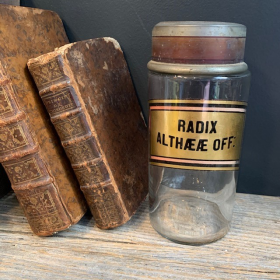
Antique 19th century pharmacy bottle
Radix althaeae Off - Marshmallow
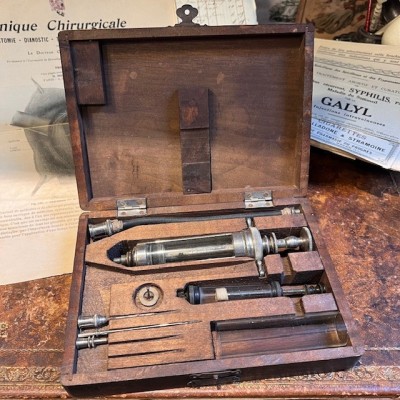
Syringe for diphtheria serum – Dr Roux method
Wooden box
Label from instrument manufacturer H. Hauptner in Berlin on the box and marking on the large syringe
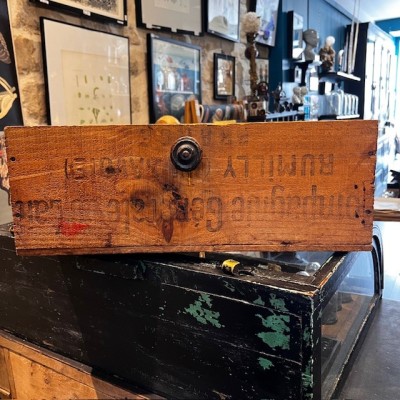
Antique wooden advertising case for Mont Blanc - Rumilly condensed milk - Drawer
Found in Parisian cellars that served as laboratories and storage rooms for pharmacists preparing their masterful concoctions from 1900 to 1950.
It was used to store products, glass bottles, etc.
This box is no longer just a transport container, it has been adopted as a piece of furniture.
Period: Circa 1920–1940
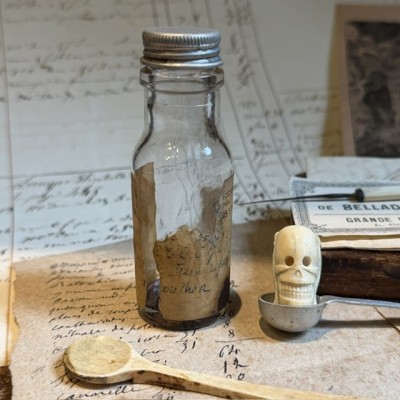
A avaler aux repas To be taken with meals (as far as can be made out from the torn label)
Antique pharmacy bottle
Torn label
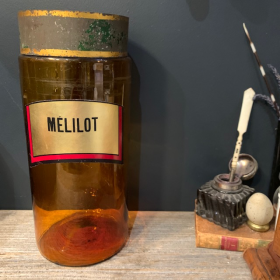
Catillon Granules – Strophanthin – Containing Ouabain
POISON
Antique tube of pharmaceutical granules – Apothecary
EMPTY