
- Created by Curiositas
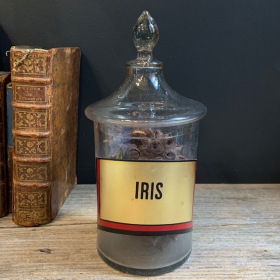
19th century Herbalist's or Pharmacy crystal jar - Iris
19th century Herbalist's or Pharmacy crystal jar
Iris
Price
€90.00
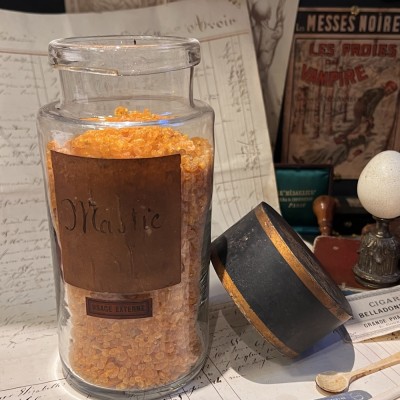
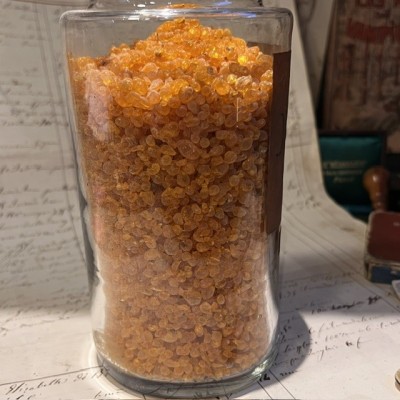
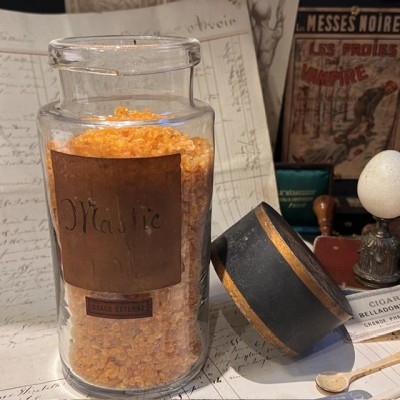
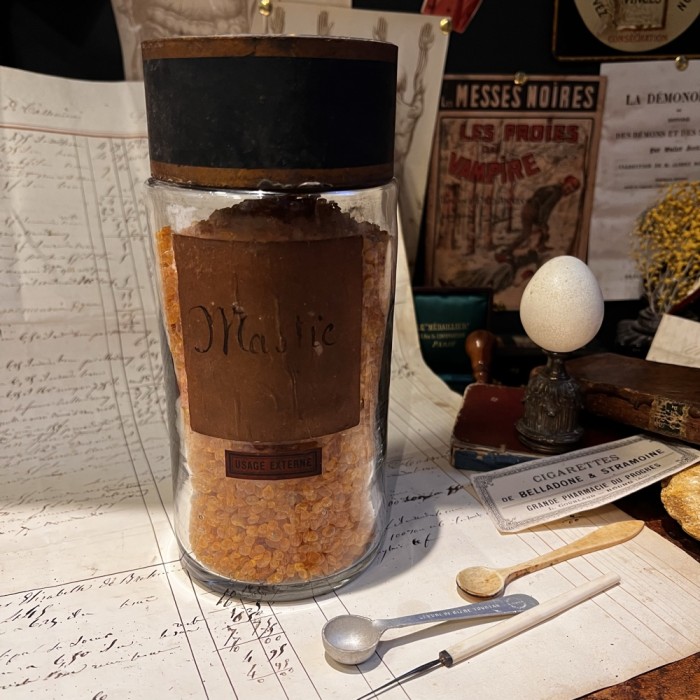
Mastic of Chios
Antique pharmacy bottle - Wide-mouth apothecary jar.
19th-century mouth-blown glass
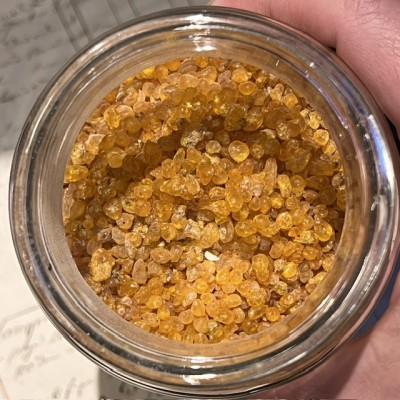
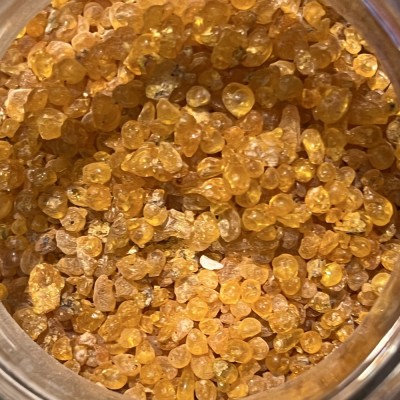
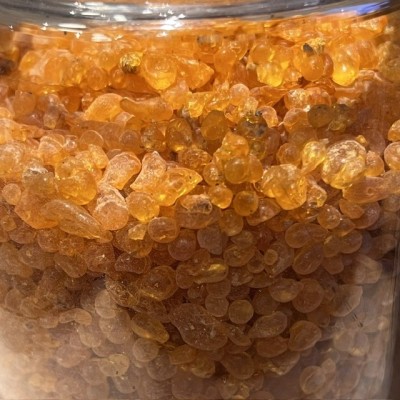
There is still some product left inside
A fascinating artifact from the history of pharmacology
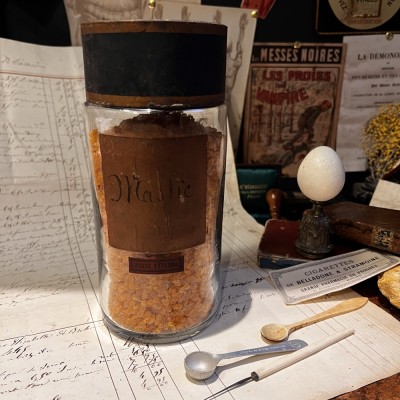
Mastic of Chios
Antique pharmacy bottle - Wide-mouth apothecary jar. 19th-century mouth-blown glass
It comes from the old cellar-laboratory of a Parisian pharmacy. The bottles had not been moved from the shelves since the late 1950s!
There is still some product left inside
This large-capacity jar was a storage jar intended for stockpiling.
Chios mastic was an indispensable product in a chemist’s shop in the late 19th or early 20th century for two main reasons:
‘Mastic Varnish’: The chemist would dissolve these mastic tears in alcohol or ether to create an adhesive varnish. It was used to secure dressings or protect wounds (the precursor to spray-on dressings).
Dentistry: It was used to make temporary dental cements or to relieve pain by chewing the grains (hence the name ‘mastic’).
Mastic was and remains one of the most expensive resins in the world. Even today, its production is protected by a PDO on the island of Chios in Greece.
Handwritten in pen
Height: 20.5cm - Diameter: 9cm - Weight: 1.15Kg
19th century Herbalist's or Pharmacy crystal jar
Iris

Sparteine sulphate
Used as a tonic for nervous syndromes at the very beginning of the 20th century, sparteine was also used to facilitate morphine withdrawal.
Antique pharmacy bottle
Apothecary vial
Some product left inside
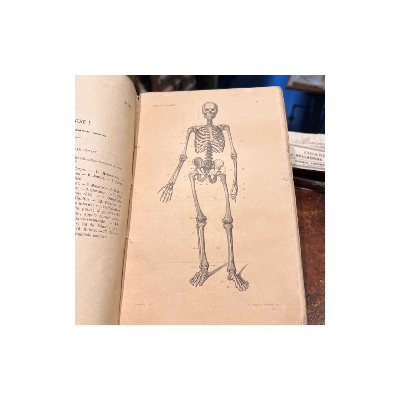
Anatomical Atlas by A. Bossu
Anthropology - End of the XIXth century
20 engravings of Anatomy by Léveillé
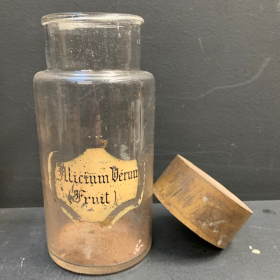
Antique pharmacy jar: Illicium verum (Fruit) / Star anise
Glass pharmacy bottle - XIXth century
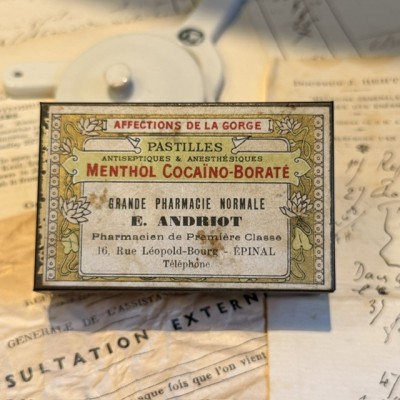
Box of cocaine lozenges
Menthol - Cocaïno - Boraté by the Pharmacist Holler in Maubeuge
Magnificent lid typical of Art Nouveau: 1900-1910
EMPTY

Carbonate de Potasse
Antique pharmacy bottle
Early 20th century (circa 1910 - 1920)
EMPTY
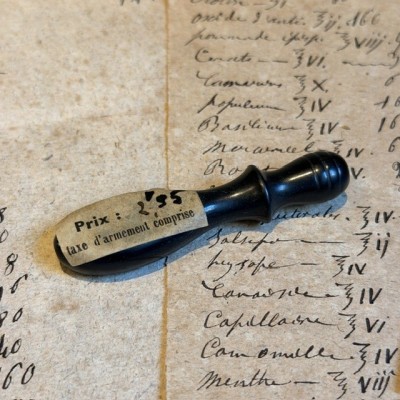
Ebonite cannula tip
Tips for enema or medical irrigation cannulas. New Old Stock
Marketed between May 1939 and sometime in 1940

Solution N°153
Antique pharmacy bottle
Apothecary vial
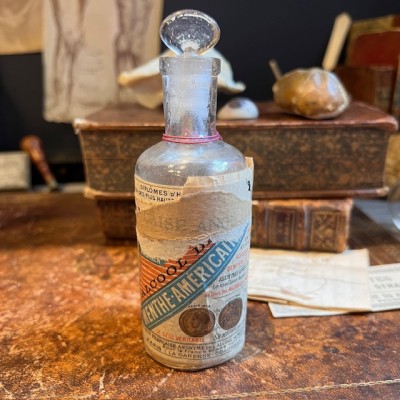
American mint alcohol
Antique pharmacy bottle
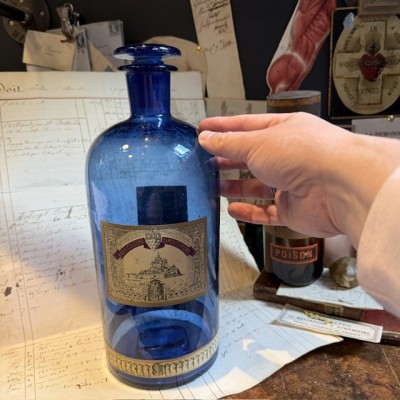
Eau de Cologne du Mont St Michel
Antique BLUE glass pharmacy bottle
EMPTY

Lower part of the lower mandible of a horse jaw
Antique model from Maison Auzoux in Paris
Paper-mâché pedagogical model
Model A - 9 months
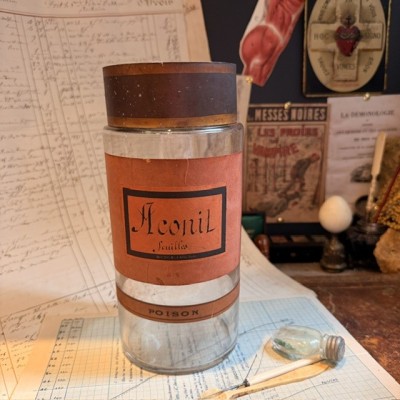
Aconit leaves - POISON
Antique pharmacy bottle - Wide-mouth apothecary jar.
19th-century mouth-blown glass
Red POISON label
Signaling to the pharmacist that it is imperative to keep apart the other substances in the cabinet of toxic substances, the famous poison cabinet.
A fascinating testimony to pharmacology
It comes from an old cellar-laboratory in a Parisian pharmacy. The bottles had not moved since the late 1950s on the shelves. The cellar had served as a laboratory for medical analyses and a laboratory for magistral preparations of the pharmacy from 1900 until around 1950.
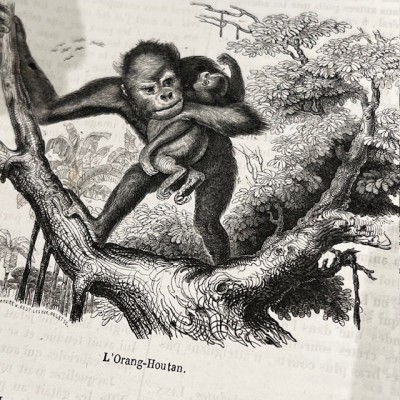
Le Jardin des Plantes
Description and habits of the mammals in the menagerie and the Natural History Museum
By Boitard - Antique book circa 1851
A beautiful snapshot of the museum and its garden in the mid-19th century, featuring interiors of the museum that no longer exist today.
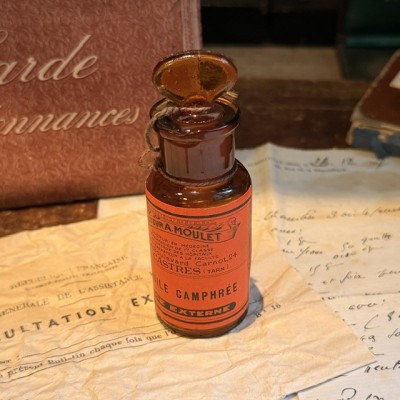
Huile camphrée
Antique pharmacy bottle
EMPTY
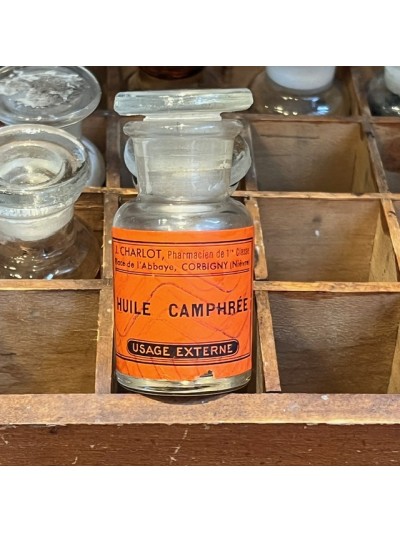
Camphorated oil
Antique pharmacy bottle
Apothecary vial
EMPTY but cap is blocked and bottle will not open

Human jaws in porcelain mounted on a blackened wooden base
Anatomical dental model for dentists
19th century
Mastic of Chios
Antique pharmacy bottle - Wide-mouth apothecary jar.
19th-century mouth-blown glass
There is still some product left inside
A fascinating artifact from the history of pharmacology