- New
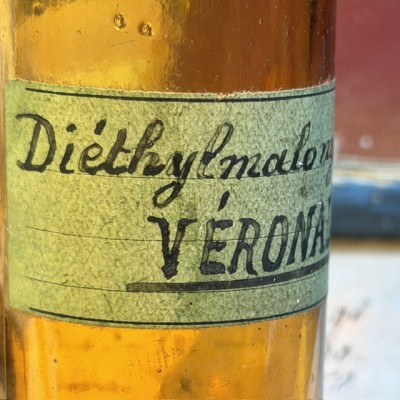
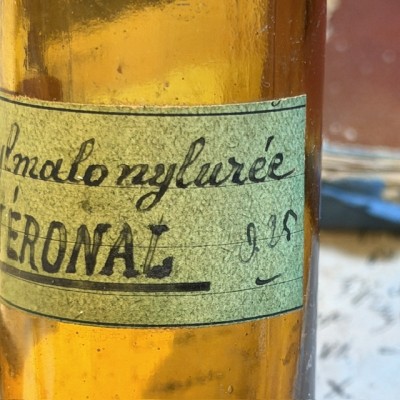
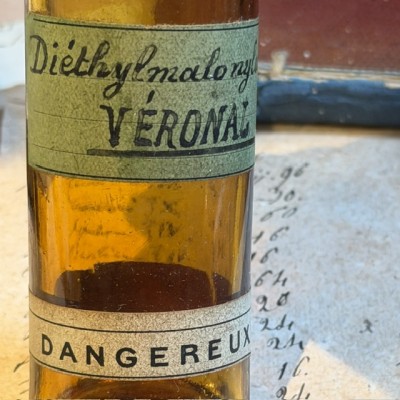
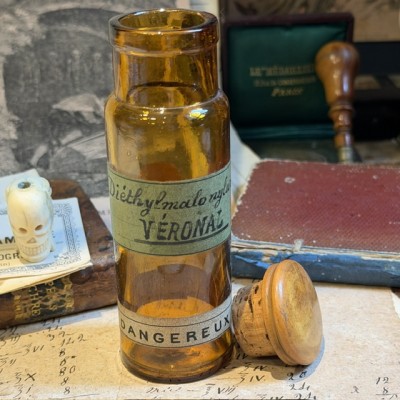
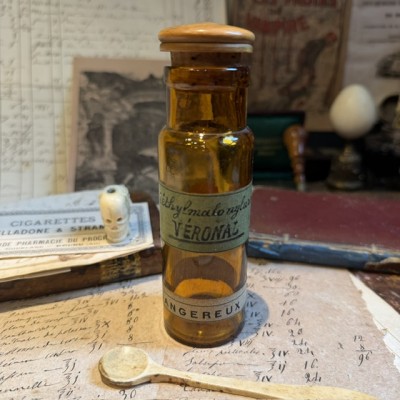
Veronal - Barbiturates - Diethylmalonylurea
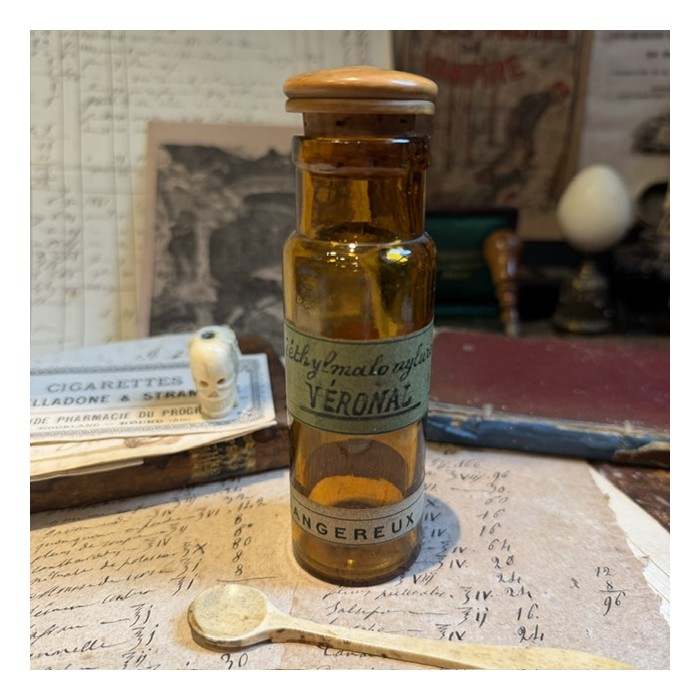
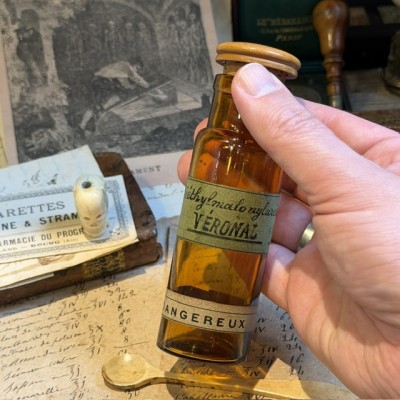
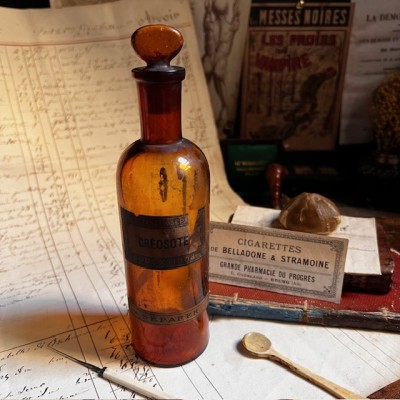
Antique amber glass bottle, with a boxwood and cork stopper.
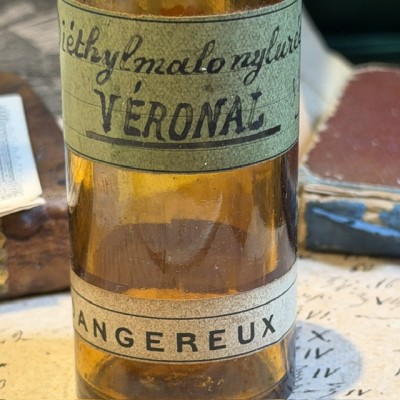
Label: DANGEROUS
Indicating to the pharmacist that it must be stored separately from other substances in the cabinet for toxic substances, the famous ‘poison cabinet’.
It comes from the former cellar-laboratory of a Parisian pharmacy. The bottles had not been moved from the shelves since the late 1950s. The cellar had served as a medical analysis laboratory and a laboratory for the pharmacy’s compounded preparations from 1900 until around 1950.
EMPTY
Veronal - Barbiturates - Diethylmalonylurea
Antique amber glass bottle, with a boxwood and cork stopper.
Label: DANGEROUS
Indicating to the pharmacist that it must be stored separately from other substances in the cabinet for toxic substances, the famous ‘poison cabinet’.
Veronal was the very first barbiturate in history, marketed at the turn of the century as a powerful sedative and hypnotic.
It was mainly prescribed as a hypnotic (sleeping pill) and sedative. It revolutionised the treatment of chronic insomnia and psychiatric disorders in the early 20th century, before being superseded by other derivatives due to its toxicity.
Veronal has a narrow therapeutic margin: the difference between the effective dose and the lethal dose is small.
Furthermore, it is eliminated slowly by the body, leading to accumulation effects. It quickly became one of the substances most frequently implicated in cases of acute poisoning, fatal accidents and high-profile suicides during the first half of the 20th century.
It became infamous for suicides, such as that of the writer Stefan Zweig.
It comes from the former cellar-laboratory of a Parisian pharmacy. The bottles had not been moved from the shelves since the late 1950s. The cellar had served as a medical analysis laboratory and a laboratory for the pharmacy’s compounded preparations from 1900 until around 1950.
Height of the bottle: 12cm with stopper
EMPTY

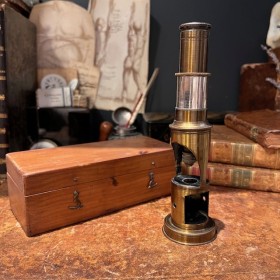
Antique brass and cast-iron rack-and-pinion microscope in wooden case
Late 19th century - Early 20th century
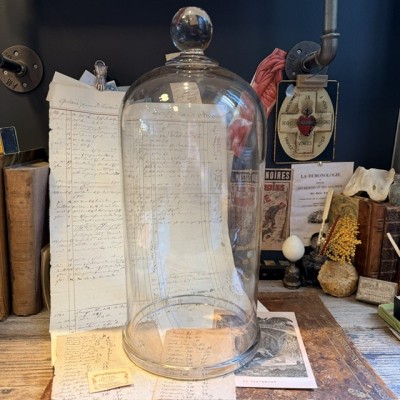
Specimen jar in blown glass – Inverted apothecary jar
Size M
A vintage laboratory or conservatory container designed for the display and preservation of biological or botanical specimens
Teinture de Cantharides - POISON
Lytta vesicatoria - Spanish fly
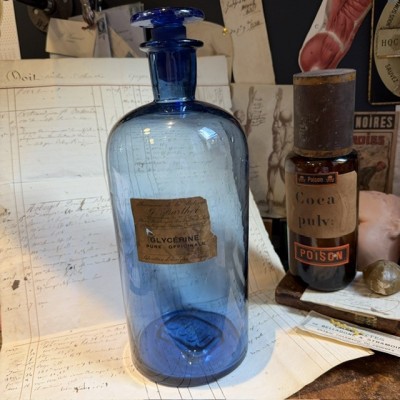
Antique blue glass pharmacy bottle - Apothecary
Early 20th century - Blown glass.
Lower part of the lower mandible of a horse jaw
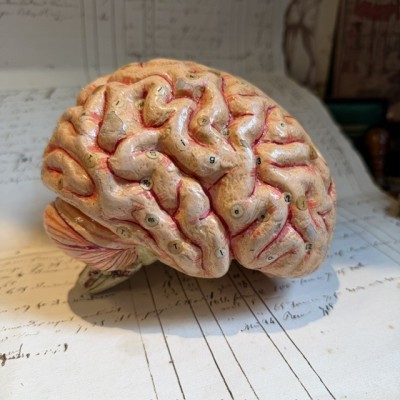
Antique model from Maison Auzoux in Paris
Paper-mâché pedagogical model
Model A - 9 months
Crushed cola nuts
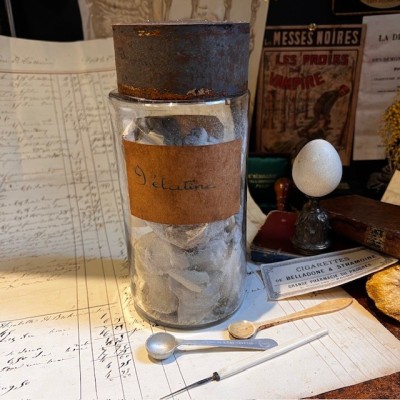
Antique pharmacy bottle - Wide-mouth apothecary jar.
19th-century mouth-blown glass
There is still some product left inside
A fascinating artifact from the history of pharmacology
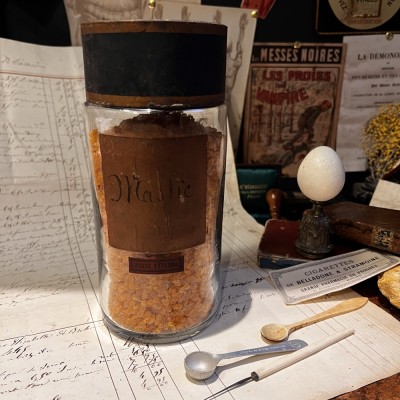
Incense
Antique pharmacy bottle - Wide-mouth apothecary jar.
19th-century mouth-blown glass
There are still some product inside.
A fascinating artifact from the history of pharmacology
Notebook – Order book from the Berthier Pharmacy in Paris
Writing on the first four pages only; the rest is blank
Pyramidon
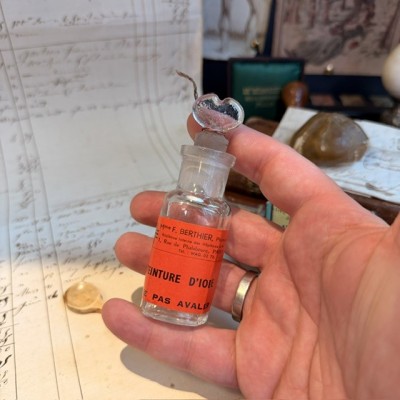
Antique pharmacy bottle
Apothecary vial
Color pigments have been added to the inside of the jar
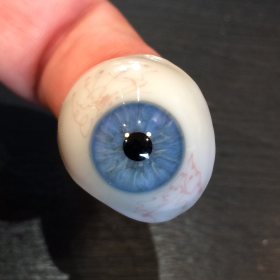
Antique glass eye - Semi-finished
Genuine antique ocular prosthesis
Color variations and irises of different sizes
The price is per unit, for one eye only
A avaler aux repas To be taken with meals (as far as can be made out from the torn label)
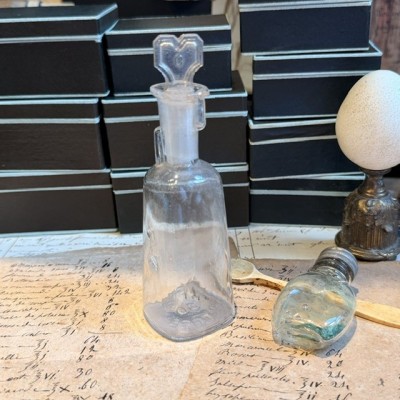
Antique pharmacy bottle
Torn label
Potassium Bromide Elixir
Antique and large brown English pharmacy bottle
Toothpaste - Antique apothecary
Porcelain pot with illustrated plastic lid
Antiseptic
Early 20th century - Caution the lid is cracked
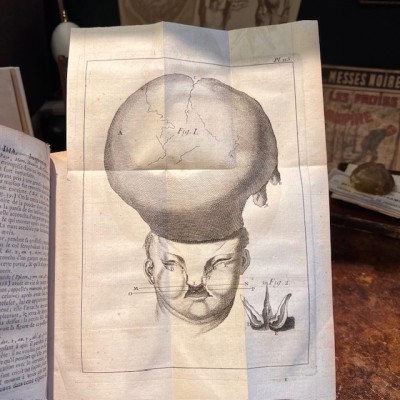
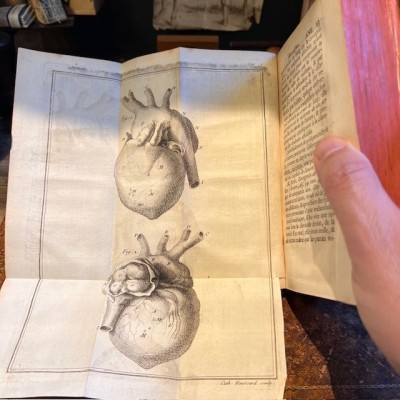
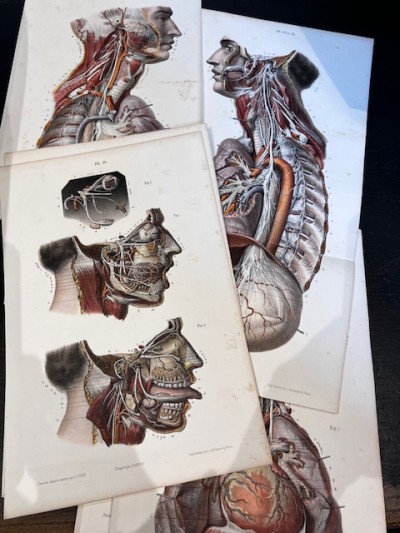
Anatomical Atlas by A. Bossu
Anthropology - End of the XIXth century
20 engravings of Anatomy by Léveillé
Orthoforme
Antique pharmacy bottle - Droguerie - Apothicaire
Silver medal at Paris 1889
Castel - Michel perfumers
Antique perfume bottle
Apothecary vial
Veronal - Barbiturates - Diethylmalonylurea
Antique amber glass bottle, with a boxwood and cork stopper.
Label: DANGEROUS
Indicating to the pharmacist that it must be stored separately from other substances in the cabinet for toxic substances, the famous ‘poison cabinet’.
It comes from the former cellar-laboratory of a Parisian pharmacy. The bottles had not been moved from the shelves since the late 1950s. The cellar had served as a medical analysis laboratory and a laboratory for the pharmacy’s compounded preparations from 1900 until around 1950.
EMPTY