

- New
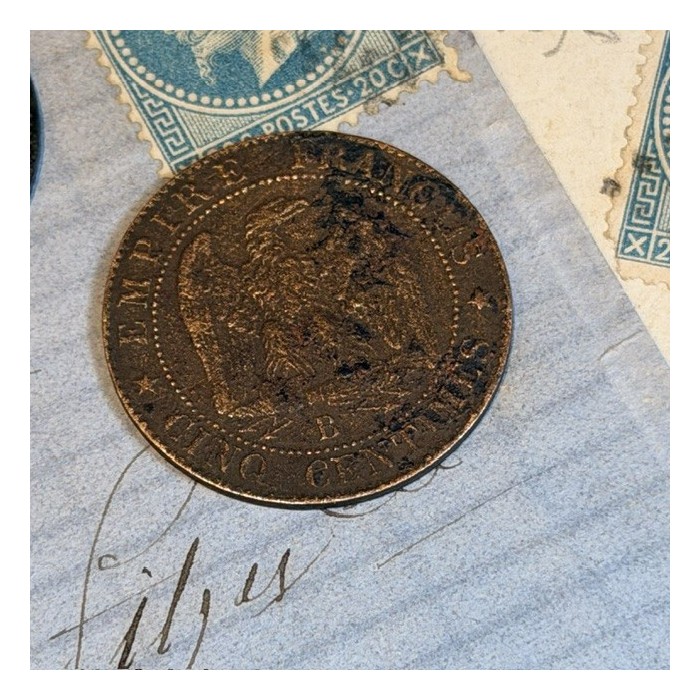
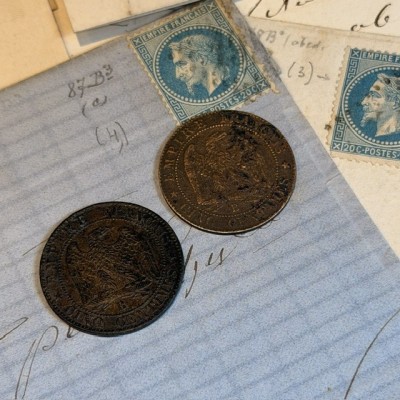
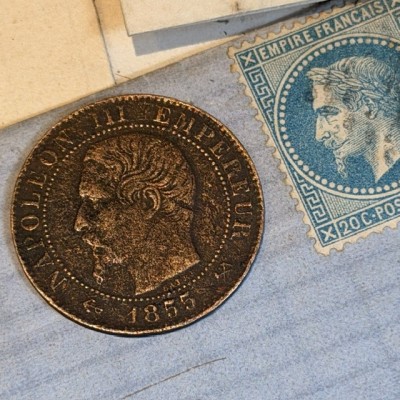
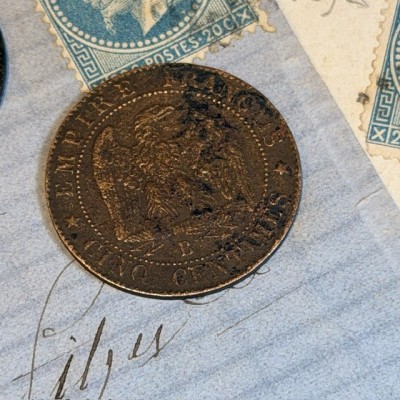
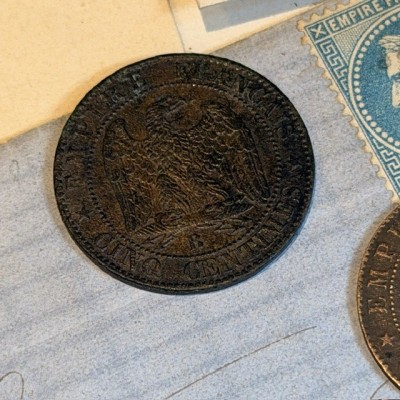
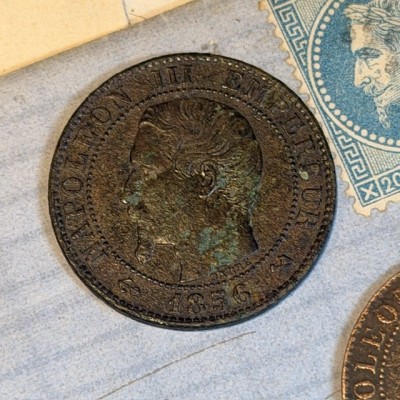
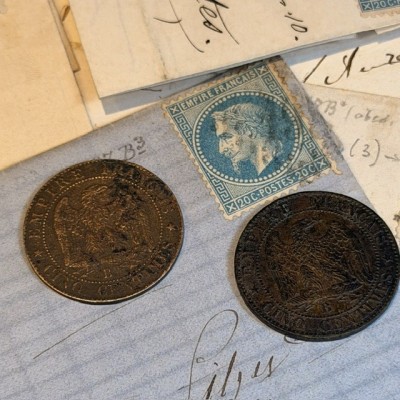
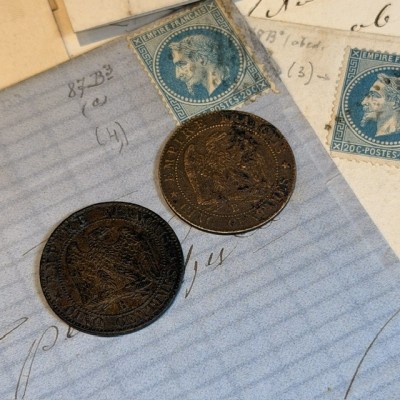
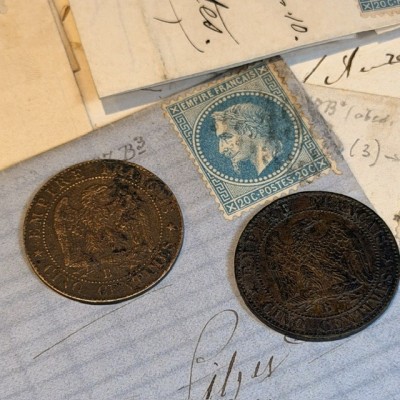
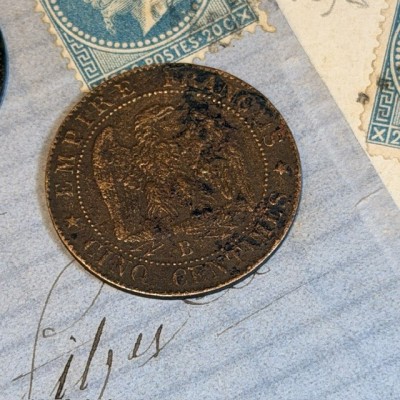
Emperor Napoleon III coin - Second Empire - 5 cents
5-cent coin - Dated 1852 - 1870
Authentic bronze period coin from the Second Empire, minted during the reign of Emperor Napoleon III. It features the profile of the Emperor on the obverse (bareheaded) and the imperial eagle on the reverse. Each copy has a unique historical patina and original reliefs preserved from the 19th century.
All coins are different
Emperor Napoleon III coin - Second Empire - 2 cents
5-cent coin - Dated 1852 - 1870
Authentic bronze coin of 5 cents minted during the reign of Napoleon III.
Major symbol of daily life under the Second Empire.
Each piece bears the unique traces of its history and the passage of time, offering a natural patina of the period, ranging from golden bronze to dark chocolate.
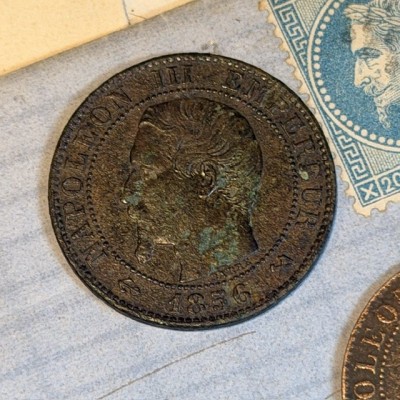
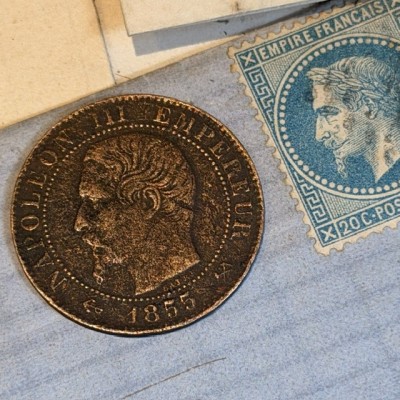
Front panel: Obverse of the coin
Profile of the Emperor: Portrait of Napoleon III facing left, engraved after the original work by Jean-Jacques Barre (Engraver general coins). the Emperor appears bareheaded without the laurel crown (strikes prior to 1862).
Circular mention "NAPOLEON III EMPEREUR"
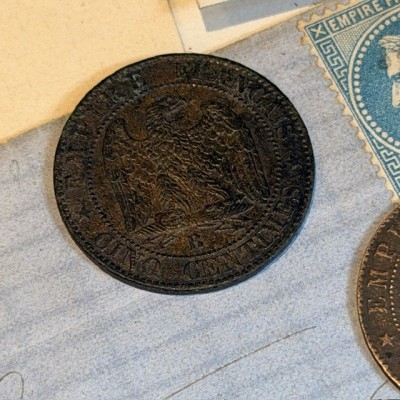
Back side: Reverse of the coin
The Imperial Eagle: Central motif representing the Roman eagle with outstretched wings, resting on the lightning of Jupiter, emblem of power, sovereignty and victory of the Napoleonic regime.
Legends: Surrounded by the mention "FRENCH EMPIRE" and the face value "FIVE CENTS".
Various minting workshops: Monetary workshop letters visible at the base (e.g., A for Paris, B for Rouen)
Material: Bronze (Alloy of copper, tin and zinc established by the reform of 1852)
Diameter: 25 mm (2.5 cm)
Weight: About 5 g
Engraver: Jean-Jacques Barre
Attention: As these are old period coins, each copy is unique, all the pieces are different and have their own nuances of patina and circulation marks.
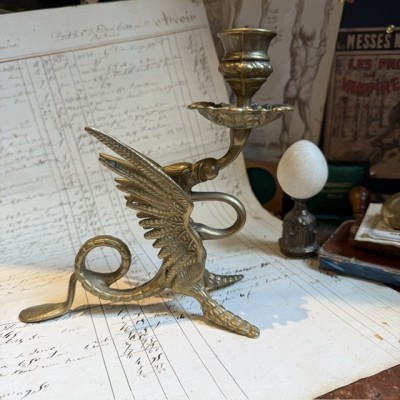
Brass Chimera or Dragon Candleholder
Period: Mid-20th century, inspired by Renaissance decorative motifs.
Sold without a candle and individually
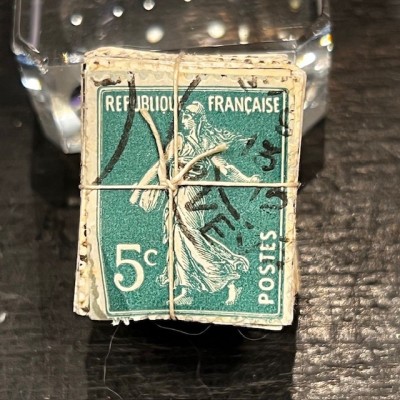
Bundle of 100 stamps tied with string
Green 5 centimes stamp of the Semeuse type
Issued from 1903 to the end of the 1930s
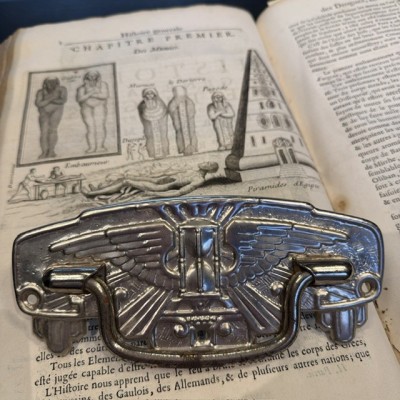
Antique Chrome-plated metal coffin handle
Winged hourglass motif
Art Deco period – 1925–1935
Some signs of oxidation on the handles
Brand new from the period; it has never been installed
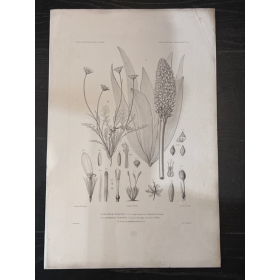
Voyage to the South Pole and Oceania on the corvettes the Astrolabe and the Zélée, executed by order of the king during the years 1837-1838-1839-1840 under the command of M. Dumont-d'Urville captain of vessel
Botanical plate
Published in 1846
Atlas of Natural History - Botany
Phanerogamy
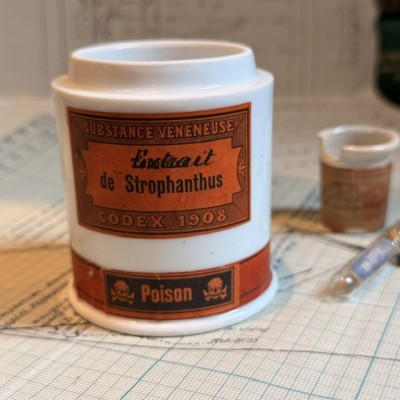
Strophanthus extract - Codex 1908
Early/ mid-20th century pharmacy jar in white earthenware
Beautiful labels: Red POISON label with the famous skull and crossbones and the Poisonous Substances label
Signaling to the pharmacist that it is imperative to keep apart the other substances in the cabinet of toxic substances, the famous poison cabinet.
It comes from an old cellar-laboratory in a Parisian pharmacy. The bottles had not moved since the late 1950s on the shelves. The cellar had served as a laboratory for medical analyses and a laboratory for magistral preparations of the pharmacy from 1900 until around 1950.
EMPTY
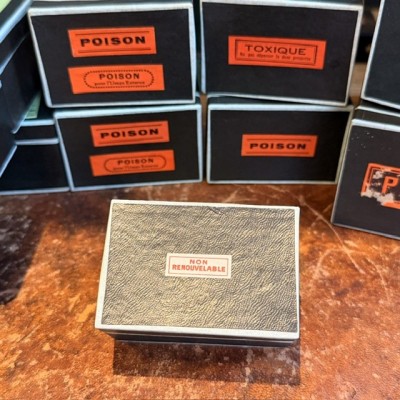
Antique labels in a pharmacy box for cures made of canvas cardboard
Non-renewable label
The pharmacist used his boxes of medicine to put away the labels he would then put on the bottles that he would resell to his customers.
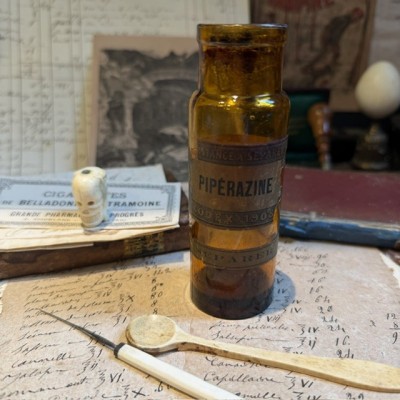
Piperazine
Antique amber glass bottle. The cap is missing
Green label: SUBSTANCE TO BE STORED SEPARATELY – CODEX 1908
Indicating to the pharmacist that it must be stored separately from other substances in the cabinet for toxic substances, the famous ‘poison cabinet’.
It comes from the former cellar-laboratory of a Parisian pharmacy. The bottles had not been moved from the shelves since the late 1950s. The cellar had served as a medical analysis laboratory and a laboratory for the pharmacy’s compounded preparations from 1900 until around 1950.
EMPTY
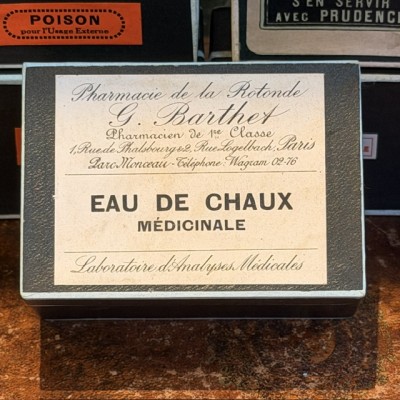
Antique labels in a pharmacy box for cures made of canvas cardboard
Label: Eau de Chaux Médicinale
The pharmacist used his boxes of medicine to put away the labels he would then put on the bottles that he would resell to his customers.
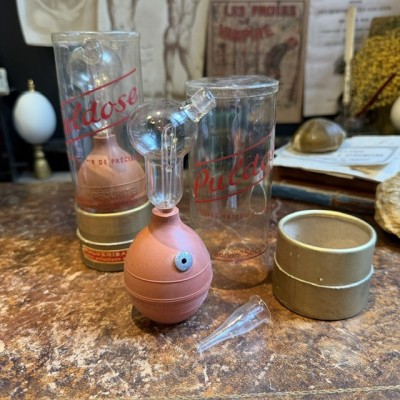
Puldose Nasal Spray for aqueous solutions - Antique remedy
In its Plastic box
Used in otolaryngology, it was intended for nasal or oral sprays in the treatment of colds and antiseptic treatment of the respiratory tract.
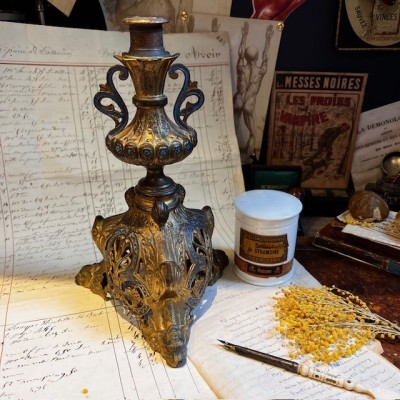
Tripod Torch Holder with Coat of Arms - Napoleon III-era Troubadour style in brass
This style, known as ‘Troubadour style’, reintroduced fantastical animals and medieval imagery into the decorative arts.
19th century
Sold without candle
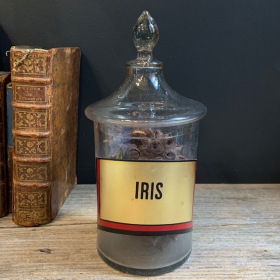
19th century Herbalist's or Pharmacy crystal jar
Iris
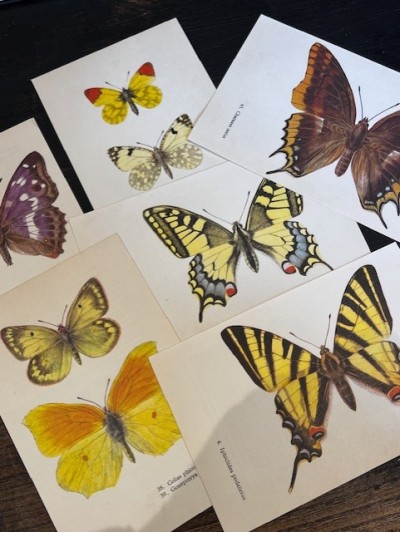
Butterfly - Natural History color plate
Entomology
You buy 1 plate, not the whole set
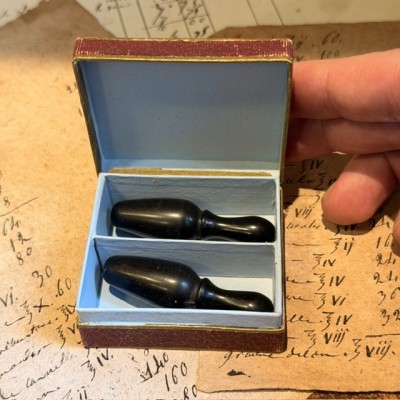
Pair of ebonite medical cannulas in their original cardboard box
Circa 1920–1930
Original stock from that period
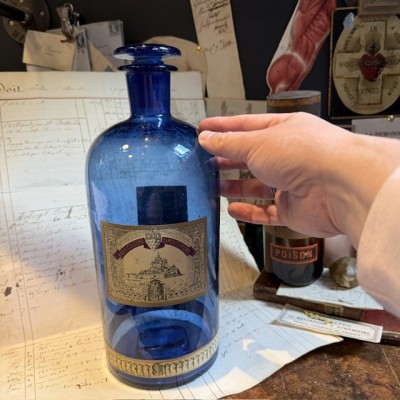
Eau de Cologne du Mont St Michel
Antique BLUE glass pharmacy bottle
EMPTY

Essence of star anise
Antique pharmacy bottle
Apothecary vial

Archimedes screw magnifier - Photographer's Achromatic focusingmagnifier
Photographer's magnifying glass from the late 19th century, early 20th century
When taking a photograph, the photographer would use this focusing magnifier against the frosted glass of his camera to assess the sharpness of the image formed.
Emperor Napoleon III coin - Second Empire - 5 cents
5-cent coin - Dated 1852 - 1870
Authentic bronze period coin from the Second Empire, minted during the reign of Emperor Napoleon III. It features the profile of the Emperor on the obverse (bareheaded) and the imperial eagle on the reverse. Each copy has a unique historical patina and original reliefs preserved from the 19th century.
All coins are different