

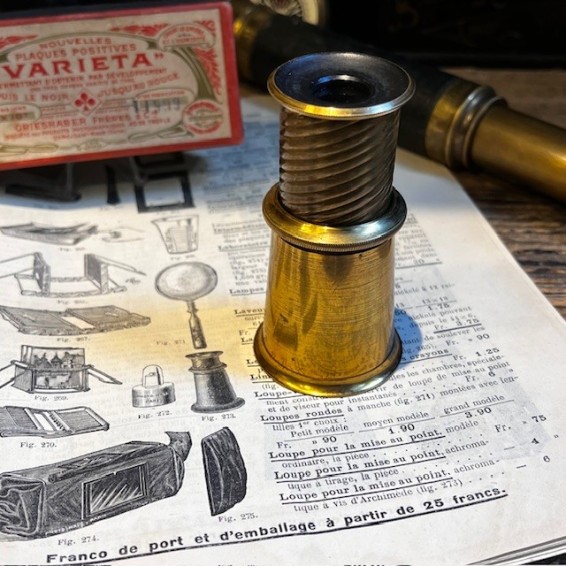
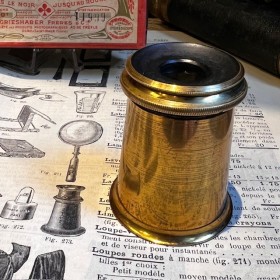
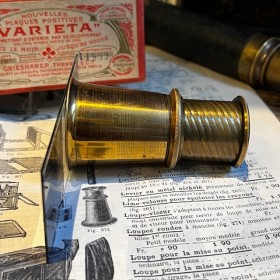

Archimedes screw magnifier - Photographer's Achromatic focusingmagnifier
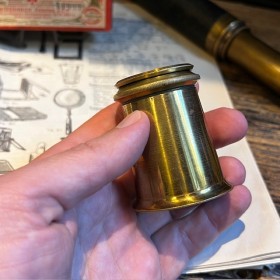
Photographer's magnifying glass from the late 19th century, early 20th century
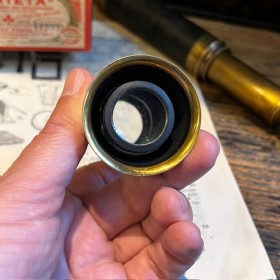
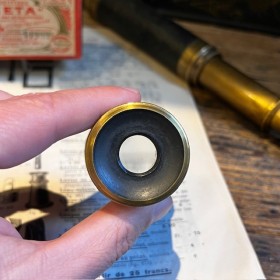
When taking a photograph, the photographer would use this focusing magnifier against the frosted glass of his camera to assess the sharpness of the image formed.
Archimedes screw magnifier - 19th century photographer's magnifier for achromatic focusing
Photographer's focusing magnifier from the late 19th and early 20th centuries.
When taking a photograph, the photographer would use this focusing magnifier against the frosted glass of his camera to assess the sharpness of the image formed.
The magnifying glass can also be used to examine a print on a light-transparent support.
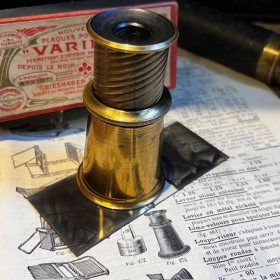
It is adjusted by means of a helical screw with several threads, known as an Archimedes screw, which allows it to be moved and thus adjusted more quickly than by pulling the tube, as is the case with other models.
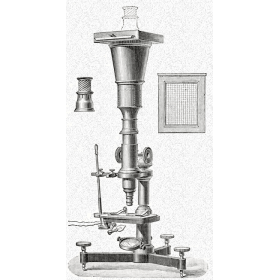
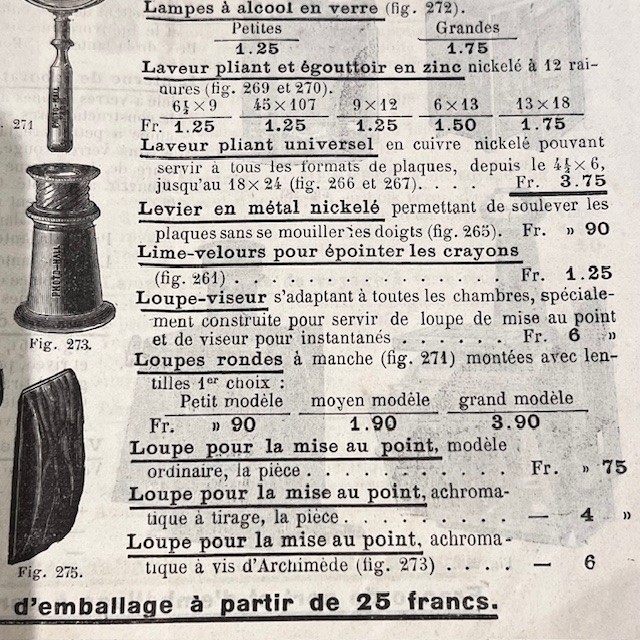
This same instrument is featured in the April 1890 issue of theJournal of the Royal Microscopical Society, which presents the ‘DUBOSCQ photographic microscope’. In the top left-hand corner, you can see this photographer's loupe, the same model.
Unfolded height: 8.8cm
Height closed: 5.5cm
Diameter at base: 4.8cm Diameter at eyepiece: 3.5cm
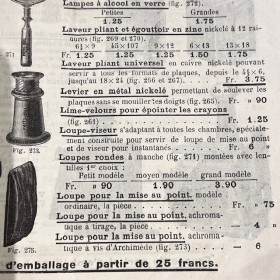
This same magnifying glass was for sale in the March 1910 catalogue of Photo-Hall in Paris, which sold cameras and accessories at the time.
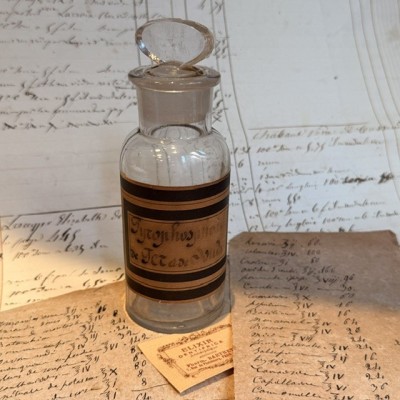
Iron & Soda Pyrophosphate
Antique pharmacy bottle
EMPTY
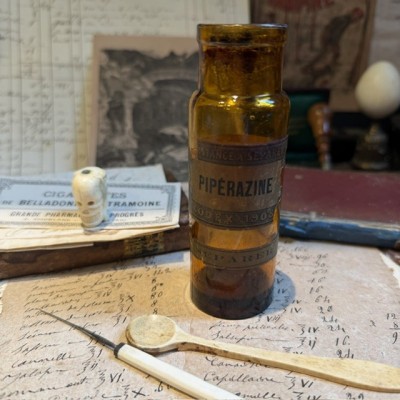
Piperazine
Antique amber glass bottle. The cap is missing
Green label: SUBSTANCE TO BE STORED SEPARATELY – CODEX 1908
Indicating to the pharmacist that it must be stored separately from other substances in the cabinet for toxic substances, the famous ‘poison cabinet’.
It comes from the former cellar-laboratory of a Parisian pharmacy. The bottles had not been moved from the shelves since the late 1950s. The cellar had served as a medical analysis laboratory and a laboratory for the pharmacy’s compounded preparations from 1900 until around 1950.
EMPTY
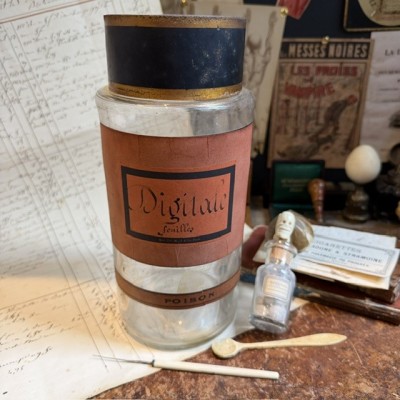
Foxglove leaves - POISON
Antique pharmacy bottle - 19th-century mouth-blown glass
Red POISON label
Signaling to the pharmacist that it is imperative to keep apart the other substances in the cabinet of toxic substances, the famous poison cabinet.
A fascinating testimony to pharmacology
It comes from an old cellar-laboratory in a Parisian pharmacy. The bottles had not moved since the late 1950s on the shelves. The cellar had served as a laboratory for medical analyses and a laboratory for magistral preparations of the pharmacy from 1900 until around 1950.
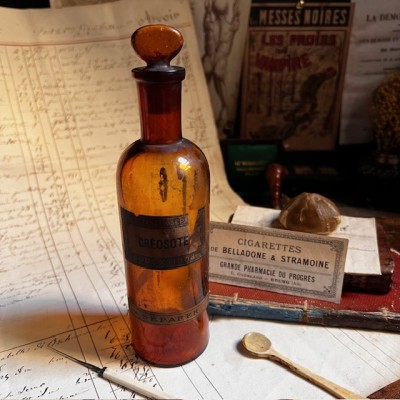
Créosote
Antique pharmacy bottle
Green label: SUBSTANCE TO BE SEPARATED - CODEX 1908
This means that this bottle had to be kept separate from the others because it was dangerous in high doses
EMPTY

DERNIERS JOURS - LAST DAYS
Antique Cinema painted plywood sign
Cinema sign announcing the final days of a film's run
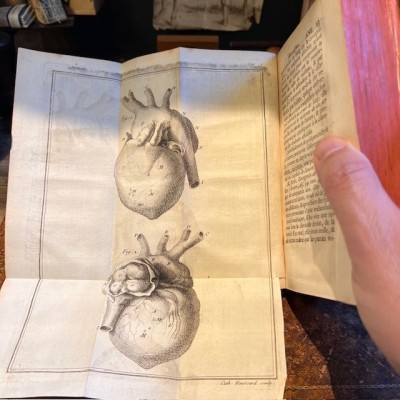
Bibliothèque Choisie de Médecine - Volume 6
Selected Library of Medicine
By François PLANQUE - 1749
Complete original edition with 5 fold-out plates
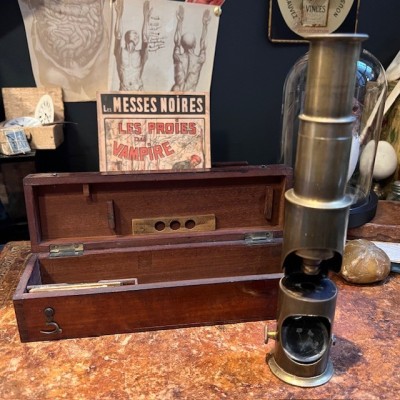
Antique and large drum microscope
In it's mahogany wooden box
For botanist, entomologist - XIXth century
This is a larger model than those usually found on the market
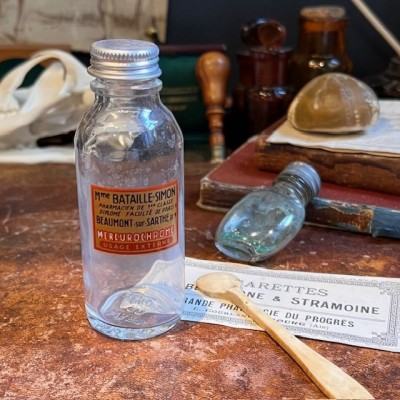
Mercurochrome
Antique pharmacy bottle - Apothecary
Mrs Bataille-Simon, First Class Pharmacist in Beaumont sur Sarthe - Tel 9
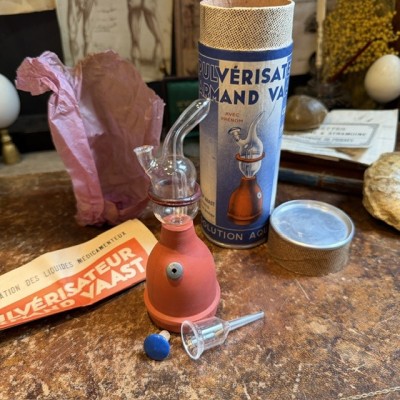
Armand Vaast nasal spray - Oil vaporizer - Antique remedy
In its box
Used in otolaryngology, it was intended for nasal or oral sprays in the treatment of colds and antiseptic treatment of the respiratory tract.
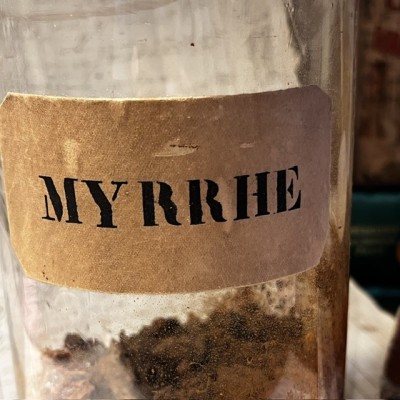
Myrrh
Antique pharmacy bottle - Wide-mouth apothecary jar.
19th-century mouth-blown glass
There is still some product left inside
A fascinating artifact from the history of pharmacology

Antique and large drum microscope
In it's mahogany wooden box
For botanist, entomologist
This is a larger model than those usually found on the market
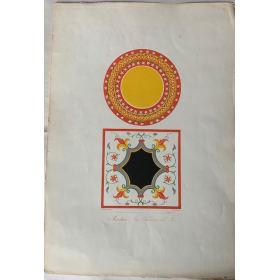
Wall decoration of Pompeii - Herculaneum mosaics: Chromolithographic plate
By Wilhelm Zahn
Published between 1832 and 1849
YOU ARE PURCHASING 1 SINGLE BOARD - NOT THE BOOK OR THE SET OF BOARDS

Crin de Florence - Antique suture thread
Catgut
Natural suture thread obtained from the caterpillar of the Bombyx mori butterfly.
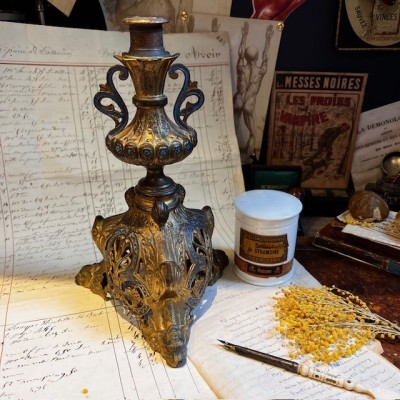
Tripod Torch Holder with Coat of Arms - Napoleon III-era Troubadour style in brass
This style, known as ‘Troubadour style’, reintroduced fantastical animals and medieval imagery into the decorative arts.
19th century
Sold without candle
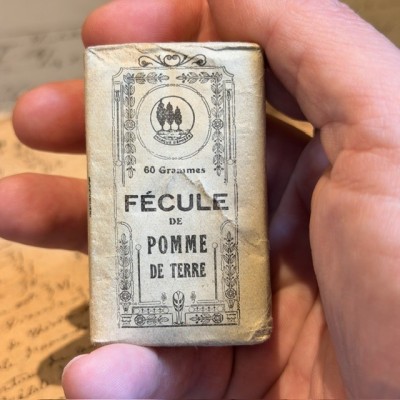
Packet of Potato Starch
Circa 1920
New old stock
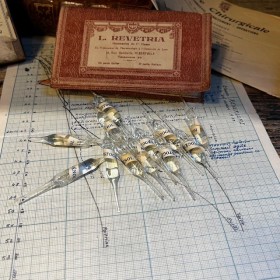
Antique ampoule for hypodermic injection
Histogénol - (circa 1900)
Archimedes screw magnifier - Photographer's Achromatic focusingmagnifier
Photographer's magnifying glass from the late 19th century, early 20th century
When taking a photograph, the photographer would use this focusing magnifier against the frosted glass of his camera to assess the sharpness of the image formed.