


Essence of star anise - Antique pharmacy bottle - Apothecary
Essence of star anise
Antique pharmacy bottle
Apothecary vial
Price
€20.00
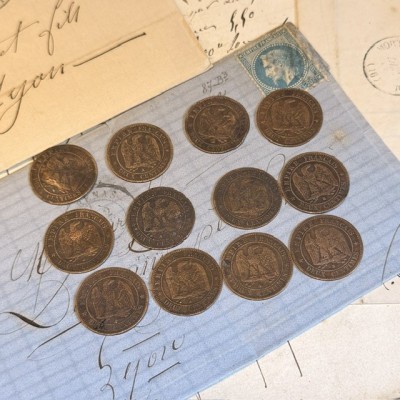
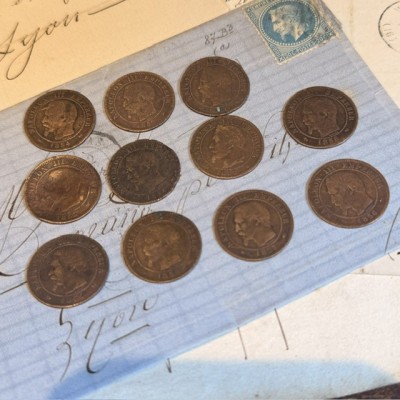
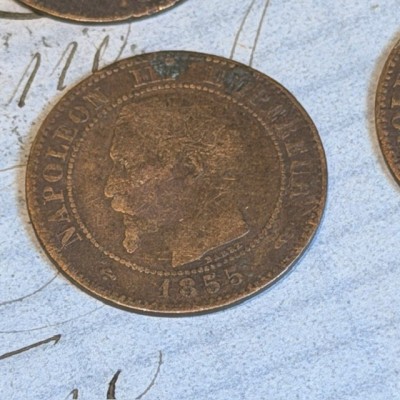
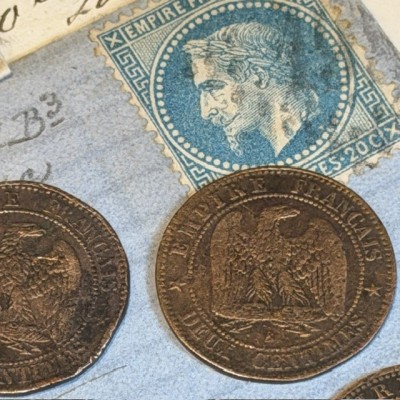
Emperor Napoleon III coin - Second Empire - 2 cents
2-cent coin - Dated 1852 - 1870
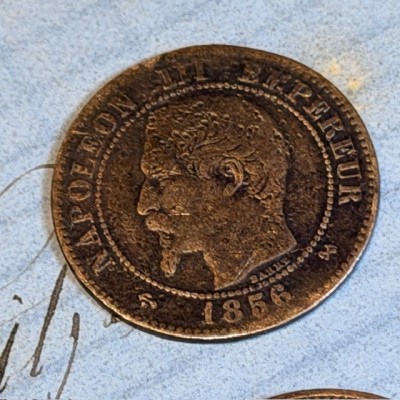
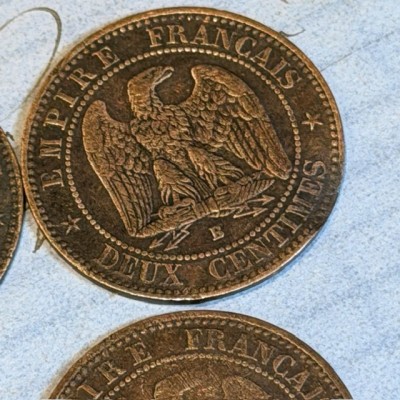
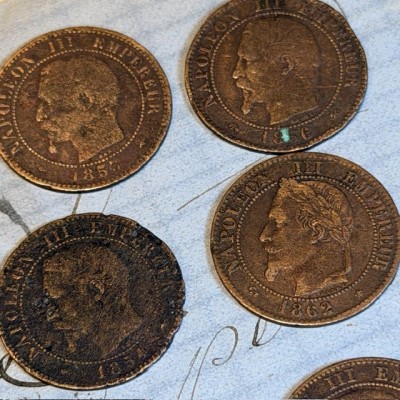
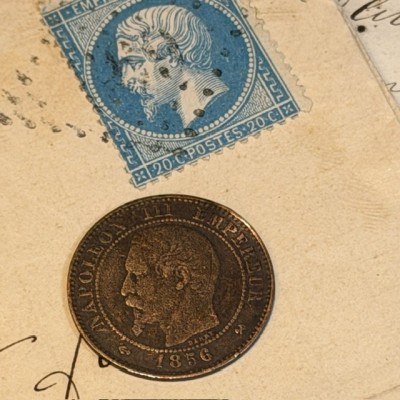
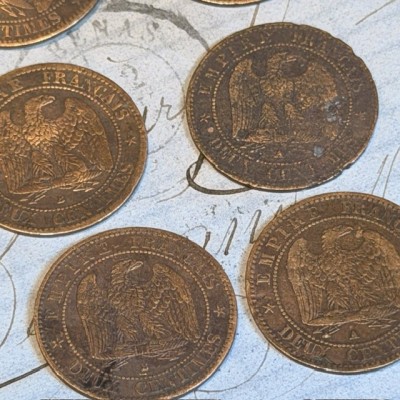
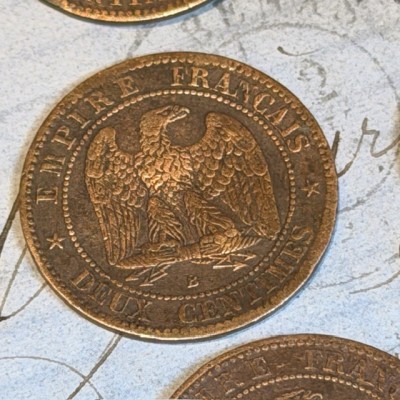
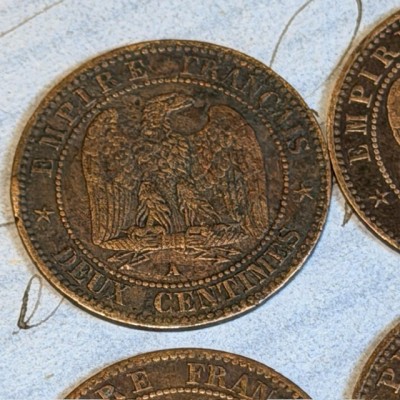
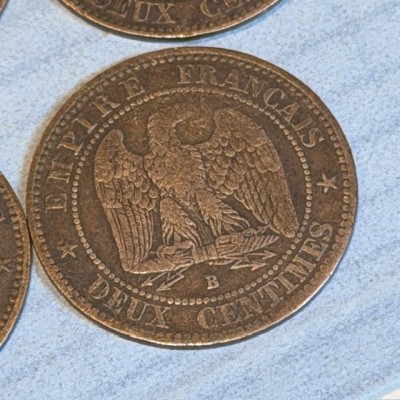
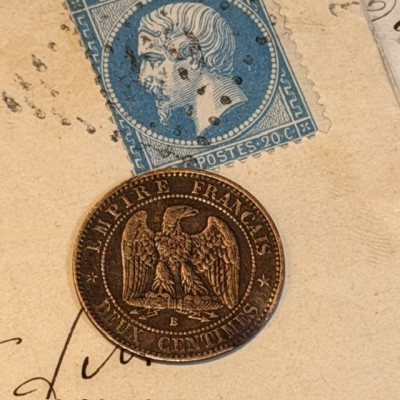
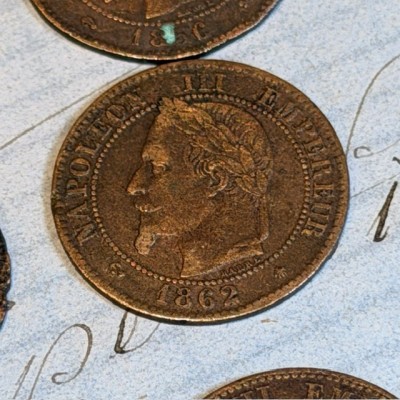
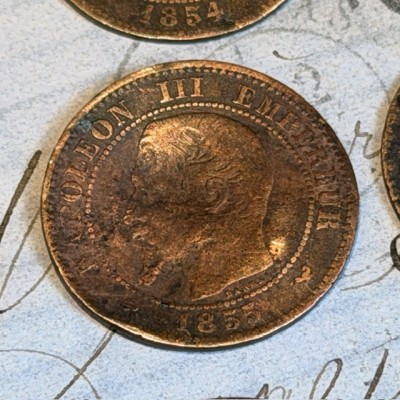
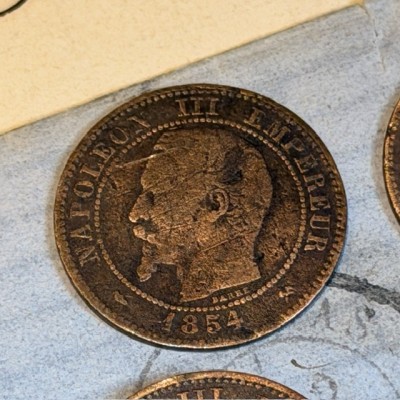
Authentic bronze period coin from the Second Empire, minted during the reign of Emperor Napoleon III. It features the profile of the Emperor on the obverse (bareheaded or gilt-plated) and the imperial eagle on the reverse. Each copy has a unique historical patina and original reliefs preserved from the 19th century.
All coins are different
Emperor Napoleon III coin - Second Empire - 2 cents
2-cent coin - Dated 1852 - 1870
Authentic bronze coin of 2 cents minted during the reign of Napoleon III.
Major symbol of daily life under the Second Empire.
Each piece bears the unique traces of its history and the passage of time, offering a natural patina of the period, ranging from golden bronze to dark chocolate.
Front panel: Obverse of the coin
Profile of the Emperor: Portrait of Napoleon III facing left, engraved after the original work by Jean-Jacques Barre (Engraver general coins).
Circular mention "NAPOLEON III EMPEREUR"
Variant: The coins can be either bareheaded of the Emperor or crowned with laurels.
Presents, according to the arrivals, the Bare head model (struck from 1853 to 1861) or the Laureate head (adopted from 1862 on bronze coins).
The laurel wreath is inspired by the Roman tradition to celebrate the military victories of the Emperor, notably the Italian Campaign of 1859 (victories of Magenta and Solferino) as well as the annexation of Savoy and Nice to France in 1860.
Back side: Reverse of the coin
The Imperial Eagle: Central motif representing the Roman eagle with outstretched wings, resting on the lightning of Jupiter, emblem of power, sovereignty and victory of the Napoleonic regime.
Legends: Surrounded by the mention "FRENCH EMPIRE" and the face value "TWO CENTS".
Various minting workshops: Monetary workshop letters visible at the base (e.g., A for Paris, B for Rouen)
Material: Bronze (Alloy of copper, tin and zinc established by the reform of 1852)
Diameter: 20 mm (2 cm)
Weight: About 2 g
Engraver: Jean-Jacques Barre
Attention: As these are old period coins, each copy is unique, all the pieces are different and have their own nuances of patina and circulation marks.
Essence of star anise
Antique pharmacy bottle
Apothecary vial
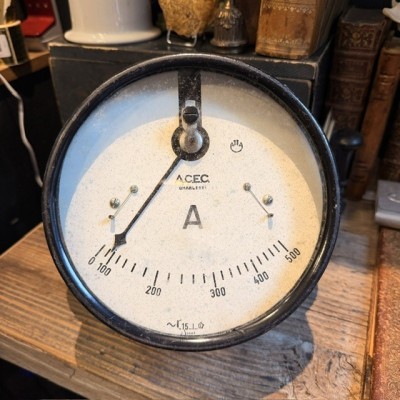
Large ACEC Industrial Ammeter (0–500 A)
Industrial Dial for Vintage Industrial Electrical Panel, circa 1920/1950
Function: Ferromagnetic ammeter with a circular dial that measures high-current alternating current (up to 500 A). It was used to monitor the load drawn by very large power lines or electrical machinery.
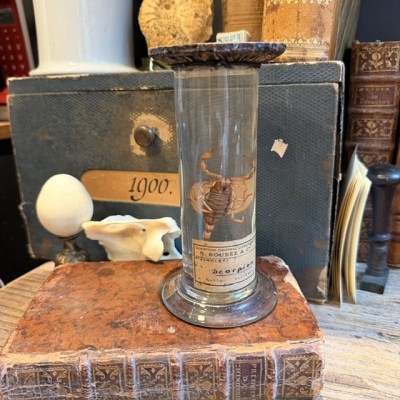
Specimen: Languedoc Scorpion - Buthus occitanus
Museum jar, also known as a Museum specimen tube.
Wet specimen
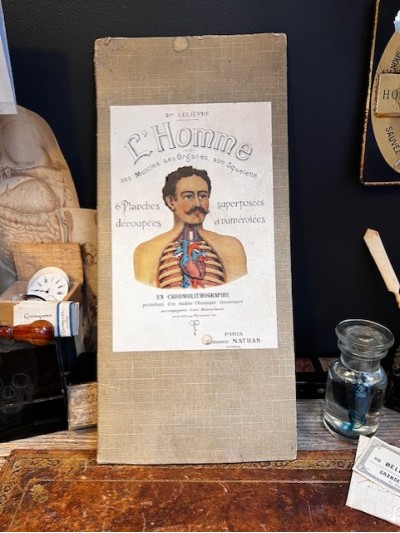
Man - Anatomical chart that can be disassembled
By Fernand Nathan Editeur publisher
Coloured chart with movable, cut-out and superimposed leaves
There are defects on the superimposed boards; the outer board, which was the man's torso, is missing, as are the lungs, which were above the heart. The left hand is missing, the arm being torn.
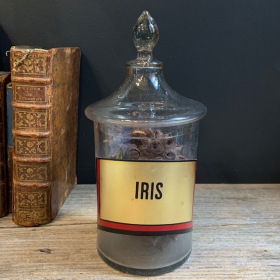
19th century Herbalist's or Pharmacy crystal jar
Iris
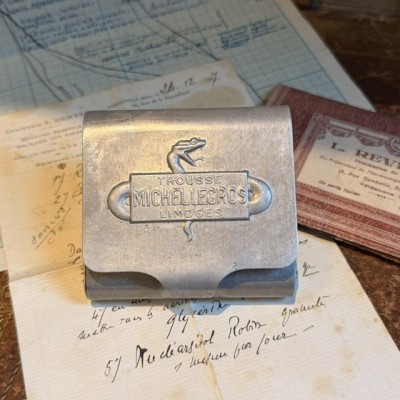
Antique First aid kit for the healing of snake bites
Glass syringe and 2 vintage doses of vaccine
Vintage quack remedy!
Beautiful snake illustration on the aluminium box
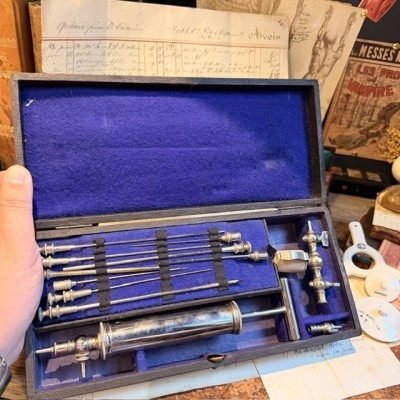
Dr. Potain’s aspirator set in its felt-lined box
Late 19th century, circa 1880
Antique medical instrument maker without manufacturer marking
non-functional
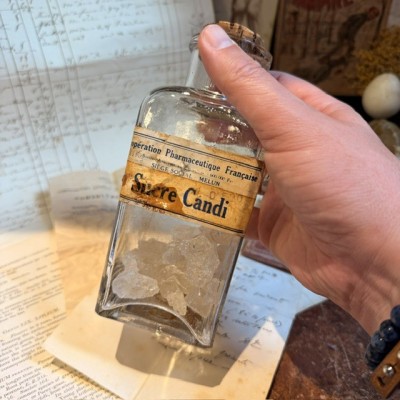
Rock Candy
Antique Apothecary Bottle of Rock Candy – Coopération Pharmaceutique Française (circa 1930–1940)
It comes from the former cellar-laboratory of a Parisian pharmacy. The bottles had remained untouched on the shelves since the late 1950s. The cellar served as a medical analysis laboratory and as a laboratory for the pharmacy's compounded preparations from 1900 until around 1950.
It still contains large crystals of rock candy (Saccharum candi), perfectly preserved.
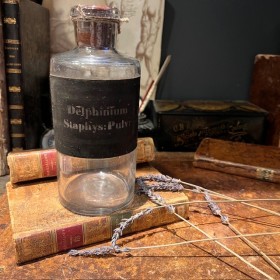
Delphinium staphisagria - Stavesacre
Pharmacy jar - Herbalism - Apothecary bottle
Late 19th century, early 20th century.
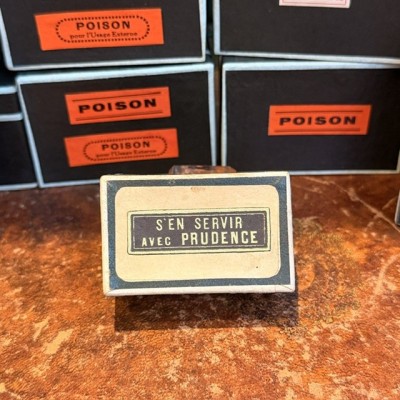
Antique labels in a pharmacy box for cures made of canvas cardboard
Use it with caution label
The pharmacist used his boxes of medicine to put away the labels he would then put on the bottles that he would resell to his customers.
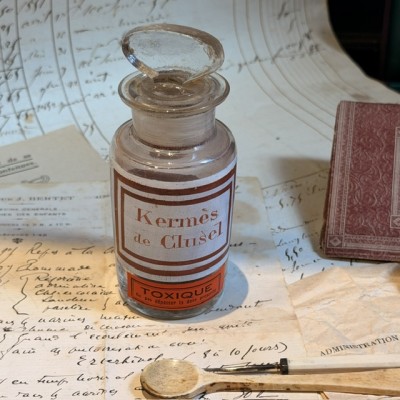
Kermes de Clusel - Antimony Sulfide
Antique pharmacy bottle made of blown glass and enameled painted label.
Red TOXIC label
Signaling to the pharmacist that it is imperative to keep apart the other substances in the cabinet of toxic substances, the famous poison cabinet.
Dating: 19th century
EMPTY
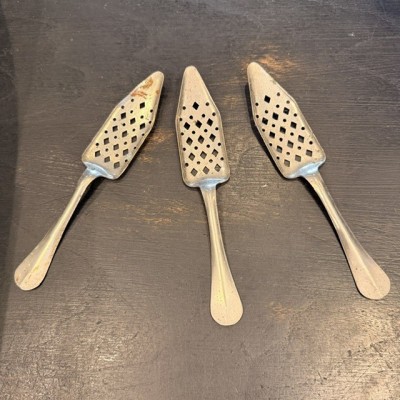
Antique Absinthe Spoon
The spoons have been used, are scratched, badly oxidized, etc.
You buy 1 spoon, not the whole lot
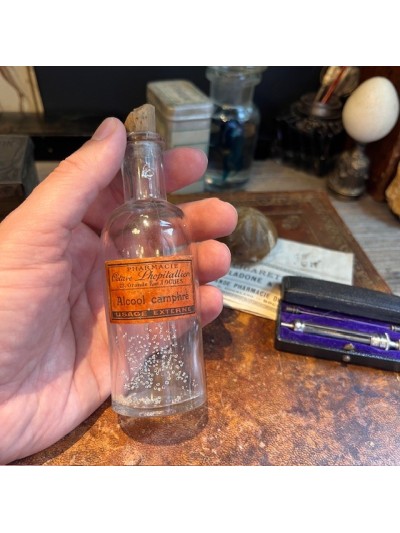
Camphorated alcohol
Antique pharmacy bottle
Apothecary vial
EMPTY
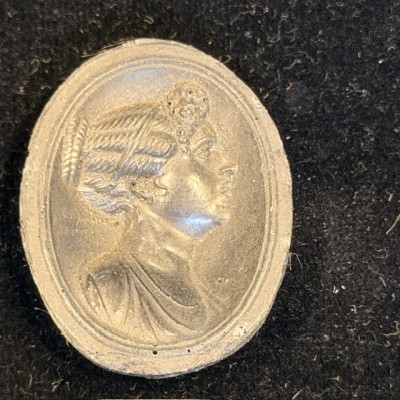
Antique intaglio and cameo print from the Grand Tour of the 19th century
In Gray Sulfur
True testimony of the Grand Tour carried out by the aristocrats in the 19th century
Profiles in the antique style, mythological scenes or Greco-Roman deities
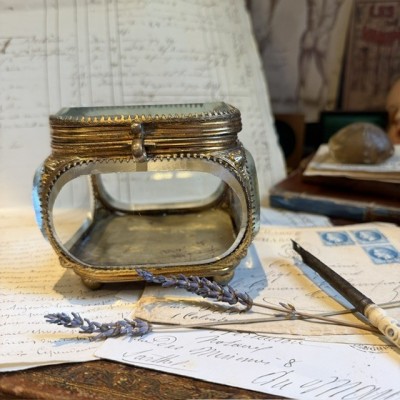
Large Reliquary box - 19th century
Jewelry box
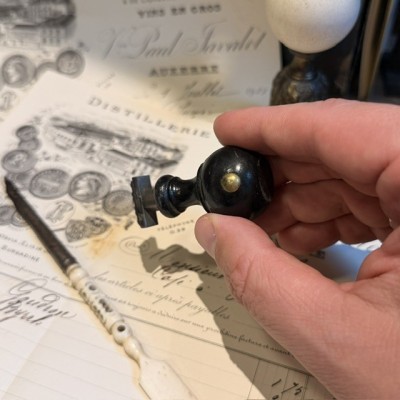
Antique manual desktop stamp
The rubber sole engraved in relief indicates: "XXX".
Sturdy metal frame and ergonomic handle made from turned blackened wood
Emperor Napoleon III coin - Second Empire - 2 cents
2-cent coin - Dated 1852 - 1870
Authentic bronze period coin from the Second Empire, minted during the reign of Emperor Napoleon III. It features the profile of the Emperor on the obverse (bareheaded or gilt-plated) and the imperial eagle on the reverse. Each copy has a unique historical patina and original reliefs preserved from the 19th century.
All coins are different