
- New
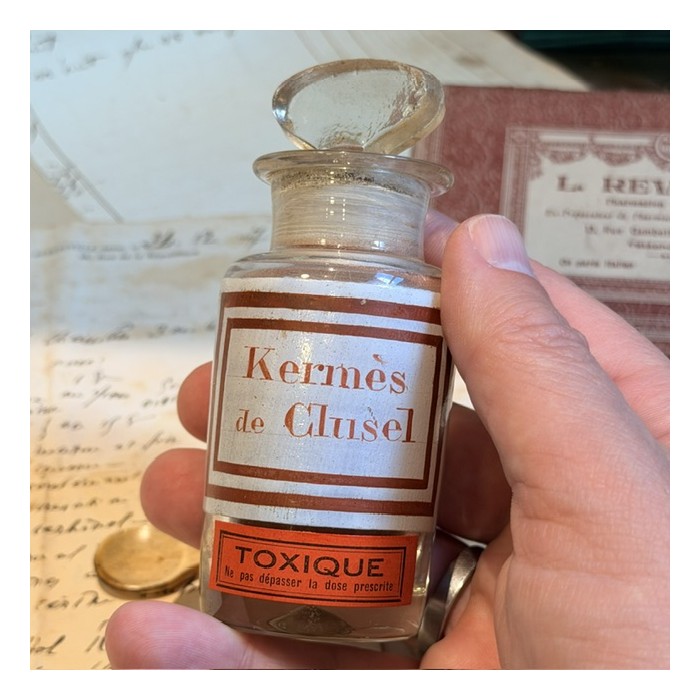
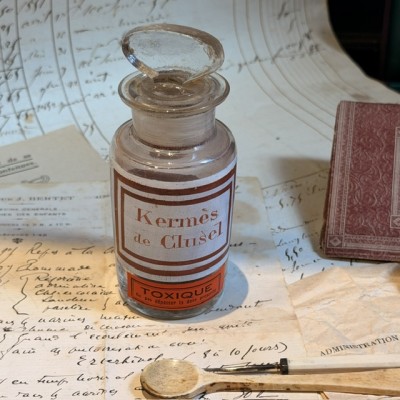
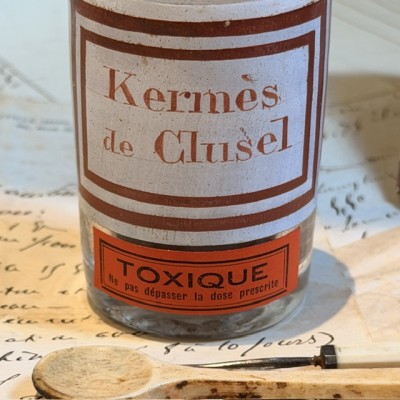
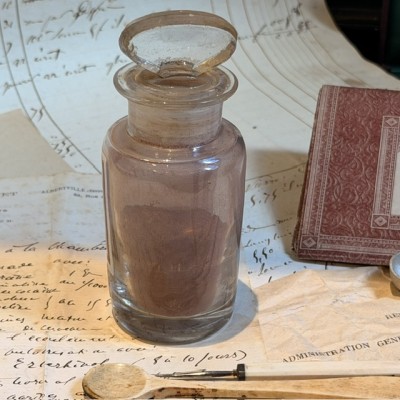
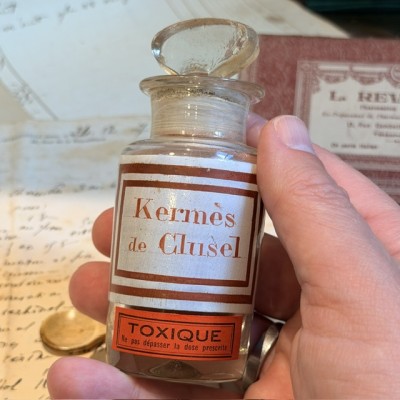
Kermes de Clusel - Antimony Sulfide
Antique pharmacy bottle made of blown glass and enameled painted label.
Red TOXIC label
Signaling to the pharmacist that it is imperative to keep apart the other substances in the cabinet of toxic substances, the famous poison cabinet.
Dating: 19th century
EMPTY
Kermes de Clusel - Antimony Sulfide
Antique pharmacy bottle made of blown glass and enameled painted label.
Red TOXIC label
Signaling to the pharmacist that it is imperative to keep apart the other substances in the cabinet of toxic substances, the famous poison cabinet.
Laboratory or pharmaceutical dispensary bottle, typical of the late nineteenth or early twentieth century.
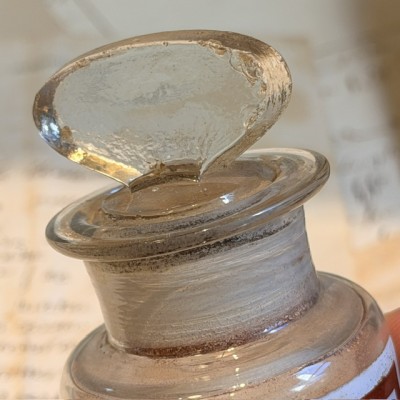
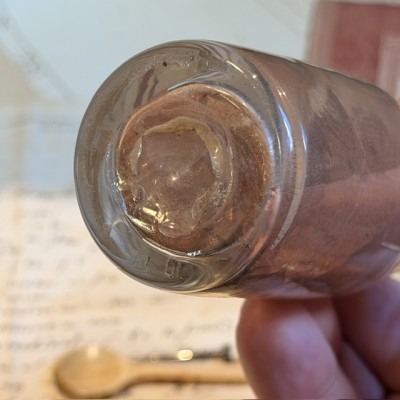
Made of blown transparent glass, it has a trace of pontil visible on the bottom, reflecting traditional artisanal manufacturing. It has its original cap honed with emery BUT the bottle is blocked and does not open, sealed by time.
Beautiful enamelled label stenciled surrounded by a brown/red border. This baked enamel technique guaranteed great resistance to handling and chemicals in the pharmacy. A red regulatory label marked "TOXIQUE" is applied at the bottom, indicating the poisonous nature of the substance.
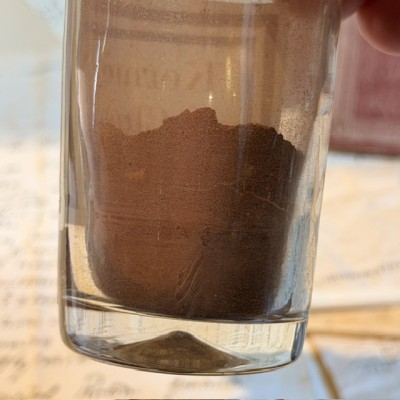
It retains its original fine brown-red powder inside.
Kermes mineral, perfected in the 19th century by pharmacists like Clusel, was an antimony-based preparation, a heavy metal widely used in traditional pharmacopeia.
Prescribed in low doses as a sudorific and expectorant to treat severe pulmonary conditions and fevers, it worked through violent purges and evacuations.
Due to the high toxicity of antimony, an overdose caused severe gastric irritation, uncontrollable vomiting, and serious heart failure.
Height of the bottle: 12cm with blown glass cap - Diameter at the base: 4cm
Dating: 19th century
EMPTY
Arsenic - Sodium arsenate
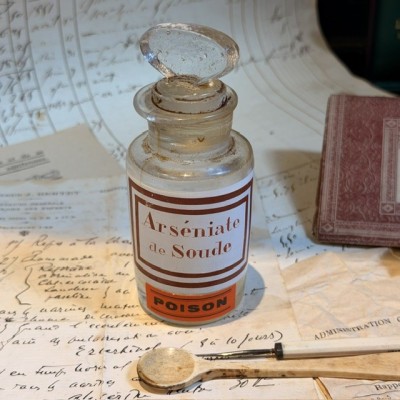
Antique pharmacy bottle made of blown glass and enameled painted label. Yes, it is indeed the arsenic you know!
Red POISON label
Signaling to the pharmacist that it is imperative to keep apart the other substances in the cabinet of toxic substances, the famous poison cabinet.
Dating: 19th century
EMPTY but the cap is blocked and does not open.
Puldose Nasal Spray for aqueous solutions - Antique remedy
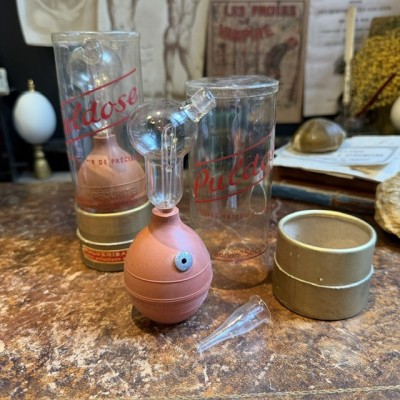
In its Plastic box
Used in otolaryngology, it was intended for nasal or oral sprays in the treatment of colds and antiseptic treatment of the respiratory tract.

Collodion
Used as a liquid dressing
Antique pharmacy bottle
EMPTY
Antique bezoar - Antipoison - Antidote
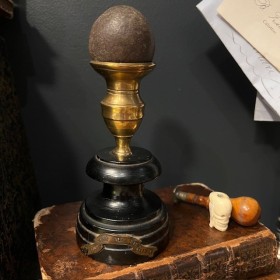
Once sold by the apothecary, bezoar, also known as gallstone, was reputed to have the same anti-poison properties as the legendary unicorn's horn, hence its excessively high price, also due to its great rarity.
An important piece in a cabinet of curiosities
Sold alone - Without stand, sold separately
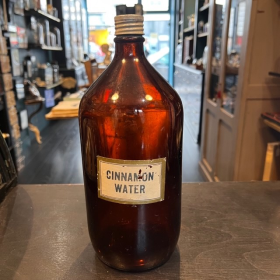
Cinnamon Water
Antique and large brown English pharmacy bottle
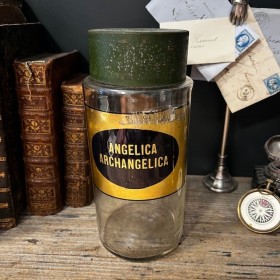
Angelica Archangelica
Pharmacy jar - Herbalism - Apothecary bottle
Late 19th century, early 20th century

Antique and large drum microscope
In it's mahogany wooden box
For botanist, entomologist
This is a larger model than those usually found on the market
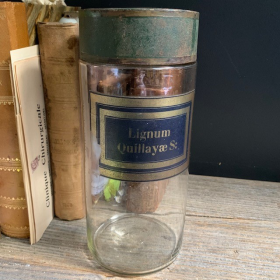
Antique pharmacy jar: Lignum Quillayae Saponaria
Panama wood - 19th century jar
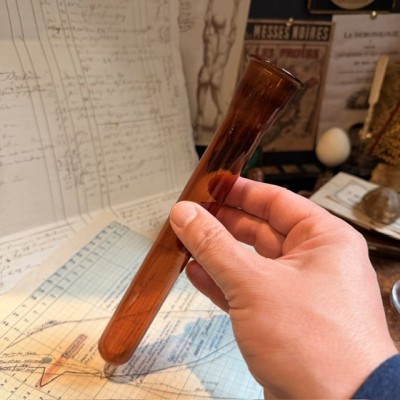
Large antique laboratory test tube made of actinic glass (brown glass) - Pharmacy
Its unusual dimensions make it a model with a beautiful presence
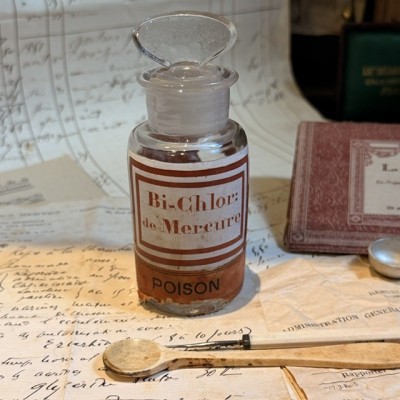
Corrosive sublimate - Bichloride of mercury
Antique pharmacy bottle made of blown glass and enameled painted label.
Red POISON label
Signaling to the pharmacist that it is imperative to keep apart the other substances in the cabinet of toxic substances, the famous poison cabinet.
Dating: 19th century
EMPTY
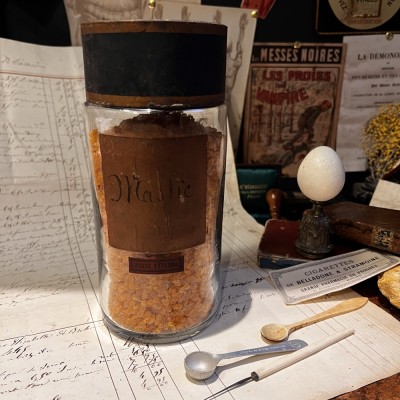
Mastic of Chios
Antique pharmacy bottle - Wide-mouth apothecary jar.
19th-century mouth-blown glass
There is still some product left inside
A fascinating artifact from the history of pharmacology
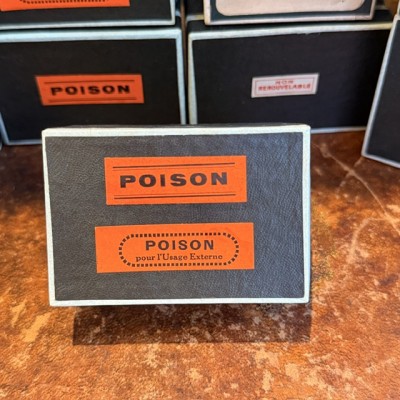
Antique labels in a pharmacy box for cures made of canvas cardboard
Poison label - Ref A
The pharmacist used his boxes of medicine to put away the labels he would then put on the bottles that he would resell to his customers.
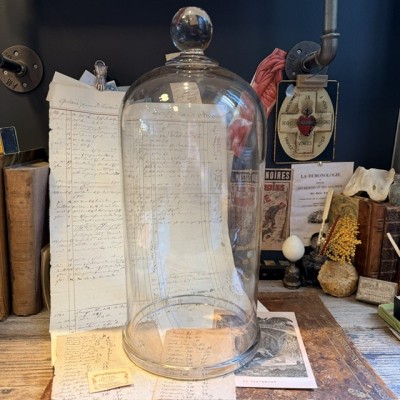
Protective laboratory bell jar - High form with knob in blown glass
Period: 1900 - Pharmacy - Apothecary
Used by the pharmacist to cover precision instruments or isolate preparations undergoing analysis
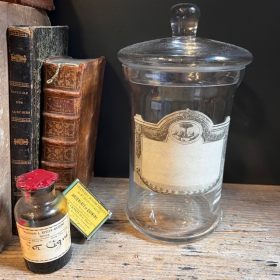
Herbalist's or Pharmacist's jar
Antique blank label of the XVIIIth century
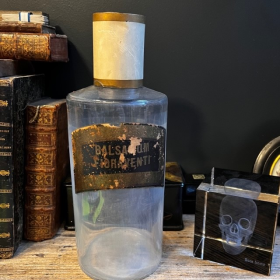
Antique pharmacy bottle from the 19th century
Balsamum Fioravanti - Balm of Fioravanti
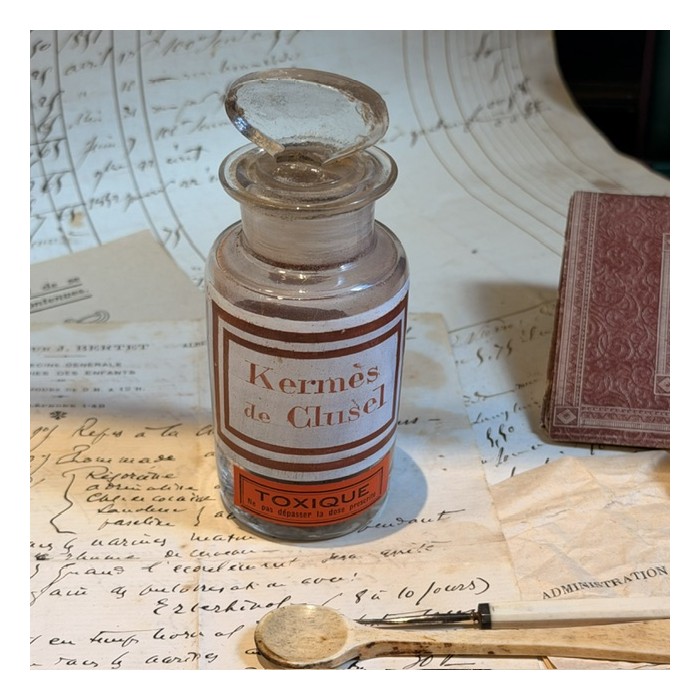
Kermes de Clusel - Antimony Sulfide
Antique pharmacy bottle made of blown glass and enameled painted label.
Red TOXIC label
Signaling to the pharmacist that it is imperative to keep apart the other substances in the cabinet of toxic substances, the famous poison cabinet.
Dating: 19th century
EMPTY