
- New
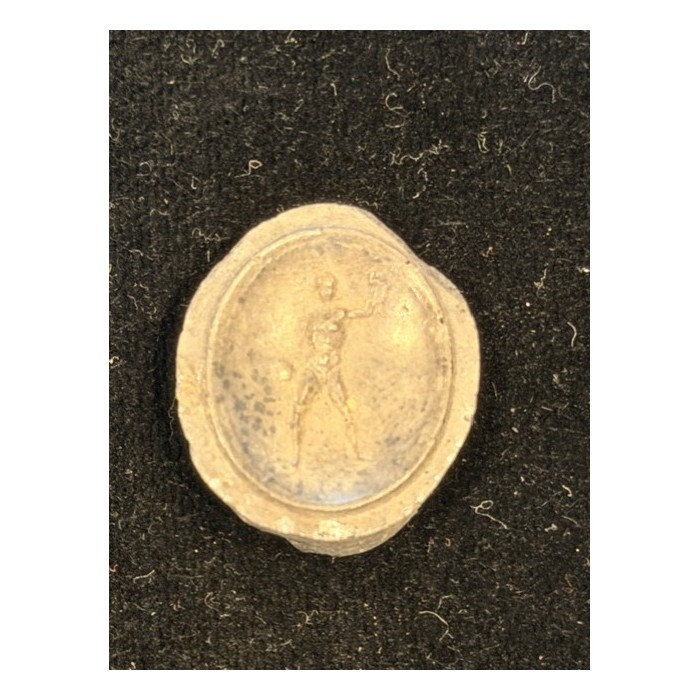
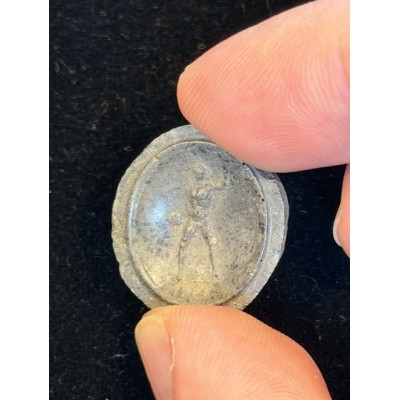
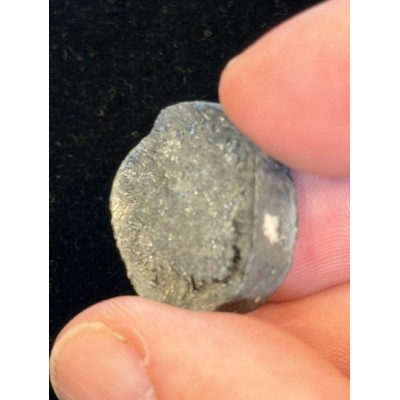
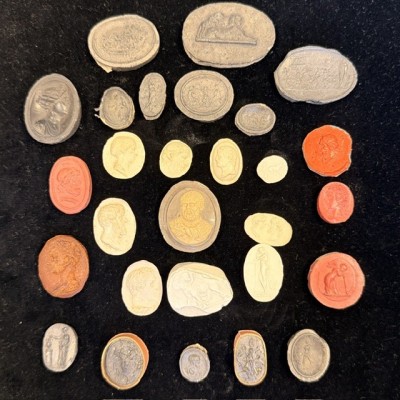
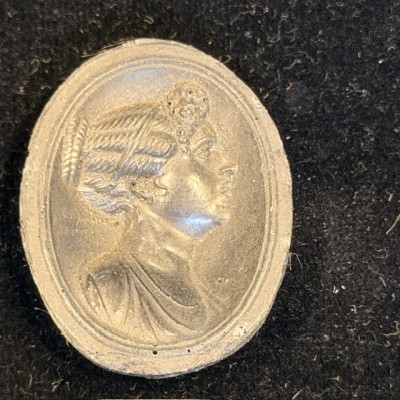
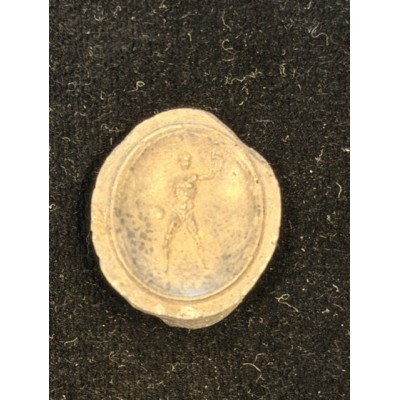
Antique intaglio and cameo print from the Grand Tour of the 19th century
In Gray Sulfur
True testimony of the Grand Tour carried out by the aristocrats in the 19th century
Profiles in the antique style, mythological scenes or Greco-Roman deities
Antique intaglio and cameo print from the Grand Tour of the 19th century
In Gray Sulfur
A true testimony of the Grand Tour, this journey of aristocratic education undertaken by the enlightened European youth from the 18th century and the beginnig of the 19th century (travel which also gave rise to the word "tourist").
During their stay in Italy, these wealthy travelers acquired, according to their means, pieces of art and antiques or reproductions such as here these prints, medals and cameos in the antique style being very popular.
These prints were part of dactyliothèques: collections of prints that reproduce the most beautiful engraved gems of antiquity.
This print is made in graphite-tinted liquid sulfur (lead powder / black smoke). Sulfur was the material of choice for molders in Italy because, melting at low temperature, it infiltrated into the smallest details of the engraved ancient stone, freezing the sculpture with precision.
Intaglio or Cameo:
The Intaglio is an engraved fine stone. When plaster is poured inside, the material fills the cavity: the resulting print therefore emerges in relief. This is the case of these prints, which allow you to admire the original design of the gem.
The Cameo: A gem sculpted in relief. An impression taken from a cameo will, on the contrary, give a debossed print.
The prints were often lined with a thin strip of two-tone paper enhanced by a golden border on the edge. This banding was intended to protect by holding the edge of the plaster to prevent chipping.
The prints presented here no longer have this banding.
Subject: Profiles in the antique style, mythological scenes or Greco-Roman deities.
When handled, its composition retains a slight sulphur olfactory signature from the era.
The prices range from 15€ to 35€
The fingerprints are all in very different sizes, from 1.5cm to 4.4cm
A:2.2cm B:2.2cm C:1.5cm D:2.2cm E:2cm F:1.7cm G:2.8cm H:2cm I:1.8 J:3.2cm K:3.2cm L:4.4cm M: 3.7cm

Cours d'opérations de chirurgie, démontrées au Jardin Royal
Course of surgical operations, demonstrated in the Royal Garden
Published in 1751 in Paris, by d'Houry, sole printer and bookseller to Monseigneur le Duc d'Orléans
Fourth edition
Illustrated with numerous plates and engravings in the text, including the famous plate of Poor Malabou and her scrotal elephantiasis on page 112/113, which the author mentions on page 373.
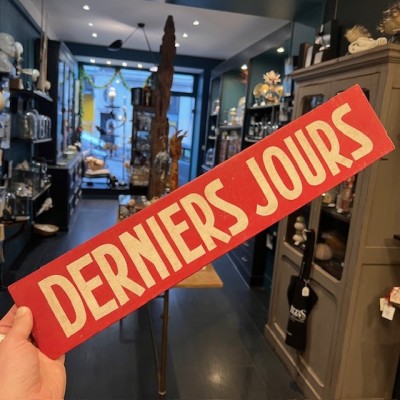
DERNIERS JOURS - LAST DAYS
Antique Cinema painted plywood sign
Cinema sign announcing the final days of a film's run
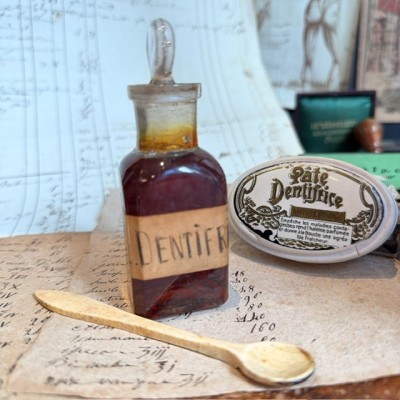
Toothpaste elixir
Antique pharmacy bottle
Handwritten label with pen
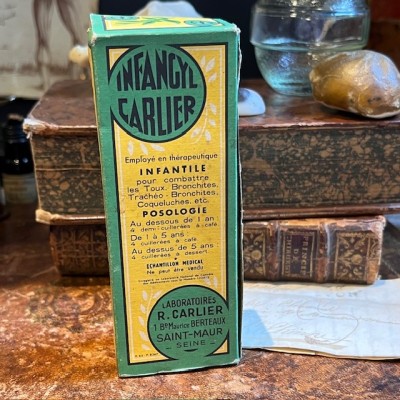
Infangyl Carlier
Antique pharmacy bottle - Apothecary
The box still contains its full, sealed bottle and instructions
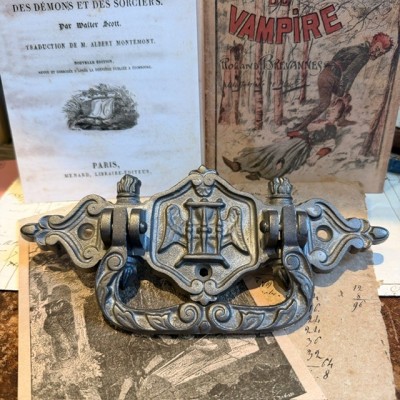
Coffin handle - Winged hourglass
around 1900
You buy only 1 handle
They are in very good condition with a superb patina.
Brand new from the period, it has never been used.
Ancient engraving -board of Natural History in colour nineteenth century
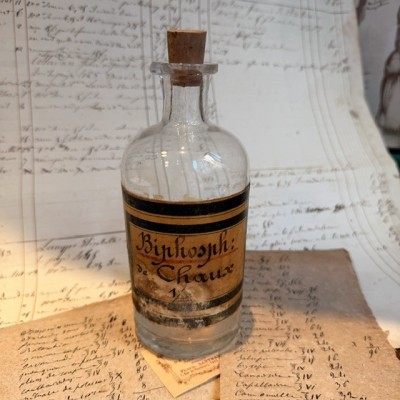
Biphosphate de Chaux
Antique pharmacy bottle
EMPTY
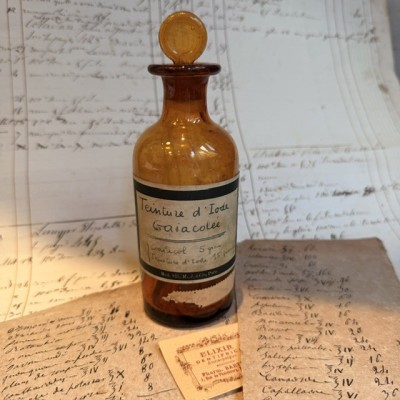
Gaiacolated Tincture of Iodine
Antique pharmacy bottle
EMPTY
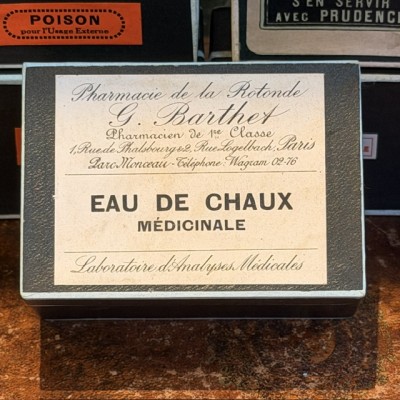
Antique labels in a pharmacy box for cures made of canvas cardboard
Label: Eau de Chaux Médicinale
The pharmacist used his boxes of medicine to put away the labels he would then put on the bottles that he would resell to his customers.
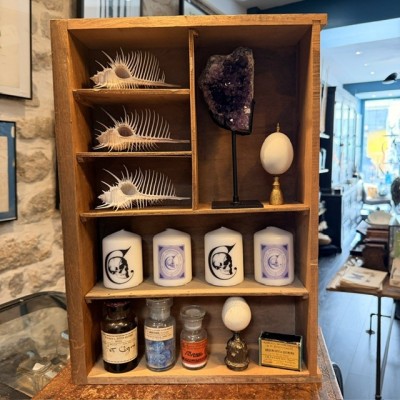
Large antique wooden pharmacy drawer with compartments
6 compartments
Curiosity shelf
Ref C - 48x34.5cm - Thickness 9.5cm
Can be used as a presentation furniture
SOLD EMPTY WITHOUT ACCESSORIES
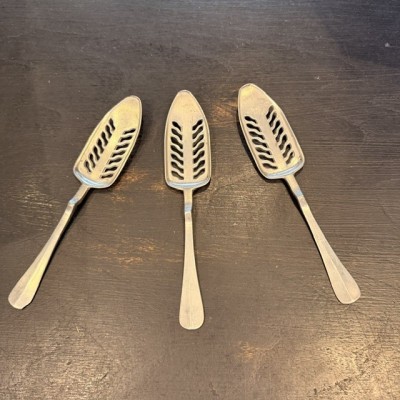
Antique Absinthe Spoon
The spoons have been used, are scratched, badly oxidized, etc.
You buy 1 spoon, not the whole lot
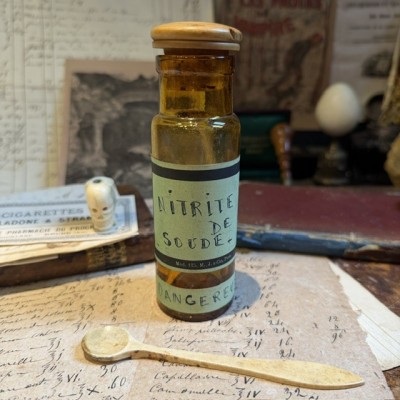
Sodium Nitrite
Antique amber glass bottle, with a boxwood and cork stopper.
Label: DANGEROUS
Indicating to the pharmacist that it must be stored separately from other substances in the cabinet for toxic substances, the famous ‘poison cabinet’.
It comes from the former cellar-laboratory of a Parisian pharmacy. The bottles had not been moved from the shelves since the late 1950s. The cellar had served as a medical analysis laboratory and a laboratory for the pharmacy’s compounded preparations from 1900 until around 1950.
EMPTY
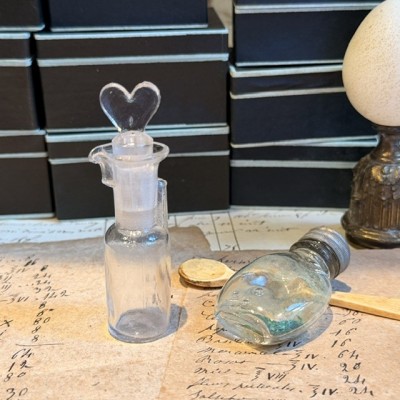
Dropper bottle
Antique pharmacy bottle - 1920-30's
Glass stopper honed in the shape of a heart for better grip
EMPTY
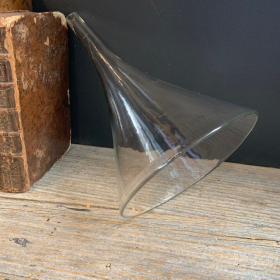

Lower part of the lower mandible of a horse jaw
Antique model from Maison Auzoux in Paris
Paper-mâché pedagogical model
Model B - 1 year
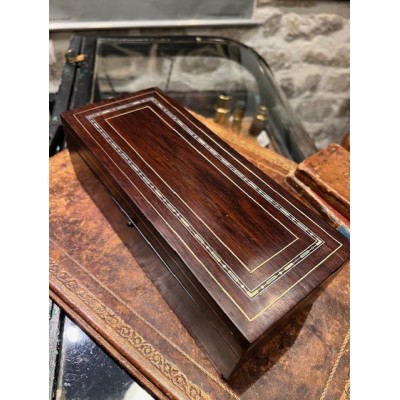
Napoleon III box in rosewood and polychrome marquetry
These boxes were used to store gloves, letters or accessories. This one was probably used to store dominoes, judging by the interior compartments.
A refined decorative piece, typical of 19th-century Parisian lifestyle.
19th century - Period: Napoleon III, circa 1850–1875
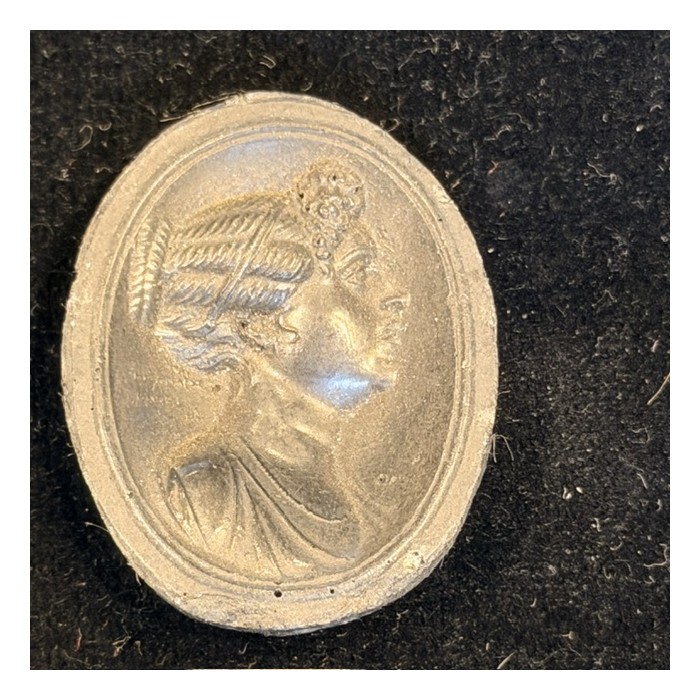
Antique intaglio and cameo print from the Grand Tour of the 19th century
In Gray Sulfur
True testimony of the Grand Tour carried out by the aristocrats in the 19th century
Profiles in the antique style, mythological scenes or Greco-Roman deities