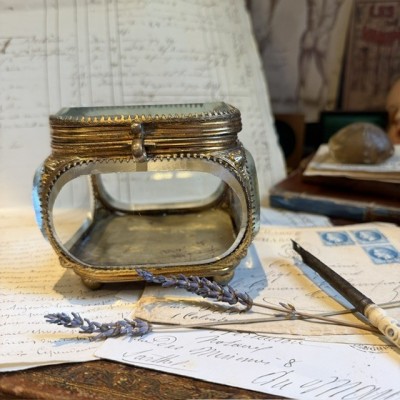
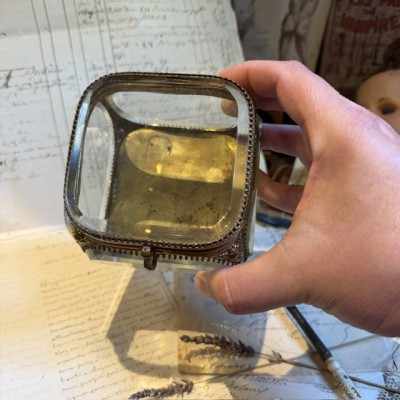
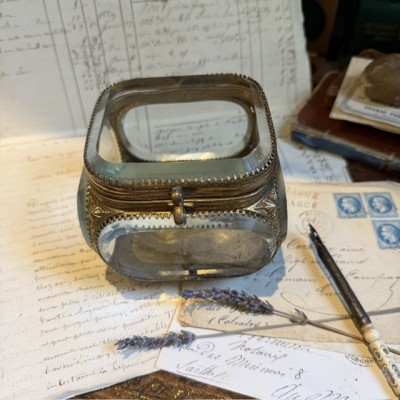
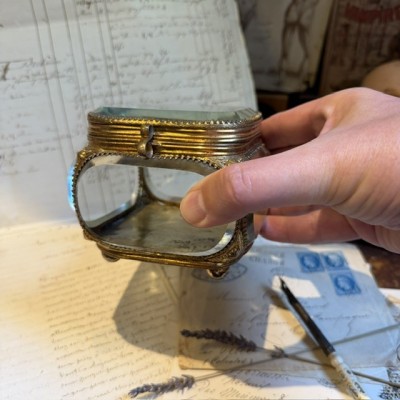
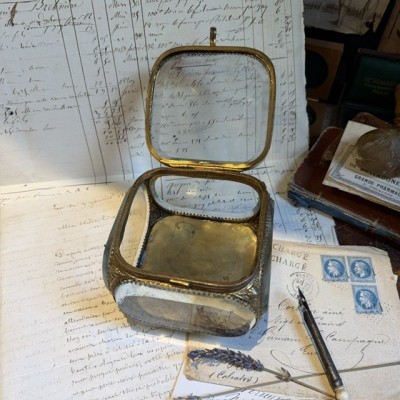
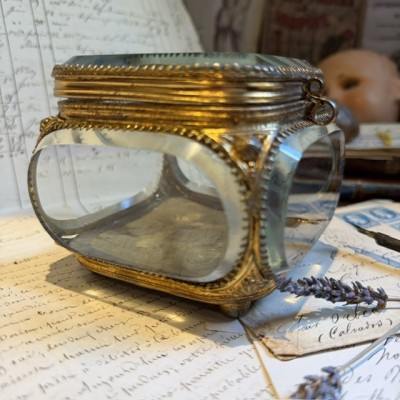
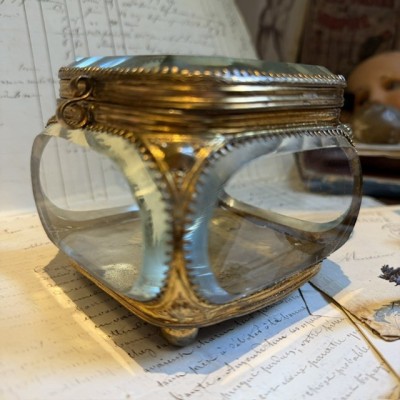
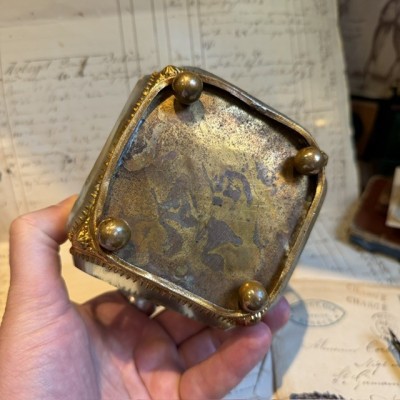
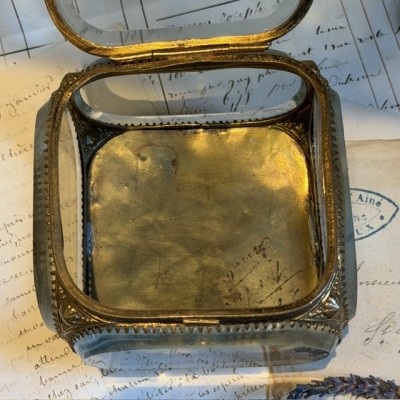
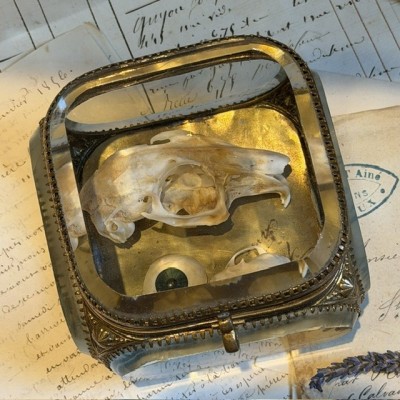
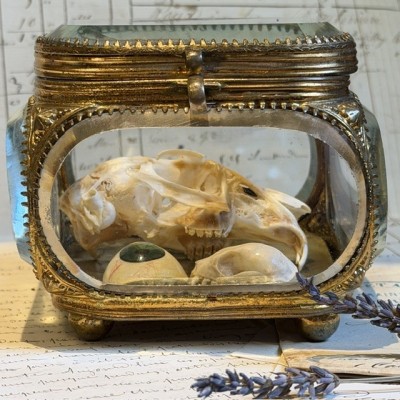
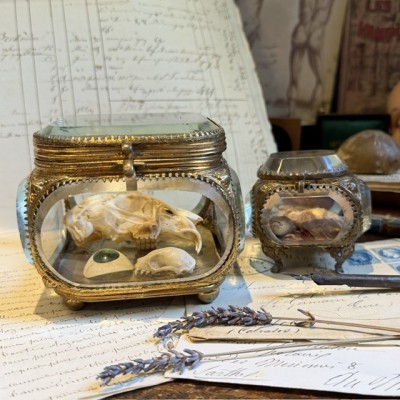
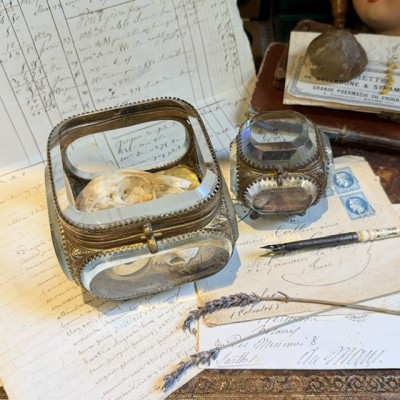
Large Reliquary box - 19th century
Jewelry box
Large 19th-century glass and brass reliquary box
Jewellery box
The sides and lid are made of thick bevelled glass. No cushion.
A very attractive size, less common.
Dimensions: 10x10cm Height: 8.5cm
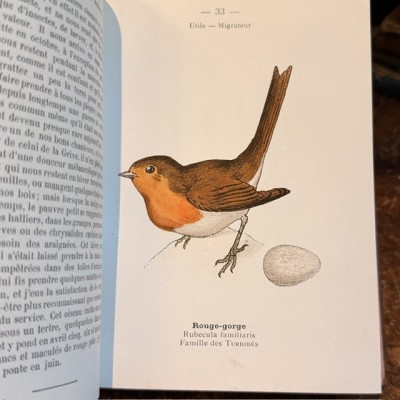
Atlas de poche des Oiseaux De France (Pocket Atlas of the Birds of France)
from Switzerland and Belgium - Useful or Harmful
72 colored plates and 4 black plates representing 70 birds, 28 eggs, and 4 nests
This is not a reissue but the original edition of 1908.
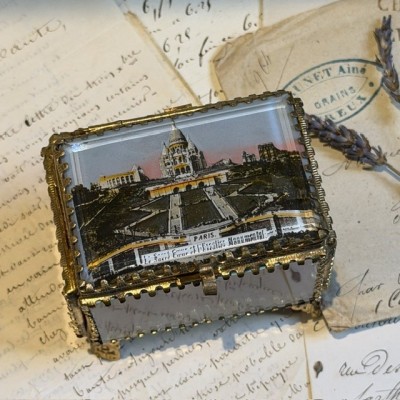
Souvenir of Montmartre 1900 – Sacré-Cœur
Glass and brass reliquary box
Jewellery box
A chance find at a flea market allowed us to bring this jewellery box back from Ardèche (south of France), more than a century later, it returns to where it all began.
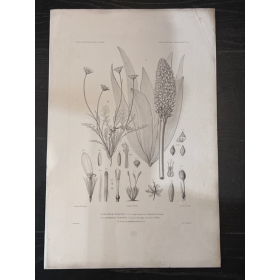
Voyage to the South Pole and Oceania on the corvettes the Astrolabe and the Zélée, executed by order of the king during the years 1837-1838-1839-1840 under the command of M. Dumont-d'Urville captain of vessel
Botanical plate
Published in 1846
Atlas of Natural History - Botany
Phanerogamy
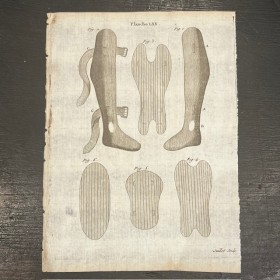
Antique surgical board
From Benjamin Bell's Complete Course in Surgery, published in 1796
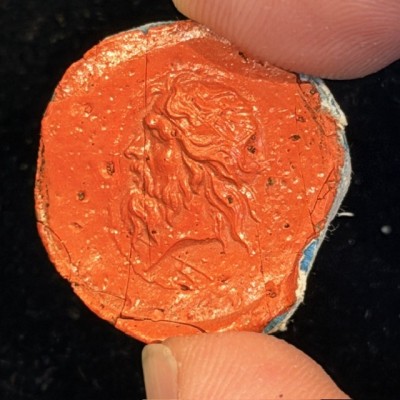
Antique intaglio and cameo print from the Grand Tour of the 19th century
In Red Sealing Wax
True testimony of the Grand Tour carried out by the aristocrats in the 19th century
Profiles in the antique style, mythological scenes or Greco-Roman deities
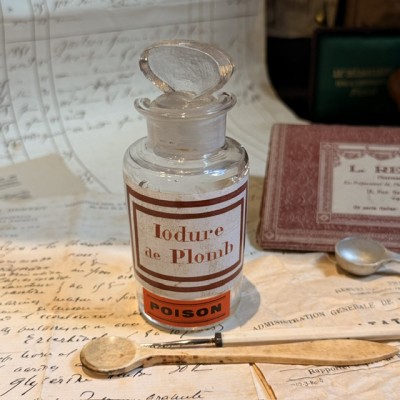
Lead iodide
Antique pharmacy bottle made of blown glass and enameled painted label.
Red POISON label
Signaling to the pharmacist that it is imperative to keep apart the other substances in the cabinet of toxic substances, the famous poison cabinet.
Dating: 19th century
EMPTY

Grams / Tablespoons - Graduated bottle
in French: Grammes / Cuillères à soupe
Antique medicine bottle
Apothecary

Antipyrina Knorr
Named after its German discoverer: Ludwig Knorr
Pharmacy jar - Herbalism - Apothecary bottle
Late 19th century
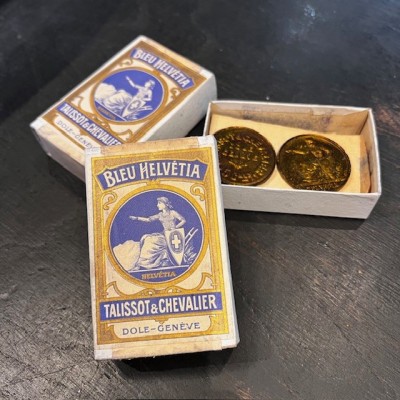
Antique Laundry blue box - Helvetia Blue from Talissot & Chevalier in Dôle and Geneva
Period: 1890-1905
Box containing 6 gold-plated “coins” made of blue wash, resembling the iconography of Swiss coins and medals from the late 19th and early 20th centuries.
Beautiful blue and gold illustration on the box.
Your box will be sealed: never opened in 120 years
UNOBTAINABLE
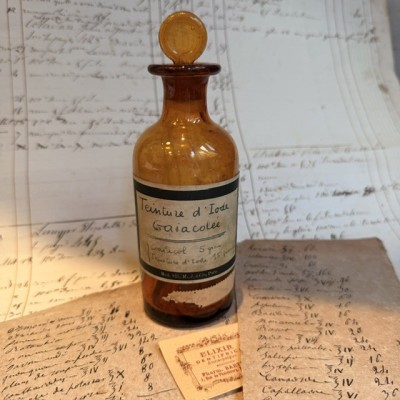
Gaiacolated Tincture of Iodine
Antique pharmacy bottle
EMPTY
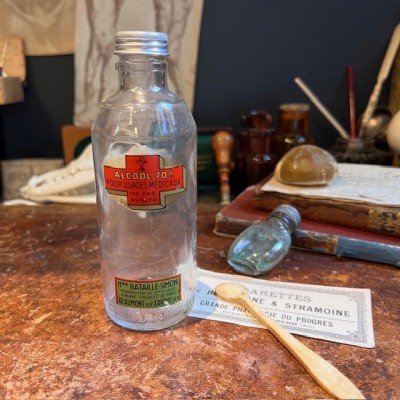
70° alcohol
Antique pharmacy bottle - Apothecary
Mrs Bataille-Simon, First Class Pharmacist in Beaumont sur Sarthe - Tel 9
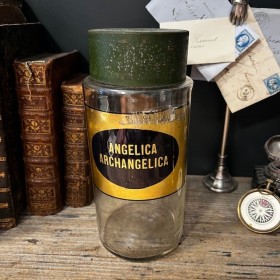
Angelica Archangelica
Pharmacy jar - Herbalism - Apothecary bottle
Late 19th century, early 20th century
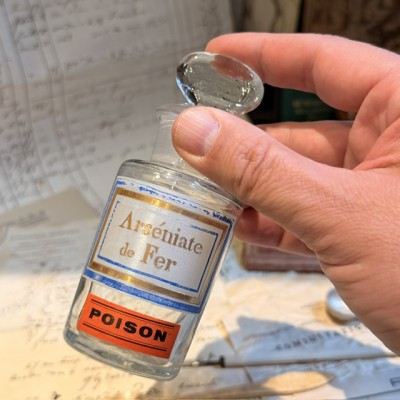
Arsenic - Iron arsenate
Antique pharmacy bottle made of blown glass and enameled painted label with golden blue threads
Red POISON label
Signaling to the pharmacist that it is imperative to keep apart the other substances in the cabinet of toxic substances, the famous poison cabinet.
Dating: 19th century
EMPTY
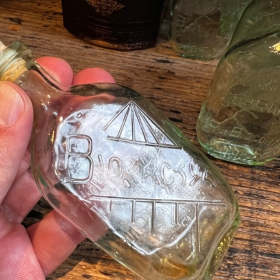
Antique pharmacy bottle
BIOLACTYL Ferment Fournier - Early 1900
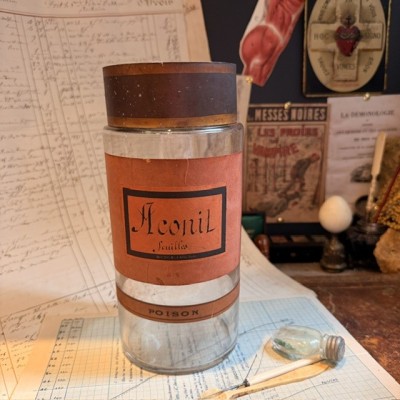
Aconit leaves - POISON
Antique pharmacy bottle - Wide-mouth apothecary jar.
19th-century mouth-blown glass
Red POISON label
Signaling to the pharmacist that it is imperative to keep apart the other substances in the cabinet of toxic substances, the famous poison cabinet.
A fascinating testimony to pharmacology
It comes from an old cellar-laboratory in a Parisian pharmacy. The bottles had not moved since the late 1950s on the shelves. The cellar had served as a laboratory for medical analyses and a laboratory for magistral preparations of the pharmacy from 1900 until around 1950.
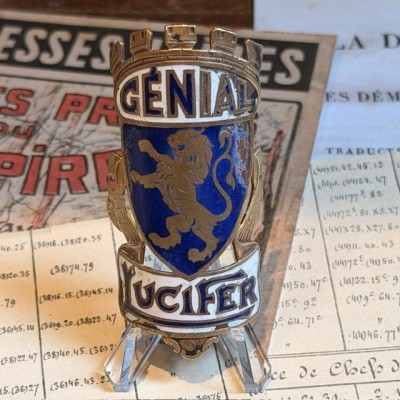
"Génial Lucifer"- Vintage bicycle headbadge
Brass & Blue Enamel to be placed on the bicycle tube at the front
The 1930s
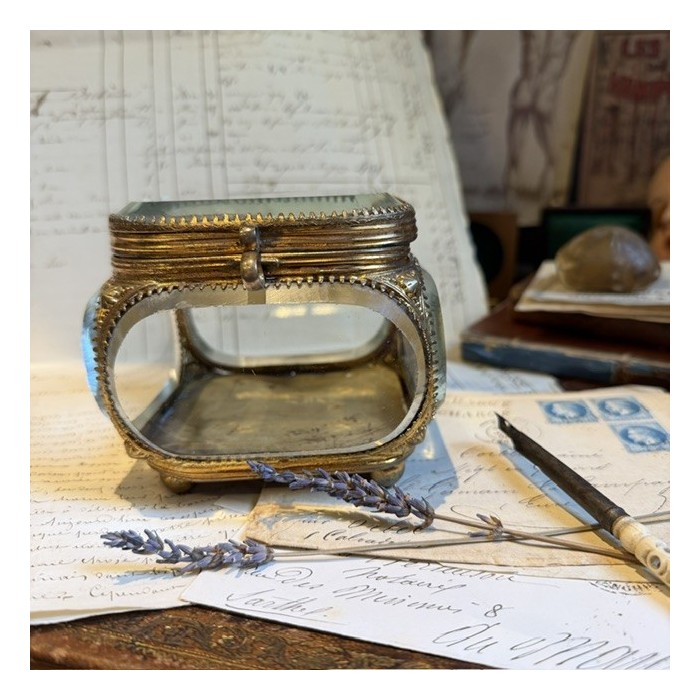
Large Reliquary box - 19th century
Jewelry box