

- New
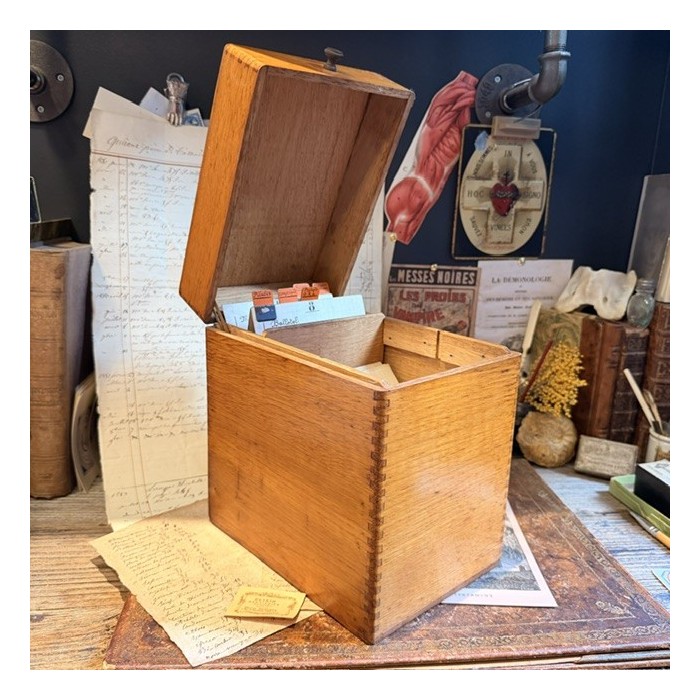
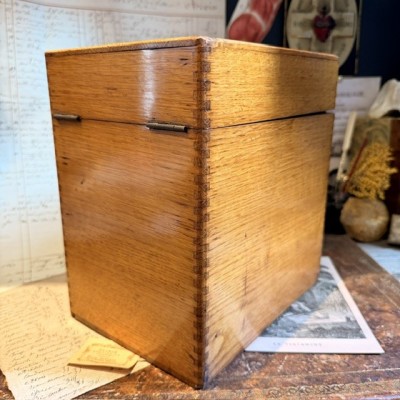
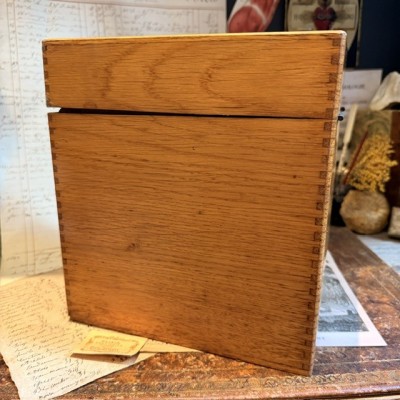
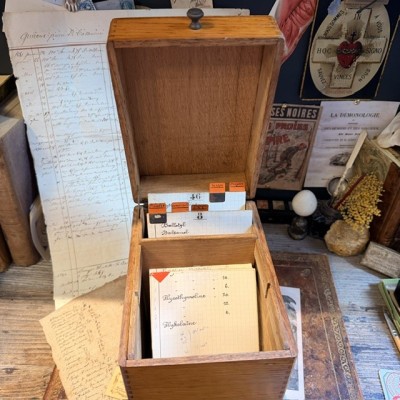
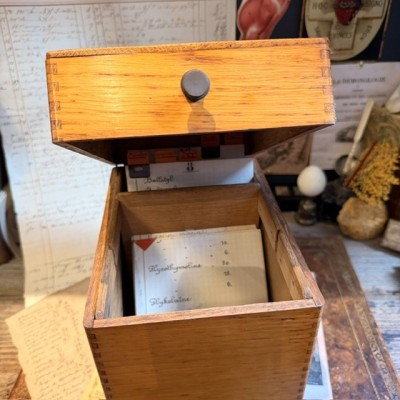
Oak desk card index cabinet - Antique pharmacy cabinet
Handcrafted
Period: 1910–1930
Oak desk card index cabinet - Antique pharmacy cabinet
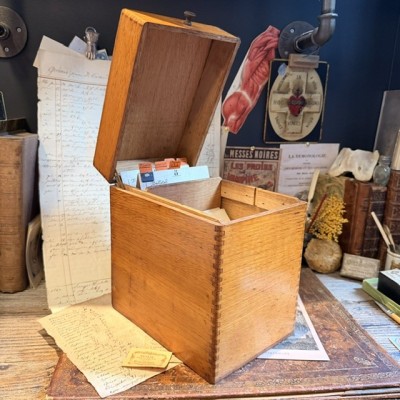
An antique vertical filing cabinet, also known as a card index box, sourced directly from the storerooms of a former pharmacy.
A beautiful piece of professional equipment, ideal for a desk, a bookcase or as a charming alternative storage solution (for recipe cards, photos, mementos).
Found in the Parisian cellars that served as laboratories and storerooms for the pharmacist to prepare his compounded medicines from the 1900s to the 1950s, and which had remained in their original condition.
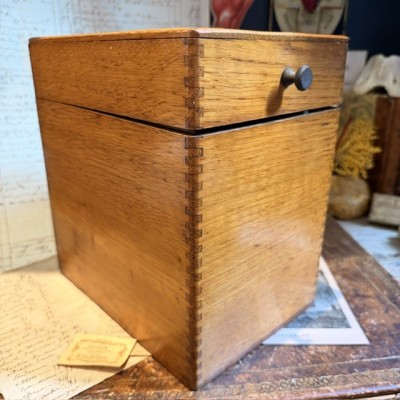
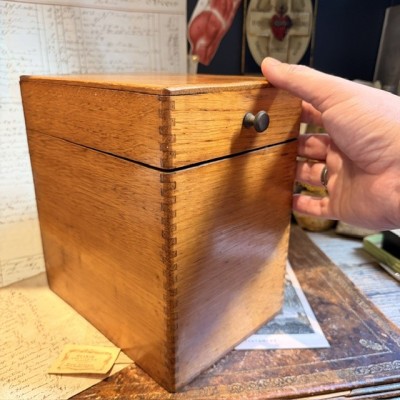
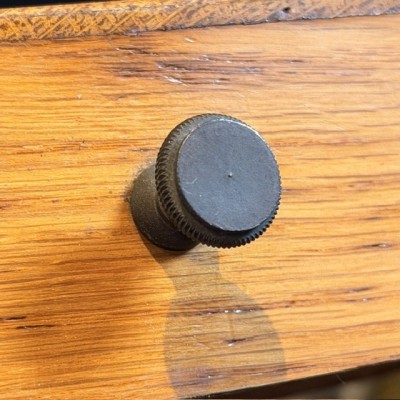
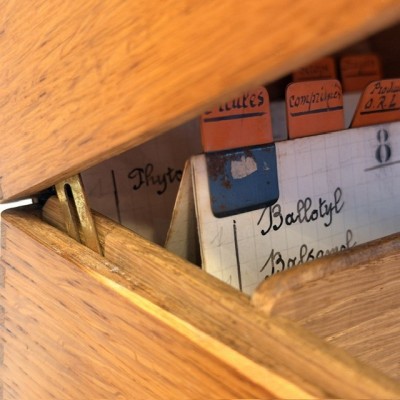
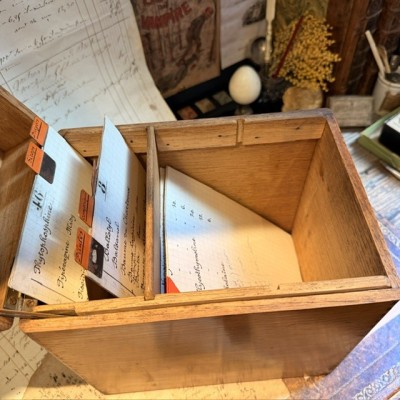
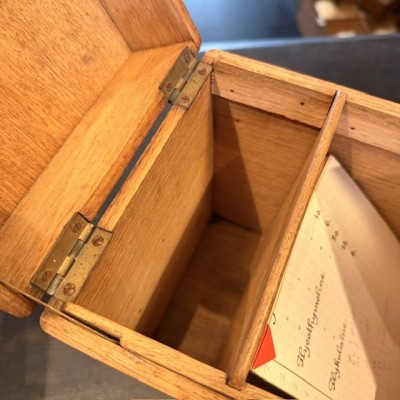
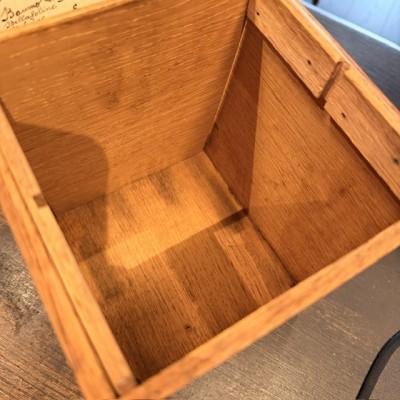
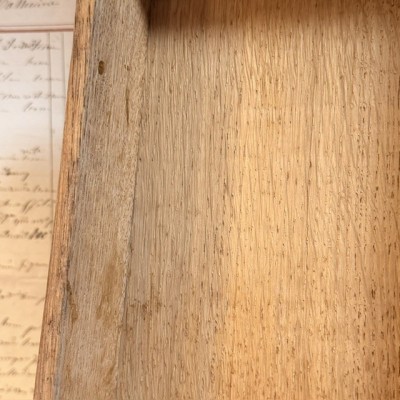
Material: Entirely made of oak, not plywood. Corners joined with straight dovetail joints. Fitted with its original brass stop compass, which allows the lid to be left open, even at a 45° angle. Small original guilloché metal pull tab on the side.
Period: 1910–1930. In the 1950s, the box would have been made of plywood.
Dimensions: Width: 15.5cm – Depth: 21cm – Height: 23cm - Weight: 1.15Kg
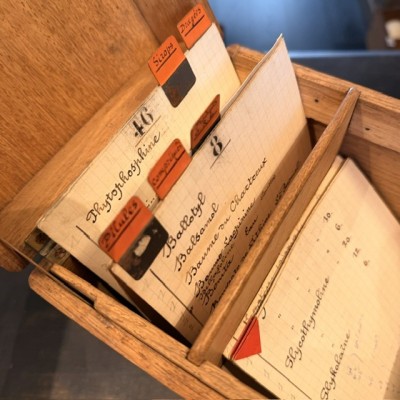
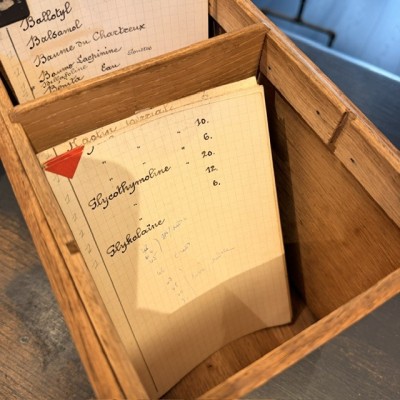
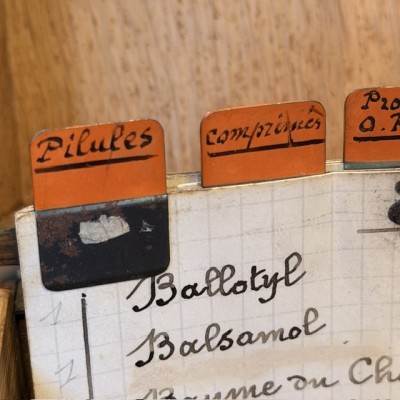
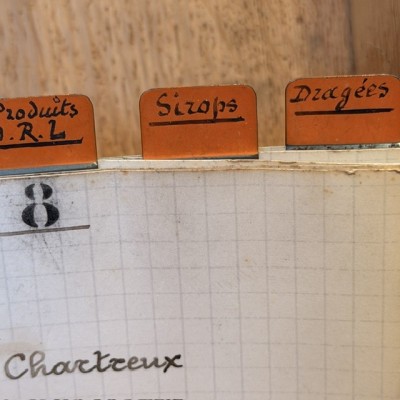
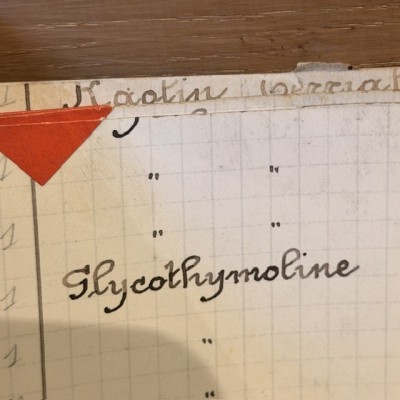
The box contains around ten period index cards. Some still bear their orange celluloid index tabs, inscribed in pen (Pills, Tablets, Syrups, Dragees), and list old-fashioned medicines (Ballotyl, Balsamol, Glycothymoline).
A little historical bonus: As evidence of the end of its career and its reuse in the 1940s, the reverse of several cards was used at the time to record the pharmacy’s handwritten accounts between 1946 and 1949 (staff costs, licence fees, and taxes linked to the introduction of the National Insurance scheme, etc.).
Indeed, as the pharmaceutical industry evolved rapidly in the post-war period, many traditional, homemade compounded preparations lost ground to standardised industrial medicines. With the formula sheets becoming redundant, they provided the perfect cardboard medium for administrative tasks. Particularly as shortages were rife in the immediate post-war period, reusing the reverse side of obsolete medical formula cards to create accounting drafts or annual balance sheets was common practice for the sake of economy.
The lid does not close tightly; as shown in the photo, there is a gap of approximately half a centimetre.
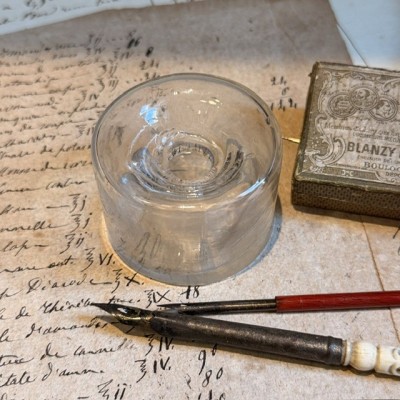
The Pharmacist's Dispensary Inkwell
Moulded glass safety inking pot - Late 19th century
sold without a pen
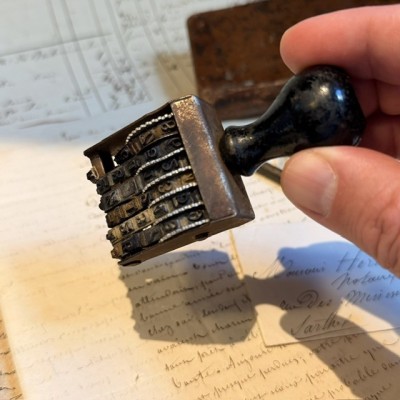
Antique mechanical date stamp with rotating discs
Blackened wooden handle and metal frame.
The metal mechanism is in working order, but the rotating rubber date bands are original, dry and cracked, and in some places broken (printing functionality not guaranteed).
Sold for decorative purposes.
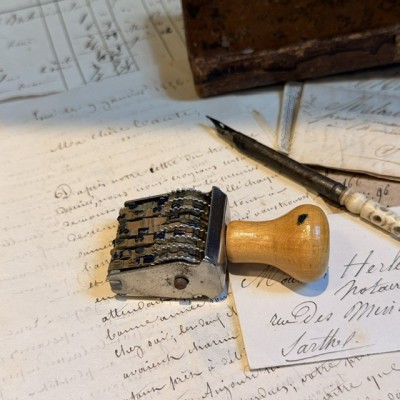
Antique mechanical date stamp with rotating discs
Light wooden handle and metal frame.
The metal mechanism is in working order, but the rotating rubber date bands are original, dry and cracked, and in some places broken (printing functionality not guaranteed).
Sold for decorative purposes.
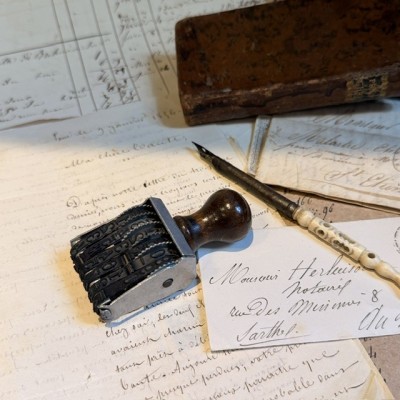
Antique mechanical date stamp with rotating discs
Weathered wooden handle and metal frame.
The metal mechanism is in working order, but the rotating rubber date bands are original, dry and cracked, and in some places broken (printing functionality not guaranteed).
Sold for decorative purposes.
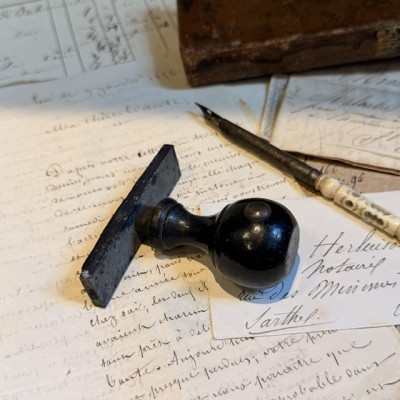
Antique manual pharmacy stamp - BERTHIER Pharmacy
The rubber base, engraved in relief, reads: ‘Pharmacie de BERTHIER / rue de Phalsbourg / PARIS’.
Sturdy metal frame and ergonomic handle made from turned blackened wood
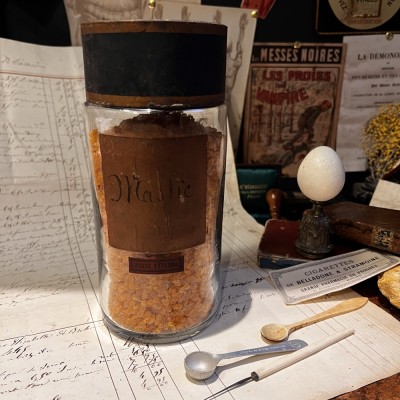
Mastic of Chios
Antique pharmacy bottle - Wide-mouth apothecary jar.
19th-century mouth-blown glass
There is still some product left inside
A fascinating artifact from the history of pharmacology
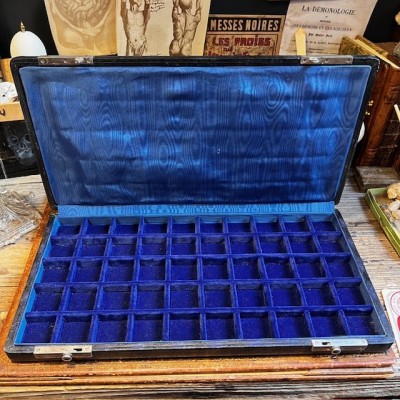
Antique storage box for glass eyes in blue felt
50 compartments
Interior in blue felt and silk
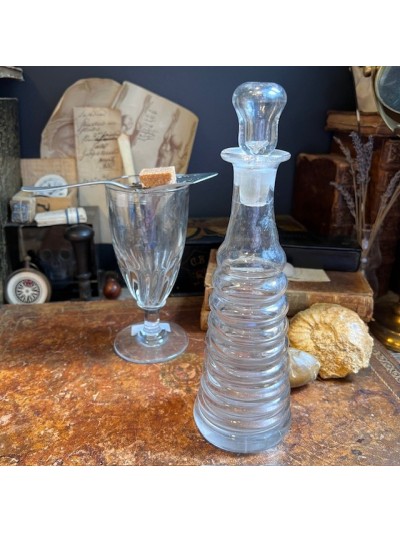
An antique absinthe topette (decanter)
10 Beaded Topette
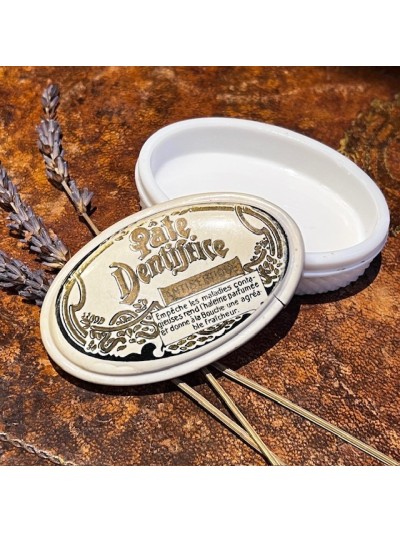
Toothpaste - Antique apothecary
Porcelain pot with illustrated plastic lid
Antiseptic
Early 20th century - Caution the lid is cracked
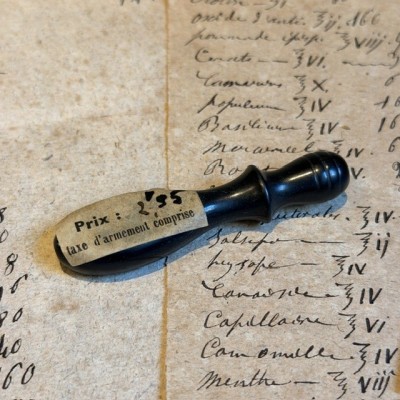
Ebonite cannula tip
Tips for enema or medical irrigation cannulas. New Old Stock
Marketed between May 1939 and sometime in 1940
Unknown bottle from Coopération Pharmaceutique Française
Antique pharmacy bottle
Apothecary vial
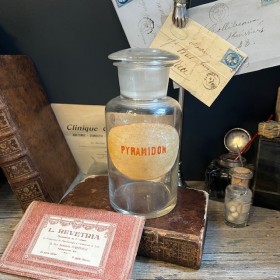
Pyramidon
Antique pharmacy bottle
Apothecary vial
Color pigments have been added to the inside of the jar
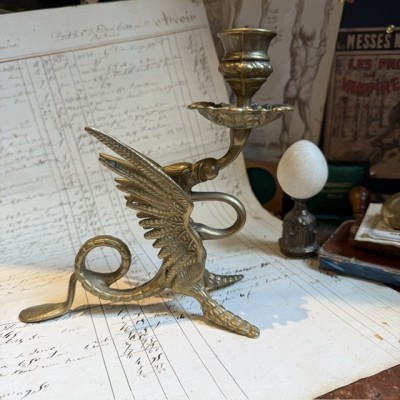
Brass Chimera or Dragon Candleholder
Period: Mid-20th century, inspired by Renaissance decorative motifs.
Sold without a candle and individually
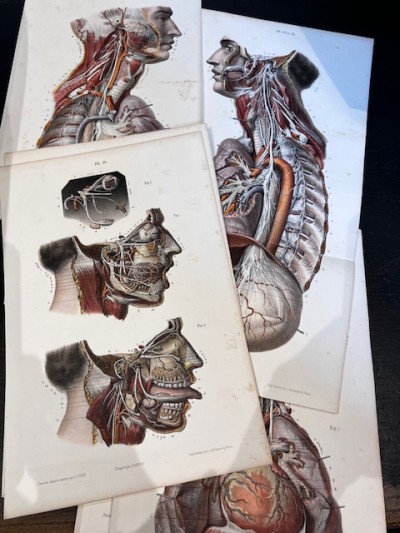
Anatomical chart by Ludovic Hirschfeld drawn by Léveillé
From Traité et iconographie du système nerveux et des organes des sens de l'homme avec leur mode de préparation
Published in 1866
Lithography
You buy 1 plate, not the whole set
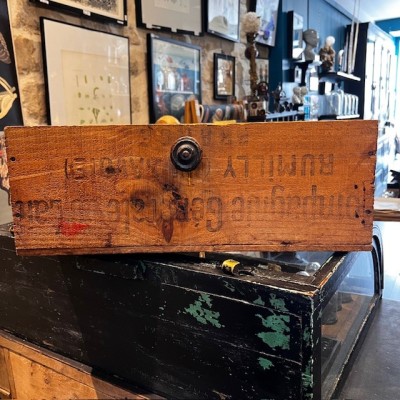
Antique wooden advertising case for Mont Blanc - Rumilly condensed milk - Drawer
Found in Parisian cellars that served as laboratories and storage rooms for pharmacists preparing their masterful concoctions from 1900 to 1950.
It was used to store products, glass bottles, etc.
This box is no longer just a transport container, it has been adopted as a piece of furniture.
Period: Circa 1920–1940
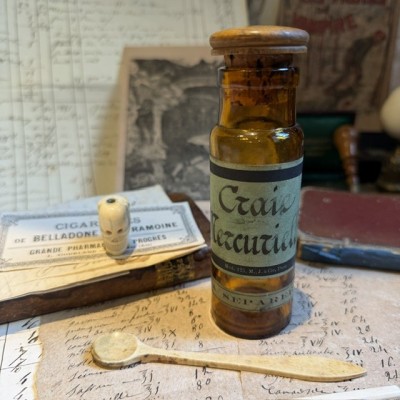
Mercury Chalk – Treatment for Syphilis
Antique amber glass bottle, with a boxwood and cork stopper.
Handwritten label, pen inscription ‘Mercurial Chalk’, neat calligraphy with its thick and thin strokes.
Bottom band ‘TO BE SEPARATED’, instructing the pharmacist to store it in the cabinet for toxic substances, the famous poison cabinet.
It comes from the former cellar-laboratory of a Parisian pharmacy. The bottles had not been moved from the shelves since the late 1950s. The cellar had served as a medical analysis laboratory and a laboratory for the pharmacy’s compounded preparations from 1900 until around 1950.
Period: Judging by the handwriting, late 19th century
EMPTY
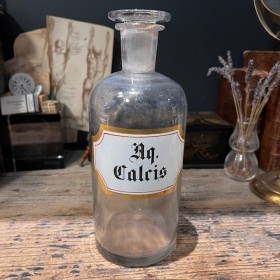
Aqua Calris - Hot water
Antique pharmacy jar
Apothecary
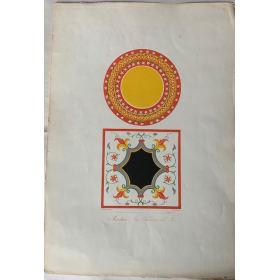
Wall decoration of Pompeii - Herculaneum mosaics: Chromolithographic plate
By Wilhelm Zahn
Published between 1832 and 1849
YOU ARE PURCHASING 1 SINGLE BOARD - NOT THE BOOK OR THE SET OF BOARDS
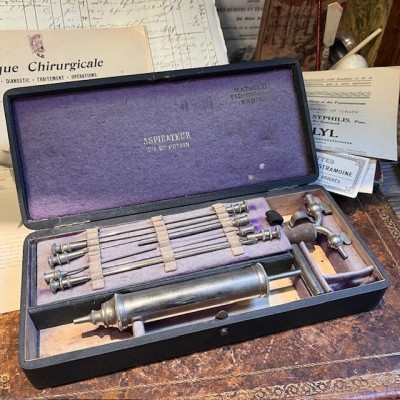
Dr Potain vacuum cleaner in its case
Late 19th century - 1885-1894
Antique medical instrument from manufacturer MATHIEU in Paris
non-functional
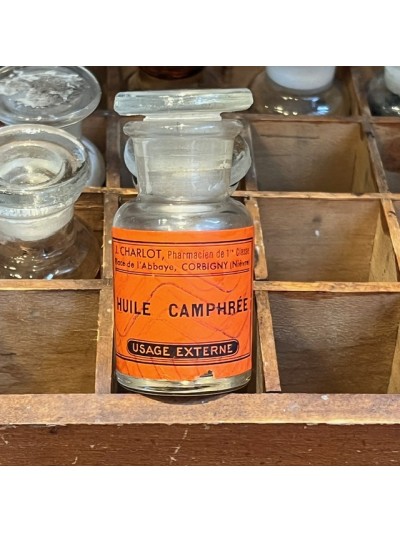
Camphorated oil
Antique pharmacy bottle
Apothecary vial
EMPTY but cap is blocked and bottle will not open
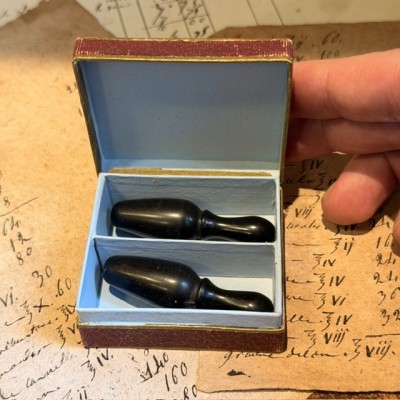
Pair of ebonite medical cannulas in their original cardboard box
Circa 1920–1930
Original stock from that period
Oak desk card index cabinet - Antique pharmacy cabinet
Handcrafted
Period: 1910–1930