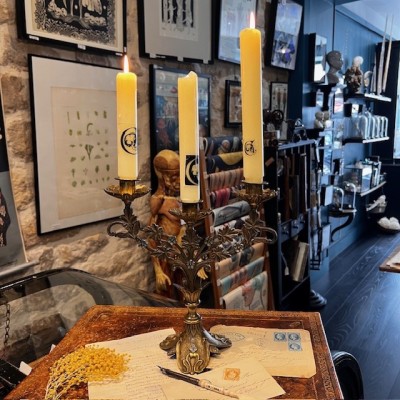
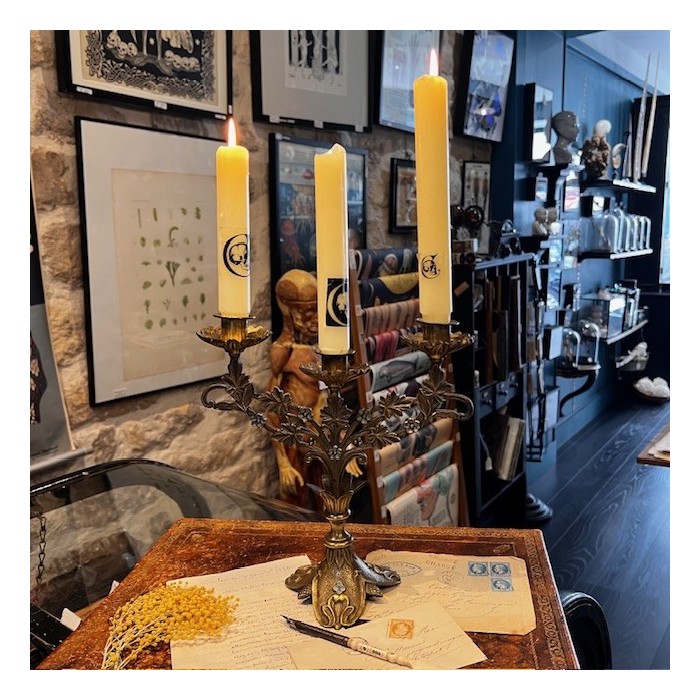
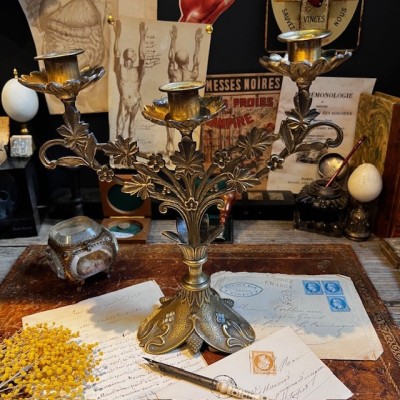
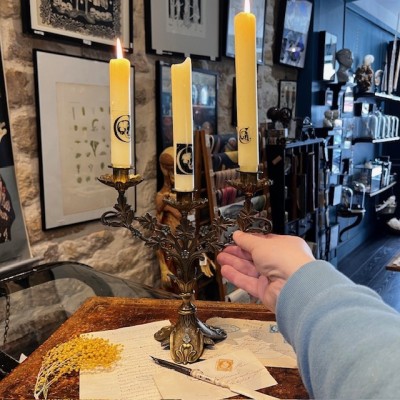
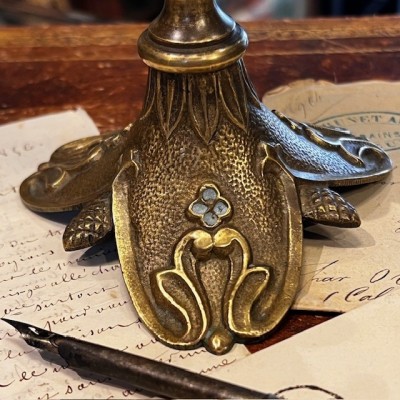
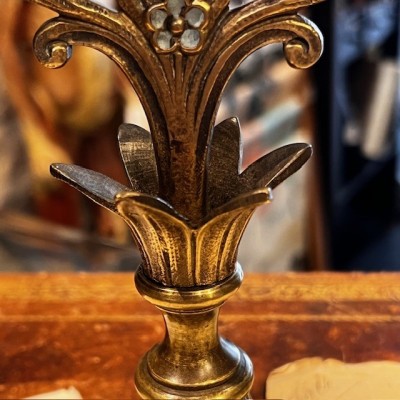
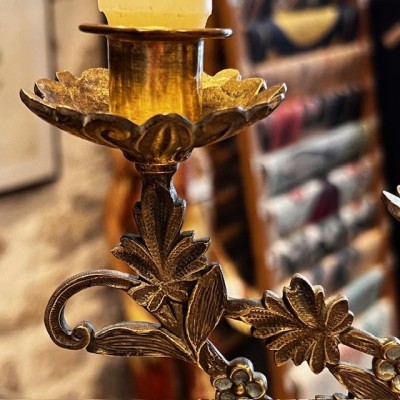
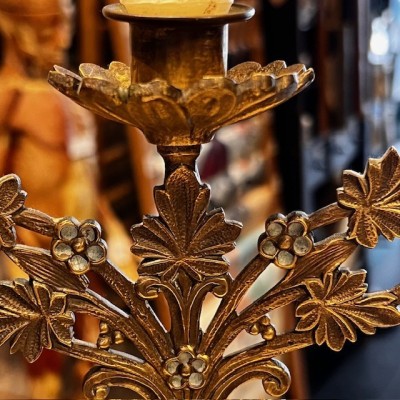
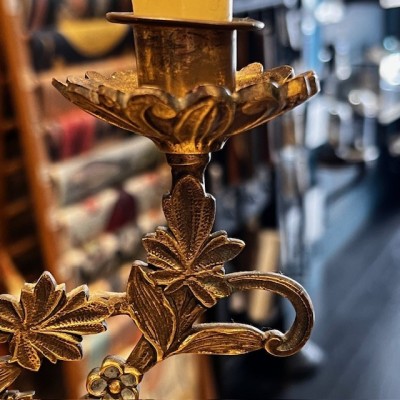
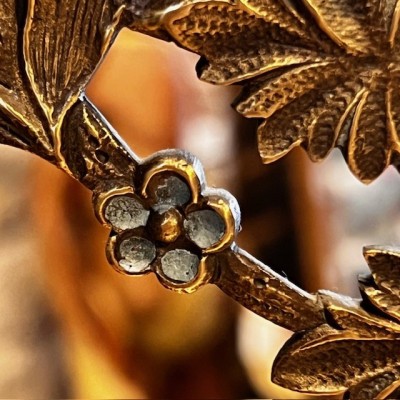
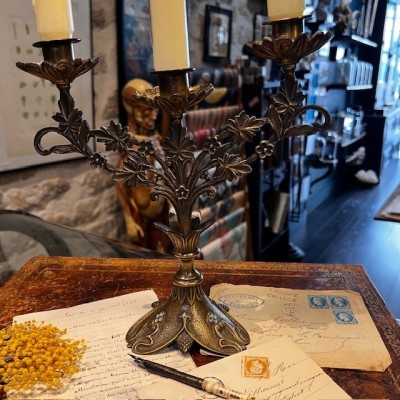
Floral Candelabra - Chiselled Brass and Painted Flowers - Circa 1900 - Candlestick
Late 19th century - Early 20th century: Belle Époque / Art Nouveau: 1895-1910
Sold without candles
Floral Candelabra - Chiselled Brass and Painted Flowers - Circa 1900 - Candlestick
Late 19th century - Early 20th century: Belle Époque / Art Nouveau: 1895-1910
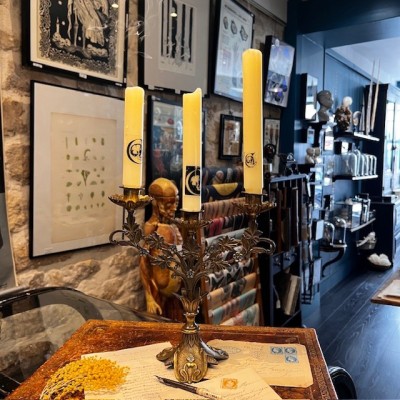
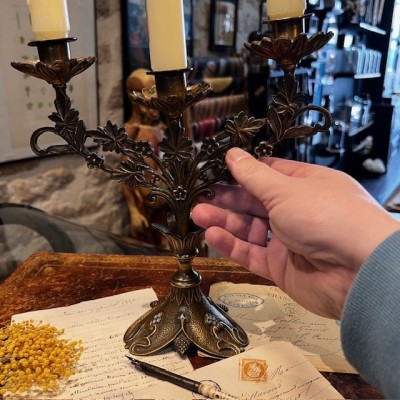
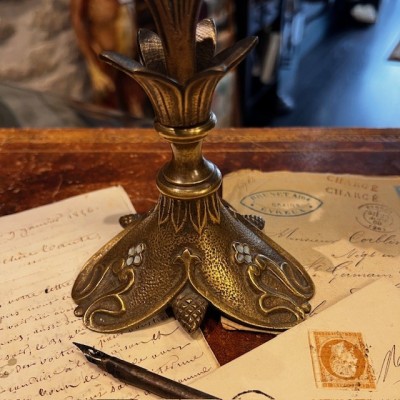
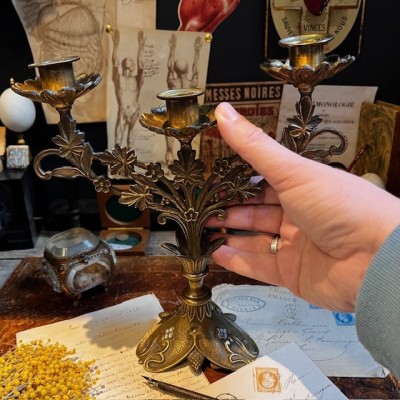
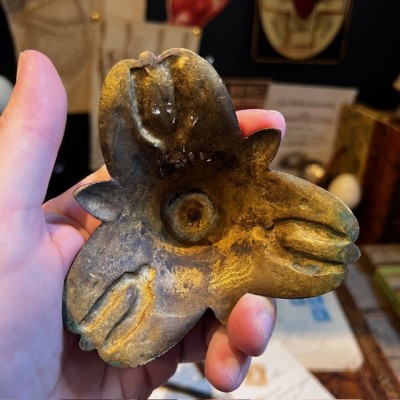
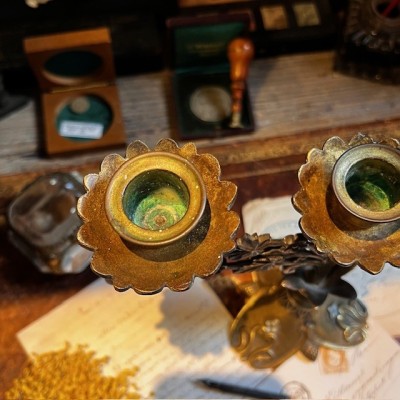
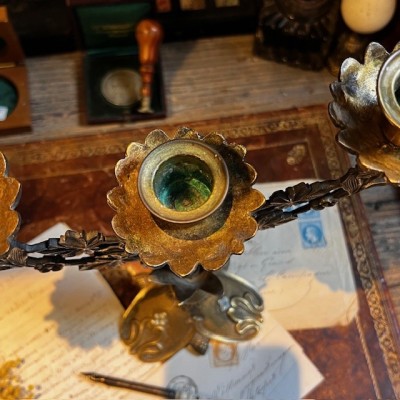
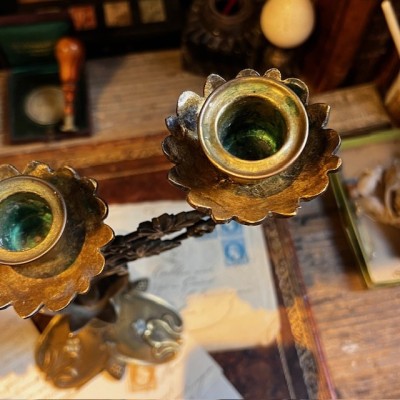
This is a 3-light candelabra or candlestick. Given its weight and structure, it was designed to be placed on a piece of furniture and not carried around, as there is nothing to make it easy to transport by hand.
Candlesticks are used to provide light when moving around, unlike chandeliers and other candle-lit lighting fixtures that remain on a piece of furniture, as is the case here.
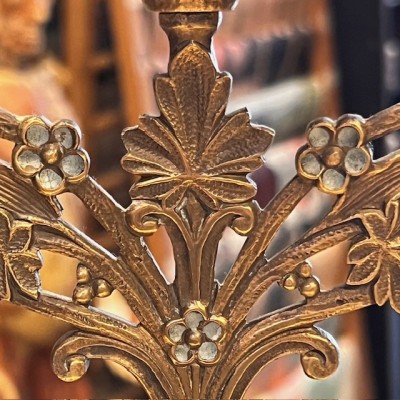
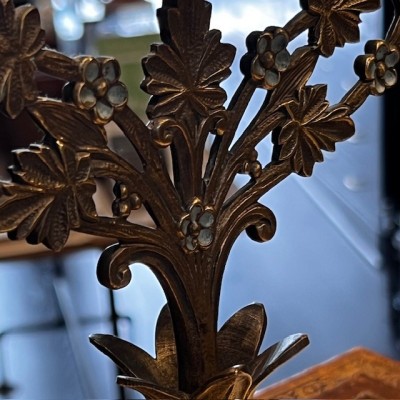
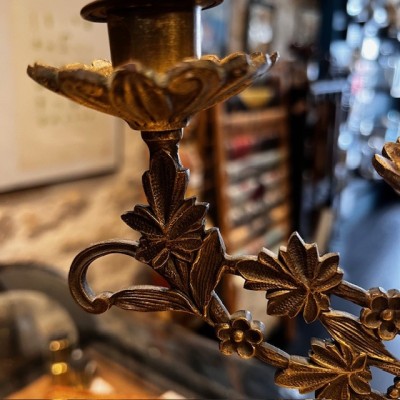
Elegant three-branched candelabra from the Belle Epoque - Art Nouveau period (circa 1900), featuring a highly refined naturalistic decoration. Three lights with corolla bobeches.
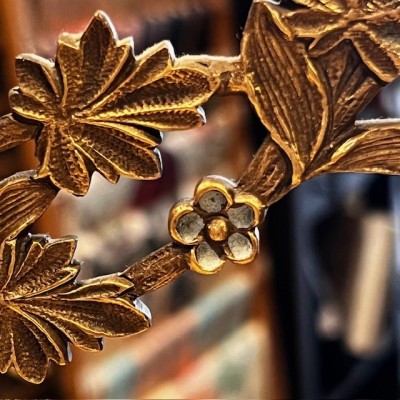
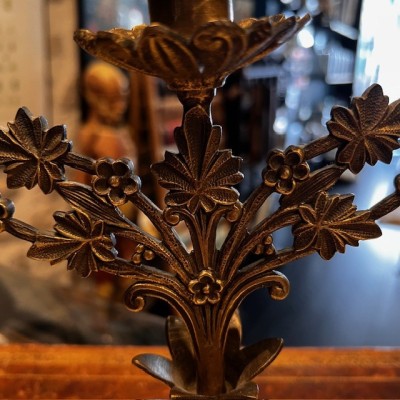
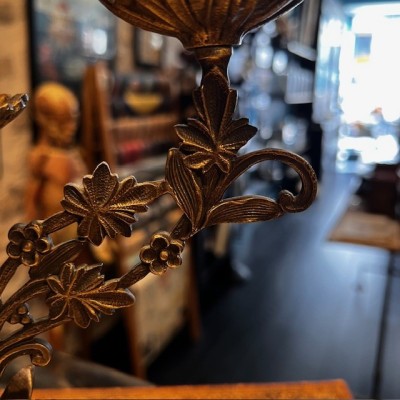
This piece is distinguished by its organic lines imitating plant stems blossoming into stylised leaves and flowers.
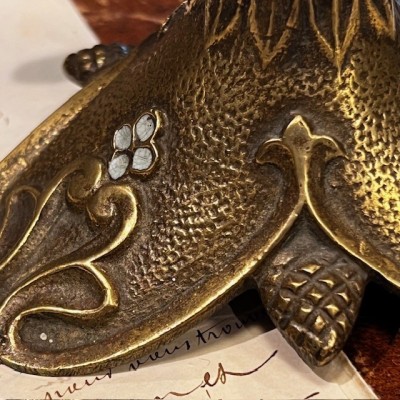
Eight small flowers enhanced with turquoise blue paint create a delicate contrast with the golden patina of the brass.
Height 25cm - Tripod base: approximately 11cm Weight: 260g
The candlestick is made of chiselled brass.
Sold without candles
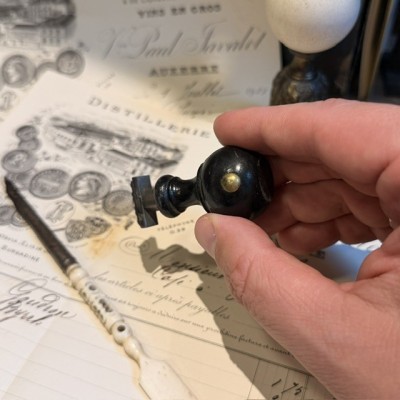
Antique manual desktop stamp
The rubber sole engraved in relief indicates: "XXX".
Sturdy metal frame and ergonomic handle made from turned blackened wood
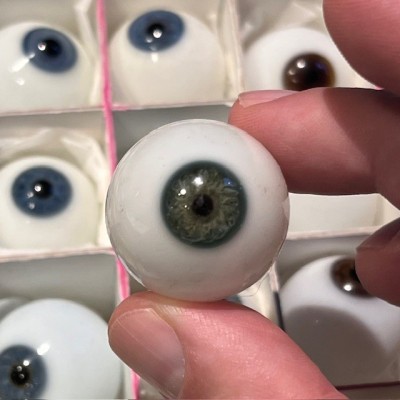
Antique glass eye - Semi-finished
Genuine antique ocular prosthesis
Color variations and irises of different sizes
The price is per unit, for one eye only
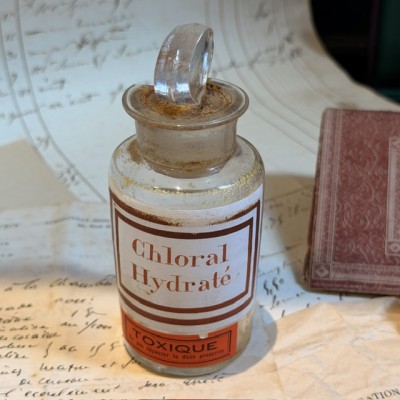
Chloral hydrate
Antique pharmacy bottle made of blown glass and enameled painted label
Red TOXIC label
Signaling to the pharmacist that it is imperative to keep apart the other substances in the cabinet of toxic substances, the famous poison cabinet.
Dating: 19th century
EMPTY - The glass collar has a significant vintage sheen on the stopper, and its original ground-glass cap is blocked and sealed with time.
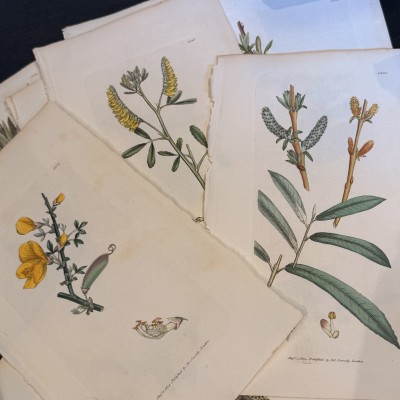
Botanical Plank - English Botany
Published in 1804
Original copper engraving, enhanced with a hand-made watercolor coloration
Painted watercolor engraving from the 19th century

Bibliothèque Choisie de Médecine - Volume 8
Selected Library of Medicine
By François PLANQUE - 1750
Complete original edition with 10 fold-out plates
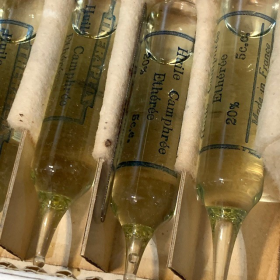
Bulb for hypodermic injection - Camphorated ethereal oil (circa 1920)
THERAPLIX
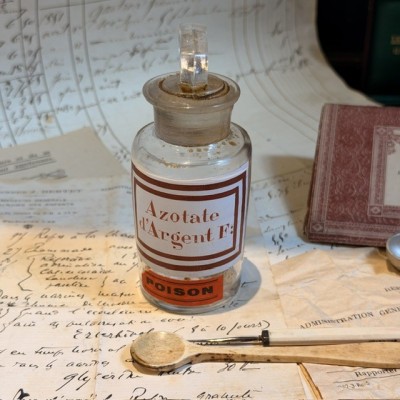
Silver nitrate
Antique pharmacy bottle made of blown glass and enameled painted label.
Red POISON label
Signaling to the pharmacist that it is imperative to keep apart the other substances in the cabinet of toxic substances, the famous poison cabinet.
Dating: 19th century
There is still some product inside but the cap is blocked and does not open.

Sparteine sulphate
Used as a tonic for nervous syndromes at the very beginning of the 20th century, sparteine was also used to facilitate morphine withdrawal.
Antique pharmacy bottle
Apothecary vial
Some product left inside
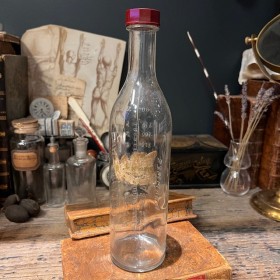
Horseradish syrup
Grams / Tablespoons - Graduated bottle
in French: Grammes / Cuillères à soupe
Antique medicine bottle
Apothecary
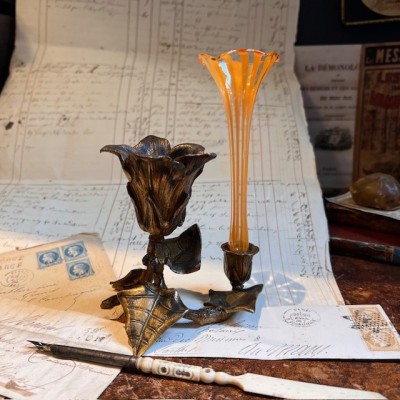
Elegant Art Nouveau glass vase and bronze candlestick
Made of cast bronze with a patina finish, decorated with naturalistic plant motifs and hand-finished with a file.
Art Nouveau decorative object combining patinated bronze and orange glass in a fluid, asymmetrical plant motif characteristic of the late 19th century.
Circa 1895–1905
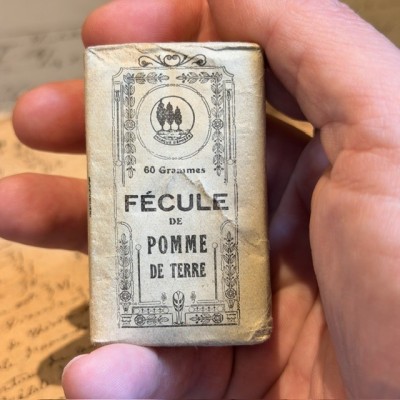
Packet of Potato Starch
Circa 1920
New old stock
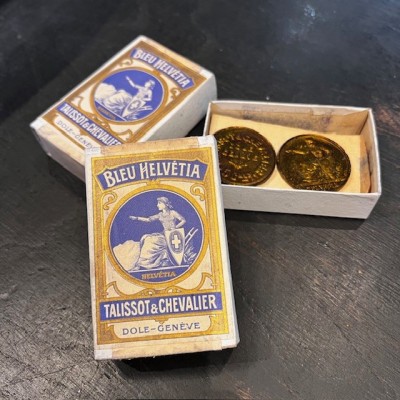
Antique Laundry blue box - Helvetia Blue from Talissot & Chevalier in Dôle and Geneva
Period: 1890-1905
Box containing 6 gold-plated “coins” made of blue wash, resembling the iconography of Swiss coins and medals from the late 19th and early 20th centuries.
Beautiful blue and gold illustration on the box.
Your box will be sealed: never opened in 120 years
UNOBTAINABLE
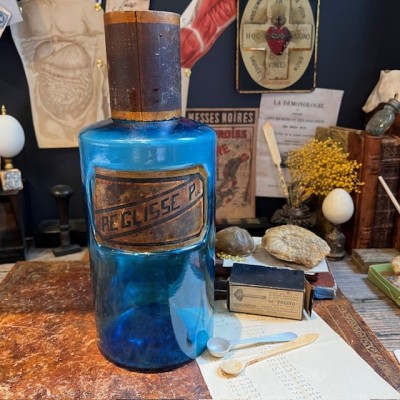
Poudre de réglisse - Licorice powder
Large cobalt blue glass pharmacy bottle - Apothecary - Shouldered - H28cm - 19th century
Shouldered apothecary bottle - Antique pharmacy bottle
Mouth-blown glass - Cobalt blue color tinted throughout
This large-capacity jar was a storage jar intended for stockpiling

Chloroform
Pharmacy jar - Herbalism - Apothecary bottle
Late 19th century - Beginning of the 20th
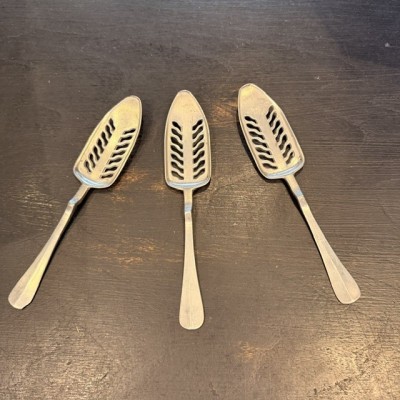
Antique Absinthe Spoon
The spoons have been used, are scratched, badly oxidized, etc.
You buy 1 spoon, not the whole lot
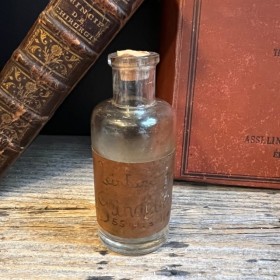
Grindelia Tincture
Antique medicine bottle
Apothecary
Floral Candelabra - Chiselled Brass and Painted Flowers - Circa 1900 - Candlestick
Late 19th century - Early 20th century: Belle Époque / Art Nouveau: 1895-1910
Sold without candles