

- New
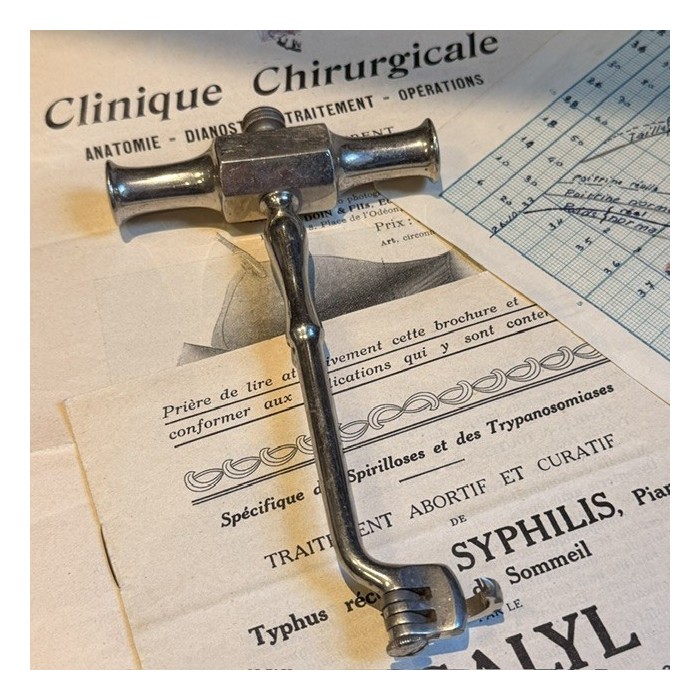
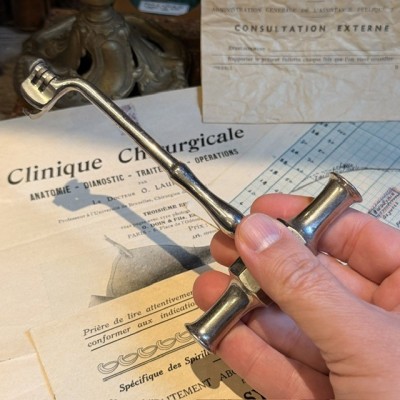
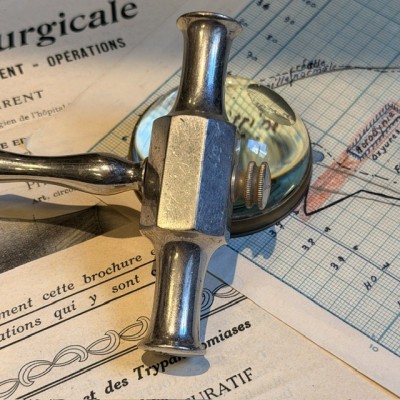
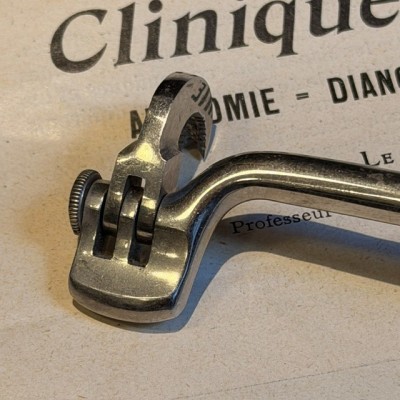
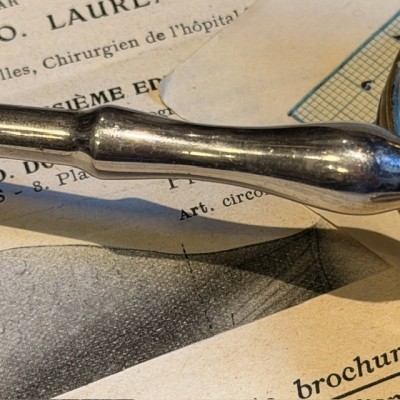
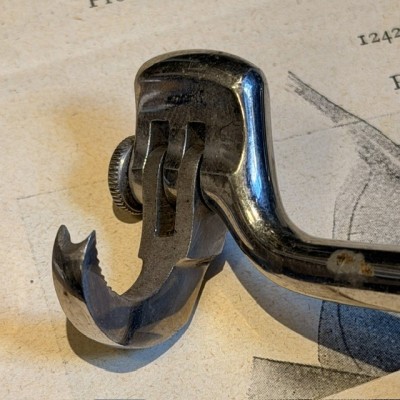
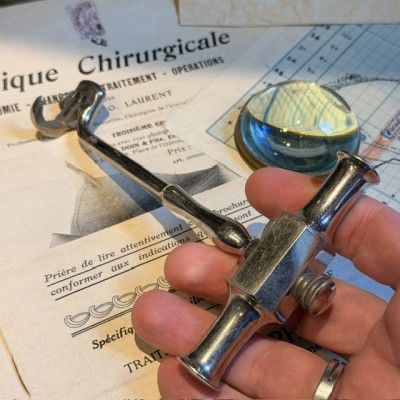
Garengeot Dental Key - Maison Favre
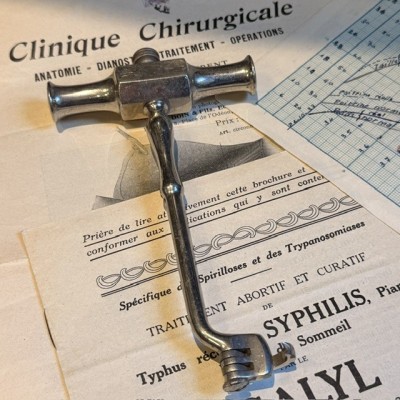
Used from the 19th century through the 1930s - Chrome-plated dental key
Date: Late 19th century – early 20th century (c. 1885–1905)
Garengeot Dental Key
Used from the 19th century through the 1930s...!
Chrome-plated dental key
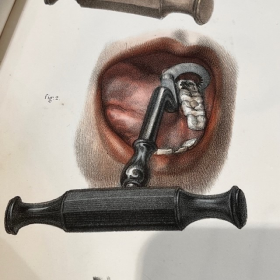
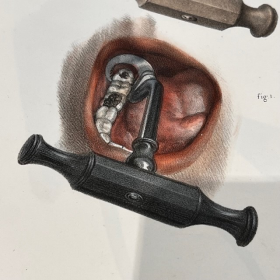
The invention of this extractor is attributed to the French military surgeon René-Jacques Croissant de Garengeot in the early 18th century, who adapted the corkscrew mechanism for extracting molars, replacing the older “pelicans,” a type of dental instrument.
Date: Late 19th century – early 20th century (c. 1885–1905)
An instrument designed to extract molars through a twisting and pulling motion, often used by dentists for its ease of use but heavily criticized in the 19th century for the damage it could cause—such as tearing off pieces of gum or fracturing teeth—during extraction...
Developed in the late 19th century to meet hygiene and heat sterilization requirements (asepsis), this all-metal version eliminated putrescible organic materials such as wood or ivory.
The addition of a clamping screw made it possible to adjust the hook’s position to fit the shape of the tooth to be extracted or to change hooks, while maintaining the fundamental mechanical principle of extraction using a rotating lever.
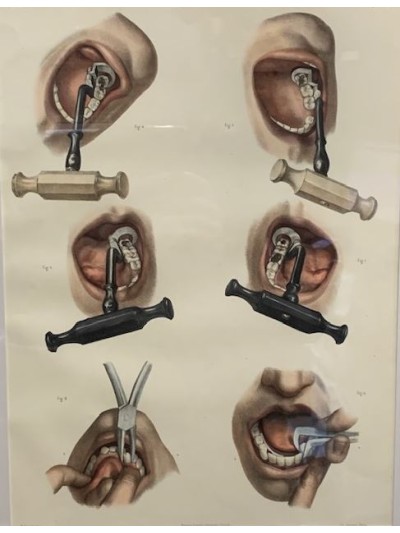
The instrument operates on the principle of a lever: the fixed hook grips the neck of the tooth while the body rests against the gum, applying a sharp lateral twisting motion to dislodge the tooth from its socket. The tooth, wedged between a hook and a key-shaped blade, could not withstand the operator’s twisting motion—similar to that used to open a lock—hence the instrument’s name. Sometimes, along with the tooth, a piece of the jawbone was removed...
Trauma and damage: The force of this centrifugal rotation caused major trauma: frequent fractures of the alveolar bone and jaw, breakage of adjacent teeth caught in the pivot point, and severe lacerations of the oral soft tissues.
Despite its proven clinical danger, this instrument and its variants continued to be manufactured and marketed in surgical instrument catalogs continuously until the 1930s, before being definitively replaced by the dental forceps.
The dental forceps, thanks to axial gripping via anatomically shaped jaws and controlled rocking movements, finally put an end to the ravages caused by dental levers by preventing destructive pressure on adjacent teeth and preserving the patients’ bone integrity.
Length: 15cm
For more information on the Garengeot keys: clef de Garengeot

Human jaws in porcelain mounted on a blackened wooden base
Anatomical dental model for dentists
19th century
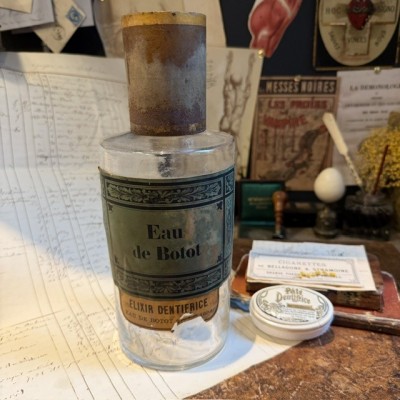
Eau de Botot - Tooth-cleansing Elixir
CODEX 1884
Antique 19th-century pharmacy bottle
EMPTY
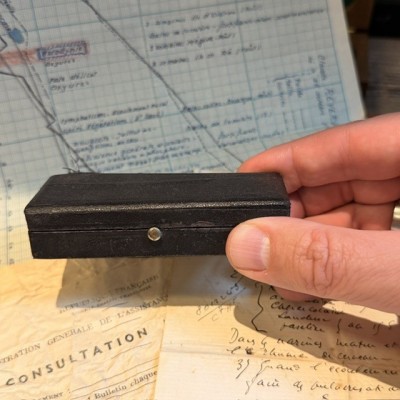
Antique Pravaz hypodermic injection syringe - 19th century
Syringe in it's case
not functional
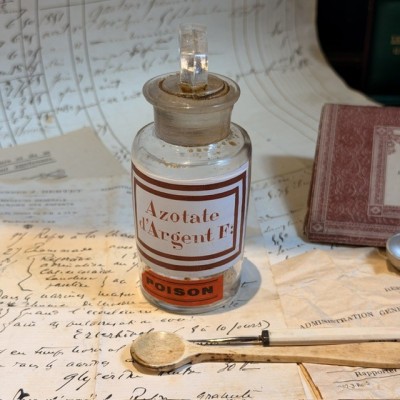
Silver nitrate
Antique pharmacy bottle made of blown glass and enameled painted label.
Red POISON label
Signaling to the pharmacist that it is imperative to keep apart the other substances in the cabinet of toxic substances, the famous poison cabinet.
Dating: 19th century
There is still some product inside but the cap is blocked and does not open.
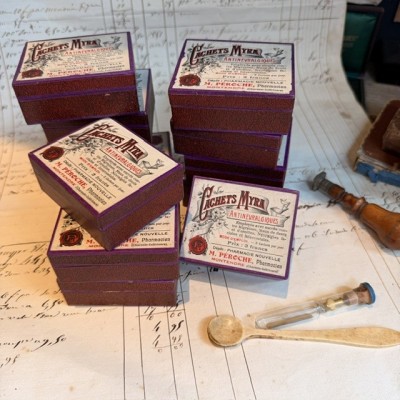
Antique pharmacy box for remedy made of canvas cardboard
Myra pills
Covering in sumptuous red maroquiné/chagrin paper, with edges and slices enhanced with a deep violet/purple very characteristic of the creations of the late nineteenth and early twentieth century: 1890/1910.
You buy 1 box but not the lot
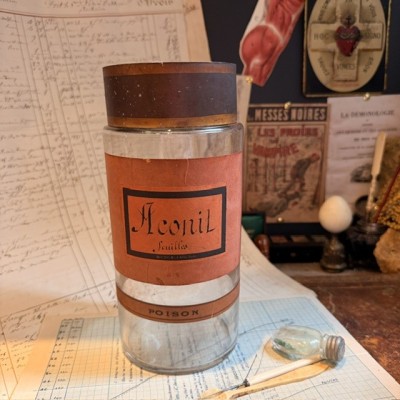
Aconit leaves - POISON
Antique pharmacy bottle - Wide-mouth apothecary jar.
19th-century mouth-blown glass
Red POISON label
Signaling to the pharmacist that it is imperative to keep apart the other substances in the cabinet of toxic substances, the famous poison cabinet.
A fascinating testimony to pharmacology
It comes from an old cellar-laboratory in a Parisian pharmacy. The bottles had not moved since the late 1950s on the shelves. The cellar had served as a laboratory for medical analyses and a laboratory for magistral preparations of the pharmacy from 1900 until around 1950.
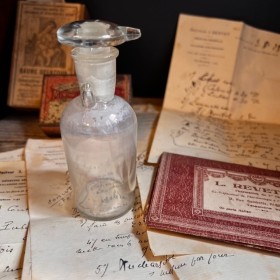
Antique glass dropper in white glass
Apothecary - Pharmacy
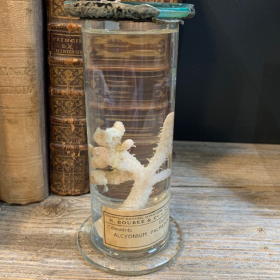
Museum jar - Wet specimen
Soft coral Alcyonium palmatum

Antipyrina Knorr
Named after its German discoverer: Ludwig Knorr
Pharmacy jar - Herbalism - Apothecary bottle
Late 19th century
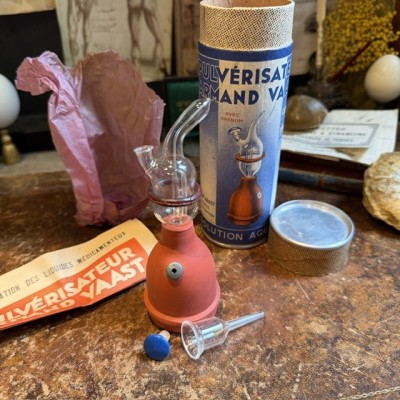
Armand Vaast nasal spray - Oil vaporizer - Antique remedy
In its box
Used in otolaryngology, it was intended for nasal or oral sprays in the treatment of colds and antiseptic treatment of the respiratory tract.

Chloroform
Pharmacy jar - Herbalism - Apothecary bottle
Late 19th century - Beginning of the 20th
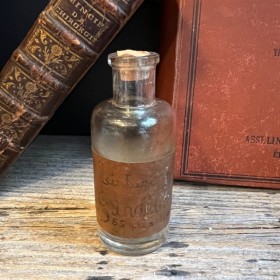
Grindelia Tincture
Antique medicine bottle
Apothecary
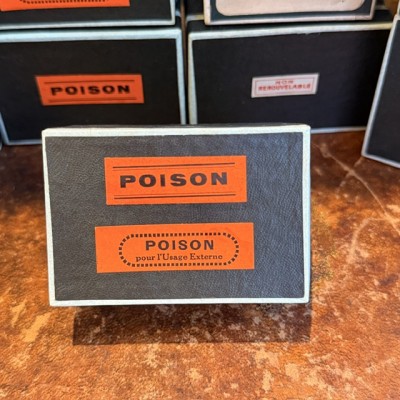
Antique labels in a pharmacy box for cures made of canvas cardboard
Poison label - Ref A
The pharmacist used his boxes of medicine to put away the labels he would then put on the bottles that he would resell to his customers.
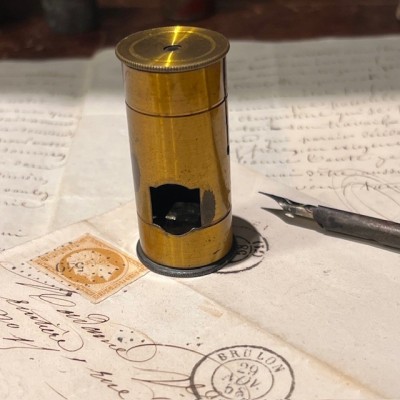
Floroscope
Botanist's microscope
Pocket microscope Late 19th - early 20th century
Warning: Here composed of 2 Stanhope lenses

Antique Guyon bladder syringe in bakelite
Beginning of XXth century
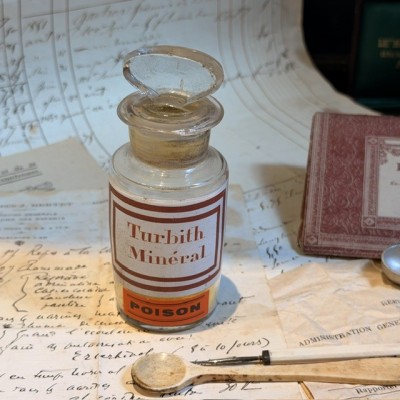
Turbith Minéral - Mercury
Antique pharmacy bottle made of blown glass and enameled painted label.
Red POISON label
Signaling to the pharmacist that it is imperative to keep apart the other substances in the cabinet of toxic substances, the famous poison cabinet.
Dating: 19th century
There is still some product inside but the cap is blocked and does not open.
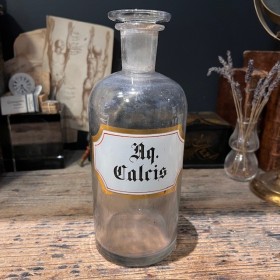
Aqua Calris - Hot water
Antique pharmacy jar
Apothecary
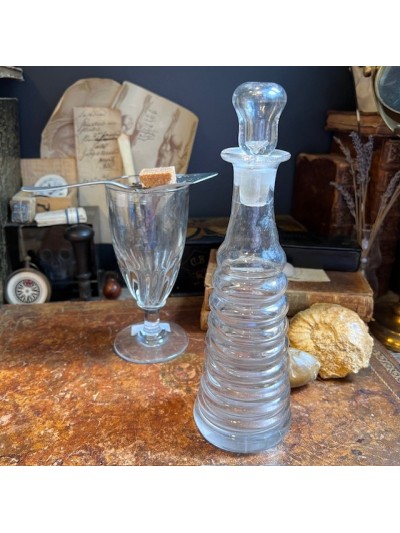
An antique absinthe topette (decanter)
10 Beaded Topette
Garengeot Dental Key - Maison Favre
Used from the 19th century through the 1930s - Chrome-plated dental key
Date: Late 19th century – early 20th century (c. 1885–1905)