
- New
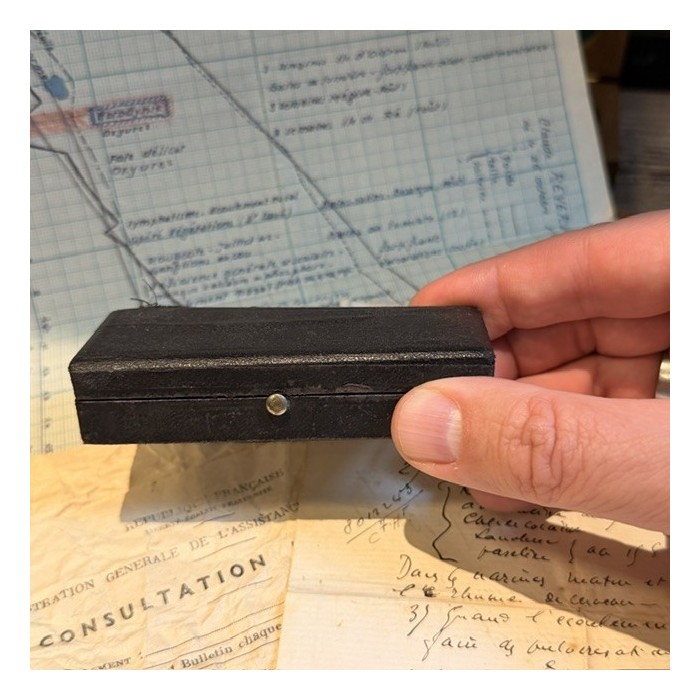
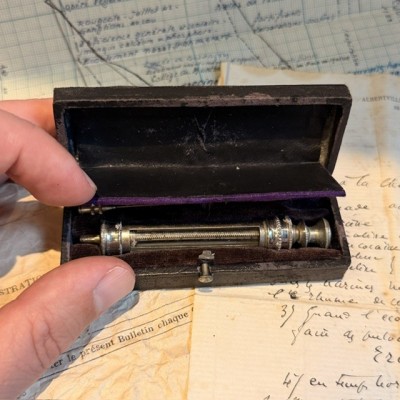
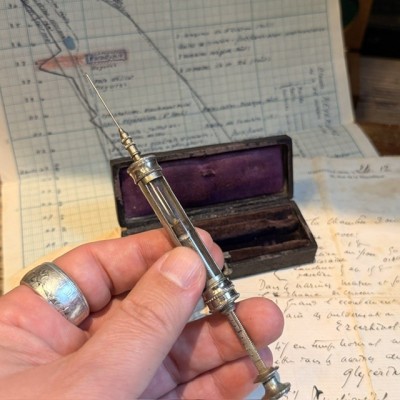
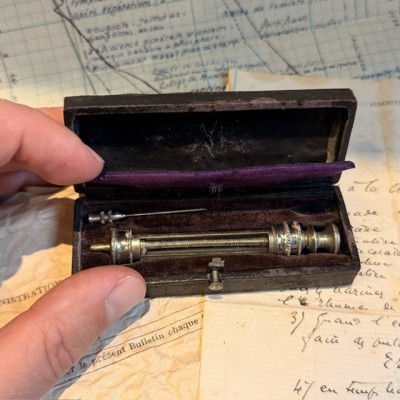
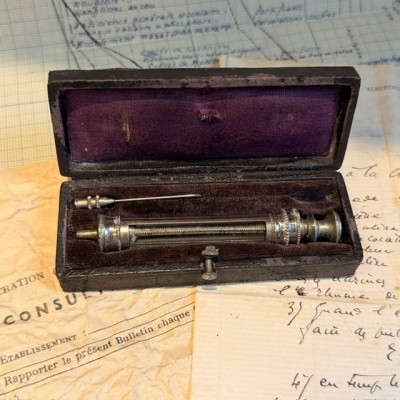
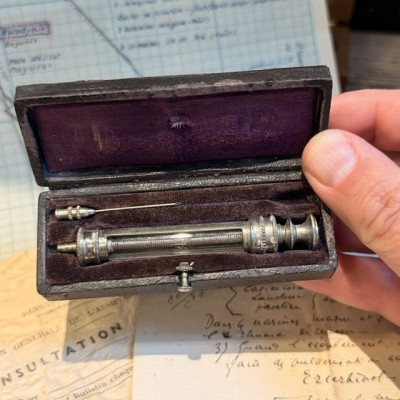
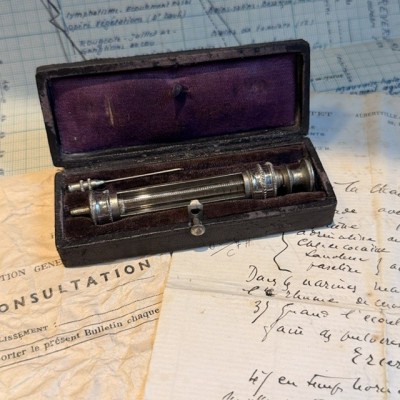
Antique Pravaz hypodermic injection syringe - 19th century
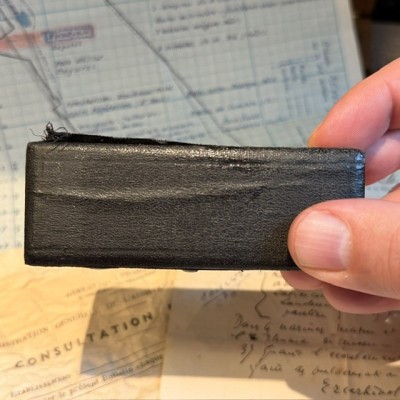
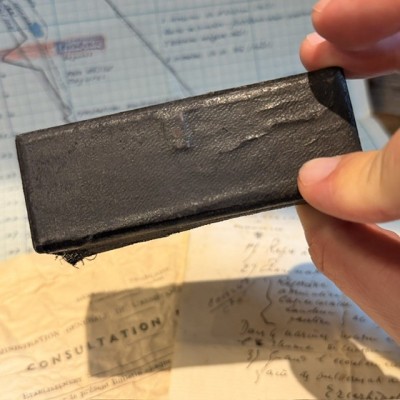
Syringe in it's case
not functional
Antique Pravaz hypodermic injection syringe - 19th century
Morphine addicts of the end of the XIXth and the beginning of the XXth century often used this kind of elegant syringe in its small case that could be easily slipped into a pocket.
The syringe is in it's case.
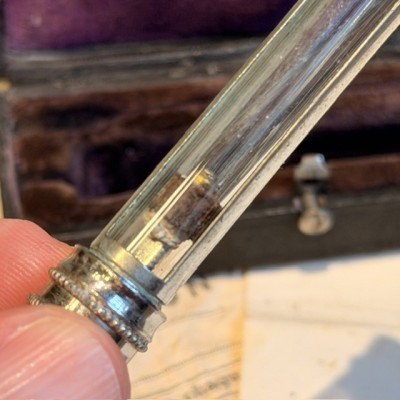
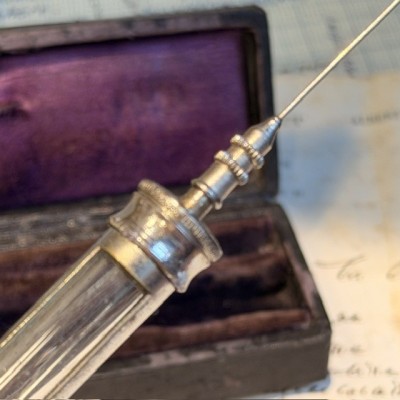
This syringe has a plunger with graduations and a glass body but the tips are not made of metal but seem to be made of celluloid resin, the ancestor of all plastics, manufactured at the end of the 19th century.
A screw step graduated from 0 to 10 allows to adjust its stroke and to measure the quantity of injected liquid.
The syringe is in its small case with felt inside. The compartment for the metal wires that were to be inserted into the needle is behind the felt part of the cover.
Dimensions of the case: 9cmx3cm
Dimensions of the syringe: Length 8cm without the needle
not functional
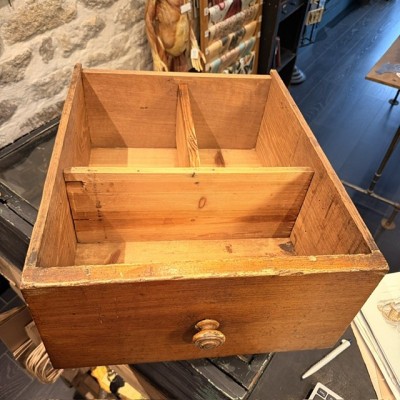
Large antique wooden pharmacy drawer with compartments - From a pharmacy or herbalist's cabinet
3 compartments
Ref C - 39.5x50cm
Can be used as a storage box
Weight: 4.1kg !
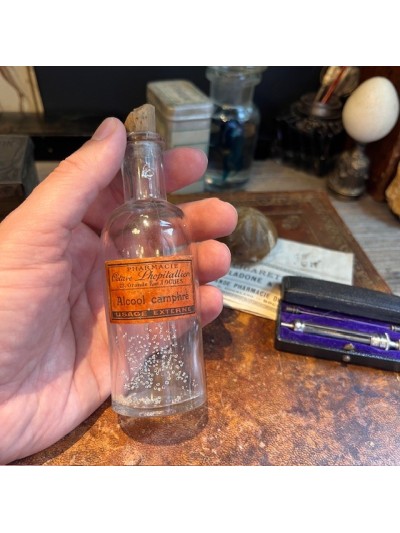
Camphorated alcohol
Antique pharmacy bottle
Apothecary vial
EMPTY
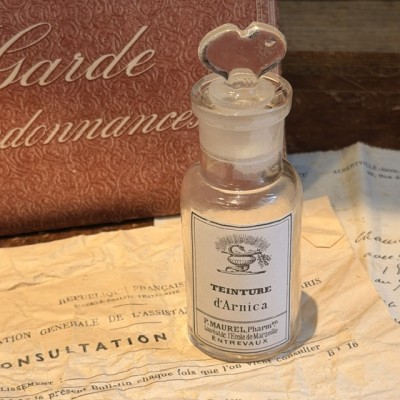
Teinture d'Arnica
Antique pharmacy bottle
EMPTY
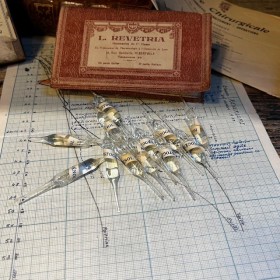
Antique ampoule for hypodermic injection
Histogénol - (circa 1900)
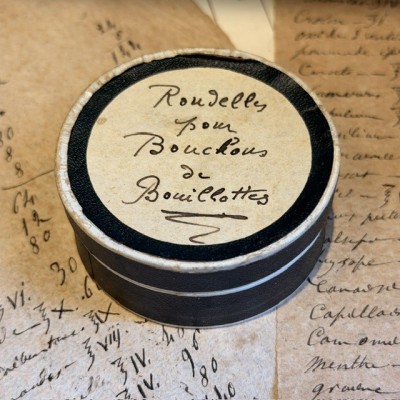
Box of rubber washers for hot water bottles
In its original cardboard box
1939/1940
New Old Stock
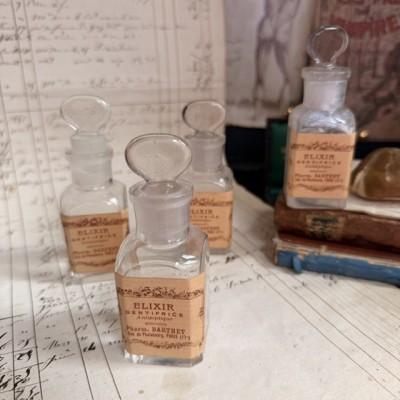
Toothpaste elixir
Antique pharmacy bottle
EMPTY
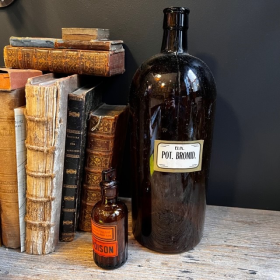
Potassium Bromide Elixir
Antique and large brown English pharmacy bottle
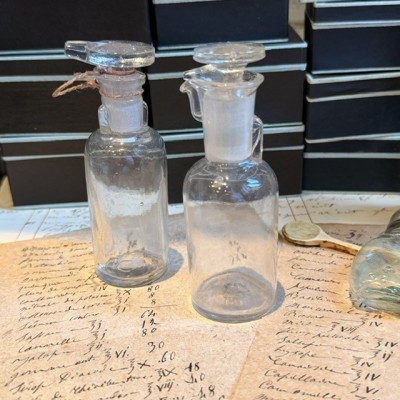
Dropper Bottle
Antique pharmacy bottle - 1920-30's
EMPTY
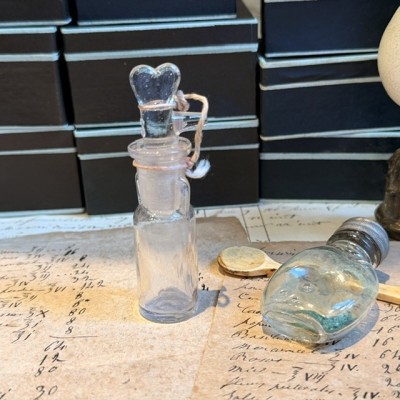
Dropper bottle
Antique pharmacy bottle - 1920-30's
Glass stopper honed in the shape of a heart for better grip
EMPTY
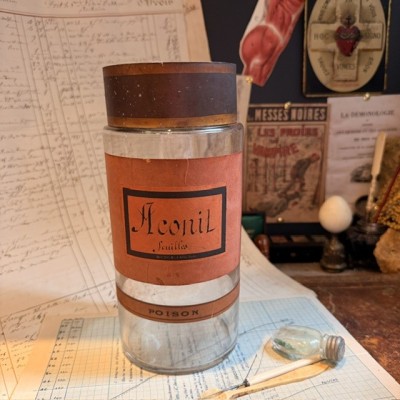
Aconit leaves - POISON
Antique pharmacy bottle - Wide-mouth apothecary jar.
19th-century mouth-blown glass
Red POISON label
Signaling to the pharmacist that it is imperative to keep apart the other substances in the cabinet of toxic substances, the famous poison cabinet.
A fascinating testimony to pharmacology
It comes from an old cellar-laboratory in a Parisian pharmacy. The bottles had not moved since the late 1950s on the shelves. The cellar had served as a laboratory for medical analyses and a laboratory for magistral preparations of the pharmacy from 1900 until around 1950.
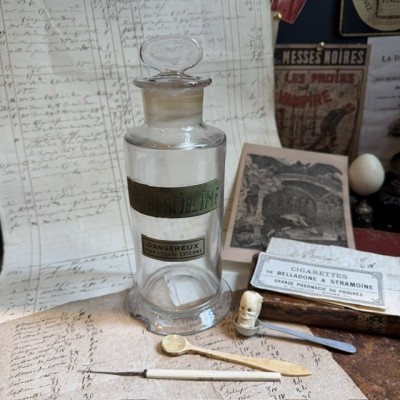
Iode Bi-Sublimé - Bi-Sublimated Iodine
Antique 19th-century blown-glass pharmacy jar
EMPTY
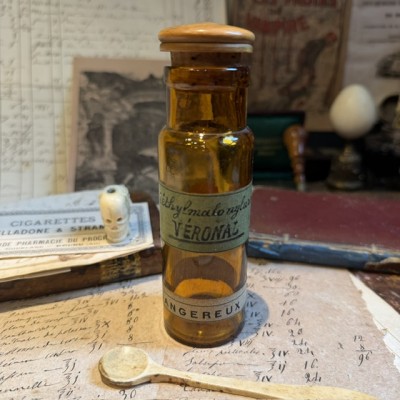
Veronal - Barbiturates - Diethylmalonylurea
Antique amber glass bottle, with a boxwood and cork stopper.
Label: DANGEROUS
Indicating to the pharmacist that it must be stored separately from other substances in the cabinet for toxic substances, the famous ‘poison cabinet’.
It comes from the former cellar-laboratory of a Parisian pharmacy. The bottles had not been moved from the shelves since the late 1950s. The cellar had served as a medical analysis laboratory and a laboratory for the pharmacy’s compounded preparations from 1900 until around 1950.
EMPTY
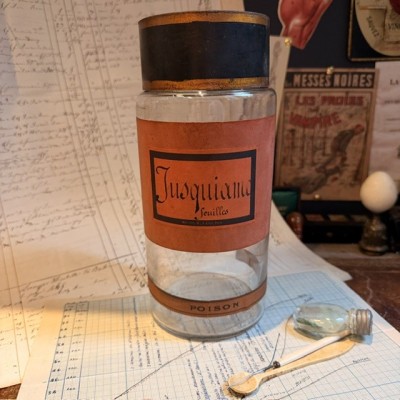
Jusquiame leaves - POISON
Antique pharmacy bottle - Wide-mouth apothecary jar.
19th-century mouth-blown glass
Red POISON label
Signaling to the pharmacist that it is imperative to keep apart the other substances in the cabinet of toxic substances, the famous poison cabinet.
A fascinating testimony to pharmacology
It comes from an old cellar-laboratory in a Parisian pharmacy. The bottles had not moved since the late 1950s on the shelves. The cellar had served as a laboratory for medical analyses and a laboratory for magistral preparations of the pharmacy from 1900 until around 1950.
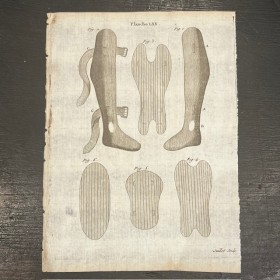
Antique surgical board
From Benjamin Bell's Complete Course in Surgery, published in 1796
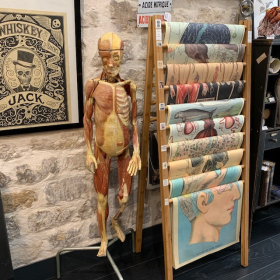
Clastic Mannequin - Dr. Auzoux's anatomical skinned
Antique Pravaz hypodermic injection syringe - 19th century
Syringe in it's case
not functional