
- New
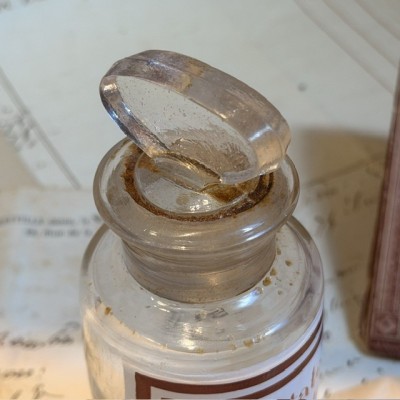
Silver nitrate
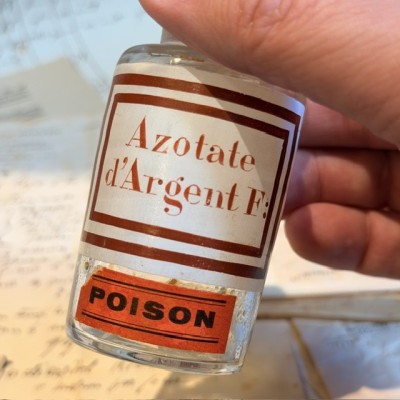
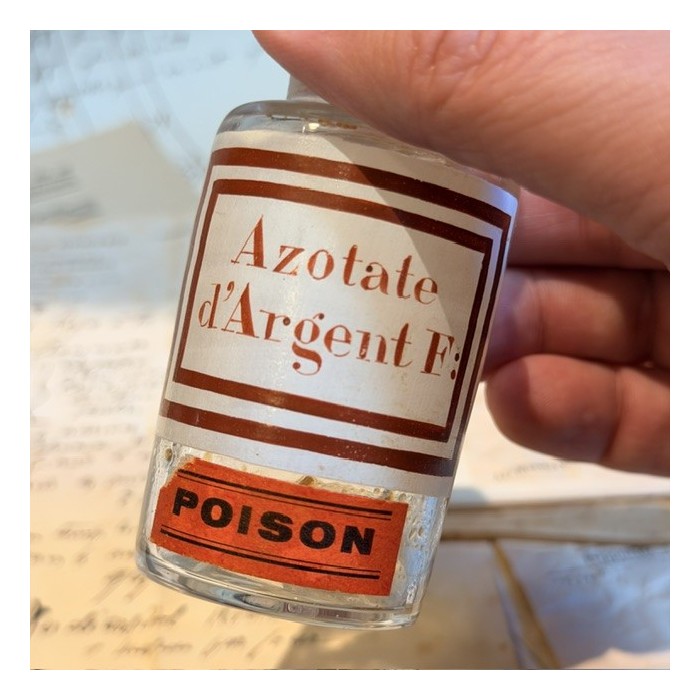
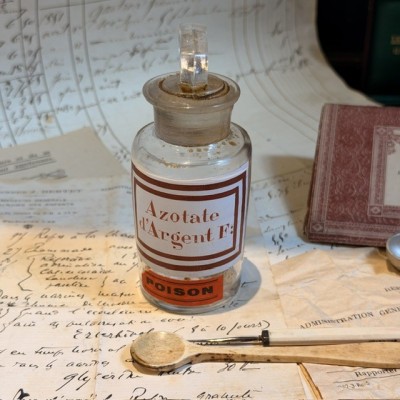
Antique pharmacy bottle made of blown glass and enameled painted label.
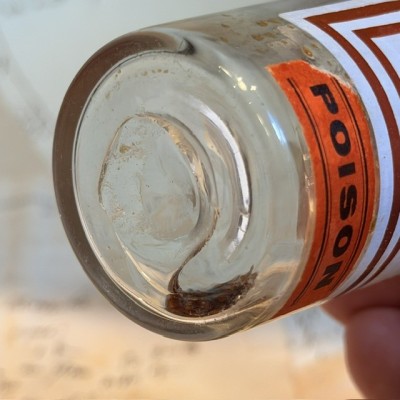
Red POISON label
Signaling to the pharmacist that it is imperative to keep apart the other substances in the cabinet of toxic substances, the famous poison cabinet.
Dating: 19th century
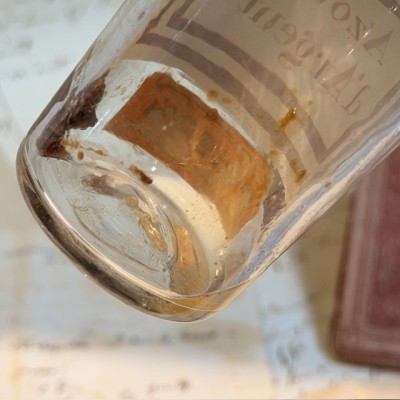
There is still some product inside but the cap is blocked and does not open.
Silver nitrate
Antique pharmacy bottle made of blown glass and enameled painted label.
Red POISON label
Signaling to the pharmacist that it is imperative to keep apart the other substances in the cabinet of toxic substances, the famous poison cabinet.
Laboratory or pharmaceutical dispensary bottle, typical of the late nineteenth or early twentieth century.
Made of blown transparent glass, it has a trace of pontil visible on the bottom, reflecting traditional artisanal manufacturing. It has its original cap honed with emery BUT the bottle is blocked and does not open, sealed by time.
Beautiful enamelled label stenciled surrounded by a brown/red border. This baked enamel technique guaranteed great resistance to handling and chemicals in the pharmacy. A red regulatory label marked "POISON" is applied at the bottom, indicating the poisonous nature of the substance.
Silver nitrate in solution was a major antiseptic and caustic agent in 19th-century pharmacopeia.
Applied topically as a swab on mucous membranes or skin lesions, it was also used highly diluted as ophthalmic eye drops.
Highly corrosive and toxic, this silver salt caused severe chemical burns to the digestive system, leading to death by gastrointestinal perforation, while also exposing patients to the risk of argyria, a chronic toxicity that permanently stained the skin a slate-blue color in cases of overly frequent cutaneous use.
Height of the bottle: 11cm with blown glass cap - Diameter at the base: 4cm
Dating: 19th century
There is still some product inside but the cap is blocked and does not open.

Mercury Proto-Iodide - Syphilis Treatment
Antique pharmacy bottle.
Red ‘POISON’ label
Indicating to the pharmacist that it must be stored separately from other substances in the cabinet for toxic substances, the famous "poison cabinet".
It comes from the former cellar-laboratory of a Parisian pharmacy. The bottles had not been moved from the shelves since the late 1950s. The cellar had served as a medical analysis laboratory and a laboratory for the pharmacy’s compounded preparations from 1900 until around 1950.
Period: Late 19th century - Very early 20th century (circa 1890–1910)
EMPTY

Antipyrina Knorr
Named after its German discoverer: Ludwig Knorr
Pharmacy jar - Herbalism - Apothecary bottle
Late 19th century
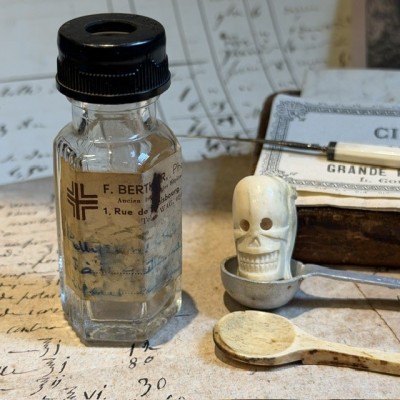
Dropper No. xx05
Antique pharmacy bottle
He's lost his rubber duck
EMPTY
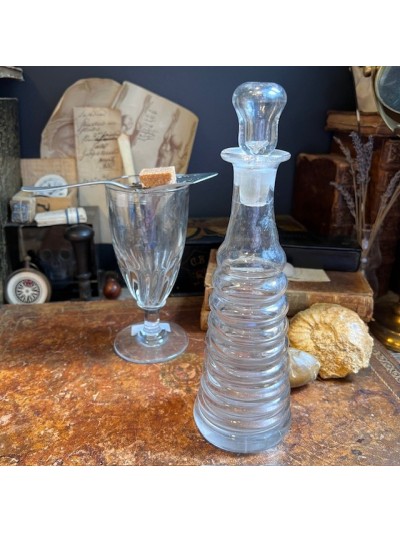
An antique absinthe topette (decanter)
10 Beaded Topette
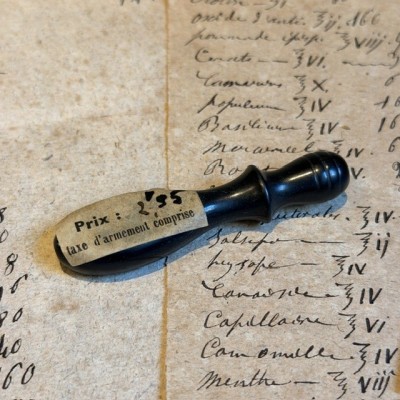
Ebonite cannula tip
Tips for enema or medical irrigation cannulas. New Old Stock
Marketed between May 1939 and sometime in 1940
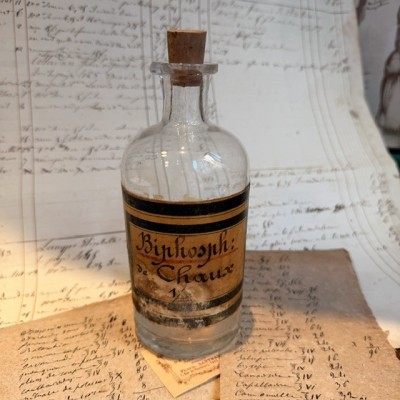
Biphosphate de Chaux
Antique pharmacy bottle
EMPTY
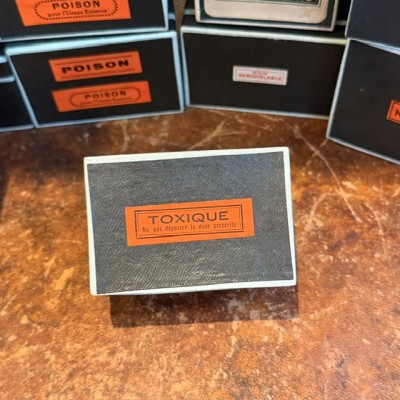
Antique labels in a pharmacy box for cures made of canvas cardboard
TOXIC label - Do not exceed the prescribed dose
The pharmacist used his boxes of medicine to put away the labels he would then put on the bottles that he would resell to his customers.
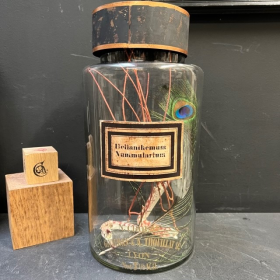
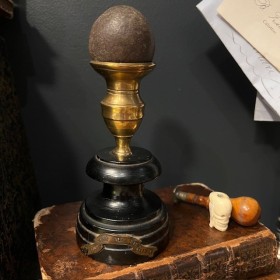
Antique bezoar - Antipoison - Antidote
Once sold by the apothecary, bezoar, also known as gallstone, was reputed to have the same anti-poison properties as the legendary unicorn's horn, hence its excessively high price, also due to its great rarity.
An important piece in a cabinet of curiosities
Sold alone - Without stand, sold separately
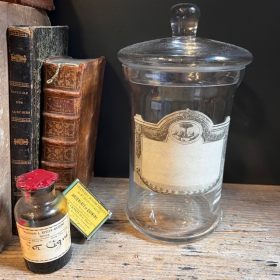
Herbalist's or Pharmacist's jar
Antique blank label of the XVIIIth century
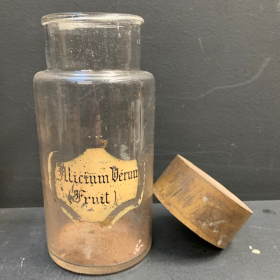
Antique pharmacy jar: Illicium verum (Fruit) / Star anise
Glass pharmacy bottle - XIXth century
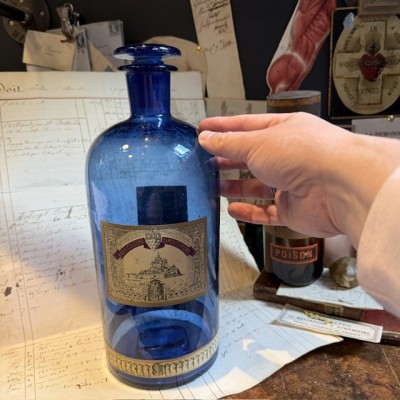
Eau de Cologne du Mont St Michel
Antique BLUE glass pharmacy bottle
EMPTY

Aqua Piris - Pear water
Antique pharmacy jar
Apothecary
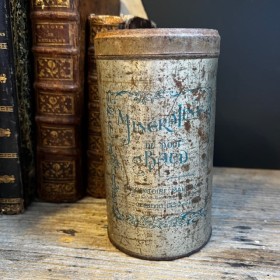
Mineraline by Dr C. Baud
Antique tin pharmacy box
Powder or talcum powder for children's toiletries

Human jaws in porcelain mounted on a blackened wooden base
Anatomical dental model for dentists
19th century
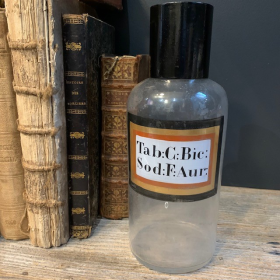
Antique pharmacy jar: Sodium bicarbonate and Gold Flower tablets
Glass pharmacy bottle - XIXth century
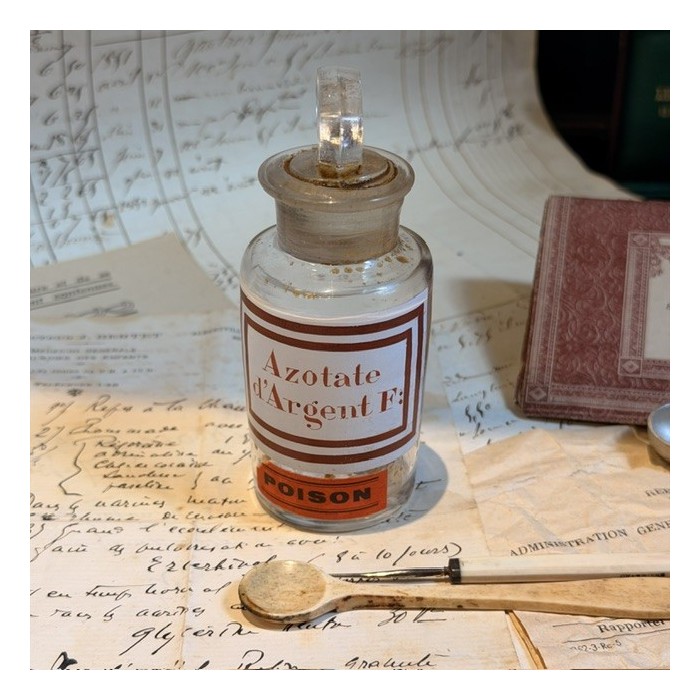
Silver nitrate
Antique pharmacy bottle made of blown glass and enameled painted label.
Red POISON label
Signaling to the pharmacist that it is imperative to keep apart the other substances in the cabinet of toxic substances, the famous poison cabinet.
Dating: 19th century
There is still some product inside but the cap is blocked and does not open.