
- New
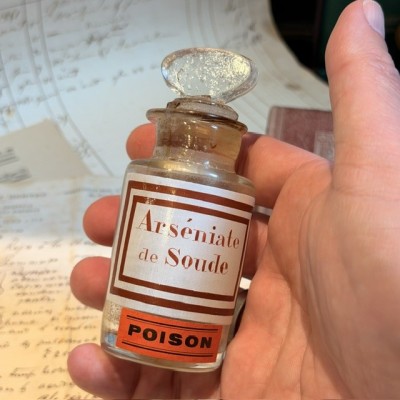
Arsenic - Sodium arsenate
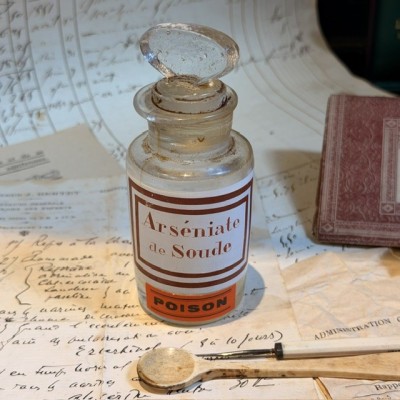
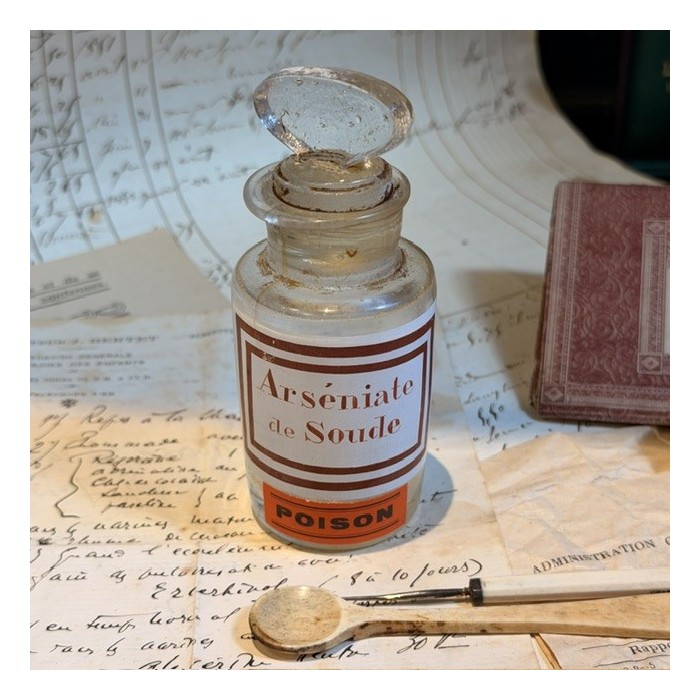
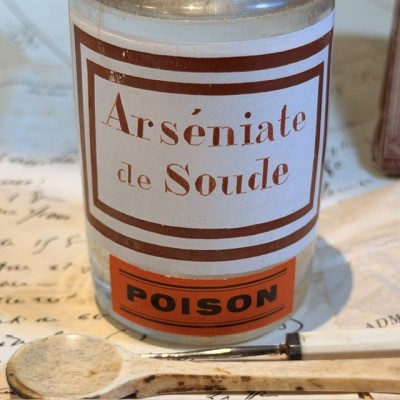
Antique pharmacy bottle made of blown glass and enameled painted label. Yes, it is indeed the arsenic you know!
Red POISON label
Signaling to the pharmacist that it is imperative to keep apart the other substances in the cabinet of toxic substances, the famous poison cabinet.
Dating: 19th century
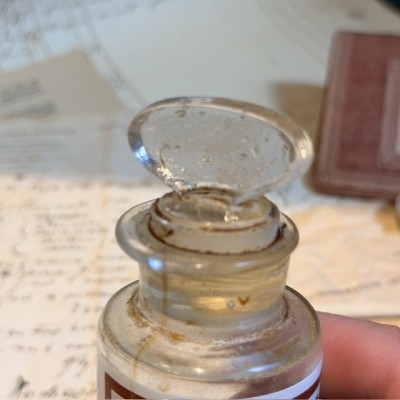
EMPTY but the cap is blocked and does not open.
Arsenic - Sodium arsenate
Antique pharmacy bottle made of blown glass and enameled painted label. Yes, it is indeed the arsenic you know!
Red POISON label
Signaling to the pharmacist that it is imperative to keep apart the other substances in the cabinet of toxic substances, the famous poison cabinet.
Laboratory or pharmaceutical dispensary bottle, typical of the late nineteenth or early twentieth century.
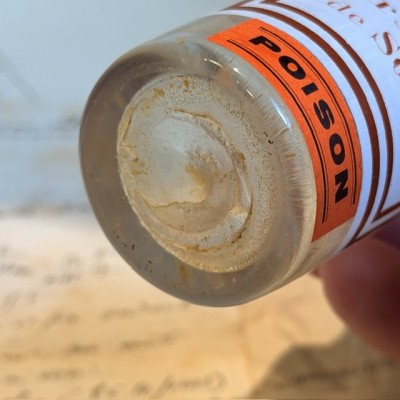
Made of blown transparent glass, it has a trace of pontil visible on the bottom, reflecting traditional artisanal manufacturing. It has its original cap honed with emery BUT the bottle is blocked and does not open, sealed by time.
Beautiful enamelled label stenciled surrounded by a brown/red border. The bottle still contains its original powder of a brilliant yellow. This baked enamel technique guaranteed great resistance to handling and chemicals in the pharmacy. A red regulatory label marked "POISON" is applied at the bottom, indicating the poisonous nature of the substance.
In the nineteenth and early twentieth centuries, this bottle contained sodium arsenate, the pharmaceutical form of the famous arsenic.
Once prescribed by doctors in infinitesimal doses to stimulate the appetite, fight against asthenia or treat conditions as diverse as eczema, psoriasis or asthma.
He embodies par excellence the slow poison of detective novels.
Immortalized by the masters of the genre such as Agatha Christie or Sir Arthur Conan Doyle and at the heart of the greatest historical criminal cases, arsenic was feared for its insidious administration and cumulative toxicity that escaped the diagnoses of the time.
Handled with extreme care by the pharmacist for his preparations, it illustrates the fragile boundary between remedy and fatal substance.
Height of the bottle: 11cm with blown glass cap - Diameter at the base: 4cm
Dating: 19th century
EMPTY but the cap is blocked and does not open.
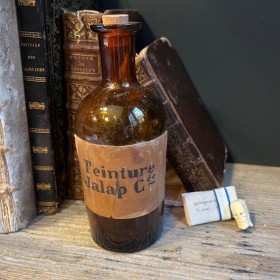
Tincture of Jalap Compound also known as German brandy
A purgative powder is extracted from the Jalap plant.
Antique pharmacy bottle
Apothecary vial

Human jaws in porcelain mounted on a blackened wooden base
Anatomical dental model for dentists
19th century
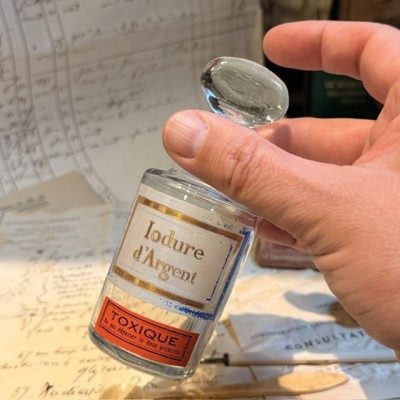
Silver iodide
Antique pharmacy bottle made of blown glass and enameled painted label with golden blue threads
Red TOXIC label
Signaling to the pharmacist that it is imperative to keep apart the other substances in the cabinet of toxic substances, the famous poison cabinet.
Dating: 19th century
EMPTY
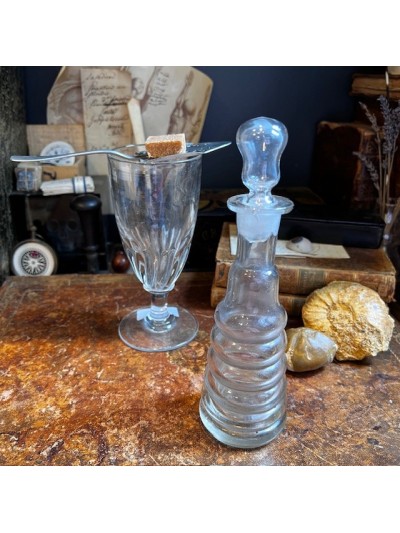
An antique absinthe topette (decanter)
6 Beaded Topette
Residue in the bottom of the carafe
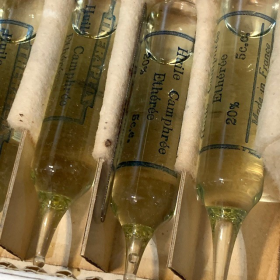
Bulb for hypodermic injection - Camphorated ethereal oil (circa 1920)
THERAPLIX
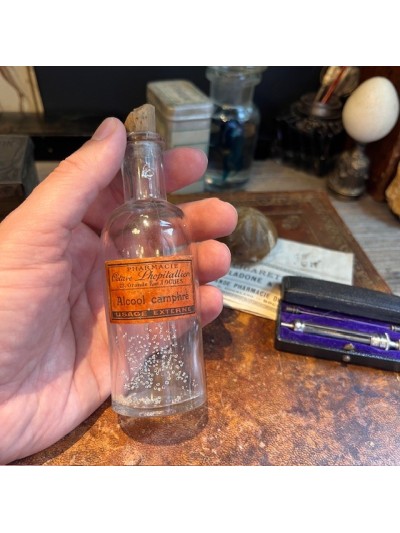
Camphorated alcohol
Antique pharmacy bottle
Apothecary vial
EMPTY
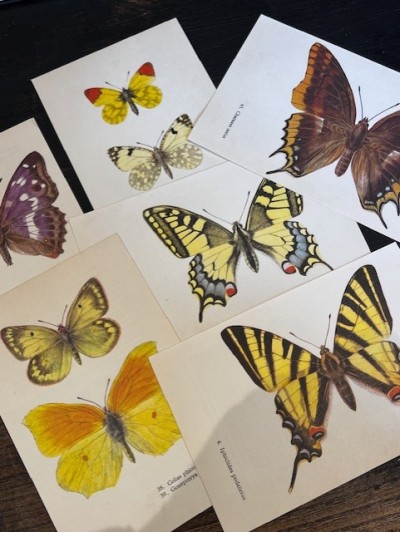
Butterfly - Natural History color plate
Entomology
You buy 1 plate, not the whole set
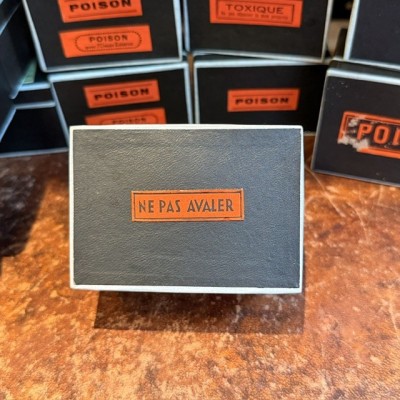
Antique labels in a pharmacy box for cures made of canvas cardboard
Do not swallow label
The pharmacist used his boxes of medicine to put away the labels he would then put on the bottles that he would resell to his customers.
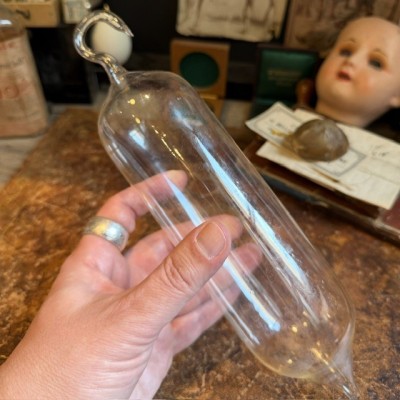
Antique sodium chloride infusion bulb
500cm3
in its original box - Still full
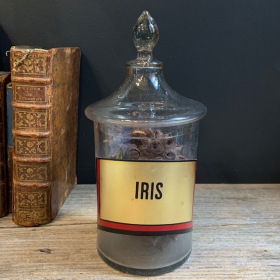
19th century Herbalist's or Pharmacy crystal jar
Iris
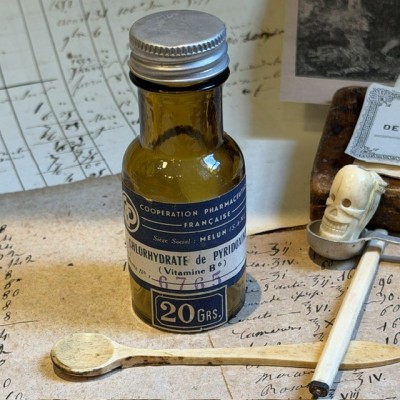
Pyridoxine hydrochloride - Vitamin B6
Antique pharmacy bottle
EMPTY
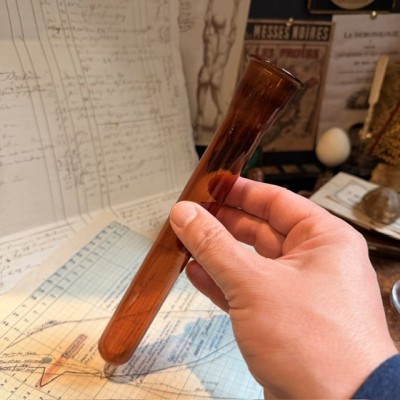
Large antique laboratory test tube made of actinic glass (brown glass) - Pharmacy
Its unusual dimensions make it a model with a beautiful presence
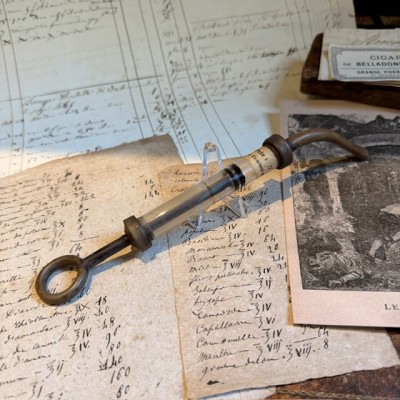
Ebonite and glass laryngeal syringe
For intra-laryngeal injections.
Marketed between May 1939 and sometime in 1940
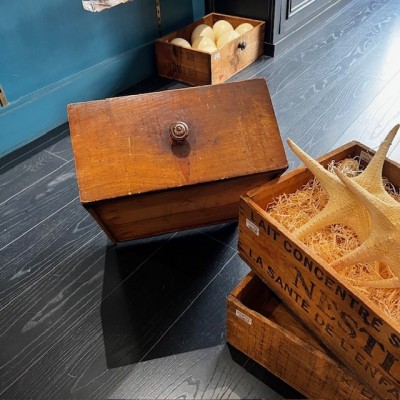
Large antique wooden pharmacy drawer with compartments - From a pharmacy or herbalist's cabinet
4 compartments
Ref A - 39.5x50cm
Can be used as a storage box
Weight: 4.1kg !

Carbonate de Potasse
Antique pharmacy bottle
Early 20th century (circa 1910 - 1920)
EMPTY
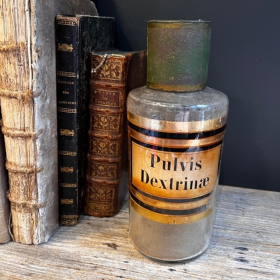
Dextrin powder - Starch - Pulvis Dextrinae
Antique pharmacy bottle
Blown glass
Arsenic - Sodium arsenate
Antique pharmacy bottle made of blown glass and enameled painted label. Yes, it is indeed the arsenic you know!
Red POISON label
Signaling to the pharmacist that it is imperative to keep apart the other substances in the cabinet of toxic substances, the famous poison cabinet.
Dating: 19th century
EMPTY but the cap is blocked and does not open.