- New
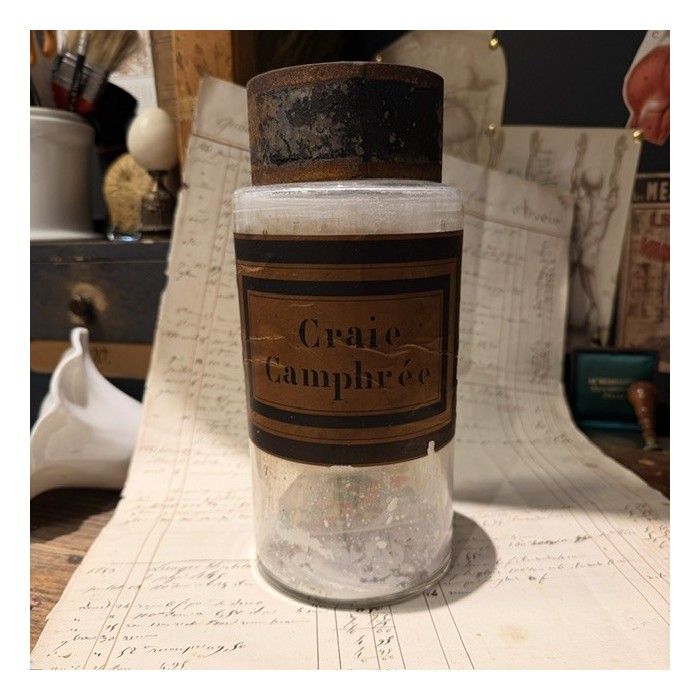
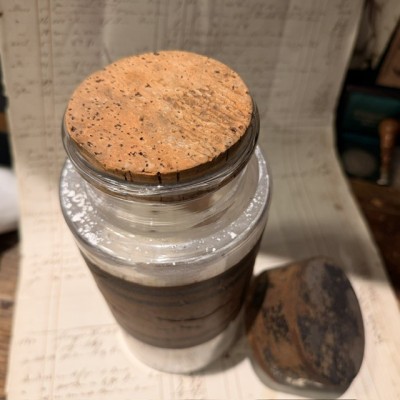
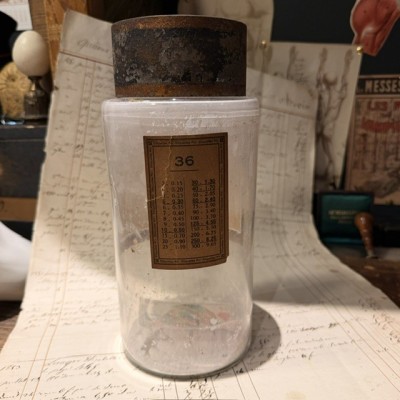
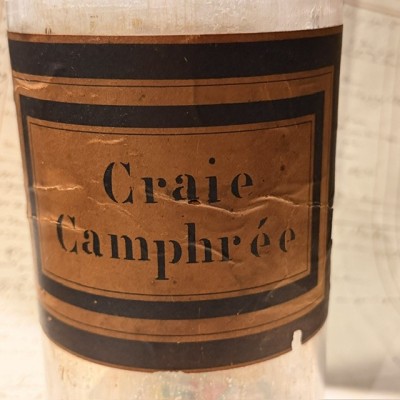
Camphor Chalk
Pharmacy jar - Herbalism - Apothecary Mouth-blown glass bottle
Late 19th century - Beginning of the 20th
Camphor Chalk
Pharmacy jar - Herbalism - Apothecary bottle
Late 19th century - Beginning of the 20th
Camphor chalk, a mixture of calcium carbonate and camphor, was a precursor to modern toothpastes in the 19th and early 20th centuries. It was used as an antiseptic toothpaste for oral hygiene, or as a soothing and cleansing powder.
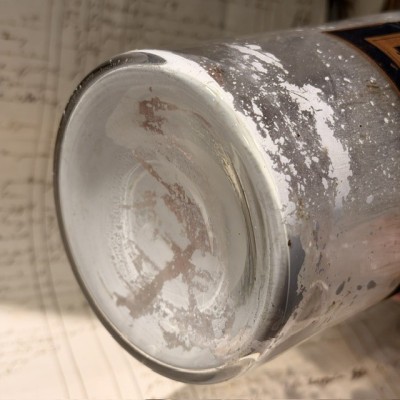
Mouth-blown glass, as the depression of the cane's pontil remains under the jar.
Beautiful original paper label lined with a double black net
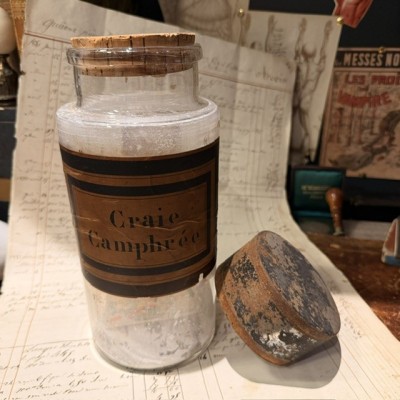
Tin stopper.
It comes from an old cellar-laboratory in a Parisian pharmacy. The bottles had not moved since the late 1950s on the shelves. The cellar had served as a laboratory for medical analyses and a laboratory for magistral preparations of the pharmacy from 1900 until around 1950.
This large-capacity jar was a reserve jar intended for the storage of raw materials to be processed into powders, tinctures or infusions in the pharmacy laboratory.
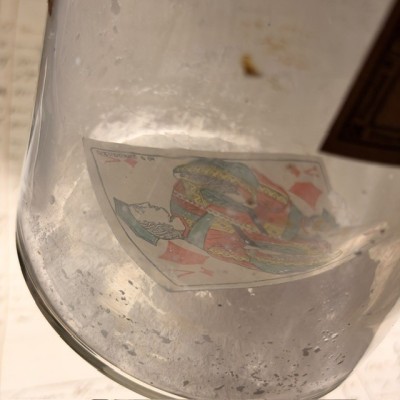
An unusual detail inside: An old playing card (the Jack of Diamonds, bearing the inscription “Dieudonné & Cie”) rests at the bottom of the bottle and was likely used as a scoop by the pharmacis
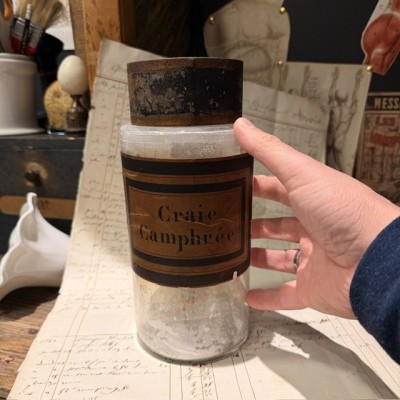
Diameter 10.5cm. Height with cap 24.5cm
SOLD EMPTY
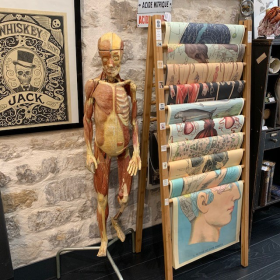
Clastic Mannequin - Dr. Auzoux's anatomical skinned
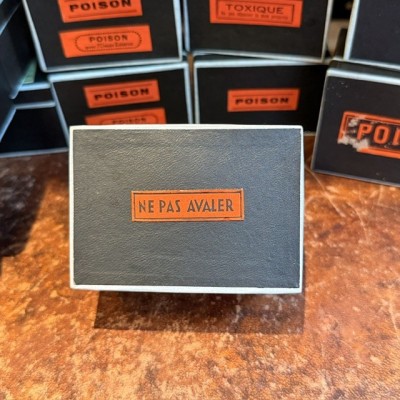
Antique labels in a pharmacy box for cures made of canvas cardboard
Do not swallow label
The pharmacist used his boxes of medicine to put away the labels he would then put on the bottles that he would resell to his customers.

Tétra-chlorure de Carbone - Carbon Tetrachloride
Antique pharmacy bottle with old label POULENC FRERES circa 1928
It comes from an old cellar-laboratory in a Parisian pharmacy. The bottles had not moved since the late 1950s on the shelves. The cellar had served as a laboratory for medical analyses and a laboratory for magistral preparations of the pharmacy from 1900 until around 1950.
EMPTY
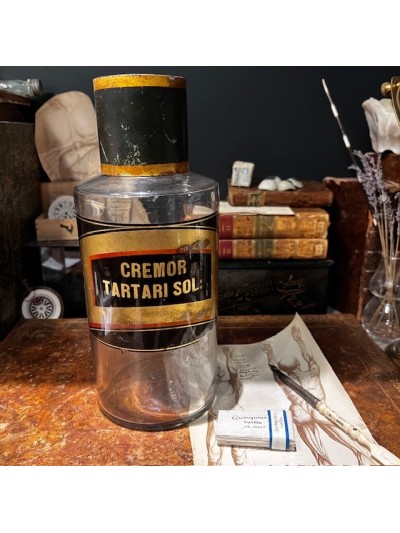
Cremor tartari sol - Cream of tartar
Potassium bitartrate
Pharmacy jar - Herbalism - Apothecary bottle
Late 19th century
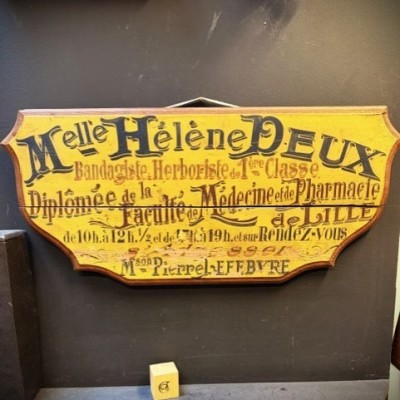
Rare and authentic wall sign panel
Pharmacy and fitting brand - Miss Hélène Deux, Bandagiste & 1st class Herbalist
Officine sign panel in painted wood from the 19th-20th century hinge: 1890-1920.
The sign is made of 2 reinforced wood panels at the back. There is a space between the 2 panels.
The sign features a superb art lettering entirely made freehand by a letter painter (superb contrasts of blue and brown, neat full and loose)
Witness to the history of pharmacy and ancient orthopaedics: the bandagist shaping leather and frames for corsets and restraints, and the herbalist 1st class, a profession that has disappeared since the abolition of the diploma in 1941.
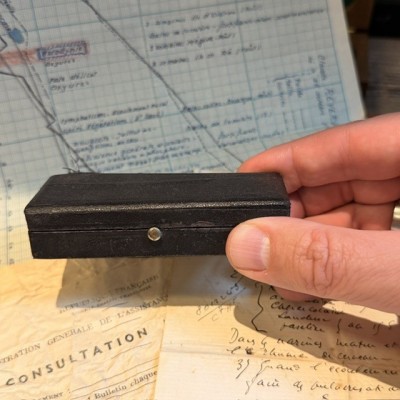
Antique Pravaz hypodermic injection syringe - 19th century
Syringe in it's case
not functional

Human jaws in porcelain mounted on a blackened wooden base
Anatomical dental model for dentists
19th century
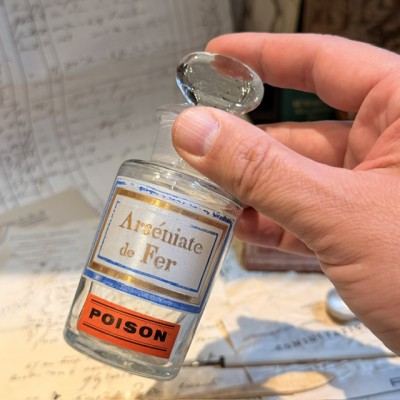
Arsenic - Iron arsenate
Antique pharmacy bottle made of blown glass and enameled painted label with golden blue threads
Red POISON label
Signaling to the pharmacist that it is imperative to keep apart the other substances in the cabinet of toxic substances, the famous poison cabinet.
Dating: 19th century
EMPTY
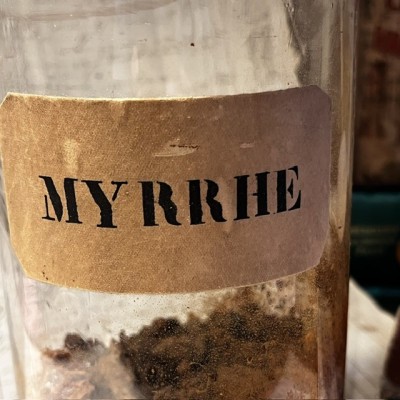
Myrrh
Antique pharmacy bottle - Wide-mouth apothecary jar.
19th-century mouth-blown glass
There is still some product left inside
A fascinating artifact from the history of pharmacology
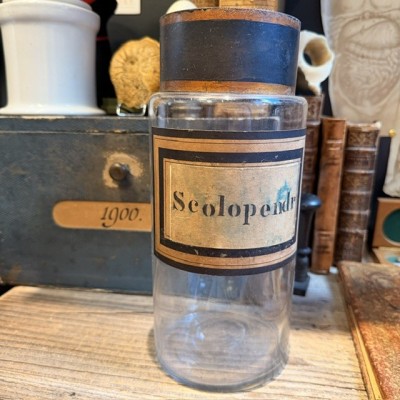
Scolopendre
Pharmacy jar - Herbalism - Apothecary Mouth-blown glass bottle
Late 19th century - Beginning of the 20th
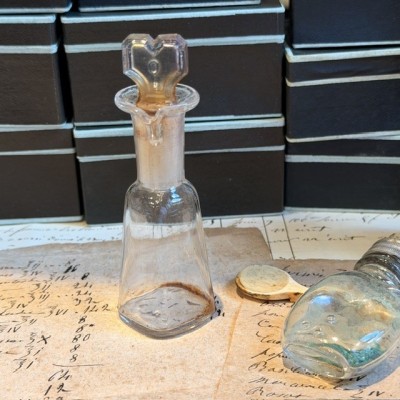
Square Section Dropper Bottle
Antique pharmacy bottle - 1920-30's
Glass stopper honed in the shape of a heart for better grip
EMPTY
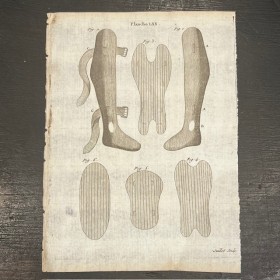
Antique surgical board
From Benjamin Bell's Complete Course in Surgery, published in 1796
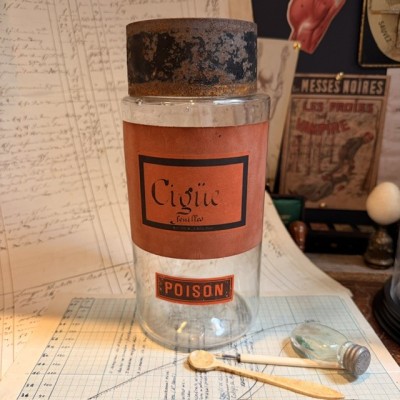
Hemlock leaves - POISON
Antique pharmacy bottle - Wide-mouth apothecary jar.
19th-century mouth-blown glass
Red POISON label
Signaling to the pharmacist that it is imperative to keep apart the other substances in the cabinet of toxic substances, the famous poison cabinet.
A fascinating testimony to pharmacology
It comes from an old cellar-laboratory in a Parisian pharmacy. The bottles had not moved since the late 1950s on the shelves. The cellar had served as a laboratory for medical analyses and a laboratory for magistral preparations of the pharmacy from 1900 until around 1950.
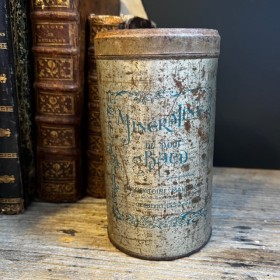
Mineraline by Dr C. Baud
Antique tin pharmacy box
Powder or talcum powder for children's toiletries
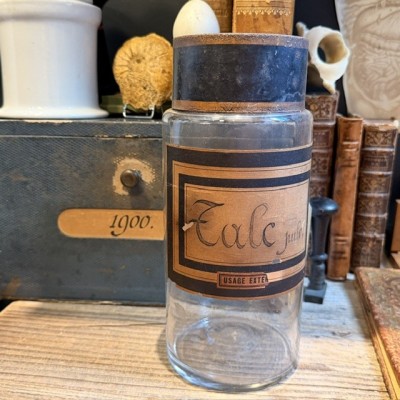
Talc powder
Pharmacy jar - Herbalism - Apothecary Mouth-blown glass bottle
Late 19th century - Beginning of the 20th
Camphor Chalk
Pharmacy jar - Herbalism - Apothecary Mouth-blown glass bottle
Late 19th century - Beginning of the 20th