

- New
Strychnine
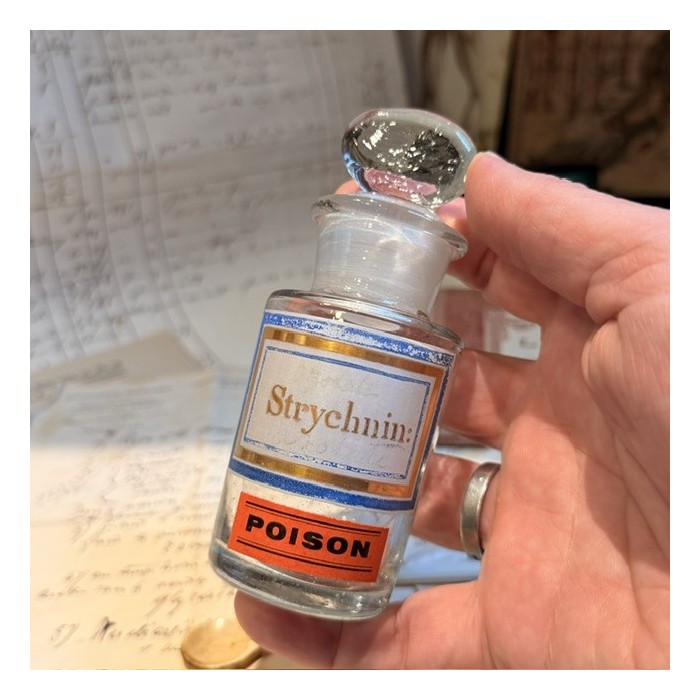
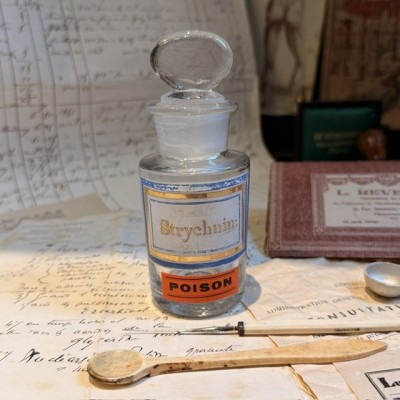
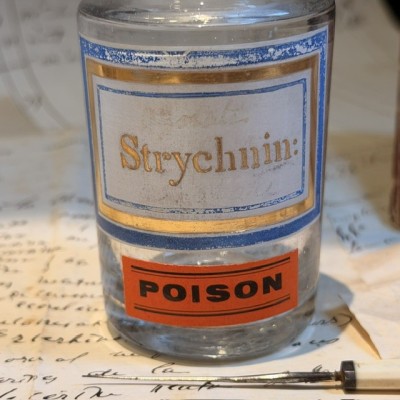
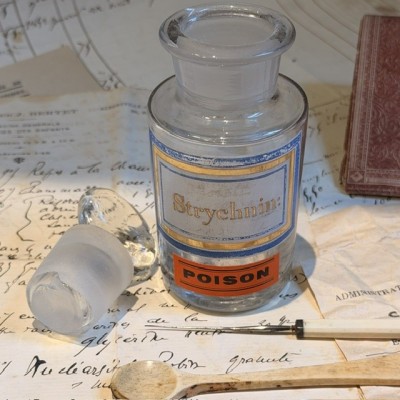
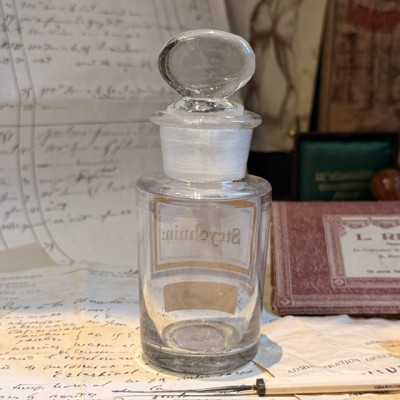
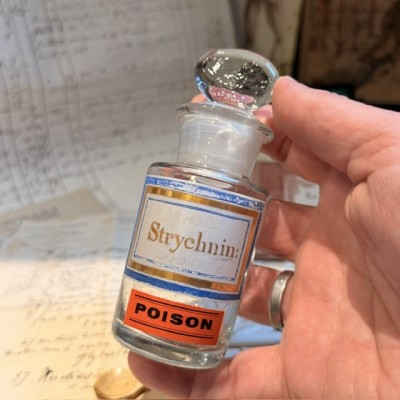
Antique pharmacy bottle made of blown glass and enameled painted label with golden blue threads
Red POISON label
Signaling to the pharmacist that it is imperative to keep apart the other substances in the cabinet of toxic substances, the famous poison cabinet.
Dating: 19th century
EMPTY
Strychnine
Antique pharmacy bottle made of blown glass and enameled painted label with golden blue threads
Red POISON label
Signaling to the pharmacist that it is imperative to keep apart the other substances in the cabinet of toxic substances, the famous poison cabinet.
Laboratory or pharmaceutical dispensary bottle, typical of the late nineteenth or early twentieth century.
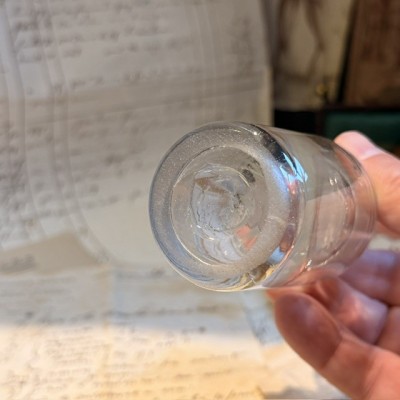
Made of blown transparent glass, it has a trace of pontil visible on the bottom, reflecting traditional artisanal manufacturing. It is equipped with its original cap honed with emery, ensuring a perfect fit with the neck of the bottle.
Beautiful enamelled label stenciled with golden highlights, framed by a blue and gold net. This baked enamel technique guaranteed great resistance to handling and chemicals in the pharmacy. A red regulatory label marked "POISON" is applied at the bottom, indicating the poisonous nature of the substance.
A very powerful substance extracted from the beans of Saint-Ignace (Strychnos ignatii) and the vomic nut (Strychnos nux-vomica), strychnine was used in very low doses in the 19th and early 20th centuries as a tonic and stimulant for the nervous system and respiration.
At higher doses, as we all know, strychnine is a formidable, violent and convulsive poison, whose action blocks the spinal cord and causes tetanic spasms of extreme violence.
Poison immortalized by Agatha Christie who made it the weapon in several of his detective novels, strychnine remains the literary poison par excellence, inseparable from the great classics of the detective novel and the history of toxicology.
Height of the bottle: 12cm with blown glass cap - Diameter at the base: 4cm
Dating: 19th century
EMPTY
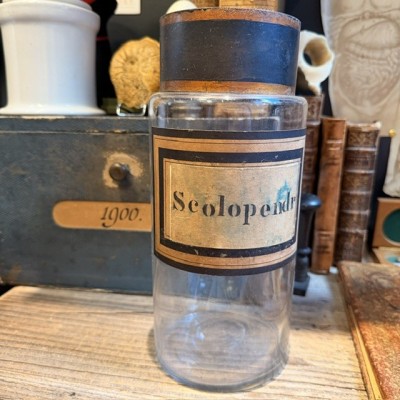
Scolopendre
Pharmacy jar - Herbalism - Apothecary Mouth-blown glass bottle
Late 19th century - Beginning of the 20th
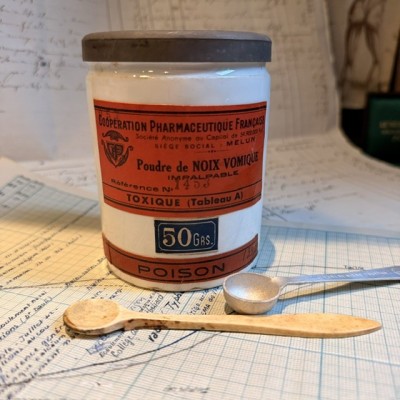
Impalpable Nux Vomica powder
White earthenware pot
Red POISON and TOXIC label
Signaling to the pharmacist that it is imperative to keep apart the other substances in the cabinet of toxic substances, the famous poison cabinet.
It comes from an old cellar-laboratory in a Parisian pharmacy. The bottles had not moved since the late 1950s on the shelves. The cellar had served as a laboratory for medical analyses and a laboratory for magistral preparations of the pharmacy from 1900 until around 1950.
EMPTY

Ancient First-aid kit for healing snake bites
antique first-aid kit from the Pharmacie Michel LEGROS
Glass syringe in its case
Antique Snake Oil Salesmen product! Quack Medicine
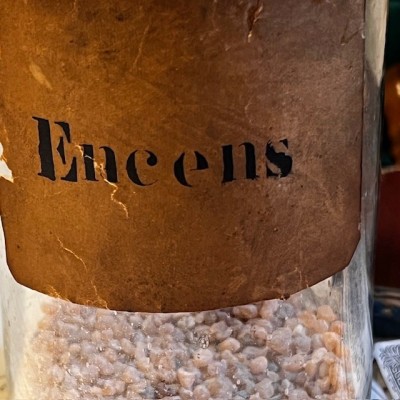
Incense
Antique pharmacy bottle - Wide-mouth apothecary jar.
19th-century mouth-blown glass
There are still some product inside.
A fascinating artifact from the history of pharmacology
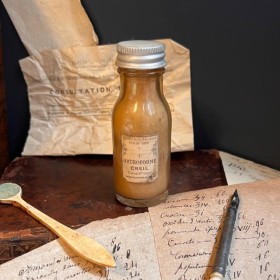
Orthoforme
Antique pharmacy bottle - Droguerie - Apothicaire
Silver medal at Paris 1889
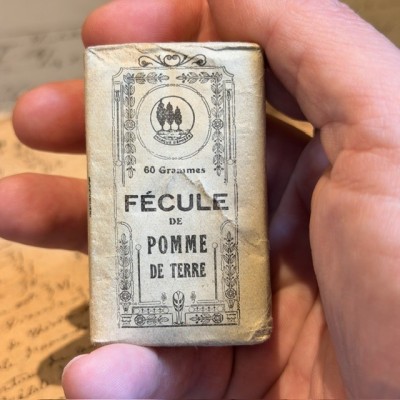
Packet of Potato Starch
Circa 1920
New old stock
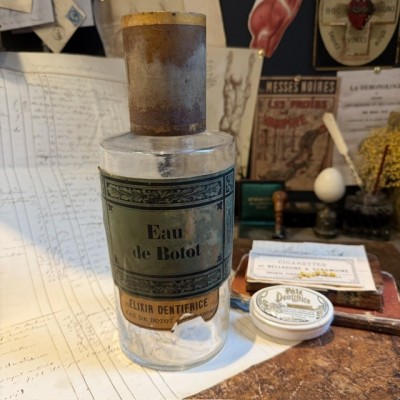
Eau de Botot - Tooth-cleansing Elixir
CODEX 1884
Antique 19th-century pharmacy bottle
EMPTY
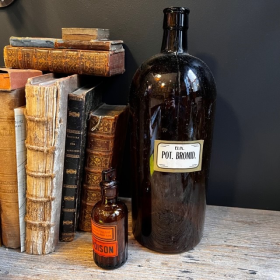
Potassium Bromide Elixir
Antique and large brown English pharmacy bottle
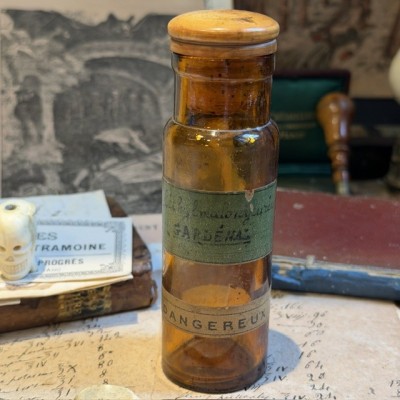
Gardénal - Phenobarbital - Barbiturates
Phényléthylmalonylurée
Antique amber glass bottle, with a boxwood and cork stopper.
Label: DANGEROUS
Indicating to the pharmacist that it must be stored separately from other substances in the cabinet for toxic substances, the famous ‘poison cabinet’.
It comes from the former cellar-laboratory of a Parisian pharmacy. The bottles had not been moved from the shelves since the late 1950s. The cellar had served as a medical analysis laboratory and a laboratory for the pharmacy’s compounded preparations from 1900 until around 1950.
EMPTY
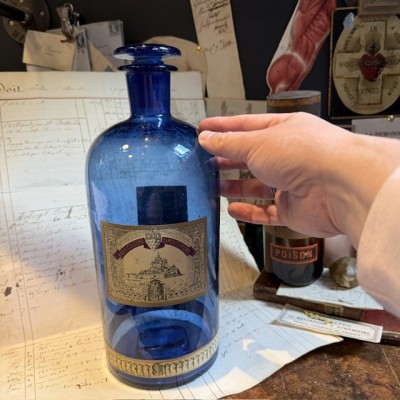
Eau de Cologne du Mont St Michel
Antique BLUE glass pharmacy bottle
EMPTY
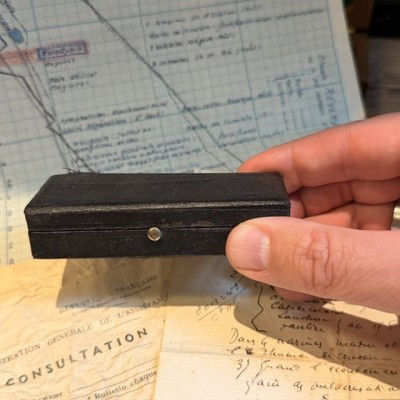
Antique Pravaz hypodermic injection syringe - 19th century
Syringe in it's case
not functional
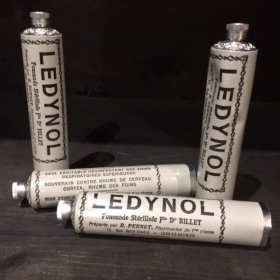
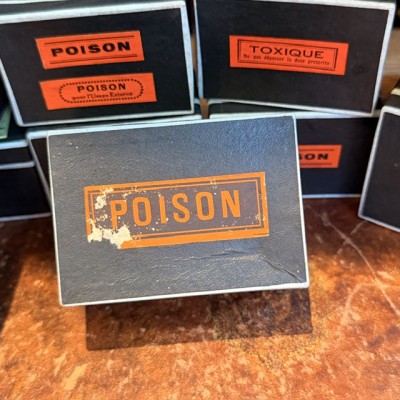
Antique labels in a pharmacy box for cures made of canvas cardboard
Poison label - Ref A
The pharmacist used his boxes of medicine to put away the labels he would then put on the bottles that he would resell to his customers.
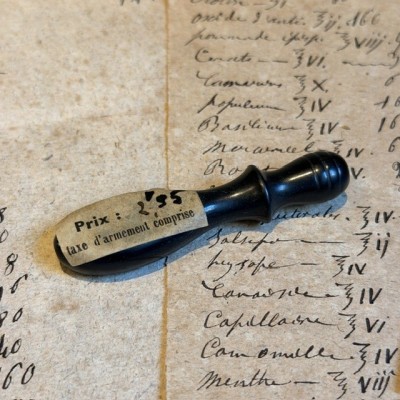
Ebonite cannula tip
Tips for enema or medical irrigation cannulas. New Old Stock
Marketed between May 1939 and sometime in 1940
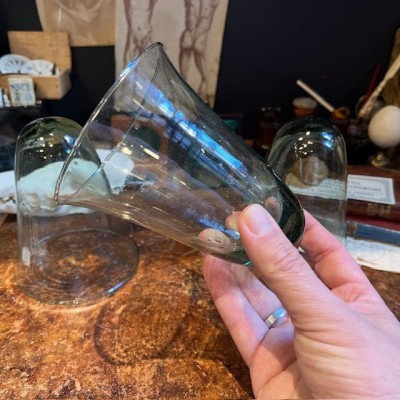
Antique glass bell jar
Apothecary / Laboratory
Thin glass, light green in color and darker at the top, with bubbles
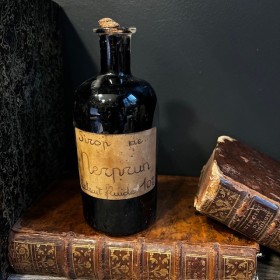
Buckthorns syrup
Antique pharmacy bottle
Apothecary vial
Strychnine
Antique pharmacy bottle made of blown glass and enameled painted label with golden blue threads
Red POISON label
Signaling to the pharmacist that it is imperative to keep apart the other substances in the cabinet of toxic substances, the famous poison cabinet.
Dating: 19th century
EMPTY