

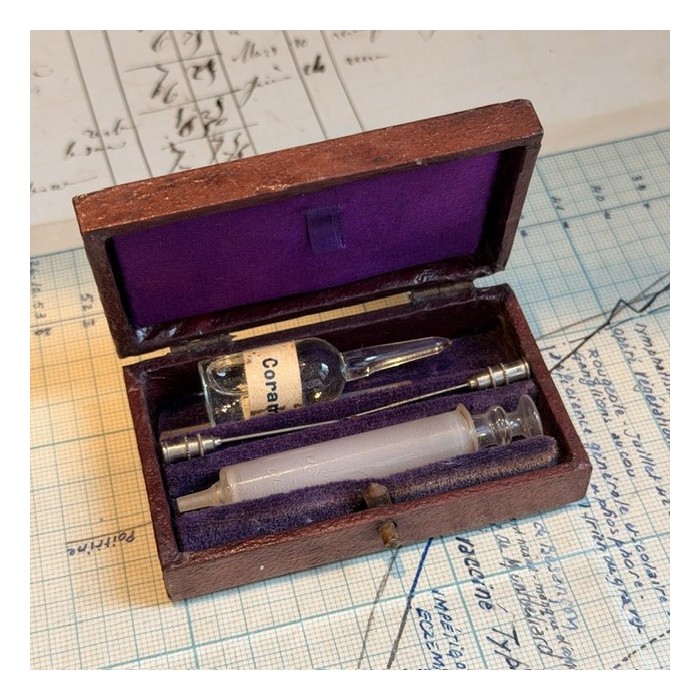
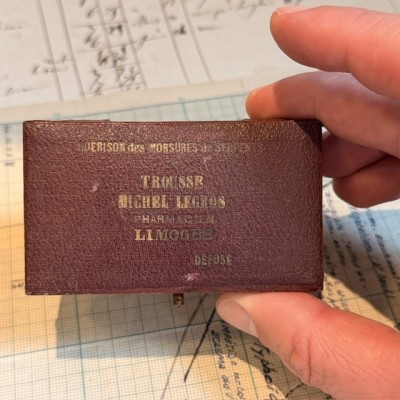
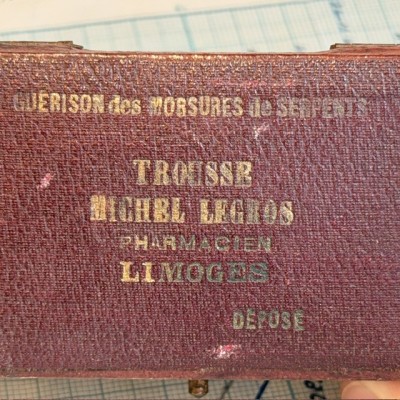
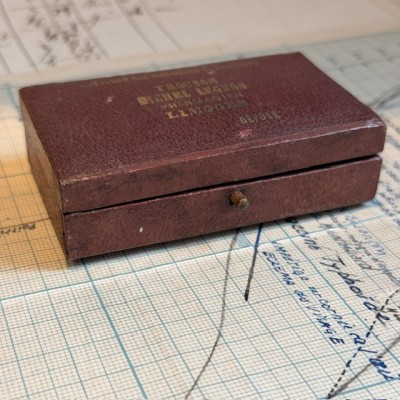
Ancient First-aid kit for healing snake bites
antique first-aid kit from the Pharmacie Michel LEGROS
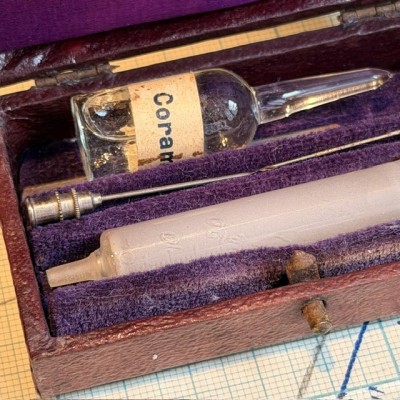
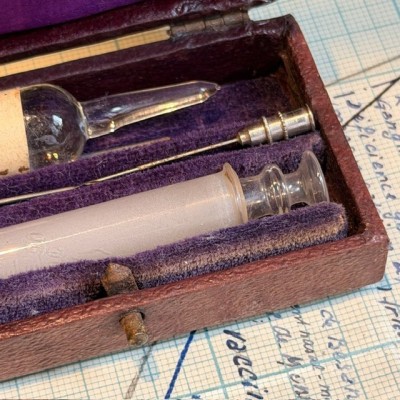
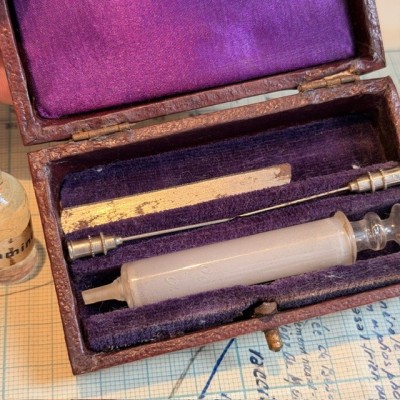
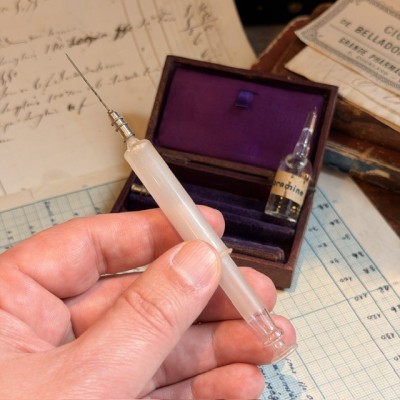
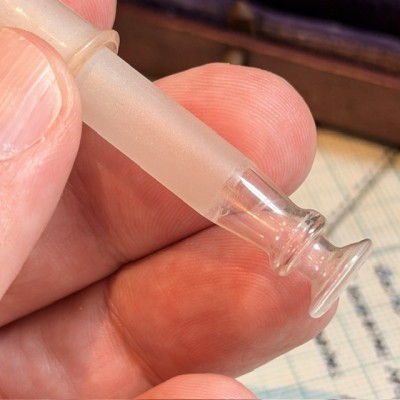
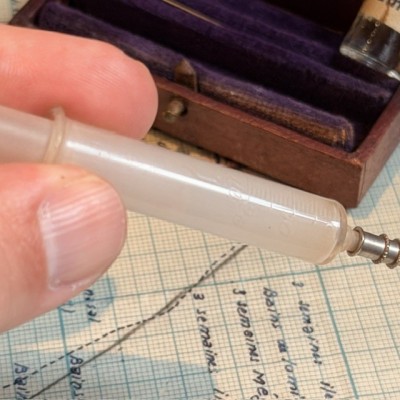
Glass syringe in its case
Antique Snake Oil Salesmen product! Quack Medicine
Ancient First-aid kit for healing snake bites
At the beginning of the 20th century, Michel Legros pharmacist in Limoges was a great connoisseur of botany.
He has developed a product that cures with impressive speed people bitten by a venomous snake, according to his words...
Hunters, fishermen and farmers of the region rush to his shop to get this kit.
The ampoule contained a solution of chromic anhydride, or chromium trioxide.
Legros’s instructions stated that his solution was "oxygenating" and that it allowed "to return to the blood, deoxygenated by the venom, the vital qualities of arterial blood". It was scientifically completely wrong. Chromium trioxide is a powerful chemical oxidant, but it does not provide breathable oxygen to cells and does not neutralize the enzymatic and destructive complexes of viper venom.
On the other hand, chromium trioxide is an extremely aggressive chemical compound, which is today classified as carcinogenic and highly corrosive.
In reality, injecting this product caused local tissue necrosis, the destruction of flesh.
His pencil case will become famous throughout France and even abroad until the 1960s.
Period from which it was necessary to prove the effectiveness and safety of the products... In reality, this antivenom had no effect on snake bites!
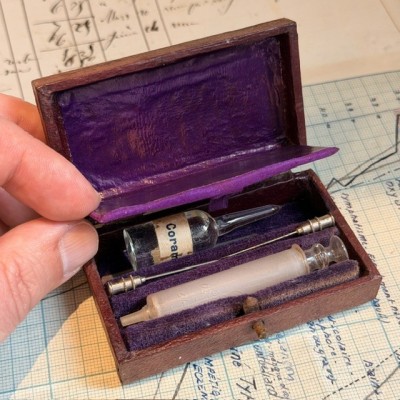
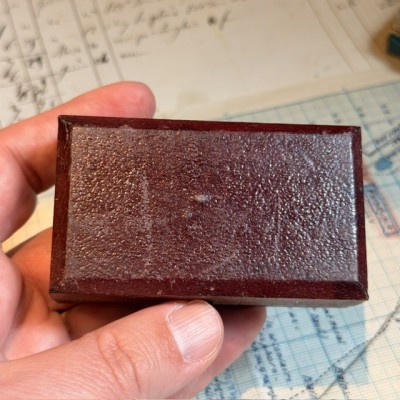
Burgundy percaline case, inside in felt.
The kit contains:
-1 Old glass syringe with its 2 needles
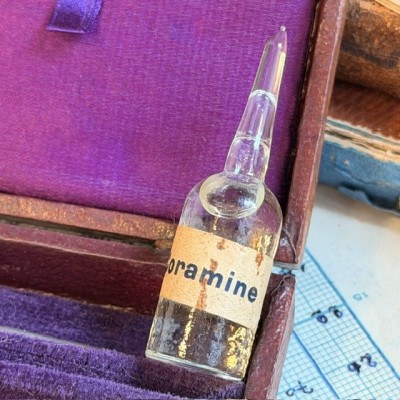
- 1 dose of serum, which is not the original one; it had to be replaced over time by an ampoule of Coramine. For the moment, this bulb had a real effect; it wasn’t an antivenom, but the product had a real effect on the heart to help it hold its own while it waited to go to a hospital. Indeed, Coramine is a backup stimulant. It did not attack the venom, but it forced the heart to beat and the lungs to breathe to prevent the injured from falling into a coma or dying of cardiac arrest due to the shock of the bite.
At the very beginning of the 20th century, because later the pencil cases would be made of metal
Dimensions of the case: 4.5 x 8cm Height: 2.5cm
Dimensions of the syringe: Length 7cm without needle
Antique Snake Oil Salesmen product! Quack Medicine
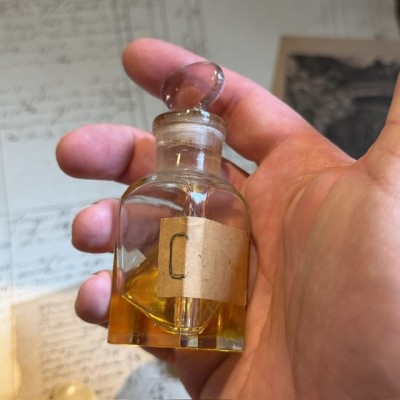
Cèdre - Cedarwood Oil
Antique pharmacy bottle
There is some product left, but the stopper is stuck
The writing has faded, but in oblique light one can make out CEDRE
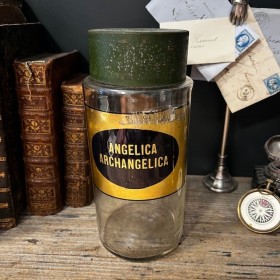
Angelica Archangelica
Pharmacy jar - Herbalism - Apothecary bottle
Late 19th century, early 20th century
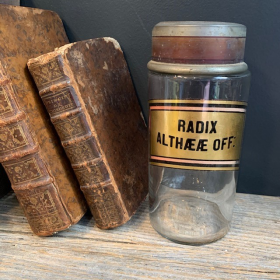
Antique 19th century pharmacy bottle
Radix althaeae Off - Marshmallow
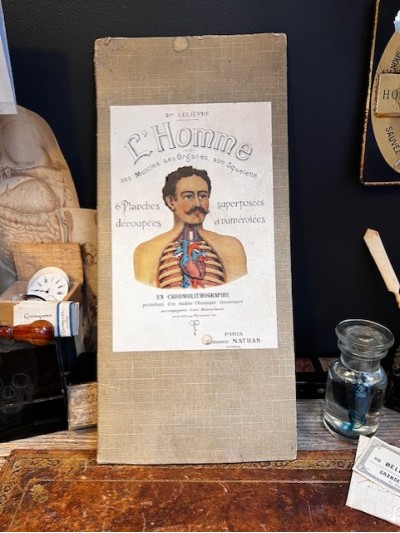
Man - Anatomical chart that can be disassembled
By Fernand Nathan Editeur publisher
Coloured chart with movable, cut-out and superimposed leaves
There are defects on the superimposed boards; the outer board, which was the man's torso, is missing, as are the lungs, which were above the heart. The left hand is missing, the arm being torn.
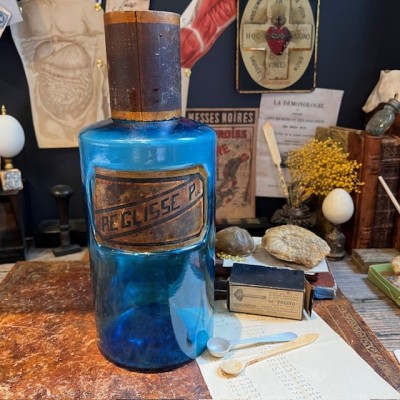
Poudre de réglisse - Licorice powder
Large cobalt blue glass pharmacy bottle - Apothecary - Shouldered - H28cm - 19th century
Shouldered apothecary bottle - Antique pharmacy bottle
Mouth-blown glass - Cobalt blue color tinted throughout
This large-capacity jar was a storage jar intended for stockpiling
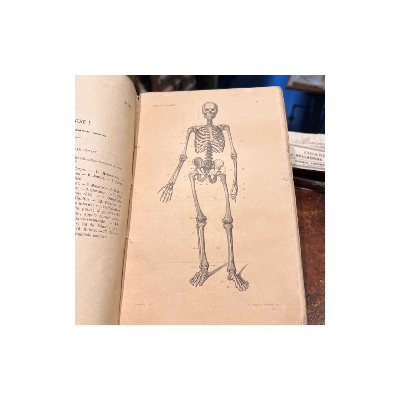
Anatomical Atlas by A. Bossu
Anthropology - End of the XIXth century
20 engravings of Anatomy by Léveillé
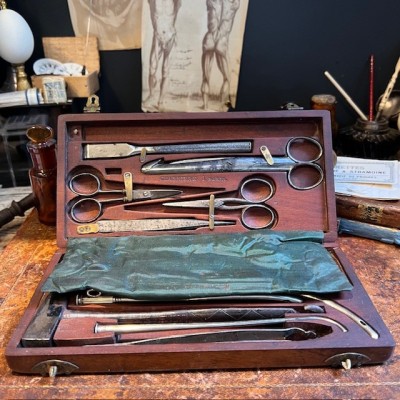
Portable autopsy kit from the mid-19th century
Maison Charrière in Paris, circa 1845–1870
Mahogany case for autopsy and dissection
Small portable mahogany case containing a set of autopsy instruments: hook hammer, bone chisel, enterotome scissors, probes, hooks and suture needles. Used by forensic scientists and anatomists for opening and examining bodies.
Charrière, a major 19th-century Parisian manufacturer, was a pioneer in the design of high-precision surgical and anatomical instruments.
Mahogany and polished steel: 23 × 11 cm
Please note: crack in the wood under the case
A beautiful object, very rare to find
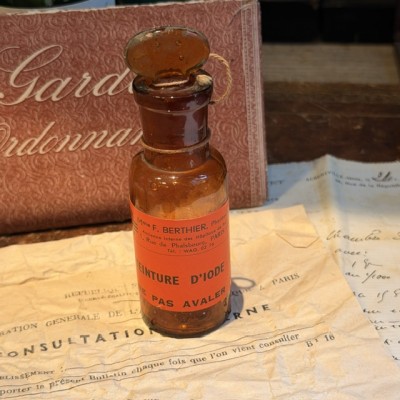
Iodine dye
Antique pharmacy bottle
With the inscription Teinture d'Iode molded in glass
EMPTY
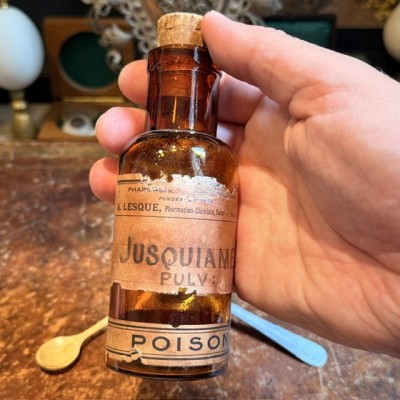
Jusquiame - Henbane
Antique pharmacy bottle.
Red ‘POISON’ label
Indicating to the pharmacist that it must be stored separately from other substances in the cabinet for toxic substances, the famous ‘poison cabinet’.
It comes from the former cellar-laboratory of a Parisian pharmacy. The bottles had not been moved from the shelves since the late 1950s. The cellar had served as a medical analysis laboratory and a laboratory for the pharmacy’s compounded preparations from 1900 until around 1950.
Date: Begining of 20th century
EMPTY
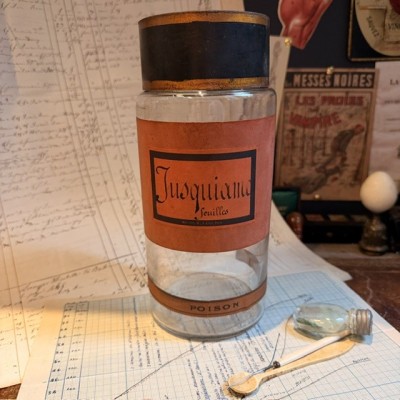
Jusquiame leaves - POISON
Antique pharmacy bottle - Wide-mouth apothecary jar.
19th-century mouth-blown glass
Red POISON label
Signaling to the pharmacist that it is imperative to keep apart the other substances in the cabinet of toxic substances, the famous poison cabinet.
A fascinating testimony to pharmacology
It comes from an old cellar-laboratory in a Parisian pharmacy. The bottles had not moved since the late 1950s on the shelves. The cellar had served as a laboratory for medical analyses and a laboratory for magistral preparations of the pharmacy from 1900 until around 1950.
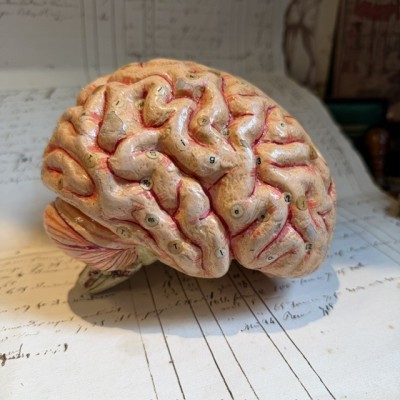
Painted papier-mâché anatomical model of the brain
Produced by Établissements Auzoux
Model No. 12 from the 1874 catalogue
Dismantlable, numbered model, used for medical teaching.
A rare item in excellent working condition
This is a 1:1 scale model of the brain, sold separately at the time as a demonstration model; it is not a brain that was found inside anatomical manikins.
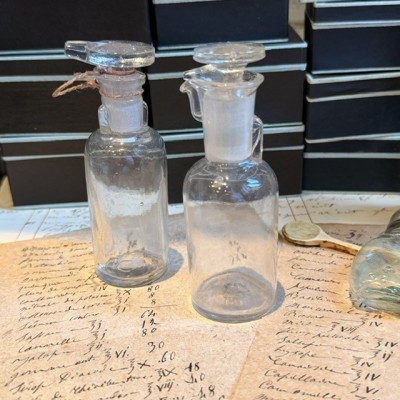
Dropper Bottle
Antique pharmacy bottle - 1920-30's
EMPTY
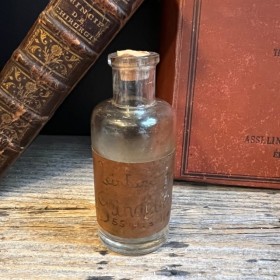
Grindelia Tincture
Antique medicine bottle
Apothecary
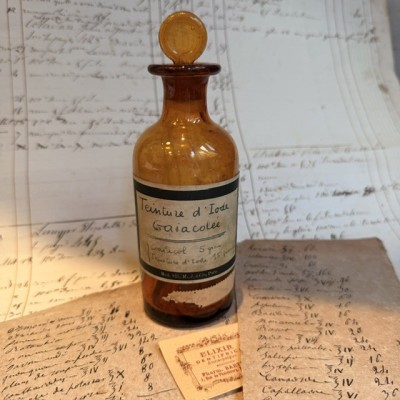
Gaiacolated Tincture of Iodine
Antique pharmacy bottle
EMPTY
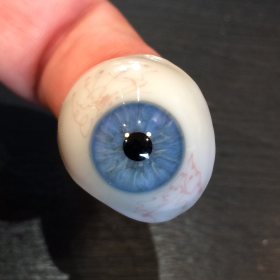
Antique glass eye
Real antique eye prosthesis
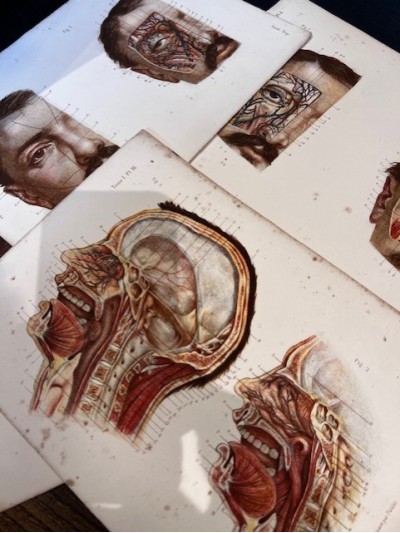
Anatomical chart by Paulet and Sarazin
From the Traité d'anatomie topographique (Treatise on topographical anatomy)
Published in 1867-1870
Chromolithography
You buy 1 plate, not the whole set
Ancient First-aid kit for healing snake bites
antique first-aid kit from the Pharmacie Michel LEGROS
Glass syringe in its case
Antique Snake Oil Salesmen product! Quack Medicine
