
- New
Kopé Opium Paste for Coughs
Antique tin medicine box - Pharmacy - Apothecary
Medical Confectionery: Circa 1920
Paradoxes of the antique pharmacy, where notorious poisons were presented in the guise of harmless sweets.
EMPTY
Kopé Opium Paste for Coughs
Antique tin medicine box – Pharmacy – Apothecary
Medical Confectionery: Circa 1920
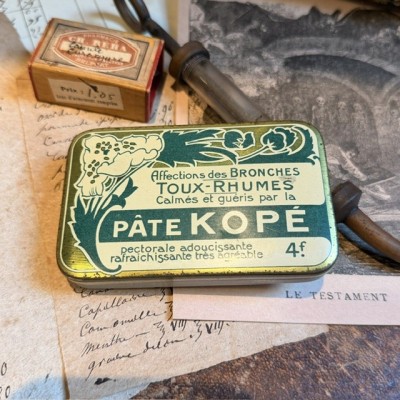
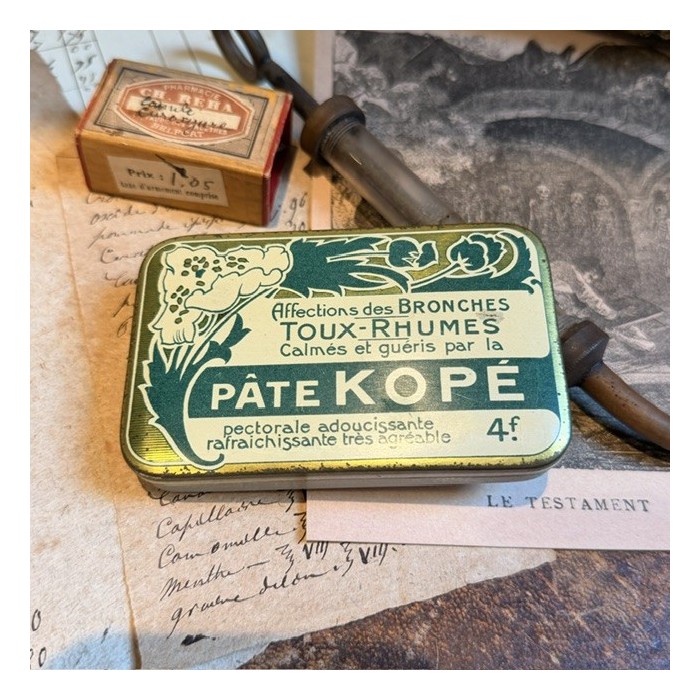
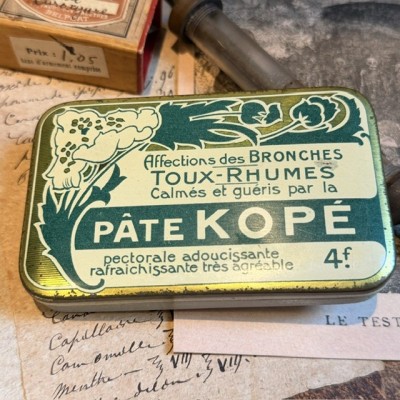
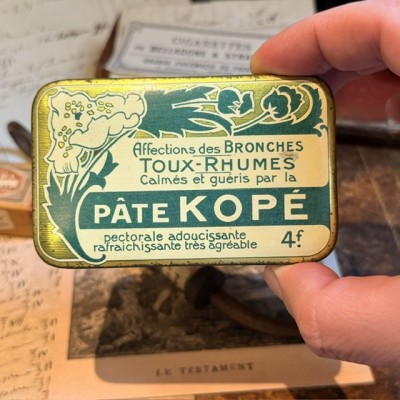
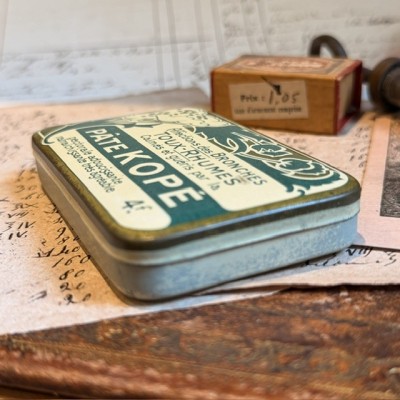
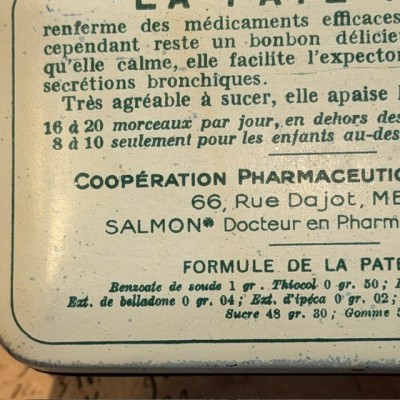
Lithographed metal advertising tin for Kopé Paste, a chest remedy for coughs.
It perfectly embodies the paradoxes of old-fashioned pharmacy, where notorious poisons were presented in the guise of harmless sweets.
Once again, it is Dr Salmon who manufactures them, already known before the war for Salmon’s Opium Lozenges.
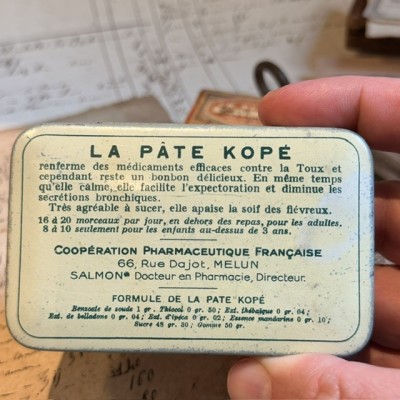
The back of the tin indicates that it was manufactured by the French Pharmaceutical Cooperative under the direction of Dr Salmon.
Kopé Paste marks the transition to industrial-scale production of his traditional pharmaceutical formulations.
The design is typical of late Art Nouveau, with its stylised plant motifs, whilst adopting a slightly more geometric structure that heralds the beginnings of Art Deco.
The “Opium & Belladonna” Cocktail
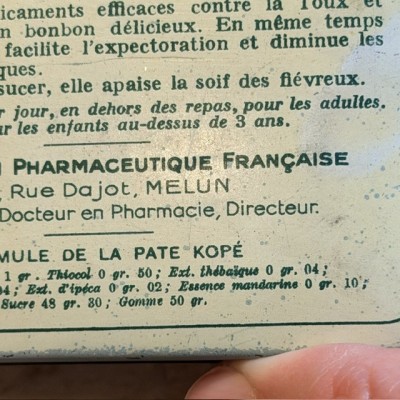
Whilst the box boasts a “delicious sweet” flavoured with mandarin essence designed to “quench the thirst of those with a fever”, its quantitative formula on the back reveals a formidable therapeutic arsenal.
Thebaine Extract (Opium): Present at a level of 0.04 g of the total weight of the formula. At the maximum recommended adult dosage (16 to 20 pieces per day), the patient consumed approximately 10 mg of opium per day. This regular intake acted as a powerful central sedative.
Belladonna extract: Also dosed at 0.04 g. This plant, rich in atropine, was used here as an antispasmodic to mechanically suppress the cough reflex and dry out the bronchial tubes.
Containing a lower dose of raw opiates than the old Salmon lozenges, Kopé Paste compensated for this with the combined effect of Opium and Belladonna.
This psychoactive cocktail, masked by the sweet taste of mandarin, provided immediate relief coupled with a ‘woolly-headed’ effect, encouraging compulsive consumption throughout the day: as many as 20 pieces a day...!
Specific Paediatric Note: The recommended dosage allowed for 8 to 10 pieces a day for children aged 3 and over, a practice unthinkable today.
Dimensions: 9.5x6cm
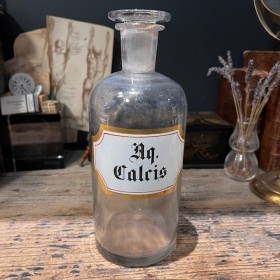
Aqua Calris - Hot water
Antique pharmacy jar
Apothecary
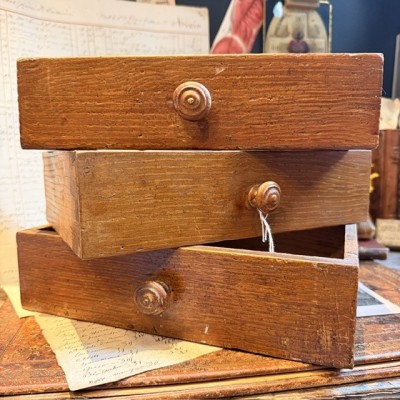
The Apothecary’s Little Drawer
Small antique wooden apothecary’s drawer that can be used as a storage box – Trade drawer
Handcrafted using traditional methods, with dovetail joints and a turned wooden handle
Width: 26cm - Length: 15.5cm - Height: 5.5cm
All the drawers are different, with stains and varying signs of age on each one
Sold empty, without accessories
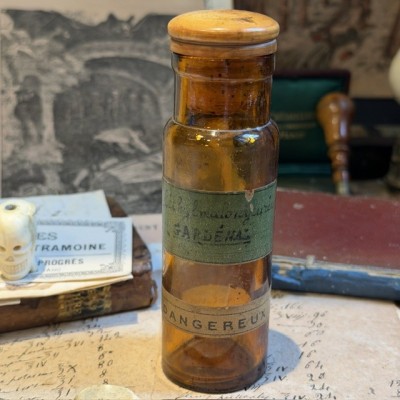
Gardénal - Phenobarbital - Barbiturates
Phényléthylmalonylurée
Antique amber glass bottle, with a boxwood and cork stopper.
Label: DANGEROUS
Indicating to the pharmacist that it must be stored separately from other substances in the cabinet for toxic substances, the famous ‘poison cabinet’.
It comes from the former cellar-laboratory of a Parisian pharmacy. The bottles had not been moved from the shelves since the late 1950s. The cellar had served as a medical analysis laboratory and a laboratory for the pharmacy’s compounded preparations from 1900 until around 1950.
EMPTY
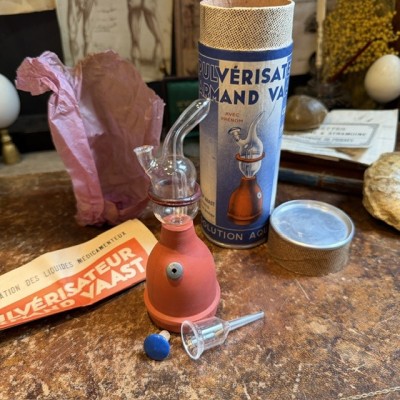
Armand Vaast nasal spray - Oil vaporizer - Antique remedy
In its box
Used in otolaryngology, it was intended for nasal or oral sprays in the treatment of colds and antiseptic treatment of the respiratory tract.
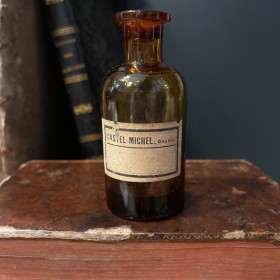
Castel - Michel perfumers
Antique perfume bottle
Apothecary vial
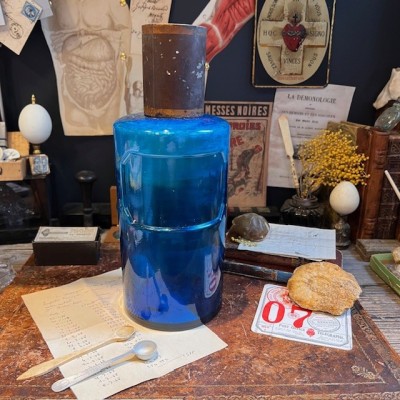
Very Large cobalt blue glass pharmacy bottle - Apothecary - Shouldered - H27.5cm - 19th century
Shouldered apothecary bottle - Antique pharmacy bottle
Mouth-blown glass - Cobalt blue color tinted throughout
This large-capacity jar was a storage jar intended for stockpiling
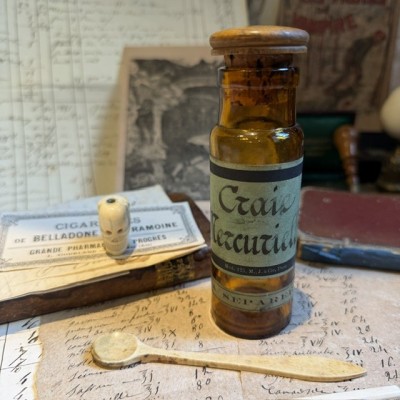
Mercury Chalk – Treatment for Syphilis
Antique amber glass bottle, with a boxwood and cork stopper.
Handwritten label, pen inscription ‘Mercurial Chalk’, neat calligraphy with its thick and thin strokes.
Bottom band ‘TO BE SEPARATED’, instructing the pharmacist to store it in the cabinet for toxic substances, the famous poison cabinet.
It comes from the former cellar-laboratory of a Parisian pharmacy. The bottles had not been moved from the shelves since the late 1950s. The cellar had served as a medical analysis laboratory and a laboratory for the pharmacy’s compounded preparations from 1900 until around 1950.
Period: Judging by the handwriting, late 19th century
EMPTY
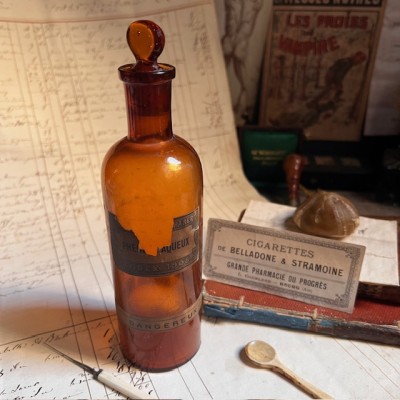
Phénol Aqueux
Antique pharmacy bottle
Green label: SUBSTANCE TO BE SEPARATED - CODEX 1908
This means that this bottle had to be kept separate from the others because it was dangerous - POISON
EMPTY
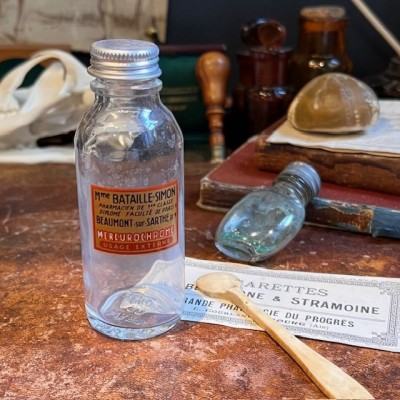
Mercurochrome
Antique pharmacy bottle - Apothecary
Mrs Bataille-Simon, First Class Pharmacist in Beaumont sur Sarthe - Tel 9
Horseradish syrup
Grams / Tablespoons - Graduated bottle
in French: Grammes / Cuillères à soupe
Antique medicine bottle
Apothecary
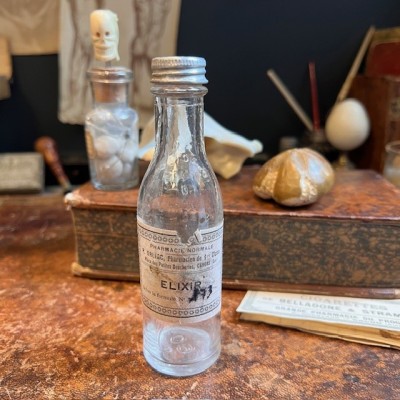
Elixir 173
Antique pharmacy bottle - Apothecary
Empty
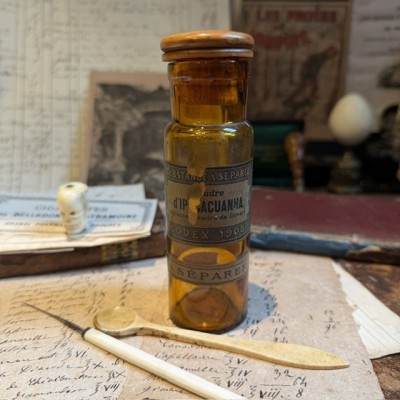
Ipecacuanha Opiate Powder - Dover's Powder
Antique amber glass bottle, with a boxwood and cork stopper.
Green label: SUBSTANCE TO BE STORED SEPARATELY – CODEX 1908
Indicating to the pharmacist that it must be stored separately from other substances in the cabinet for toxic substances, the famous ‘poison cabinet’.
It comes from the former cellar-laboratory of a Parisian pharmacy. The bottles had not been moved from the shelves since the late 1950s. The cellar had served as a medical analysis laboratory and a laboratory for the pharmacy’s compounded preparations from 1900 until around 1950.
EMPTY
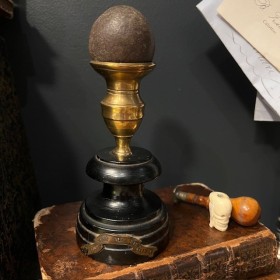
Antique bezoar - Antipoison - Antidote
Once sold by the apothecary, bezoar, also known as gallstone, was reputed to have the same anti-poison properties as the legendary unicorn's horn, hence its excessively high price, also due to its great rarity.
An important piece in a cabinet of curiosities
Sold alone - Without stand, sold separately
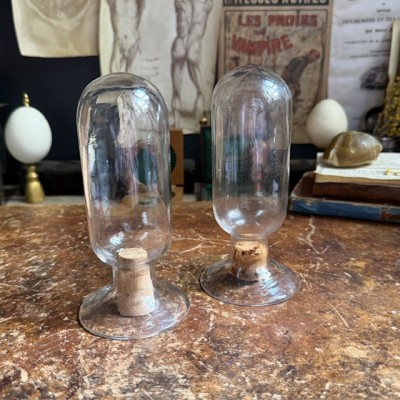
Specimen jar in blown glass – Inverted apothecary jar
Size S
A vintage laboratory or conservatory container designed for the display and preservation of biological or botanical specimens
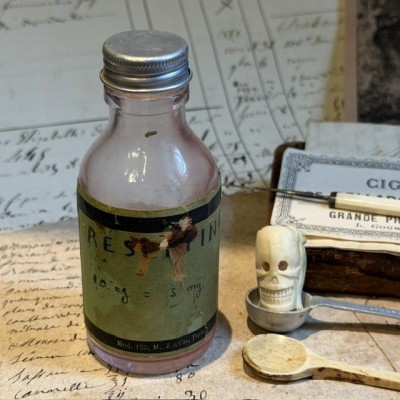
Reseptine
Antique pharmacy bottle
EMPTY
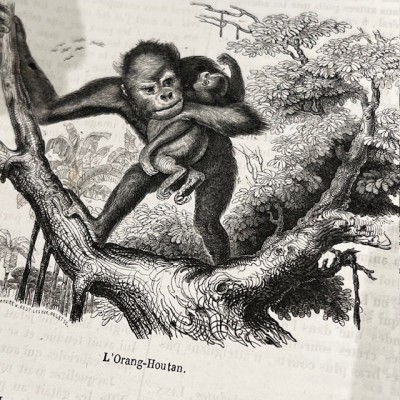
Le Jardin des Plantes
Description and habits of the mammals in the menagerie and the Natural History Museum
By Boitard - Antique book circa 1851
A beautiful snapshot of the museum and its garden in the mid-19th century, featuring interiors of the museum that no longer exist today.
Kopé Opium Paste for Coughs
Antique tin medicine box - Pharmacy - Apothecary
Medical Confectionery: Circa 1920
Paradoxes of the antique pharmacy, where notorious poisons were presented in the guise of harmless sweets.
EMPTY