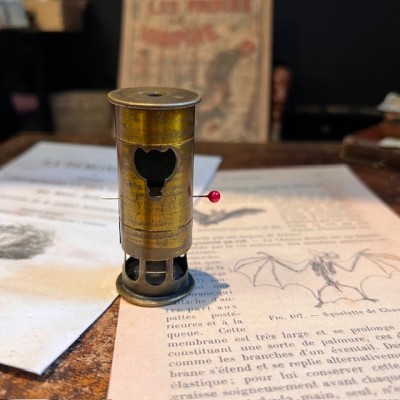

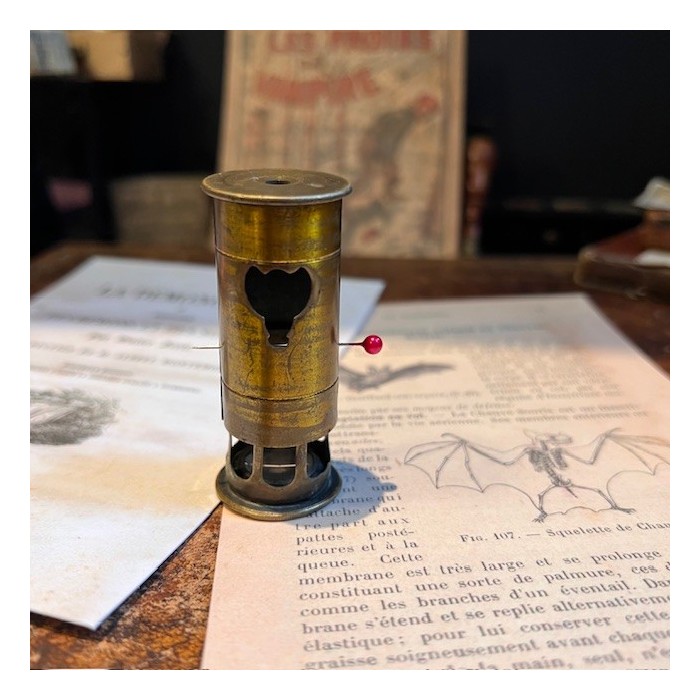
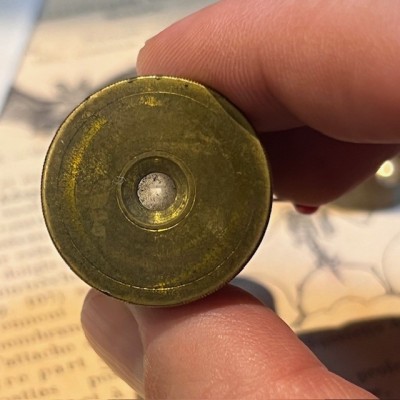
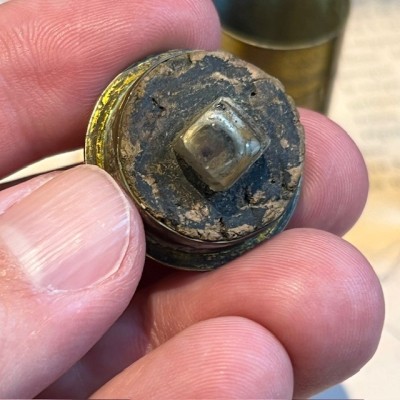
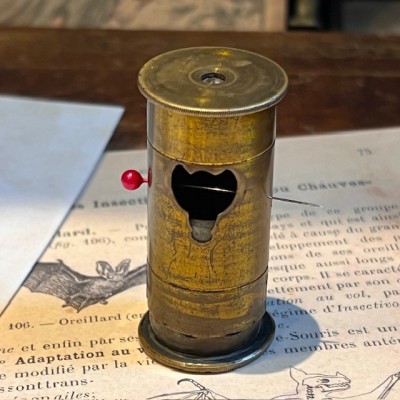
Pocket microscope
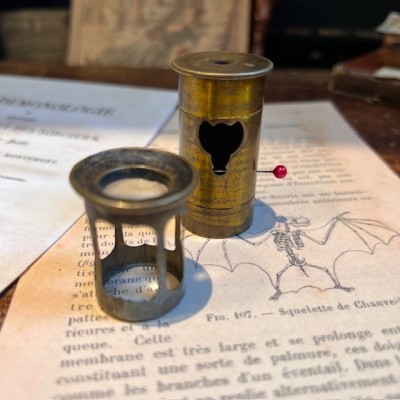
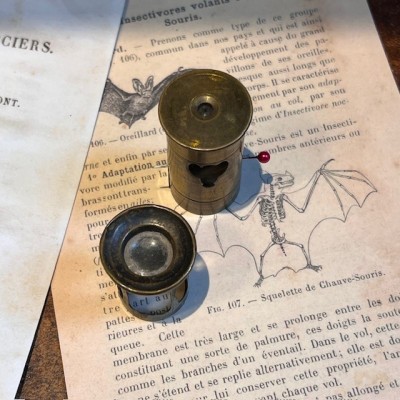
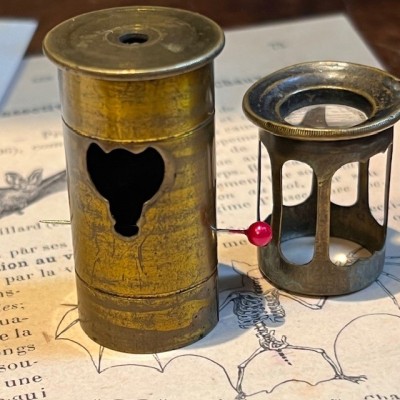
Floroscope - Insectoscope in brass
1850's - 1930's
Pocket microscope
Floroscope - Brass insectoscope
Small pocket microscope that allowed for quick observation of insects, small minerals, flowers, etc. in nature.
These small microscopes were sold from the 1850s until around the 1930s.
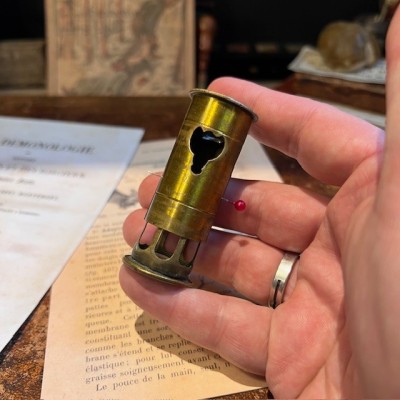
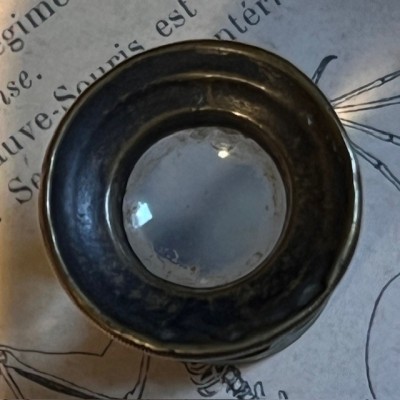
Consisting of two detachable parts with lenses at each end, one being a biconvex magnifying lens placed on a cage and the other a square Stanhope lens placed in an eyepiece above a tube.
A non-period pin can be inserted into the slots in the cylindrical body, allowing the object to be examined, such as a plant or insect, to be positioned in line with the biconvex lens, the one with the cage.
You can read an interesting article about these pocket microscopes on the Compendium website: pocket microscope
Height: approx. 6.5 cm - Diameter: 2.5 cm
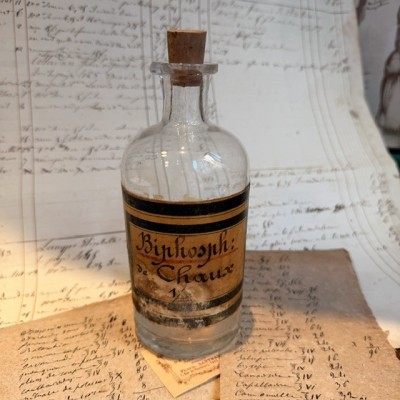
Biphosphate de Chaux
Antique pharmacy bottle
EMPTY
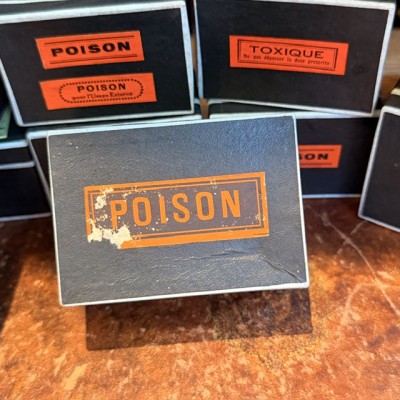
Antique labels in a pharmacy box for cures made of canvas cardboard
Poison label - Ref A
The pharmacist used his boxes of medicine to put away the labels he would then put on the bottles that he would resell to his customers.
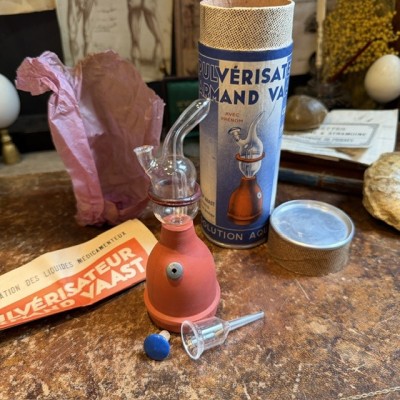
Armand Vaast nasal spray - Oil vaporizer - Antique remedy
In its box
Used in otolaryngology, it was intended for nasal or oral sprays in the treatment of colds and antiseptic treatment of the respiratory tract.
Grindelia Tincture
Antique medicine bottle
Apothecary
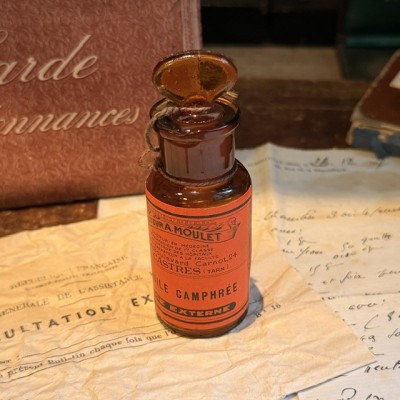
Huile camphrée
Antique pharmacy bottle
EMPTY
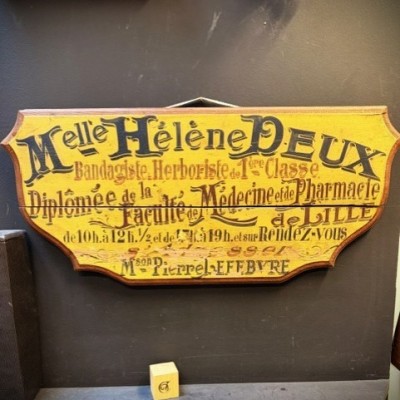
Rare and authentic wall sign panel
Pharmacy and fitting brand - Miss Hélène Deux, Bandagiste & 1st class Herbalist
Officine sign panel in painted wood from the 19th-20th century hinge: 1890-1920.
The sign is made of 2 reinforced wood panels at the back. There is a space between the 2 panels.
The sign features a superb art lettering entirely made freehand by a letter painter (superb contrasts of blue and brown, neat full and loose)
Witness to the history of pharmacy and ancient orthopaedics: the bandagist shaping leather and frames for corsets and restraints, and the herbalist 1st class, a profession that has disappeared since the abolition of the diploma in 1941.
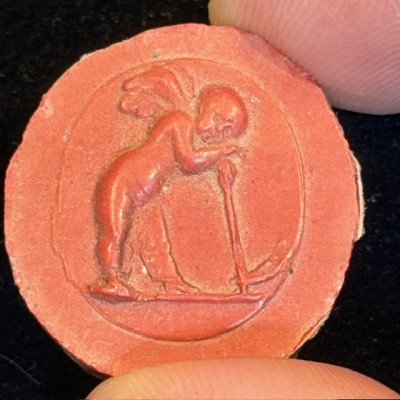
Antique intaglio and cameo print from the Grand Tour of the 19th century
In Red Sulfur
True testimony of the Grand Tour carried out by the aristocrats in the 19th century
Profiles in the antique style, mythological scenes or Greco-Roman deities
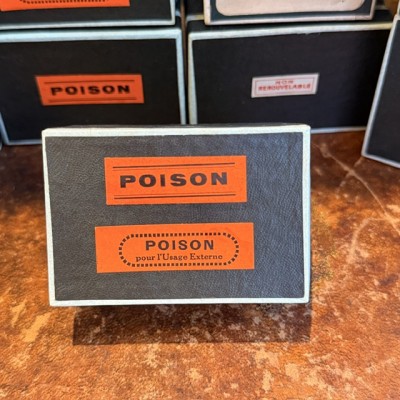
Antique labels in a pharmacy box for cures made of canvas cardboard
Poison label - Ref A
The pharmacist used his boxes of medicine to put away the labels he would then put on the bottles that he would resell to his customers.

Lower part of the lower mandible of a horse jaw
Antique model from Maison Auzoux in Paris
Paper-mâché pedagogical model
Model B - 1 year
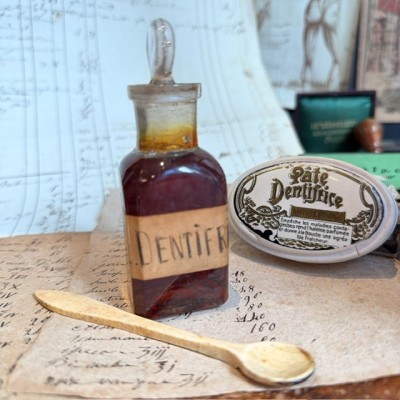
Toothpaste elixir
Antique pharmacy bottle
Handwritten label with pen
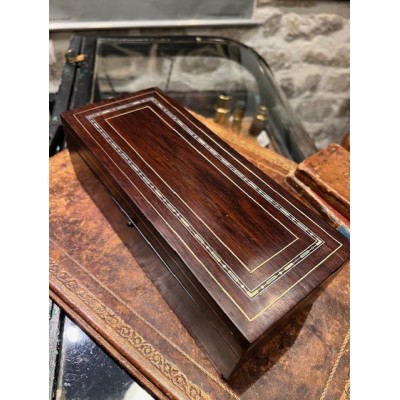
Napoleon III box in rosewood and polychrome marquetry
These boxes were used to store gloves, letters or accessories. This one was probably used to store dominoes, judging by the interior compartments.
A refined decorative piece, typical of 19th-century Parisian lifestyle.
19th century - Period: Napoleon III, circa 1850–1875
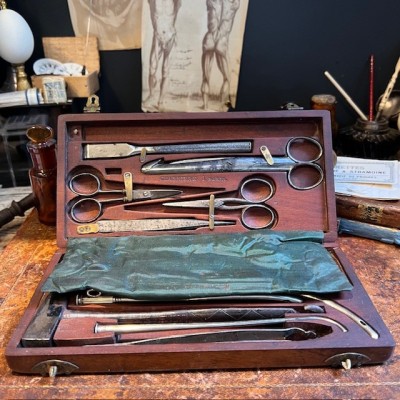
Portable autopsy kit from the mid-19th century
Maison Charrière in Paris, circa 1845–1870
Mahogany case for autopsy and dissection
Small portable mahogany case containing a set of autopsy instruments: hook hammer, bone chisel, enterotome scissors, probes, hooks and suture needles. Used by forensic scientists and anatomists for opening and examining bodies.
Charrière, a major 19th-century Parisian manufacturer, was a pioneer in the design of high-precision surgical and anatomical instruments.
Mahogany and polished steel: 23 × 11 cm
Please note: crack in the wood under the case
A beautiful object, very rare to find
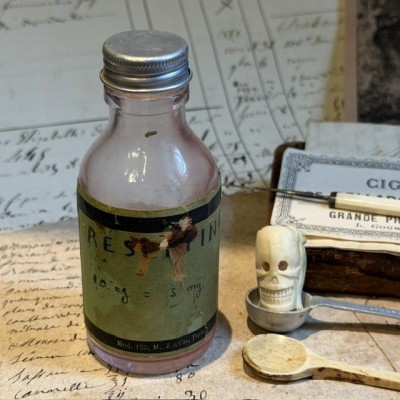
Reseptine
Antique pharmacy bottle
EMPTY
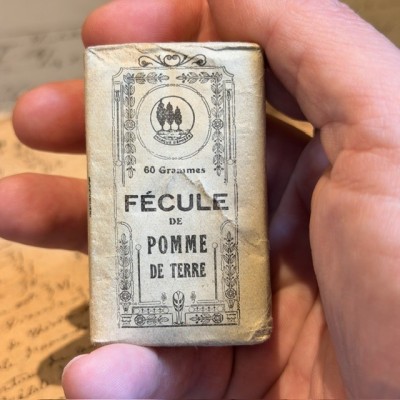
Packet of Potato Starch
Circa 1920
New old stock
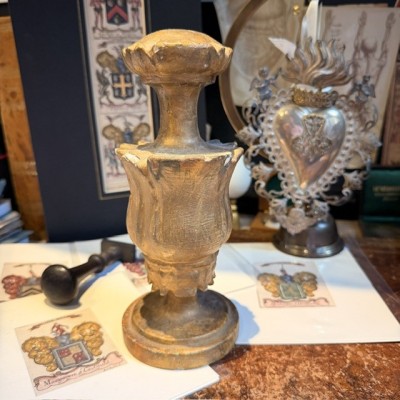
Stem - Baroque base in turned wood and gilded stucco - Italy (Tuscany), 19th century
Italian Giltwood Altar Floral Stand
Antique religious altar bouquet stem made of turned and carved wood, covered with a stucco undercoating (gesso) and gilded.
Lack of gesso and gilding in some places, which is precisely why the white gesso appears under the gilding.
Traces of use and visible gaps in stucco
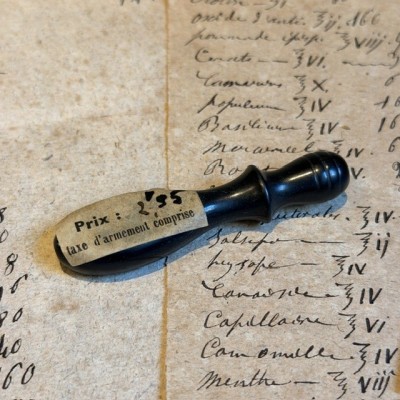
Ebonite cannula tip
Tips for enema or medical irrigation cannulas. New Old Stock
Marketed between May 1939 and sometime in 1940
Pocket microscope
Floroscope - Insectoscope in brass
1850's - 1930's