

- New
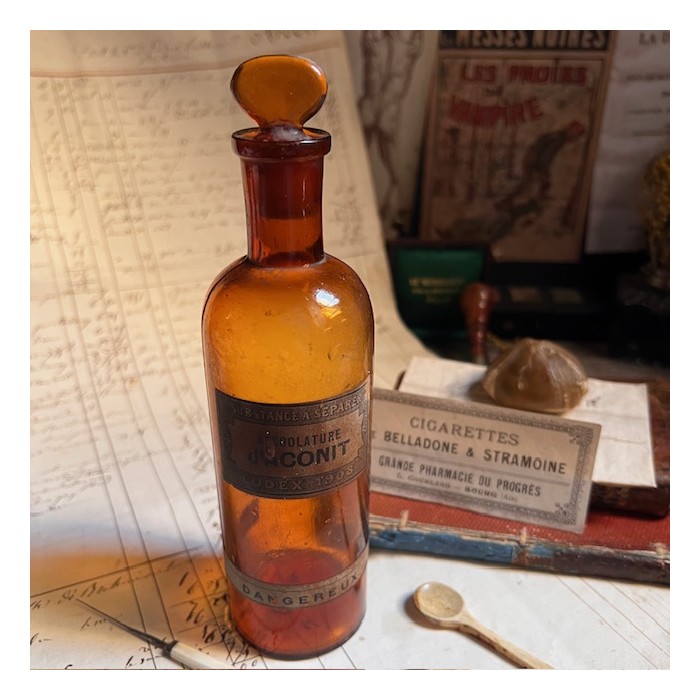
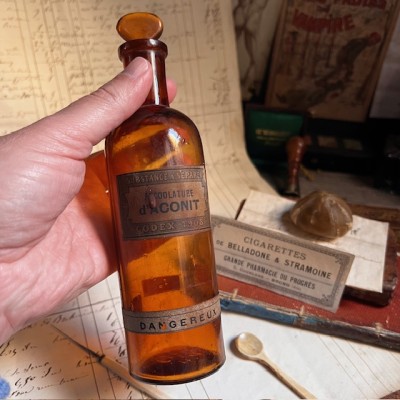
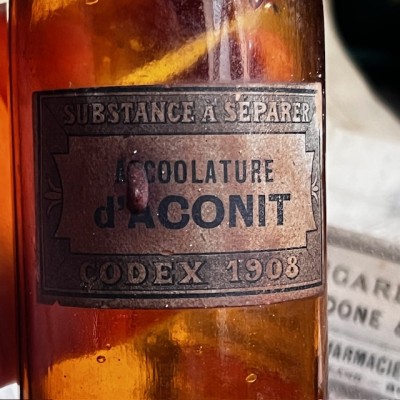
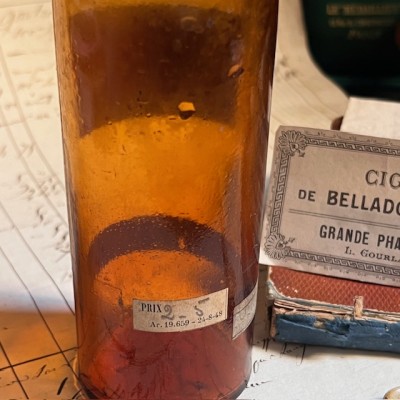
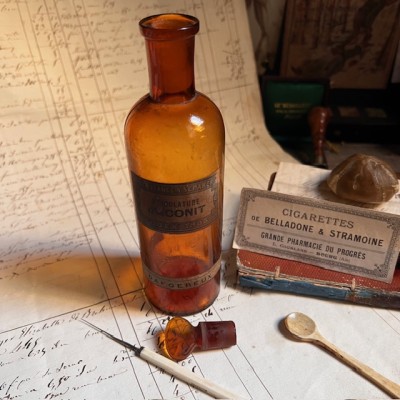
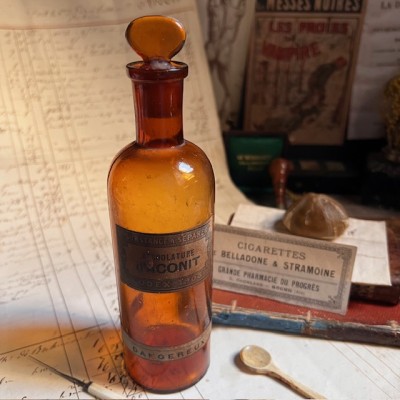
Aconite tincture
Antique pharmacy bottle
Green label: SUBSTANCE A SEPARER - CODEX 1908
This means that this bottle had to be kept separate from the others because it was dangerous in high doses- POISON
EMPTY
Aconite tincture
Antique pharmacy bottle
Green label: SUBSTANCE TO BE SEPARATED - CODEX 1908
This means that this bottle had to be kept separate from the others because it was dangerous in high doses - POISON
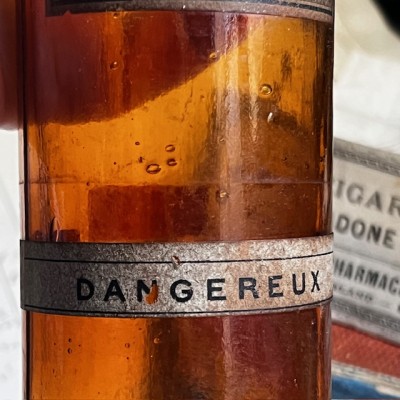
This means that this bottle had to be kept separate from the others because it was extremely dangerous and deadly – POISON
The Queen of Poisons: Aconite! Also known as wolfsbane
Extremely toxic; it is estimated that 2 to 4 milligrammes – the size of a grain of sand – is enough to kill an adult within a few hours by causing progressive paralysis of the respiratory and cardiac centres.
However, it was used in very small doses as a painkiller, a cough suppressant or to reduce fevers.
Here, the bottle is also accompanied by a ‘danger’ label: this substance had to be stored separately in the Poison Cabinet, the key to which was held solely by the apothecary.
It comes from the former cellar-laboratory of a Parisian pharmacy. The bottles had not been moved from the shelves since the late 1950s. The cellar had served as a medical analysis laboratory and a laboratory for the pharmacy’s compounded preparations from 1900 until around 1950.
Bottle height: 19.5 cm including cap
EMPTY
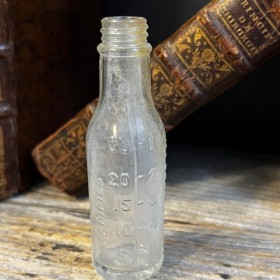
Grams / Teaspoons in French: Grammes / Cuillères à café
Antique medicine bottle
Apothecary
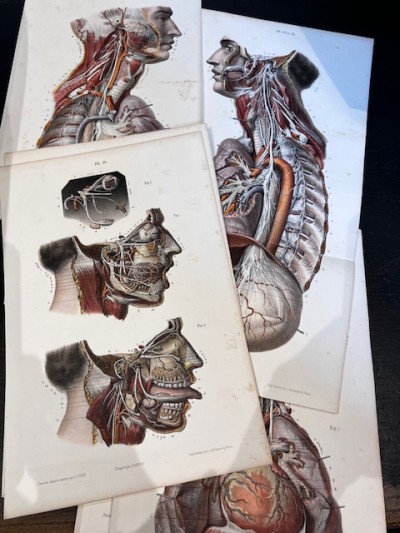
Anatomical chart by Ludovic Hirschfeld drawn by Léveillé
From Traité et iconographie du système nerveux et des organes des sens de l'homme avec leur mode de préparation
Published in 1866
Lithography
You buy 1 plate, not the whole set
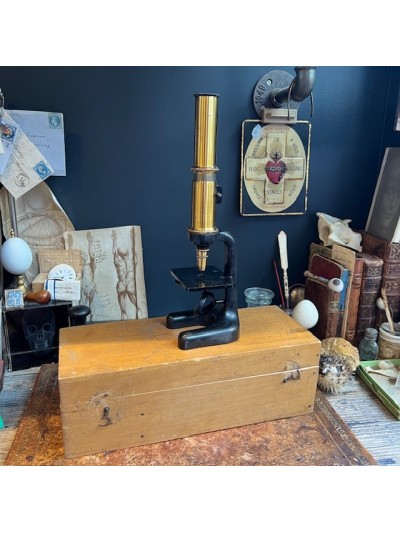
Antique brass and cast-iron rack-and-pinion microscope in wooden case
Late 19th century - Early 20th century

Essence of star anise
Antique pharmacy bottle
Apothecary vial
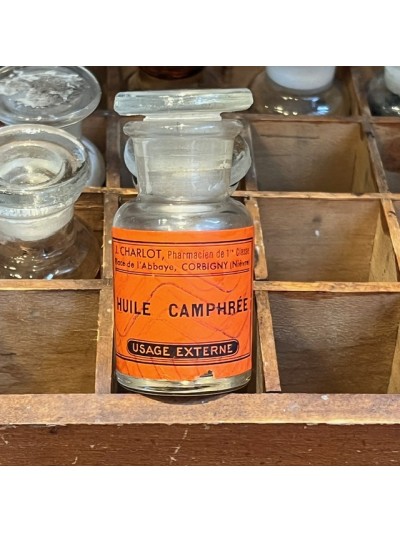
Camphorated oil
Antique pharmacy bottle
Apothecary vial
EMPTY but cap is blocked and bottle will not open

Lower part of the lower mandible of a horse jaw
Antique model from Maison Auzoux in Paris
Paper-mâché pedagogical model
Model A - 9 months
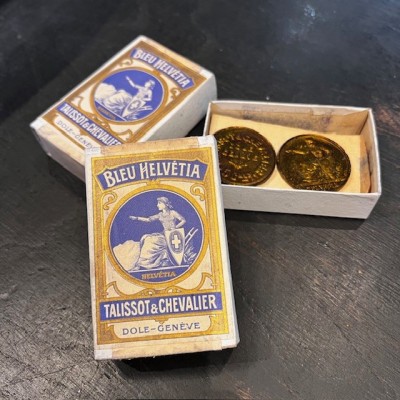
Antique Laundry blue box - Helvetia Blue from Talissot & Chevalier in Dôle and Geneva
Period: 1890-1905
Box containing 6 gold-plated “coins” made of blue wash, resembling the iconography of Swiss coins and medals from the late 19th and early 20th centuries.
Beautiful blue and gold illustration on the box.
Your box will be sealed: never opened in 120 years
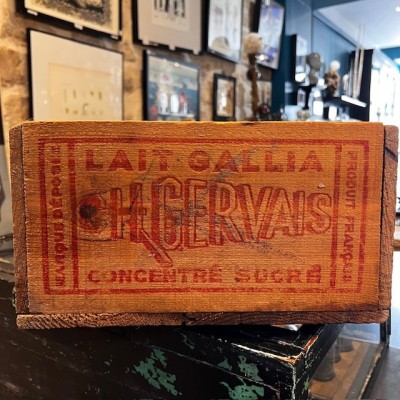
Antique wooden advertising crate for Gallia / Ch. Gervais infant milk concentrate
Found in Parisian cellars that served as laboratories and storage rooms for pharmacists preparing their masterful concoctions from 1900 to 1950.
It was used to store products, glass bottles, etc.
Period: Circa 1947–1955

Antique Guyon bladder syringe in bakelite
Beginning of XXth century
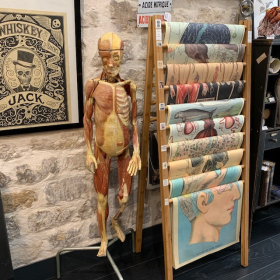
Clastic Mannequin - Dr. Auzoux's anatomical skinned
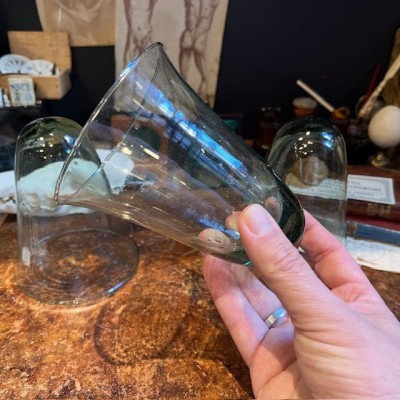
Antique glass bell jar
Apothecary / Laboratory
Thin glass, light green in color and darker at the top, with bubbles
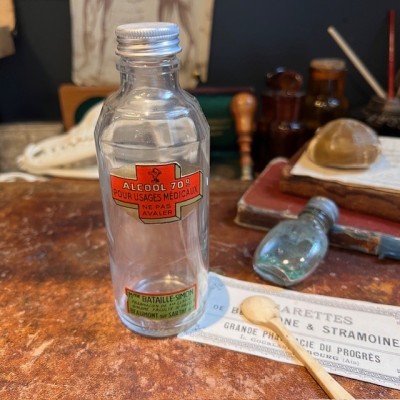
70° alcohol
Antique pharmacy bottle - Apothecary
Mrs Bataille-Simon, First Class Pharmacist in Beaumont sur Sarthe - Tel 9
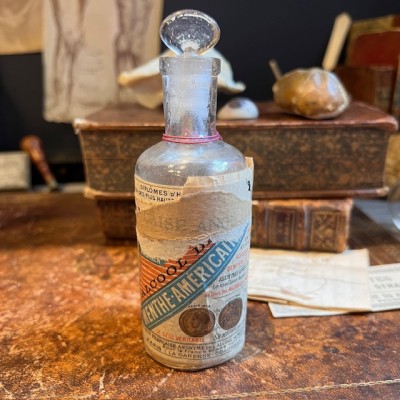
American mint alcohol
Antique pharmacy bottle
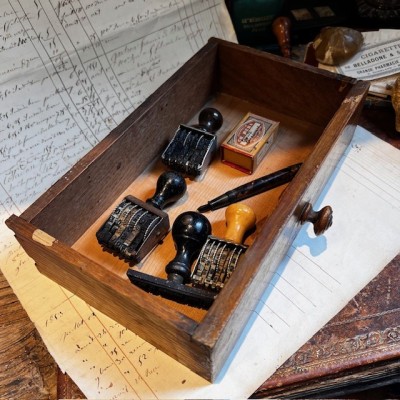
The Pharmacist's Drawer
Small antique wooden pharmacy drawer that can be used as a storage box
A true time capsule!
Sold with its contents, just as they were found when discovered in the basement of this Parisian pharmacy.
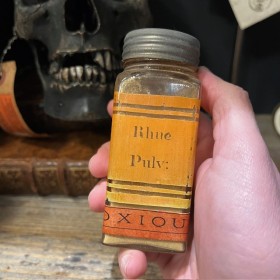
Rue Powder
Rue was an abortive plant
Antique pharmacy bottle - Poison - Toxic
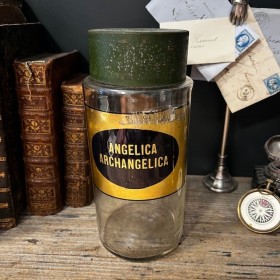
Angelica Archangelica
Pharmacy jar - Herbalism - Apothecary bottle
Late 19th century, early 20th century
Aconite tincture
Antique pharmacy bottle
Green label: SUBSTANCE A SEPARER - CODEX 1908
This means that this bottle had to be kept separate from the others because it was dangerous in high doses- POISON
EMPTY