

- New
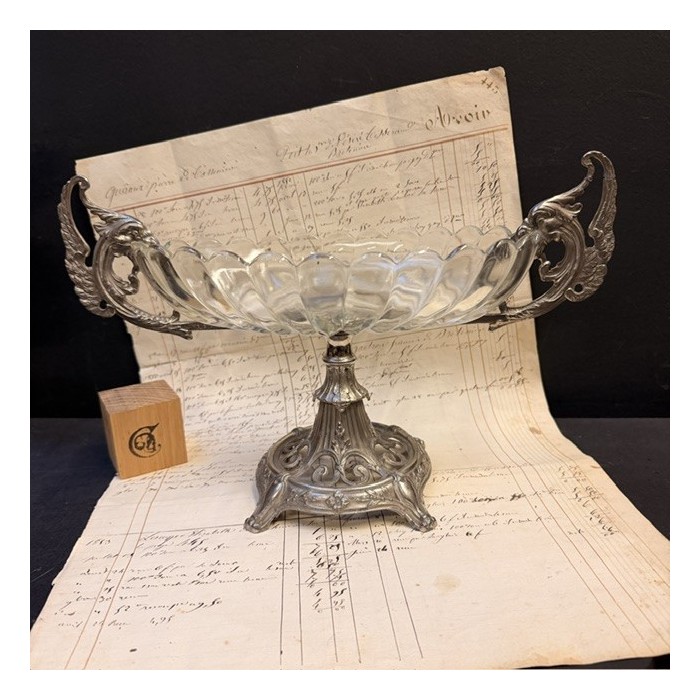
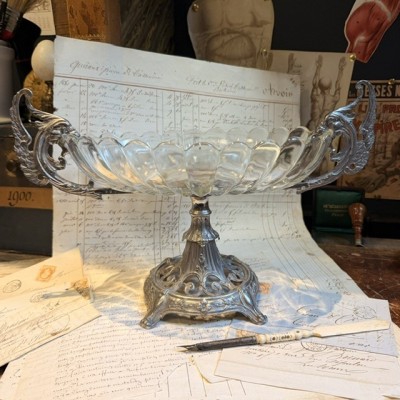
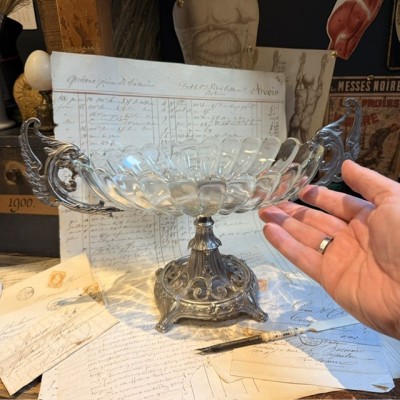
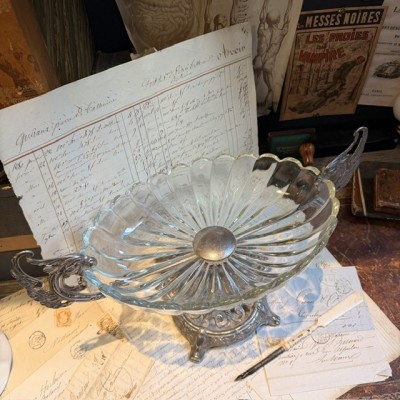
Silvered Spelter and Molded Glass Chimera Centerpiece - Large Late 19th Century Table Bowl
This centerpiece reflects the eclectic and historicist style of the late 19th century, a period when tableware incorporated decorative motifs inspired by fantastical creatures and mythology.
Circa 1890–1910
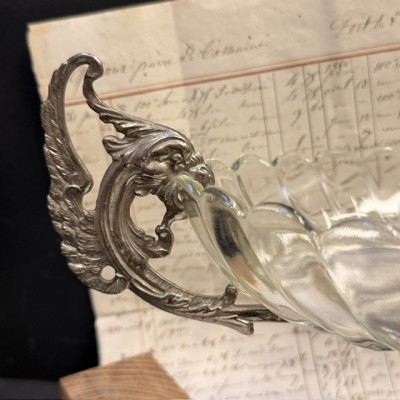
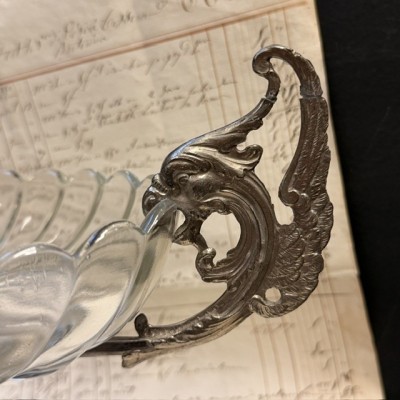
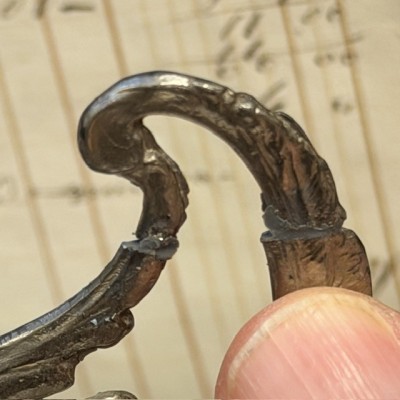
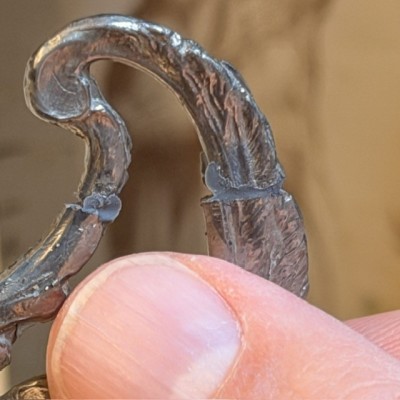
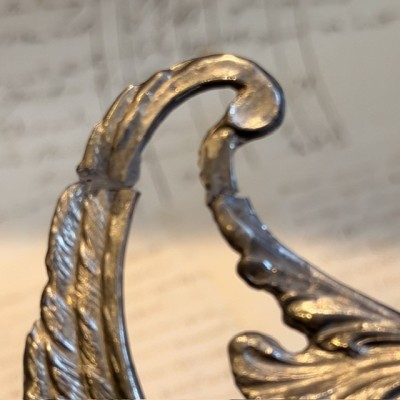
Condition: Discreet restoration on one end of the chimera's wing, but this end remains fragile and must be handled with care, as it may break off.
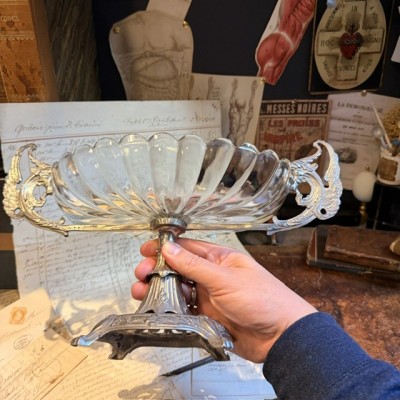
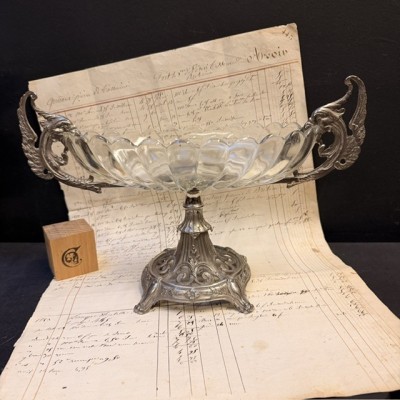
Silvered Spelter and Molded Glass Chimera Centerpiece - Large Late 19th Century Table Bowl
This centerpiece reflects the eclectic and historicist taste of the late 19th century, a period when tableware incorporated a decorative repertoire inspired by fantastical beasts and mythology.
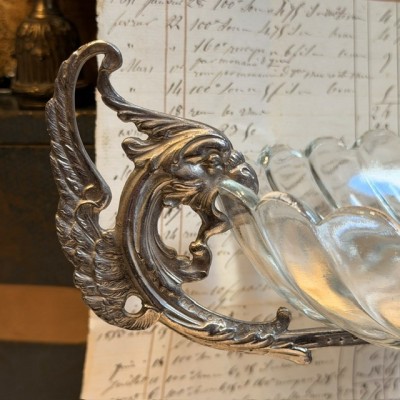
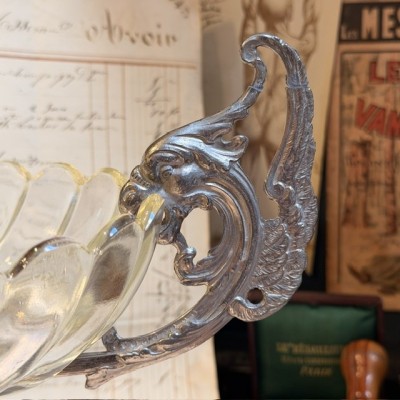
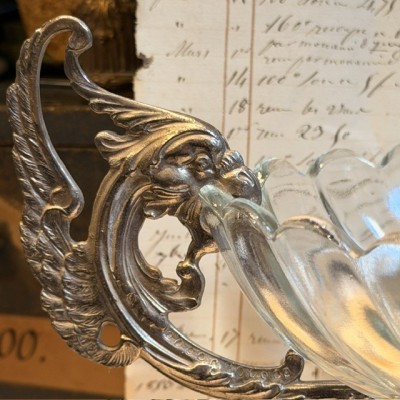
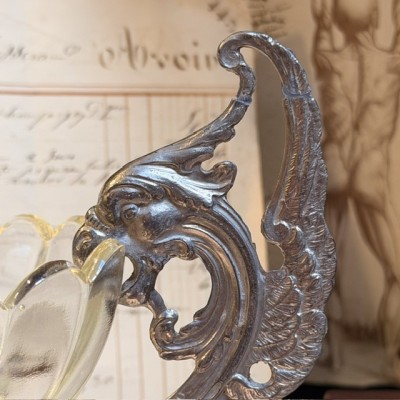
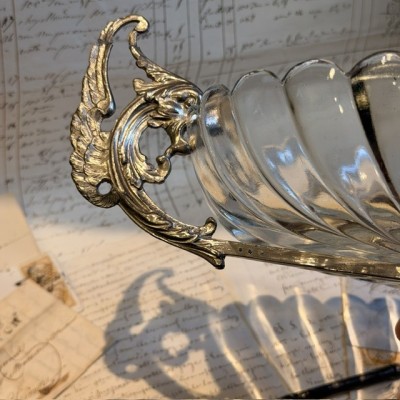
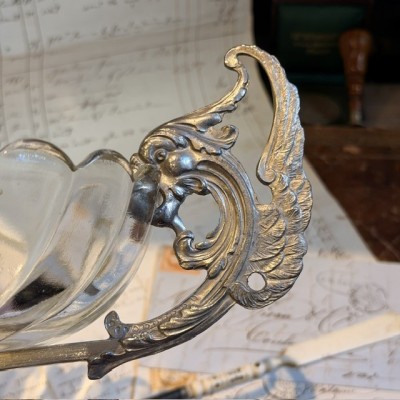
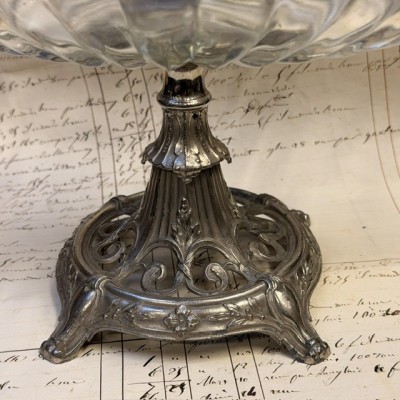
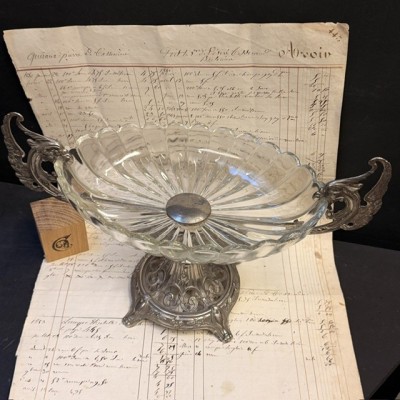
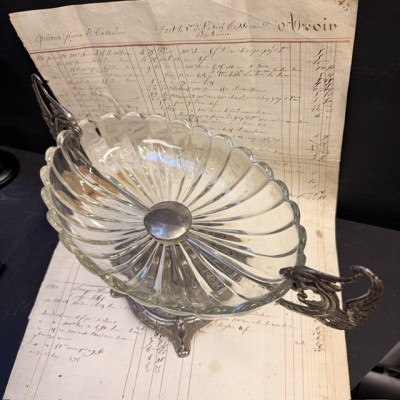
The side handles of the frame depict chimeras or winged dragons with volute-like bodies that seem to bite into the glass bowl.
In decorative tradition, the figures of the chimera and the dragon carry strong narrative weight; as hybrid creatures that guard thresholds, they lend a theatrical and unique dimension to ceremonial objects.
Their presence directly evokes historic cabinets of curiosities, where the extraordinary and the monstrous intermingle with utilitarian decorative art.
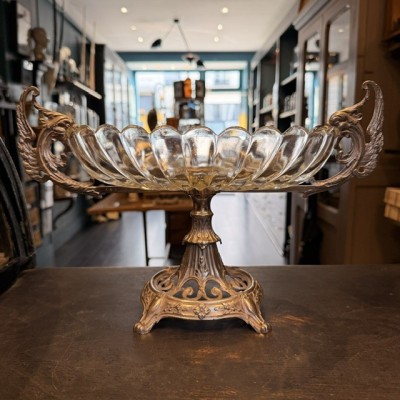
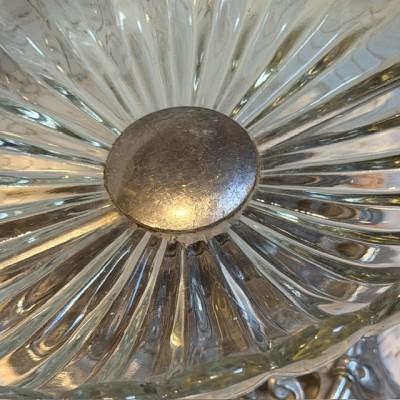
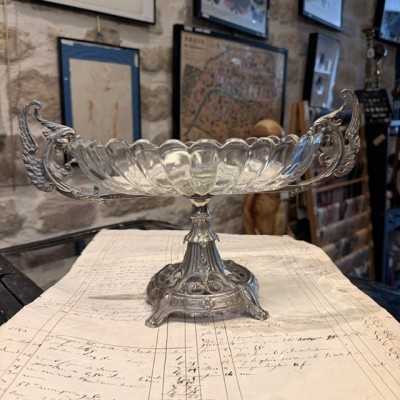
The Silvered Spelter mount supports a molded glass navette-shaped bowl with twisted, scalloped ribs.
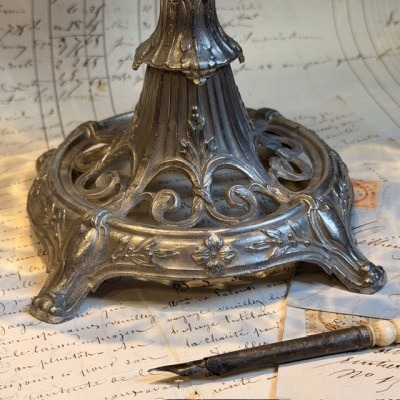
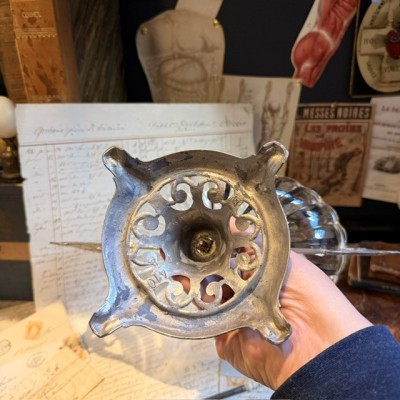
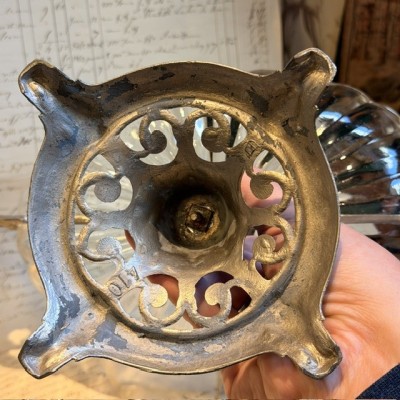
The openwork pedestal is adorned with stylized foliage and leaf motifs.
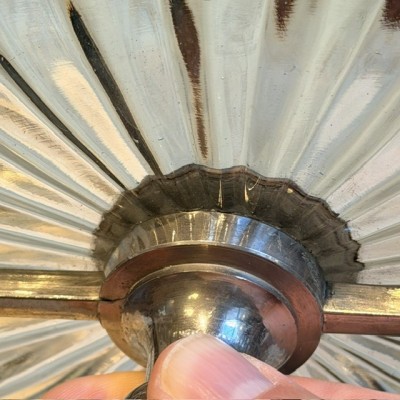
Period and Manufacture: Late 19th century – Early 20th century (circa 1890–1910). The mount is made of patinated silver-plated regul, and the vessel is a clear molded glass bowl with twisted ribs, assembled with a central threaded stem.
Dimensions:
Total height: approximately 21 cm - Total width: approximately 34 cm - Base diameter: 16 cm - Weight: 1.45 kg
Condition: Discreet restoration on one end of the chimera's wing, but this end remains fragile and must be handled with care, as it may break off.
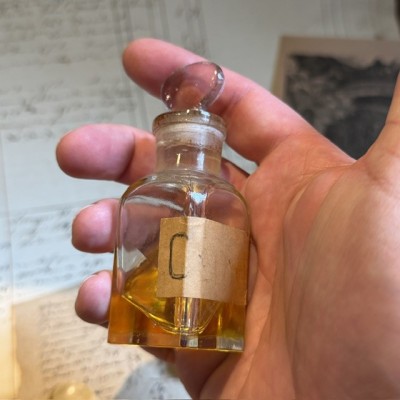
Cèdre - Cedarwood Oil
Antique pharmacy bottle
There is some product left, but the stopper is stuck
The writing has faded, but in oblique light one can make out CEDRE
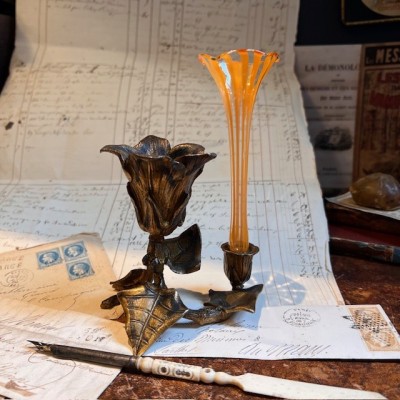
Elegant Art Nouveau glass vase and bronze candlestick
Made of cast bronze with a patina finish, decorated with naturalistic plant motifs and hand-finished with a file.
Art Nouveau decorative object combining patinated bronze and orange glass in a fluid, asymmetrical plant motif characteristic of the late 19th century.
Circa 1895–1905
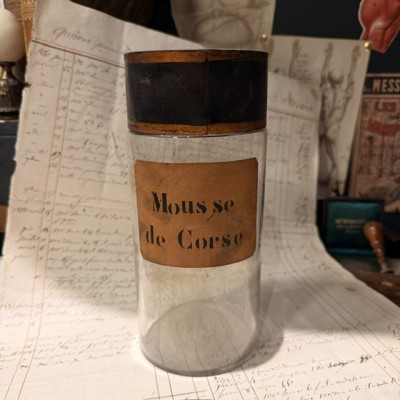
Corsican Moss
Pharmacy jar - Herbalism - Apothecary Mouth-blown glass bottle
Corsican Moss (Helminthochorton or Sphaerococcus helminthochorton) is a mixture of red seaweeds harvested along the coast of Corsica. It was one of the most famous deworming agents used in traditional medicine to eliminate intestinal worms.
Late 19th century - Beginning of the 20th
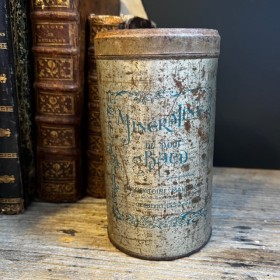
Mineraline by Dr C. Baud
Antique tin pharmacy box
Powder or talcum powder for children's toiletries
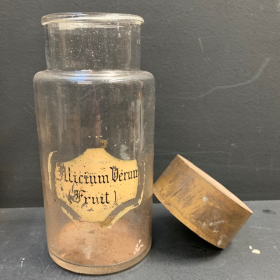
Antique pharmacy jar: Illicium verum (Fruit) / Star anise
Glass pharmacy bottle - XIXth century
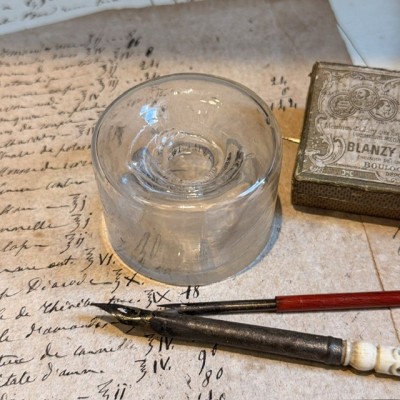
The Pharmacist's Dispensary Inkwell
Moulded glass safety inking pot - Late 19th century
sold without a pen
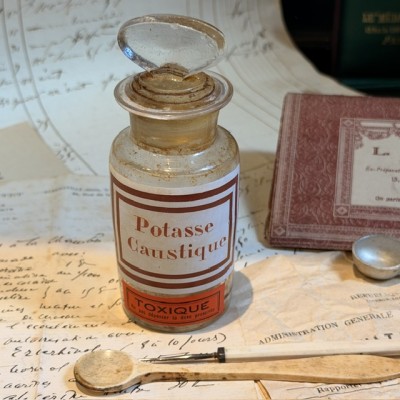
Caustic Potash
Antique pharmacy bottle made of blown glass and enameled painted label.
Red TOXIC label
Signaling to the pharmacist that it is imperative to keep apart the other substances in the cabinet of toxic substances, the famous poison cabinet.
Dating: 19th century
EMPTY
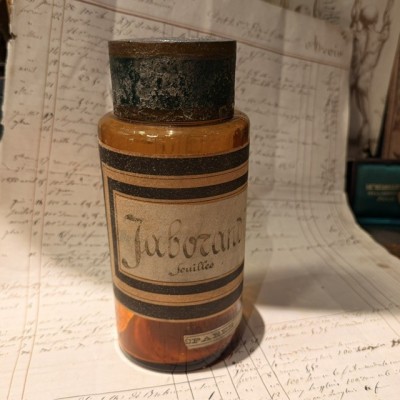
Jaborandi
Pharmacy jar - Herbalism - Apothecary Mouth-blown glass bottle
Late 19th century - Beginning of the 20th
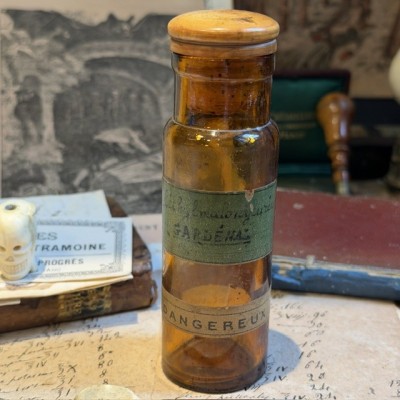
Gardénal - Phenobarbital - Barbiturates
Phényléthylmalonylurée
Antique amber glass bottle, with a boxwood and cork stopper.
Label: DANGEROUS
Indicating to the pharmacist that it must be stored separately from other substances in the cabinet for toxic substances, the famous ‘poison cabinet’.
It comes from the former cellar-laboratory of a Parisian pharmacy. The bottles had not been moved from the shelves since the late 1950s. The cellar had served as a medical analysis laboratory and a laboratory for the pharmacy’s compounded preparations from 1900 until around 1950.
EMPTY
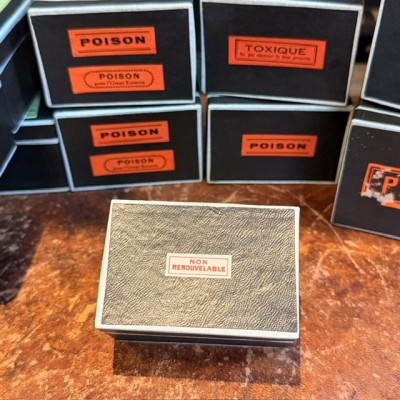
Antique labels in a pharmacy box for cures made of canvas cardboard
Non-renewable label
The pharmacist used his boxes of medicine to put away the labels he would then put on the bottles that he would resell to his customers.
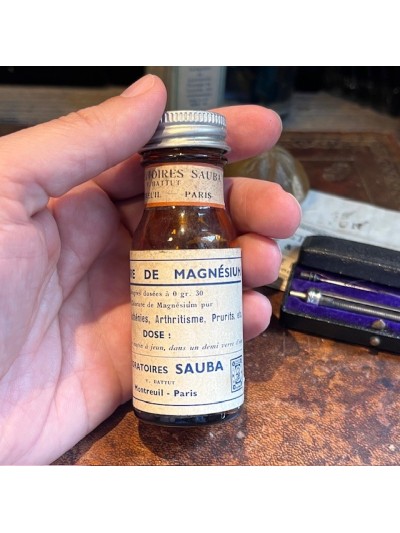
Chlorure de magnésium
Antique pharmacy bottle
Apothecary vial
EMPTY
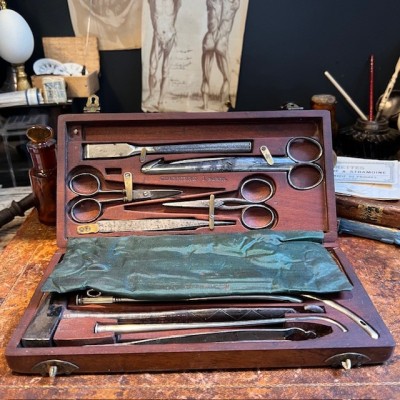
Portable autopsy kit from the mid-19th century
Maison Charrière in Paris, circa 1845–1870
Mahogany case for autopsy and dissection
Small portable mahogany case containing a set of autopsy instruments: hook hammer, bone chisel, enterotome scissors, probes, hooks and suture needles. Used by forensic scientists and anatomists for opening and examining bodies.
Charrière, a major 19th-century Parisian manufacturer, was a pioneer in the design of high-precision surgical and anatomical instruments.
Mahogany and polished steel: 23 × 11 cm
Please note: crack in the wood under the case
A beautiful object, very rare to find
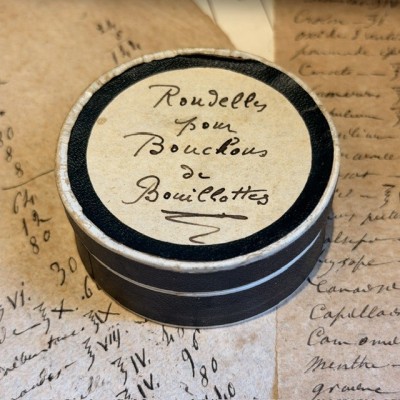
Box of rubber washers for hot water bottles
In its original cardboard box
1939/1940
New Old Stock
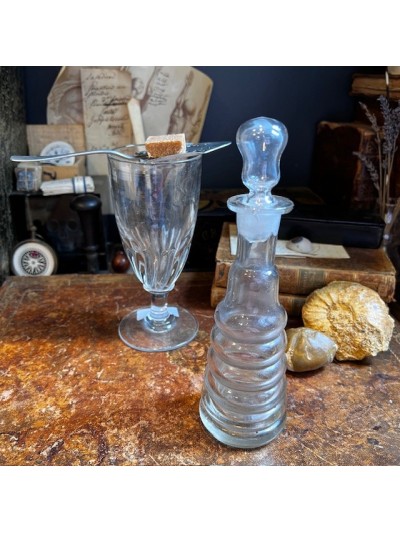
An antique absinthe topette (decanter)
6 Beaded Topette
Residue in the bottom of the carafe
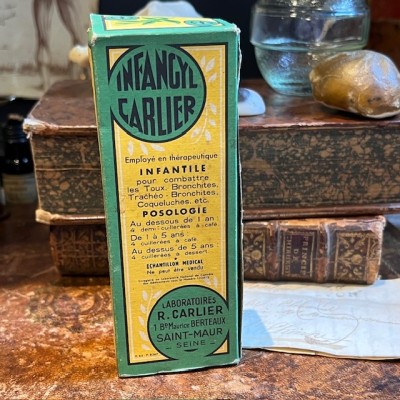
Infangyl Carlier
Antique pharmacy bottle - Apothecary
The box still contains its full, sealed bottle and instructions
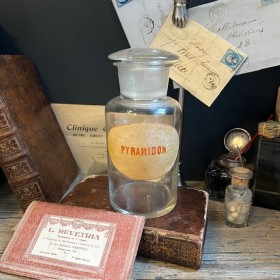
Pyramidon
Antique pharmacy bottle
Apothecary vial
Color pigments have been added to the inside of the jar
Silvered Spelter and Molded Glass Chimera Centerpiece - Large Late 19th Century Table Bowl
This centerpiece reflects the eclectic and historicist style of the late 19th century, a period when tableware incorporated decorative motifs inspired by fantastical creatures and mythology.
Circa 1890–1910
Condition: Discreet restoration on one end of the chimera's wing, but this end remains fragile and must be handled with care, as it may break off.