
- New
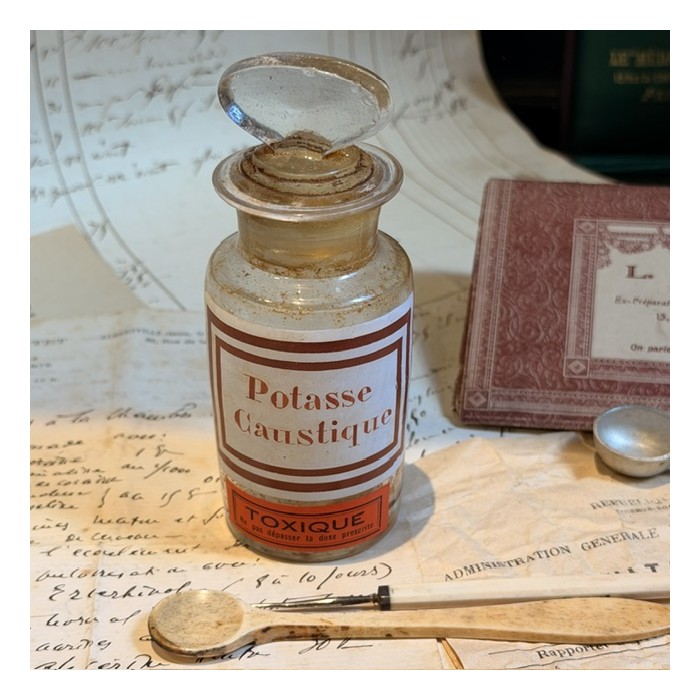
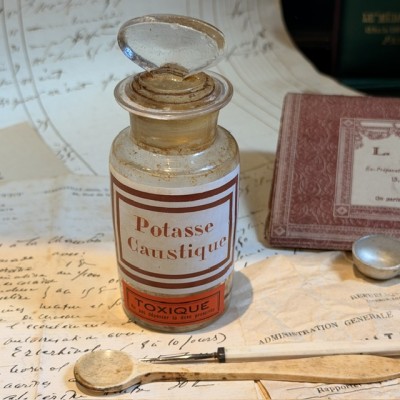
Caustic Potash
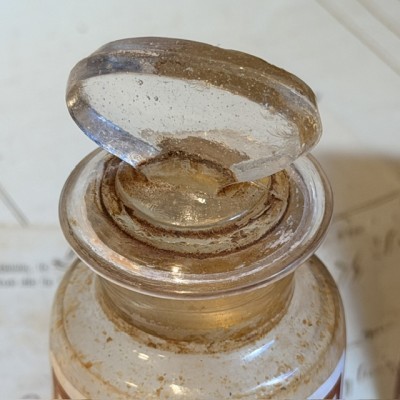
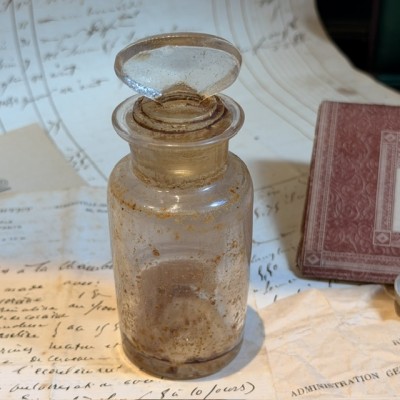
Antique pharmacy bottle made of blown glass and enameled painted label.
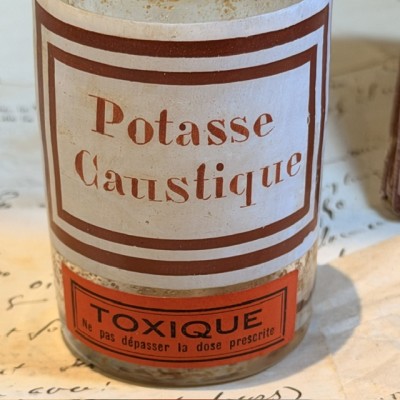
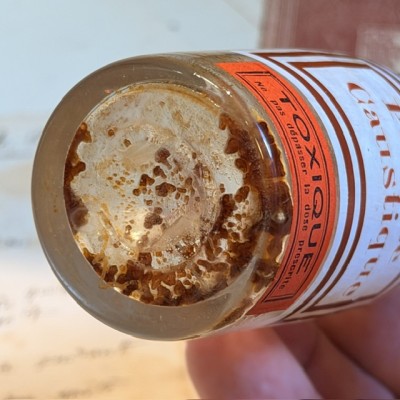
Red TOXIC label
Signaling to the pharmacist that it is imperative to keep apart the other substances in the cabinet of toxic substances, the famous poison cabinet.
Dating: 19th century
EMPTY
Caustic Potash
Antique pharmacy bottle made of blown glass and enameled painted label.
Red TOXIC label
Signaling to the pharmacist that it is imperative to keep apart the other substances in the cabinet of toxic substances, the famous poison cabinet.
Laboratory or pharmaceutical dispensary bottle, typical of the late nineteenth or early twentieth century.
Made of blown transparent glass, it has a trace of pontil visible on the bottom, reflecting traditional artisanal manufacturing. It has its original cap honed with emery BUT the bottle is blocked and does not open, sealed by time.
Beautiful enamelled label stenciled surrounded by a brown/red border. This baked enamel technique guaranteed great resistance to handling and chemicals in the pharmacy. A red regulatory label marked "TOXIQUE" is applied at the bottom, indicating the poisonous nature of the substance.
Used in the 19th century as a cauterizing agent, caustic potash served to destroy warts, ulcers, and necrotic tissue through chemical burning.
An extremely strong alkaline base, it did not merely burn the skin: it dissolved fats and broke down living tissue, causing a chemical burn that penetrated deep into the flesh.
Accidental ingestion instantly destroyed the esophagus and stomach, causing fatal internal perforations
Height of the bottle: 12cm with blown glass cap - Diameter at the base: 4cm
Dating: 19th century
EMPTY
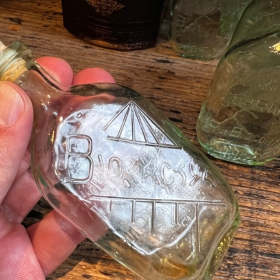
Antique pharmacy bottle
BIOLACTYL Ferment Fournier - Early 1900
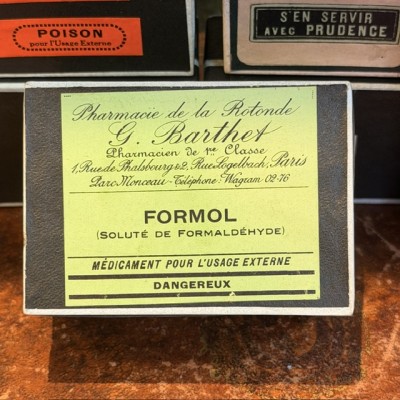
Antique labels in a pharmacy box for cures made of canvas cardboard
Formalin label
The pharmacist used his boxes of medicine to put away the labels he would then put on the bottles that he would resell to his customers.
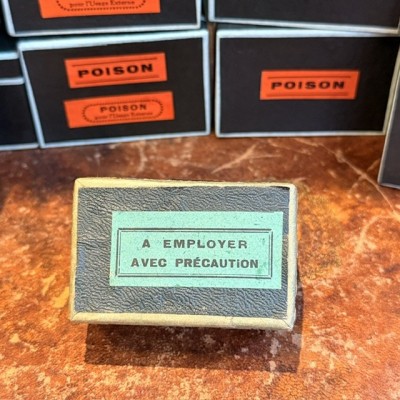
Antique labels in a pharmacy box for cures made of canvas cardboard
To be used with care label
The pharmacist used his boxes of medicine to put away the labels he would then put on the bottles that he would resell to his customers.
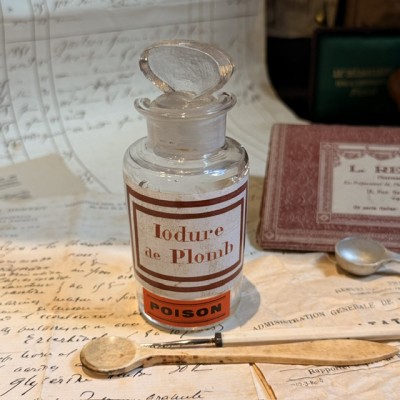
Lead iodide
Antique pharmacy bottle made of blown glass and enameled painted label.
Red POISON label
Signaling to the pharmacist that it is imperative to keep apart the other substances in the cabinet of toxic substances, the famous poison cabinet.
Dating: 19th century
EMPTY
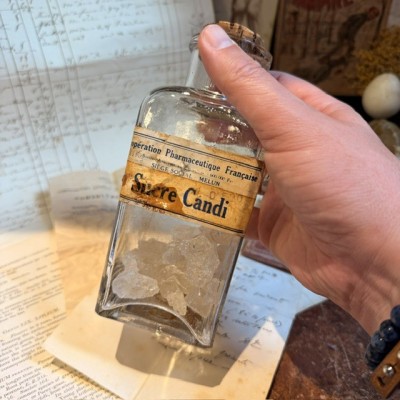
Rock Candy
Antique Apothecary Bottle of Rock Candy – Coopération Pharmaceutique Française (circa 1930–1940)
It comes from the former cellar-laboratory of a Parisian pharmacy. The bottles had remained untouched on the shelves since the late 1950s. The cellar served as a medical analysis laboratory and as a laboratory for the pharmacy's compounded preparations from 1900 until around 1950.
It still contains large crystals of rock candy (Saccharum candi), perfectly preserved.
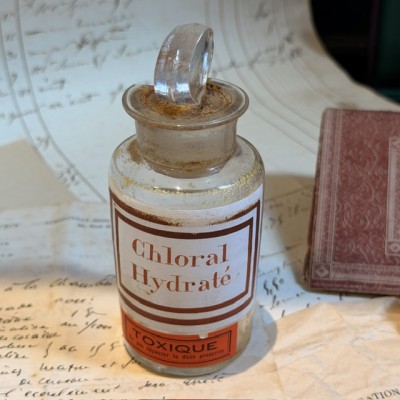
Chloral hydrate
Antique pharmacy bottle made of blown glass and enameled painted label
Red TOXIC label
Signaling to the pharmacist that it is imperative to keep apart the other substances in the cabinet of toxic substances, the famous poison cabinet.
Dating: 19th century
EMPTY - The glass collar has a significant vintage sheen on the stopper, and its original ground-glass cap is blocked and sealed with time.

Human jaws in porcelain mounted on a blackened wooden base
Anatomical dental model for dentists
19th century
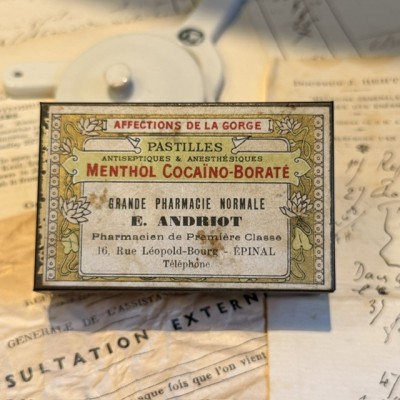
Box of cocaine lozenges
Menthol - Cocaïno - Boraté by the Pharmacist Holler in Maubeuge
Magnificent lid typical of Art Nouveau: 1900-1910
EMPTY
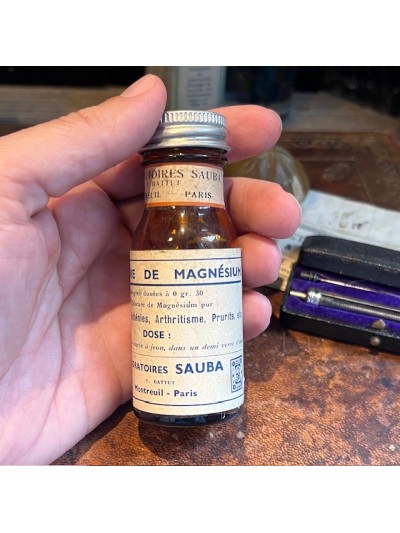
Chlorure de magnésium
Antique pharmacy bottle
Apothecary vial
EMPTY
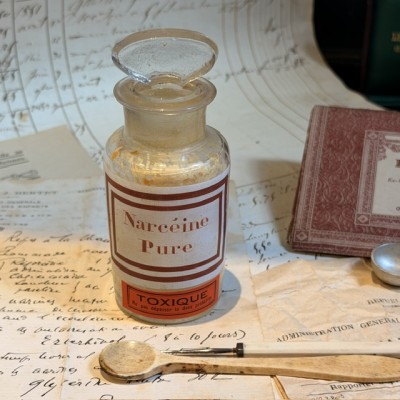
Narceine - Opium Derivative
Antique pharmacy bottle made of blown glass and enameled painted label.
Red TOXIC label
Signaling to the pharmacist that it is imperative to keep apart the other substances in the cabinet of toxic substances, the famous poison cabinet.
Dating: 19th century
EMPTY - The bottle is blocked and does not open, sealed by time

Collodion
Used as a liquid dressing
Antique pharmacy bottle
EMPTY
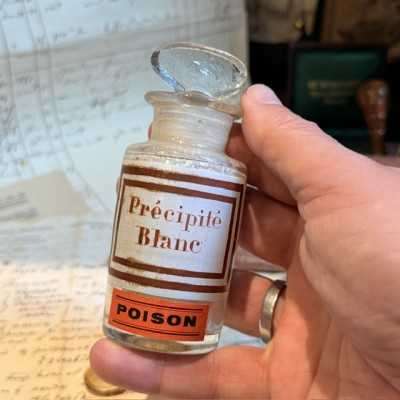
White Precipitate - Mercury
Antique pharmacy bottle made of blown glass and enameled painted label.
Red POISON label
Signaling to the pharmacist that it is imperative to keep apart the other substances in the cabinet of toxic substances, the famous poison cabinet.
Dating: 19th century
There is still some product inside but the cap is blocked and does not open.

Bibliothèque Choisie de Médecine - Volume 8
Selected Library of Medicine
By François PLANQUE - 1750
Complete original edition with 10 fold-out plates
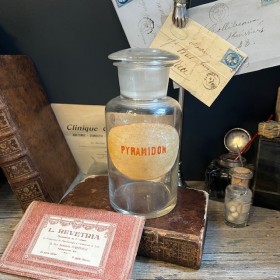
Pyramidon
Antique pharmacy bottle
Apothecary vial
Color pigments have been added to the inside of the jar
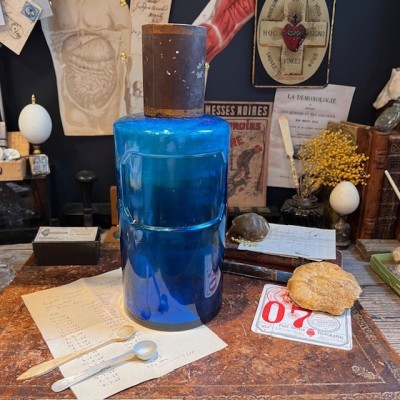
Large cobalt blue glass pharmacy bottle - Apothecary - Shouldered - H27.5cm - 19th century
Shouldered apothecary bottle - Antique pharmacy bottle
Mouth-blown glass - Cobalt blue color tinted throughout
This large-capacity jar was a storage jar intended for stockpiling
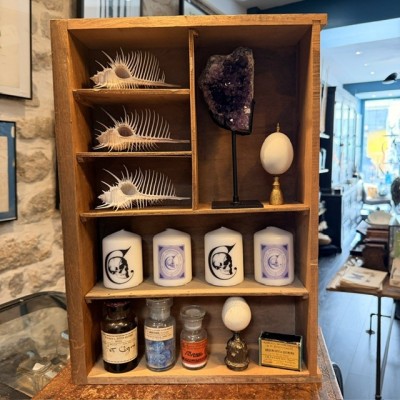
Large antique wooden pharmacy drawer with compartments
6 compartments
Curiosity shelf
Ref C - 48x34.5cm - Thickness 9.5cm
Can be used as a presentation furniture
SOLD EMPTY WITHOUT ACCESSORIES
Caustic Potash
Antique pharmacy bottle made of blown glass and enameled painted label.
Red TOXIC label
Signaling to the pharmacist that it is imperative to keep apart the other substances in the cabinet of toxic substances, the famous poison cabinet.
Dating: 19th century
EMPTY