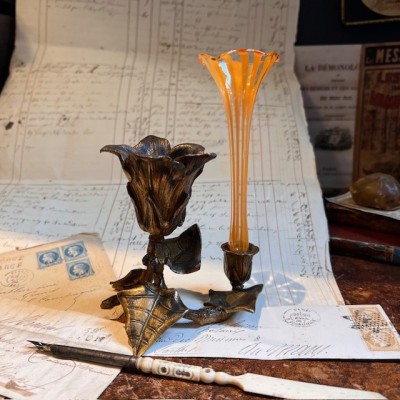

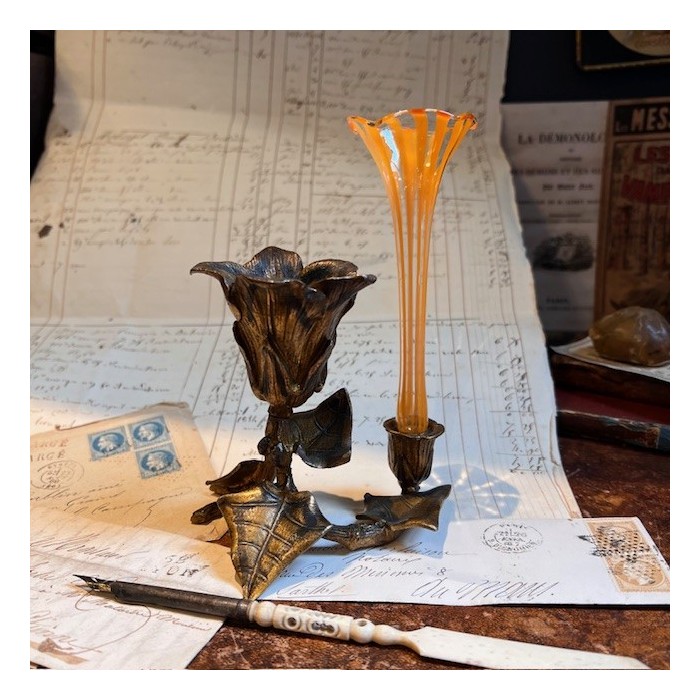
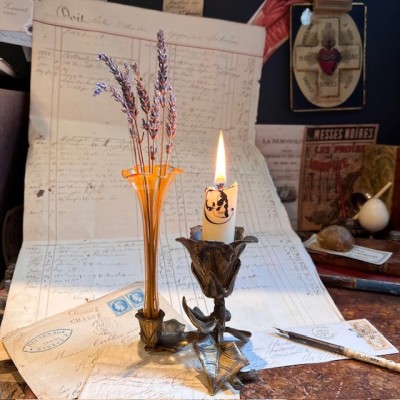
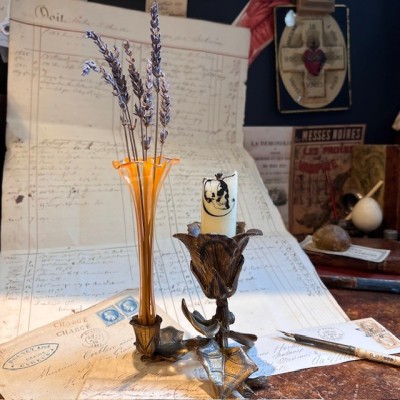
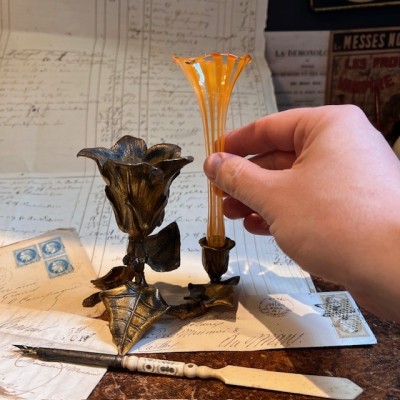
Elegant Art Nouveau glass vase and bronze candlestick
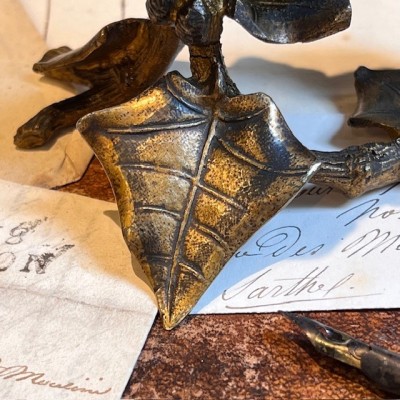
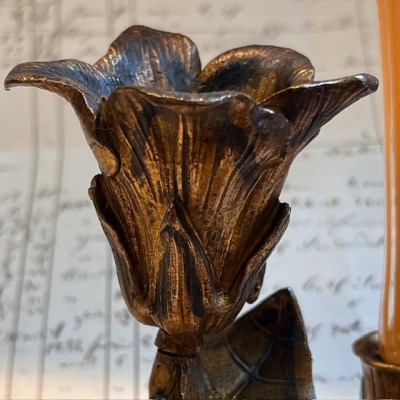
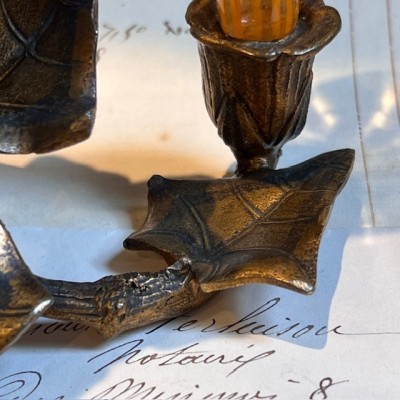
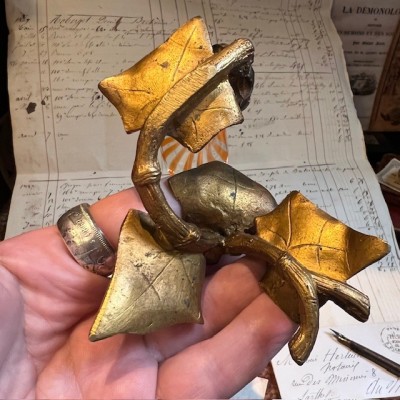
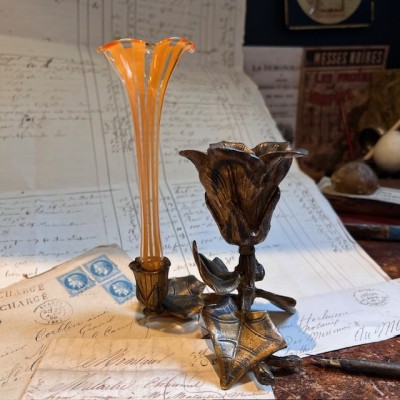
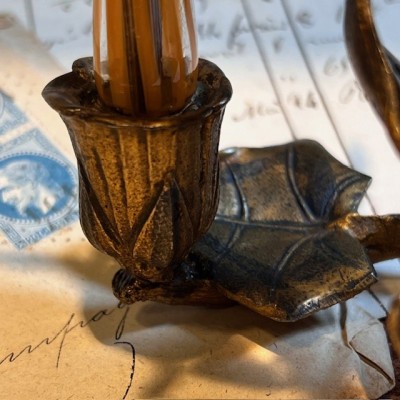
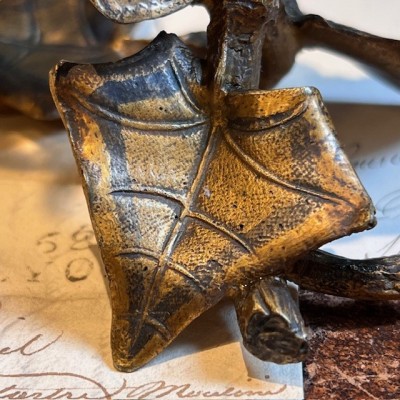
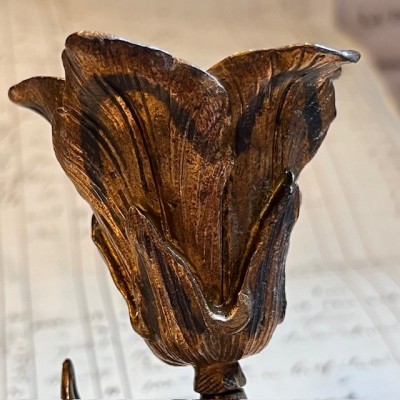
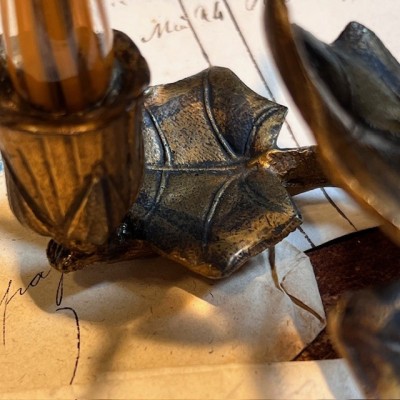
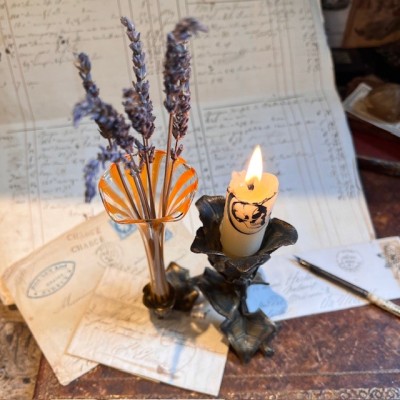
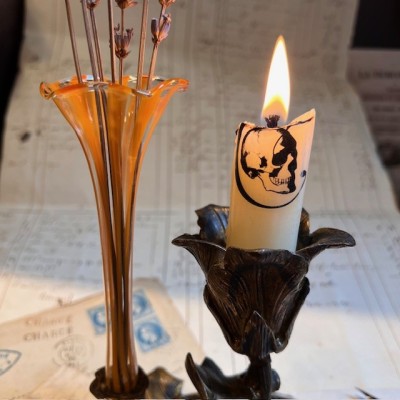
Made of cast bronze with a patina finish, decorated with naturalistic plant motifs and hand-finished with a file.
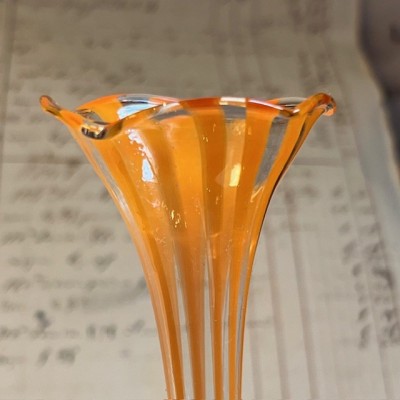
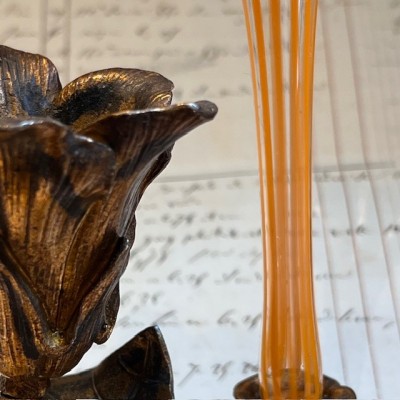
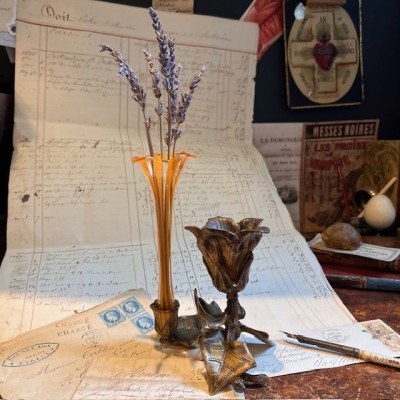
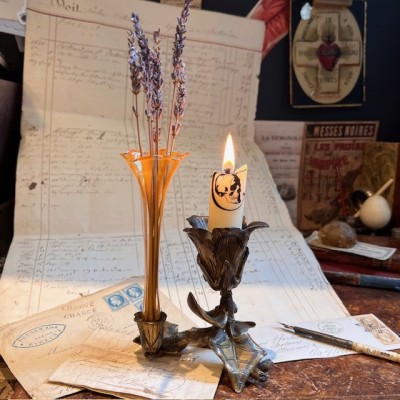
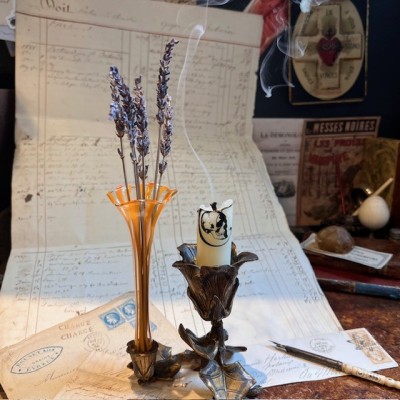
Art Nouveau decorative object combining patinated bronze and orange glass in a fluid, asymmetrical plant motif characteristic of the late 19th century.
Circa 1895–1905
Elegant Art Nouveau glass vase and bronze candlestick
Made of cast bronze with a patina finish, decorated with naturalistic plant motifs and hand-finished with a file.
Circa 1895–1905
Art Nouveau decorative object combining patinated bronze and orange glass in a fluid, asymmetrical plant motif characteristic of the late 19th century.
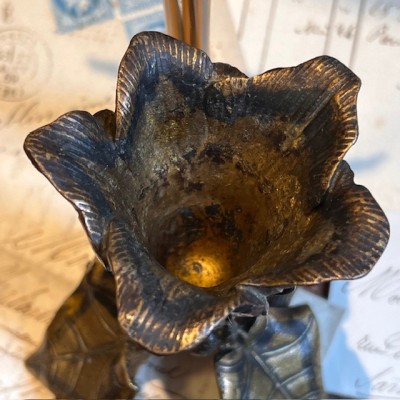
The glass tube, which is sealed and functional, can be used as a single-flower vase, while the bronze corolla can hold a thin candle, in keeping with domestic usage at the time. This duality of use — light and flowers — is typical of the Art Nouveau spirit, which blends art, nature and everyday life.
The bronze was cast and then finished by hand, as evidenced by the visible file marks on the reverse, indicative of the craftsmanship of a small art foundry. The dark, old and uncleaned patina highlights the relief and movement of the decoration.
A small piece but of high quality workmanship, designed for 1900s interiors, somewhere between a utilitarian object and a decorative sculpture.
Height 16cm - Length: approximately 11cm
Sold without candle
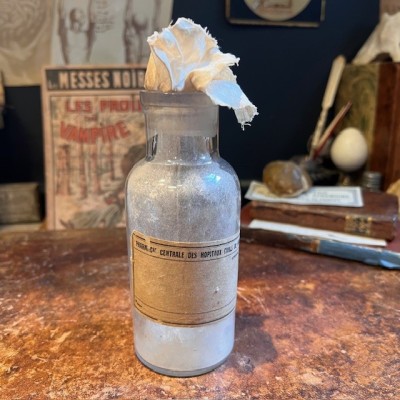
Central Pharmacy of the Civil Hospitals of Paris
Antique pharmacy bottle
Apothecary
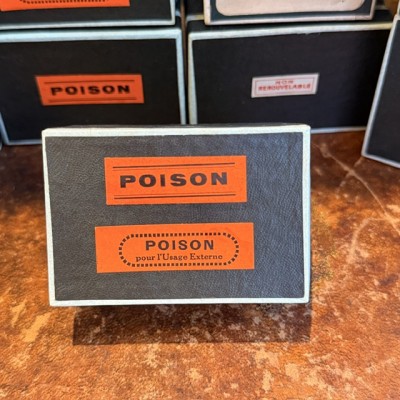
Antique labels in a pharmacy box for cures made of canvas cardboard
Poison label - Ref A
The pharmacist used his boxes of medicine to put away the labels he would then put on the bottles that he would resell to his customers.
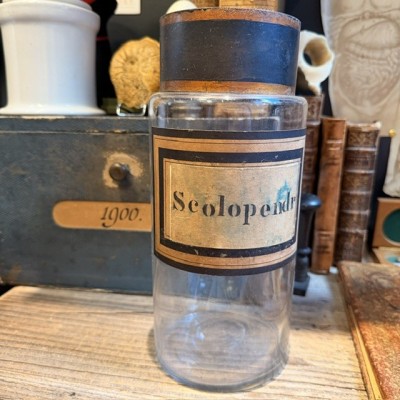
Scolopendre
Pharmacy jar - Herbalism - Apothecary Mouth-blown glass bottle
Late 19th century - Beginning of the 20th
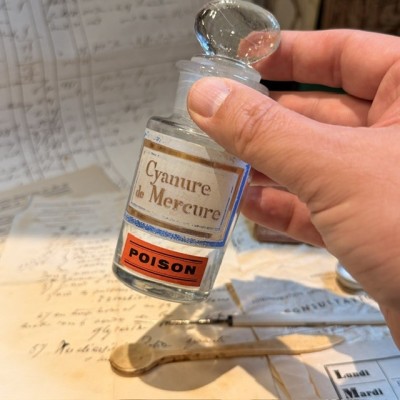
Mercuric cyanide
Antique pharmacy bottle made of blown glass and enameled painted label with golden blue threads
Red POISON label
Signaling to the pharmacist that it is imperative to keep apart the other substances in the cabinet of toxic substances, the famous poison cabinet.
Dating: 19th century
EMPTY
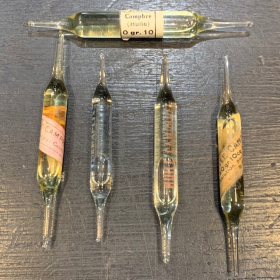
Bulb for hypodermic injection - Camphor (circa 1920)
various manufacturers
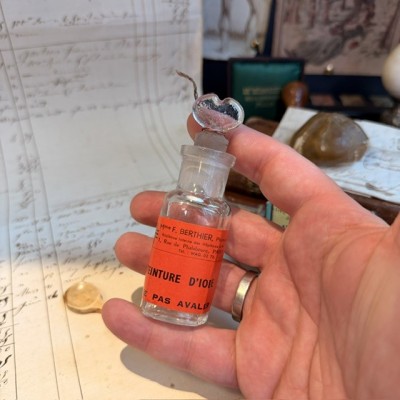
Iodine dye
Antique pharmacy bottle
With the inscription Teinture d'Iode molded in glass
EMPTY
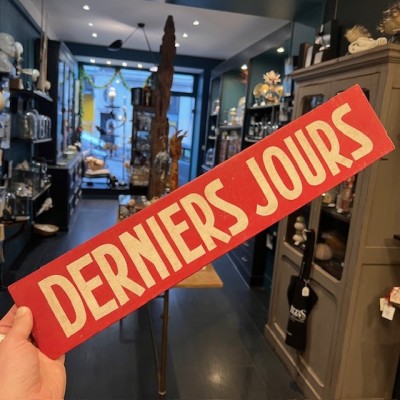
DERNIERS JOURS - LAST DAYS
Antique Cinema painted plywood sign
Cinema sign announcing the final days of a film's run
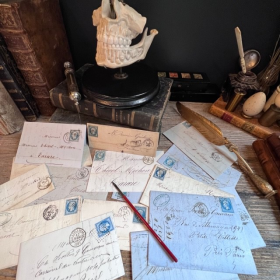
Stamped letter-envelope of the Second Empire
Dated from 1852-1870
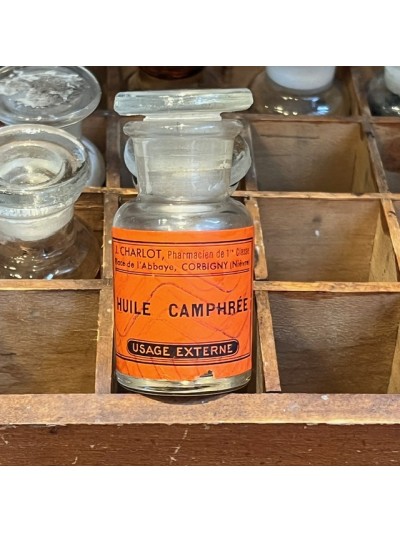
Camphorated oil
Antique pharmacy bottle
Apothecary vial
EMPTY but cap is blocked and bottle will not open
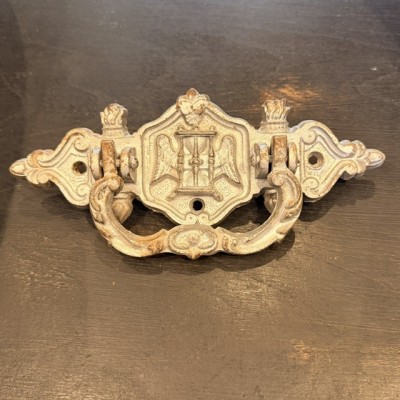
Coffin handle - Winged hourglass
around 1900
You buy only 1 handle
Traces of oxidation on the handles, more or less important
Brand new from the period, it has never been used.
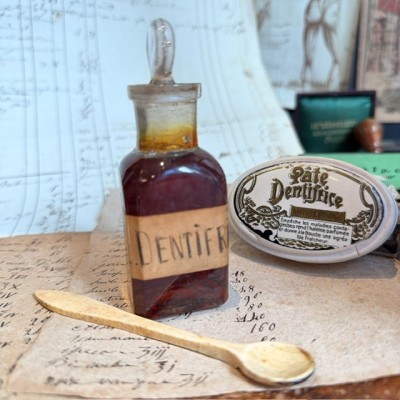
Toothpaste elixir
Antique pharmacy bottle
Handwritten label with pen

Carbonate de Potasse
Antique pharmacy bottle
Early 20th century (circa 1910 - 1920)
EMPTY
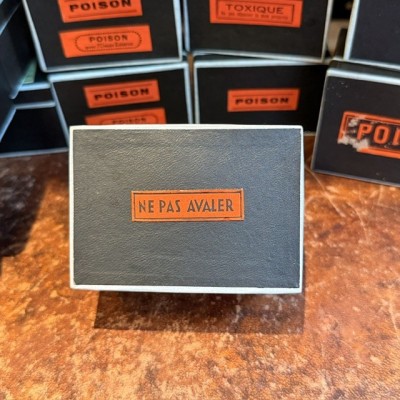
Antique labels in a pharmacy box for cures made of canvas cardboard
Do not swallow label
The pharmacist used his boxes of medicine to put away the labels he would then put on the bottles that he would resell to his customers.
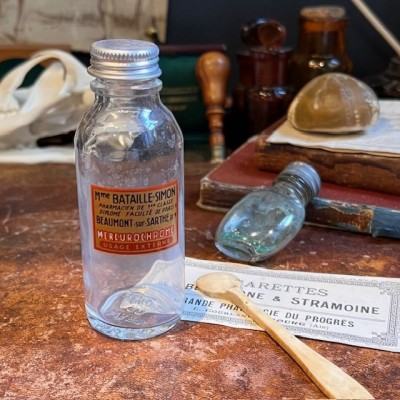
Mercurochrome
Antique pharmacy bottle - Apothecary
Mrs Bataille-Simon, First Class Pharmacist in Beaumont sur Sarthe - Tel 9
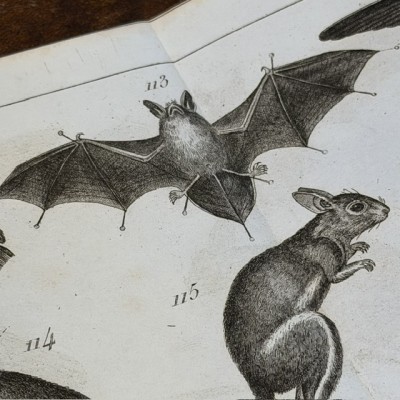
Manual of the Naturalist Preparer followed by a Treaty of Embalmings
by BOITARD - Book of 1853
5 fold-out plates at the end of the volume with beautiful engravings
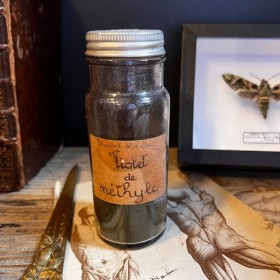
Violet de Méthyle
Antique pharmacy bottle - Droguerie - Apothicaire
Elegant Art Nouveau glass vase and bronze candlestick
Made of cast bronze with a patina finish, decorated with naturalistic plant motifs and hand-finished with a file.
Art Nouveau decorative object combining patinated bronze and orange glass in a fluid, asymmetrical plant motif characteristic of the late 19th century.
Circa 1895–1905