

- New
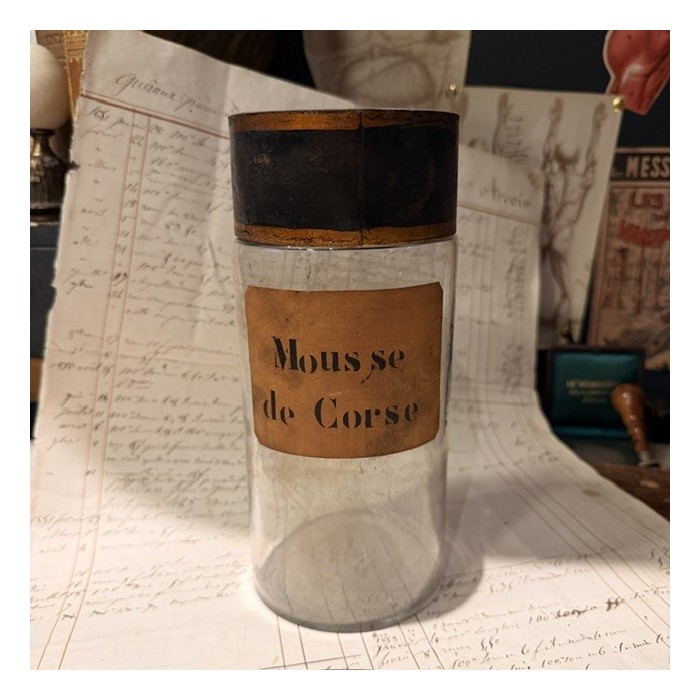
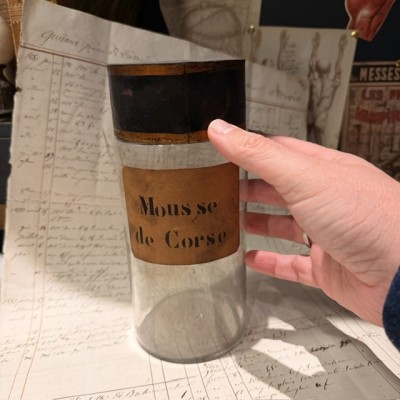
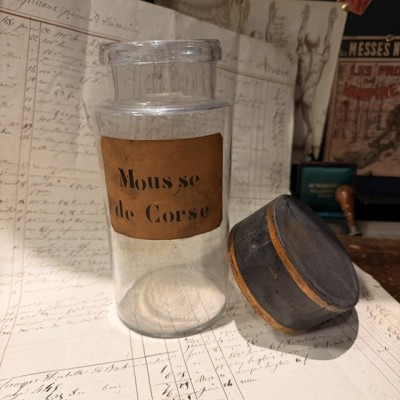
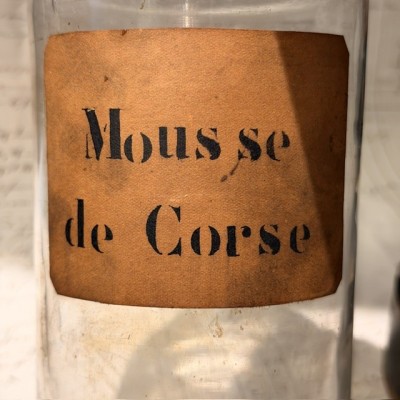
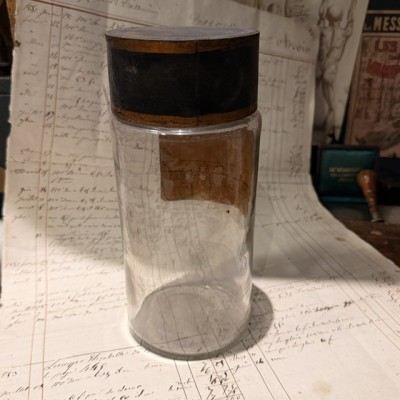
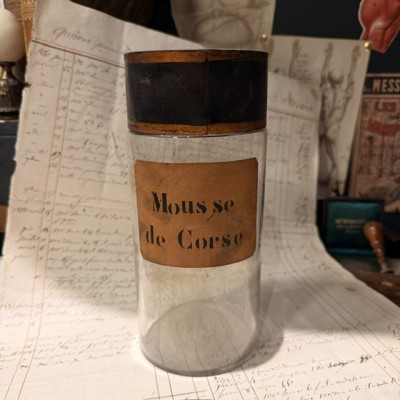
Corsican Moss
Pharmacy jar - Herbalism - Apothecary Mouth-blown glass bottle
Corsican Moss (Helminthochorton or Sphaerococcus helminthochorton) is a mixture of red seaweeds harvested along the coast of Corsica. It was one of the most famous deworming agents used in traditional medicine to eliminate intestinal worms.
Late 19th century - Beginning of the 20th
Corsican Moss
Pharmacy jar - Herbalism - Apothecary bottle
Late 19th century - Beginning of the 20th
Corsican Moss (Helminthochorton or Sphaerococcus helminthochorton) is a mixture of red seaweeds harvested along the coast of Corsica. It was one of the most famous deworming agents used in traditional medicine to eliminate intestinal worms.
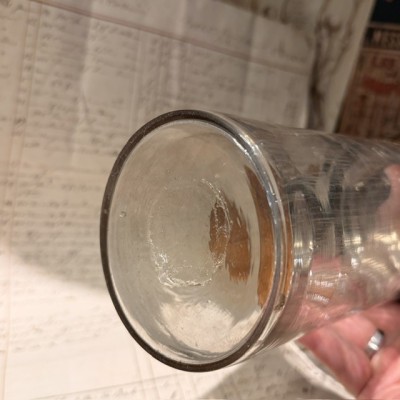
Mouth-blown glass, as the depression of the cane's pontil remains under the jar.
Beautiful original paper label lined with a double black net. Tin stopper.
It comes from an old cellar-laboratory in a Parisian pharmacy. The bottles had not moved since the late 1950s on the shelves. The cellar had served as a laboratory for medical analyses and a laboratory for magistral preparations of the pharmacy from 1900 until around 1950.
This large-capacity jar was a reserve jar intended for the storage of raw materials to be processed into powders, tinctures or infusions in the pharmacy laboratory.
Diameter 9cm. Height with cap 21cm
SOLD EMPTY

Lower part of the lower mandible of a horse jaw
Antique model from Maison Auzoux in Paris
Paper-mâché pedagogical model
Model A - 9 months
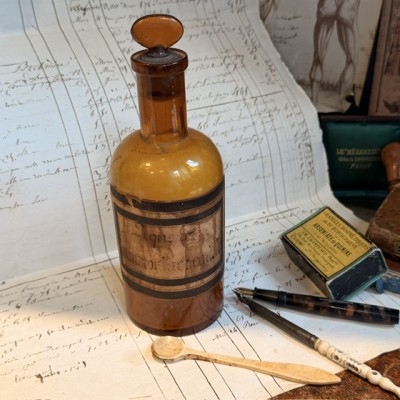
Liqueur Ammoniac: anisée
Antique pharmacy bottle with handwritten writing.
Also called the aniseed ammonia spirit.
EMPTY

Grams / Tablespoons - Graduated bottle
in French: Grammes / Cuillères à soupe
Antique medicine bottle
Apothecary
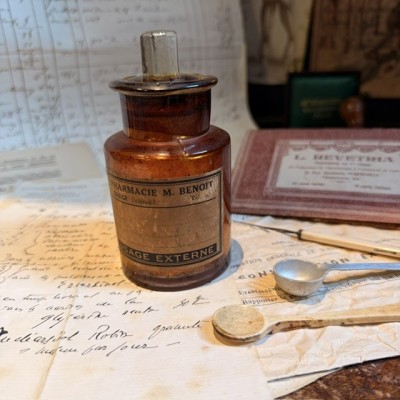
M. BENOIT Pharmacy
Antique pharmacy bottle
EMPTY - Blocked cap
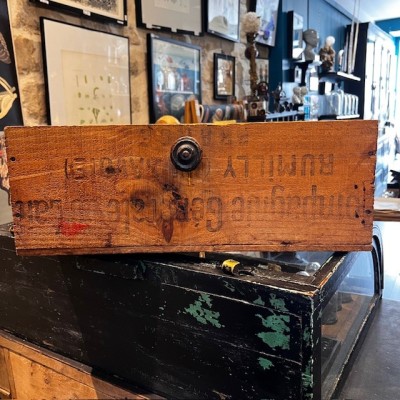
Antique wooden advertising case for Mont Blanc - Rumilly condensed milk - Drawer
Found in Parisian cellars that served as laboratories and storage rooms for pharmacists preparing their masterful concoctions from 1900 to 1950.
It was used to store products, glass bottles, etc.
This box is no longer just a transport container, it has been adopted as a piece of furniture.
Period: Circa 1920–1940
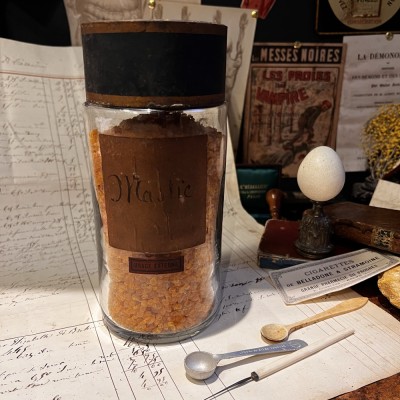
Mastic of Chios
Antique pharmacy bottle - Wide-mouth apothecary jar.
19th-century mouth-blown glass
There is still some product left inside
A fascinating artifact from the history of pharmacology
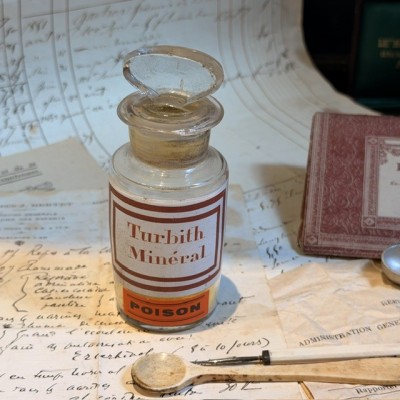
Turbith Minéral - Mercury
Antique pharmacy bottle made of blown glass and enameled painted label.
Red POISON label
Signaling to the pharmacist that it is imperative to keep apart the other substances in the cabinet of toxic substances, the famous poison cabinet.
Dating: 19th century
There is still some product inside but the cap is blocked and does not open.

Mercury Proto-Iodide - Syphilis Treatment
Antique pharmacy bottle.
Red ‘POISON’ label
Indicating to the pharmacist that it must be stored separately from other substances in the cabinet for toxic substances, the famous "poison cabinet".
It comes from the former cellar-laboratory of a Parisian pharmacy. The bottles had not been moved from the shelves since the late 1950s. The cellar had served as a medical analysis laboratory and a laboratory for the pharmacy’s compounded preparations from 1900 until around 1950.
Period: Late 19th century - Very early 20th century (circa 1890–1910)
EMPTY
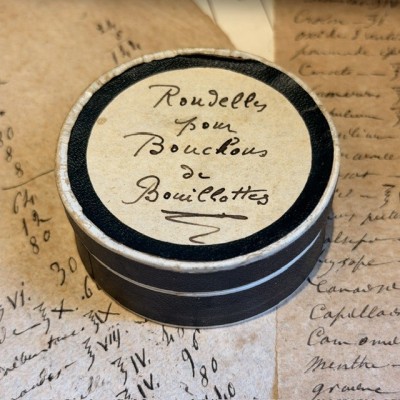
Box of rubber washers for hot water bottles
In its original cardboard box
1939/1940
New Old Stock
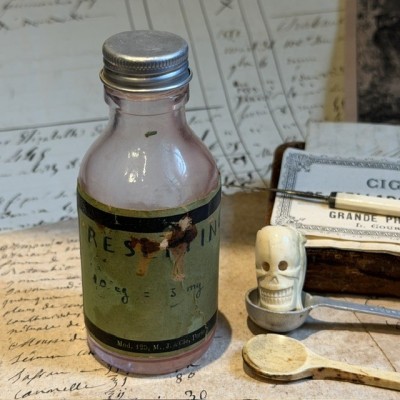
Reseptine
Antique pharmacy bottle
EMPTY
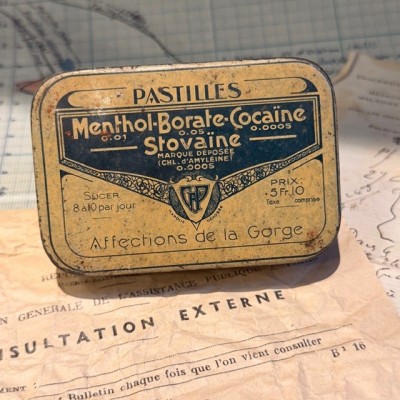
Metal box of breath mints with cocaine
Box of pastilles Menthol-Borate-Cocaïne-Stovaïne from CPF Laboratories
1920's
EMPTY
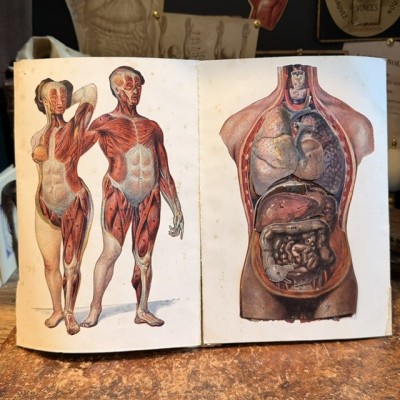
Man and Woman
Anatomy booklet with removable boards
Around 1930's
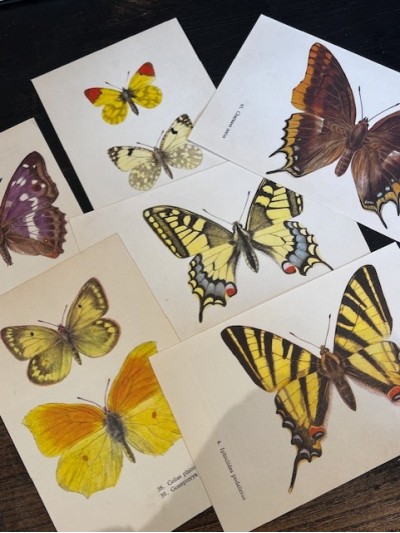
Butterfly - Natural History color plate
Entomology
You buy 1 plate, not the whole set
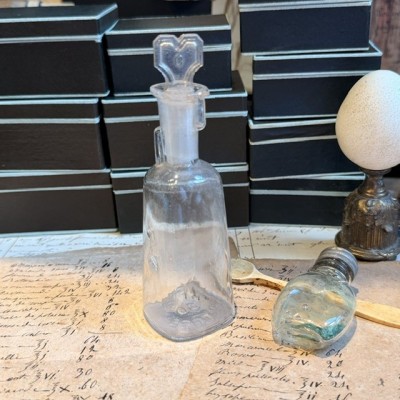
Square Section Dropper Bottle
Antique pharmacy bottle - 1920-30's
Glass stopper honed in the shape of a heart for better grip
EMPTY
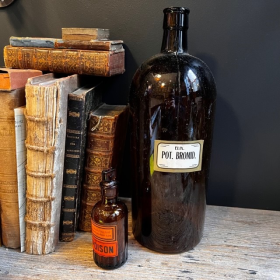
Potassium Bromide Elixir
Antique and large brown English pharmacy bottle
Corsican Moss
Pharmacy jar - Herbalism - Apothecary Mouth-blown glass bottle
Corsican Moss (Helminthochorton or Sphaerococcus helminthochorton) is a mixture of red seaweeds harvested along the coast of Corsica. It was one of the most famous deworming agents used in traditional medicine to eliminate intestinal worms.
Late 19th century - Beginning of the 20th