
- New
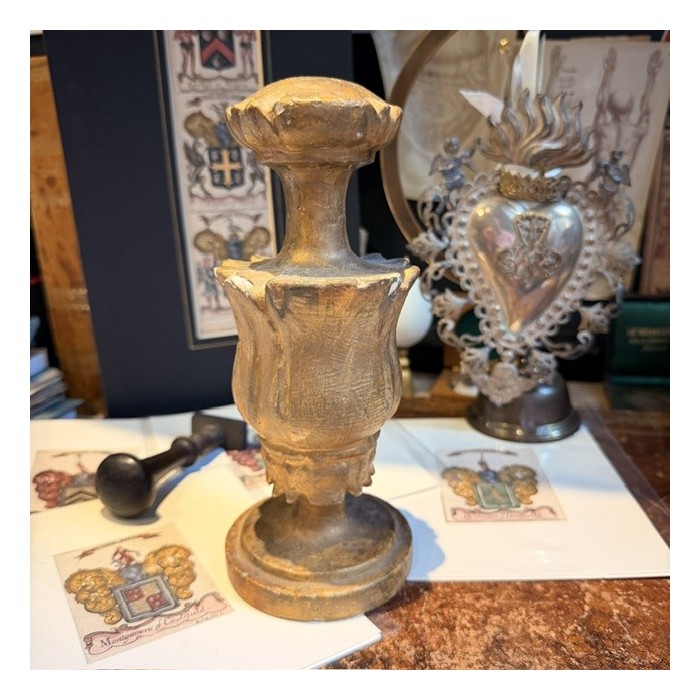
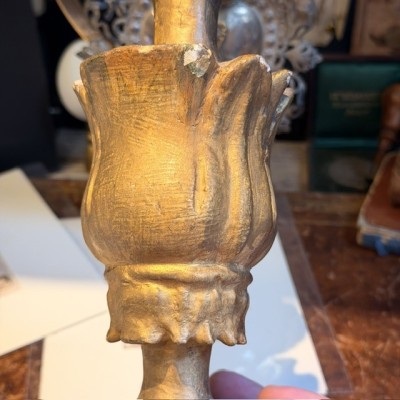
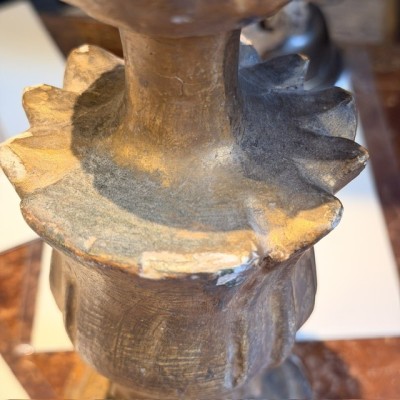
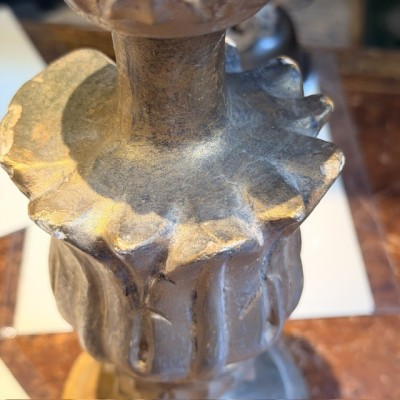
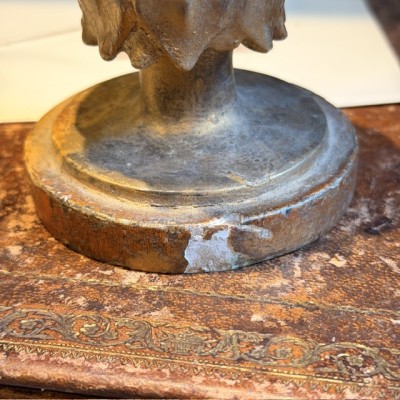
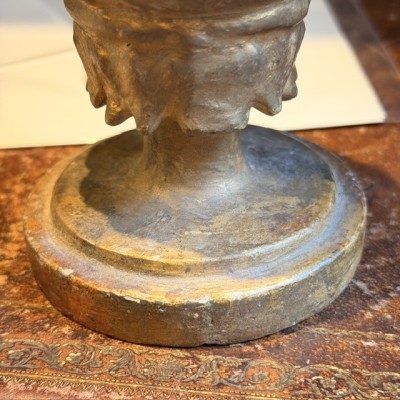
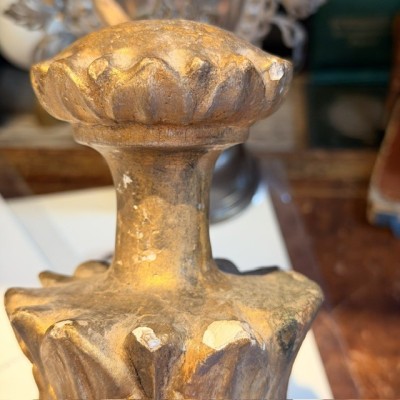
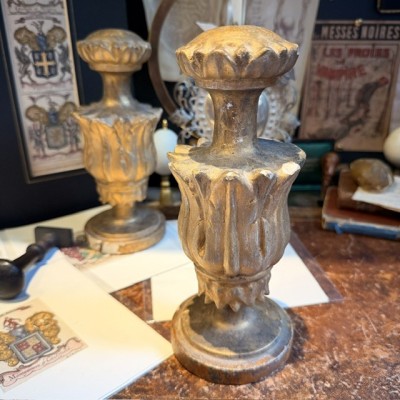
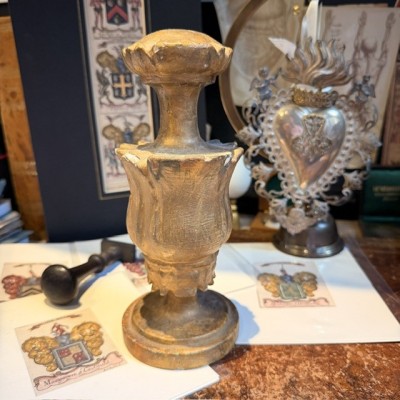
Stem - Baroque base in turned wood and gilded stucco - Italy (Tuscany), 19th century
Italian Giltwood Altar Floral Stand
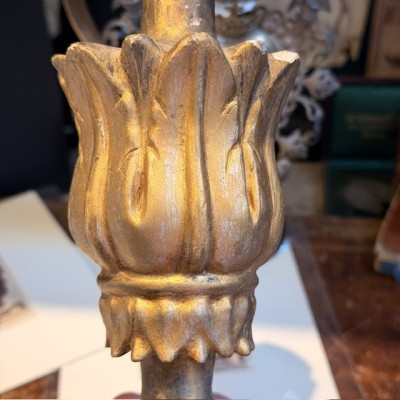
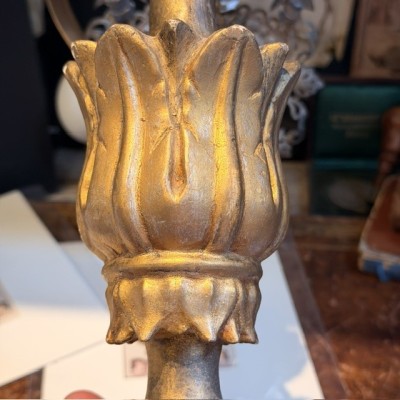
Antique religious altar bouquet stem made of turned and carved wood, covered with a stucco undercoating (gesso) and gilded.
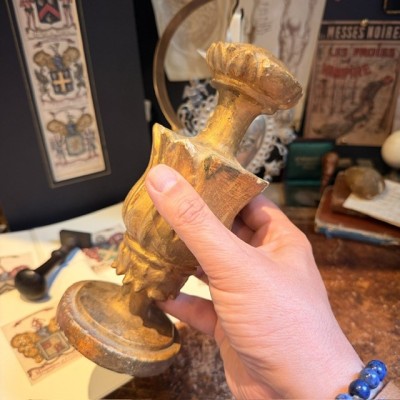
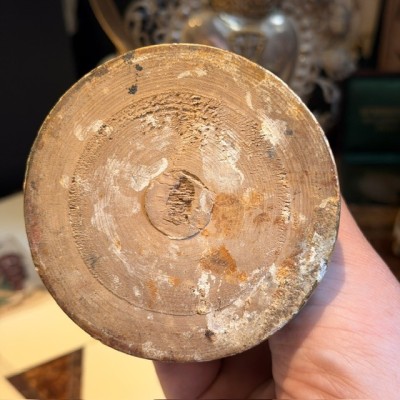
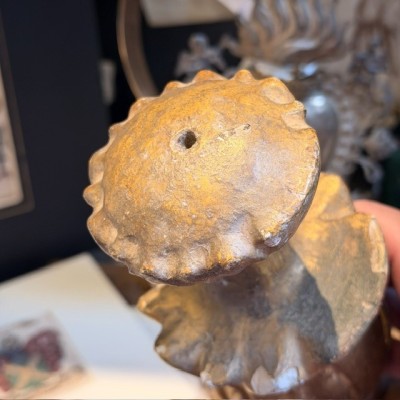
Lack of gesso and gilding in some places, which is precisely why the white gesso appears under the gilding.
Traces of use and visible gaps in stucco
Stem - Baroque base in turned wood and gilded stucco - Italy (Tuscany), 19th century
Italian Giltwood Altar Floral Stand
Antique religious altar bouquet stem made of turned and carved wood, covered with a stucco undercoating (gesso) and gilded.
The central knot features a decoration carved in a corolla of stylized acanthus foliage, resting on a circular molded base.
Originally intended to maintain compositions of church flowers in painted sheet metal and glassware, this base has a beautiful patina of time with its wear and small jumps of gilding characteristic.
Wooden and gilded metal chancel bouquets (often called altar bouquets or bouquets of fervor) are objects of sacred art typical of the Counter-Reformation and the Baroque period, particularly widespread in Tuscan churches.
These pieces, fixed on the altar or near the tabernacle, were used to glorify the divine permanently at a time when fresh flowers were rare and expensive in winter.
Here, it is only thestem that supported the metal flowers.
Lack of gesso and gilding in some places, which is precisely why the white gesso appears under the gilding.
Origin: Tuscany, Italy
Period: 19th century
Materials: Turned wood, priming stucco, gilding
Dimensions: Height 20cm - Diameter of the base: 8.5cm
Condition: Traces of use and visible gaps in stucco, indicating its authenticity.

Lower part of the lower mandible of a horse jaw
Antique model from Maison Auzoux in Paris
Paper-mâché pedagogical model
Model A - 9 months
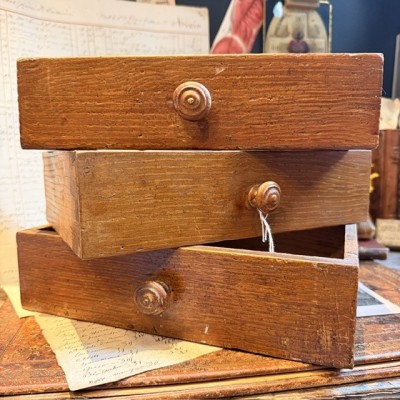
The Apothecary’s Little Drawer
Small antique wooden apothecary’s drawer that can be used as a storage box – Trade drawer
To be diverted on the shelf or niche for your curiosities
Handcrafted using traditional methods, with dovetail joints and a turned wooden handle
Width: 26cm - Length: 15.5cm - Height: 5.5cm
All the drawers are different, with stains and varying signs of age on each one
Sold empty, without accessories
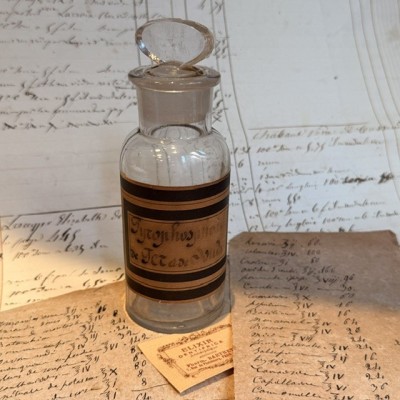
Iron & Soda Pyrophosphate
Antique pharmacy bottle
EMPTY
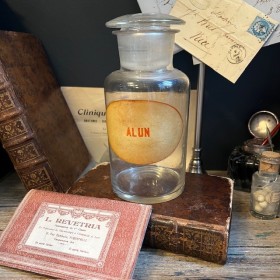
Alum
Antique pharmacy bottle
Apothecary vial
Color pigments have been added to the inside of the jar
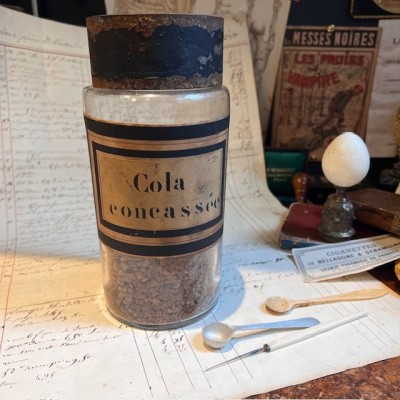
Crushed cola nuts
Antique pharmacy bottle - Wide-mouth apothecary jar.
19th-century mouth-blown glass
There is still some product left inside
A fascinating artifact from the history of pharmacology
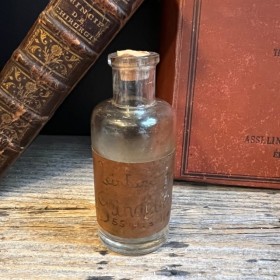
Grindelia Tincture
Antique medicine bottle
Apothecary
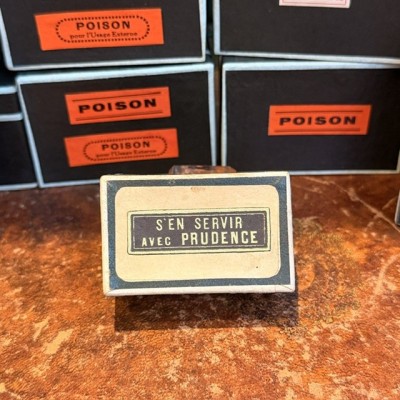
Antique labels in a pharmacy box for cures made of canvas cardboard
Use it with caution label
The pharmacist used his boxes of medicine to put away the labels he would then put on the bottles that he would resell to his customers.
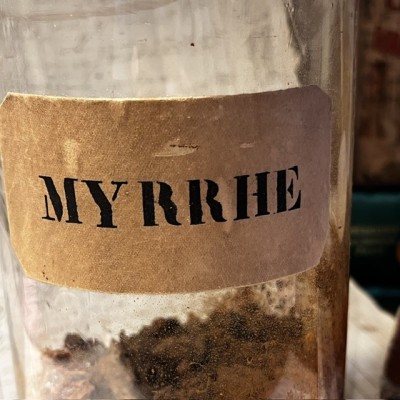
Myrrh
Antique pharmacy bottle - Wide-mouth apothecary jar.
19th-century mouth-blown glass
There is still some product left inside
A fascinating artifact from the history of pharmacology
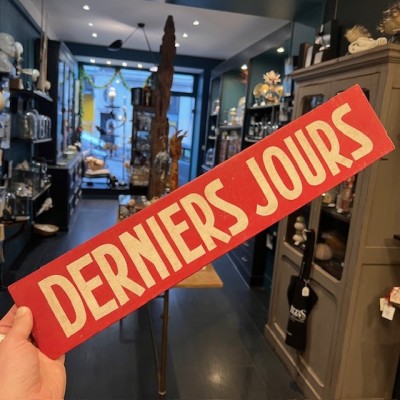
DERNIERS JOURS - LAST DAYS
Antique Cinema painted plywood sign
Cinema sign announcing the final days of a film's run
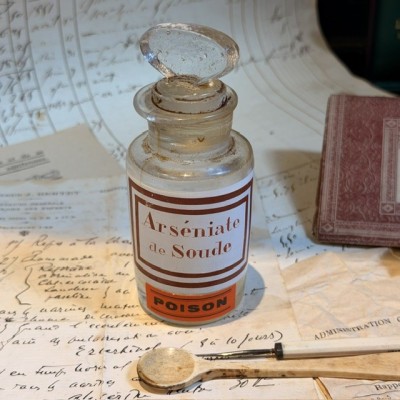
Arsenic - Sodium arsenate
Antique pharmacy bottle made of blown glass and enameled painted label. Yes, it is indeed the arsenic you know!
Red POISON label
Signaling to the pharmacist that it is imperative to keep apart the other substances in the cabinet of toxic substances, the famous poison cabinet.
Dating: 19th century
EMPTY but the cap is blocked and does not open.
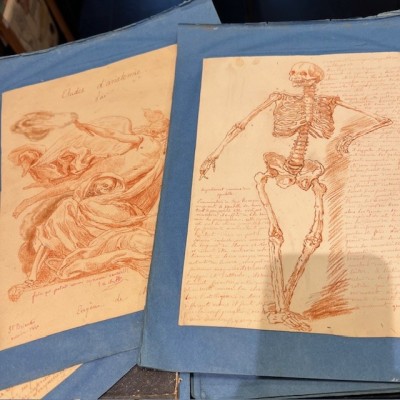
Red chalk drawing- Anatomical drawing
Anatomical study
Drawn by Eugène de Montchoisy in Saint-Brieuc in November 1840
These are not reproductions but original period drawings in red chalk.
You are purchasing one plate, not the entire set of plates
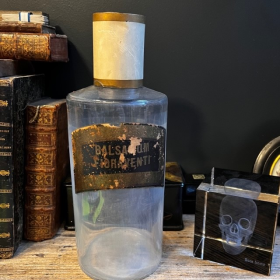
Antique pharmacy bottle from the 19th century
Balsamum Fioravanti - Balm of Fioravanti
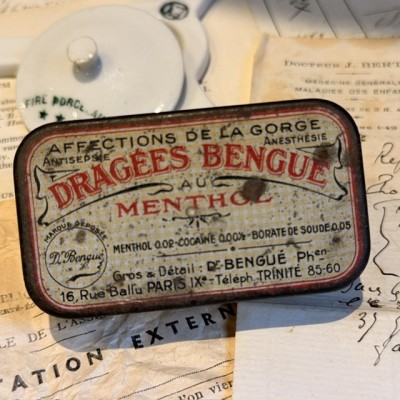
Metal box of breath mints with cocaine
Box of Dr BENGUE Dragees
1920's
It is recommended to suck 8 to 10 lozenges per day, allowing them to melt in the mouth...
EMPTY
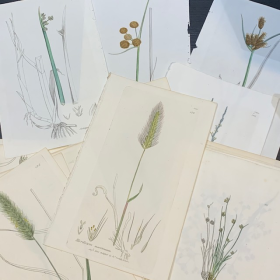
Ancient engraving -board of Natural History in colour nineteenth century
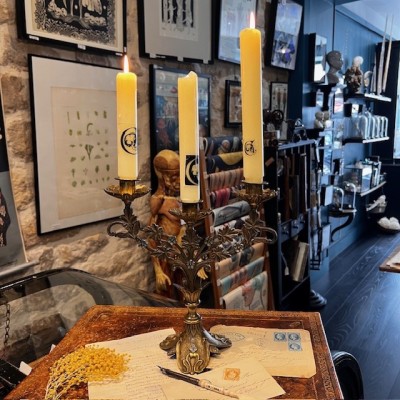
Floral Candelabra - Chiselled Brass and Painted Flowers - Circa 1900 - Candlestick
Late 19th century - Early 20th century: Belle Époque / Art Nouveau: 1895-1910
Sold without candles
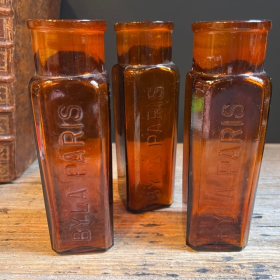
BYLA - Antique Pharmacy bottle in amber glass
Stem - Baroque base in turned wood and gilded stucco - Italy (Tuscany), 19th century
Italian Giltwood Altar Floral Stand
Antique religious altar bouquet stem made of turned and carved wood, covered with a stucco undercoating (gesso) and gilded.
Lack of gesso and gilding in some places, which is precisely why the white gesso appears under the gilding.
Traces of use and visible gaps in stucco