- New
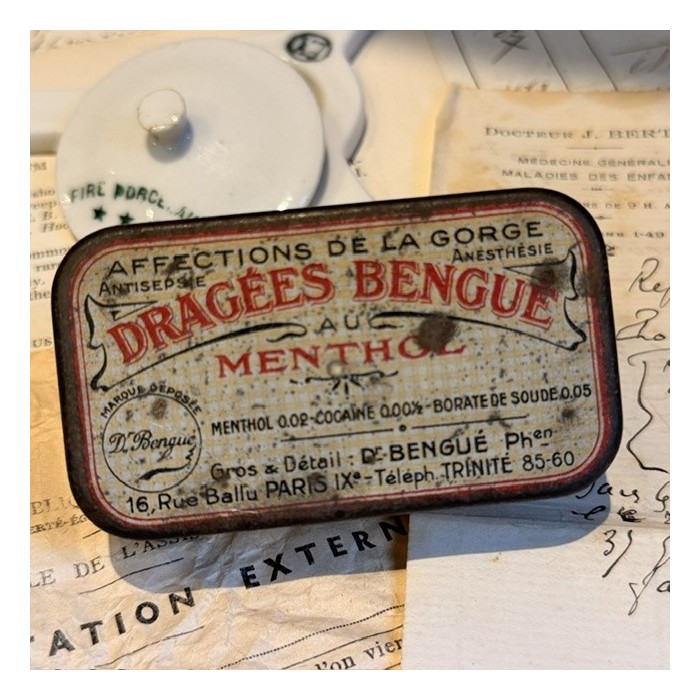
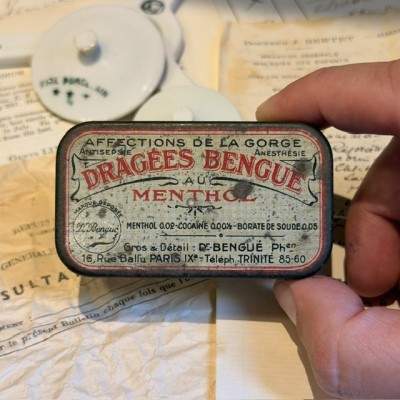
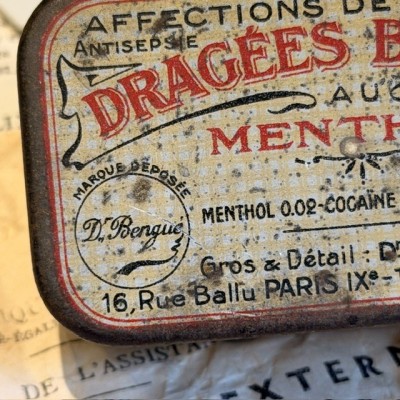
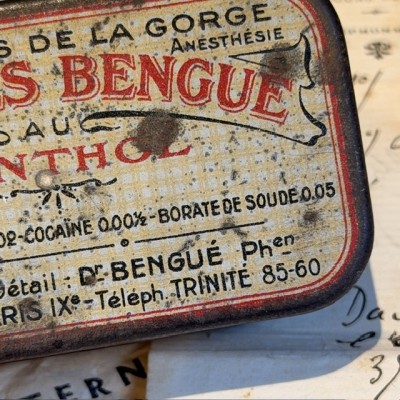
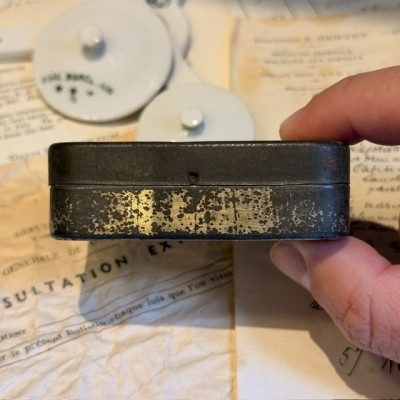
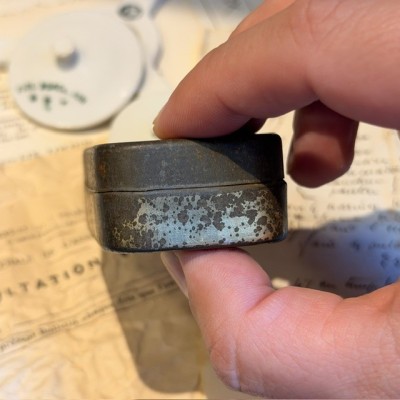
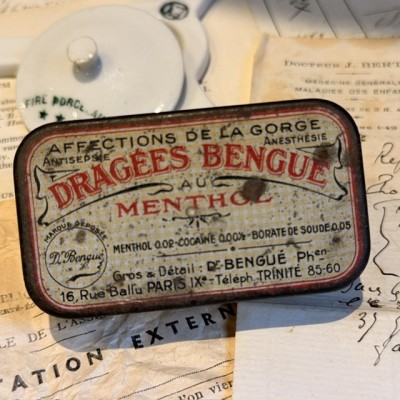
Metal box of breath mints with cocaine
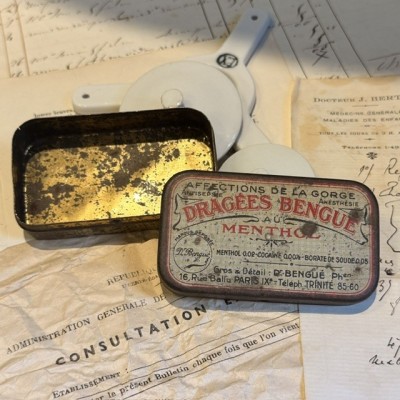
Box of Dr BENGUE Dragees
1920's
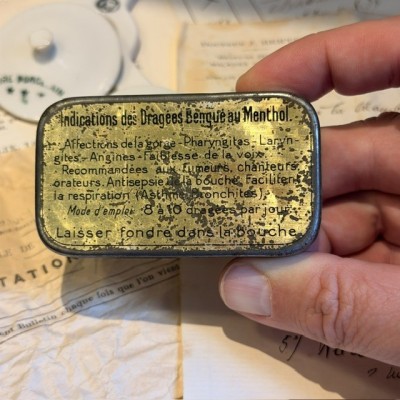
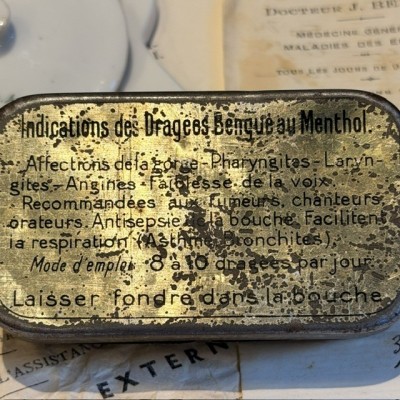
It is recommended to suck 8 to 10 lozenges per day, allowing them to melt in the mouth...
EMPTY
Metal box of breath mints with cocaine.
Box of Dr BENGUE Dragees
Between 1900s in 1950 it was not rare to see the cocaine as ingredient in tablets, particulary for the affections of the throat.
Here it's a 1920 box with a beautiful typical typography of this period.
It is recommended to suck 8 to 10 lozenges per day, allowing them to melt in the mouth... Recommended for smokers, singers and public speakers.
Dimensions: 7.5x4x2.5cm
EMPTY
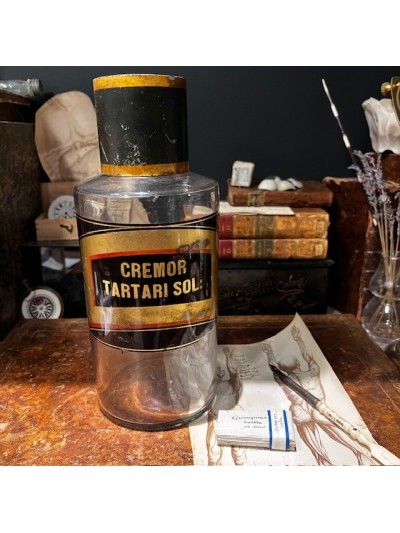
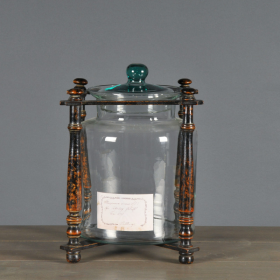
Cremor tartari sol - Cream of tartar
Potassium bitartrate
Pharmacy jar - Herbalism - Apothecary bottle
Late 19th century
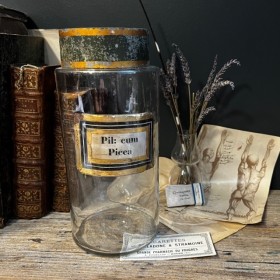
Cumin Epicea Pill - Pil: Cum Picea
Antique blown glass pharmacy jar
Apothecary
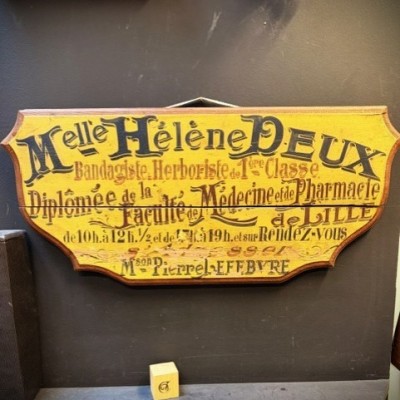
Rare and authentic wall sign panel
Pharmacy and fitting brand - Miss Hélène Deux, Bandagiste & 1st class Herbalist
Officine sign panel in painted wood from the 19th-20th century hinge: 1890-1920.
The sign is made of 2 reinforced wood panels at the back. There is a space between the 2 panels.
The sign features a superb art lettering entirely made freehand by a letter painter (superb contrasts of blue and brown, neat full and loose)
Witness to the history of pharmacy and ancient orthopaedics: the bandagist shaping leather and frames for corsets and restraints, and the herbalist 1st class, a profession that has disappeared since the abolition of the diploma in 1941.
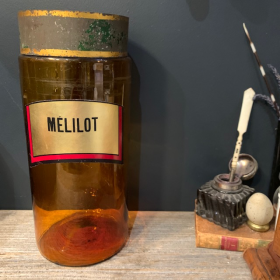
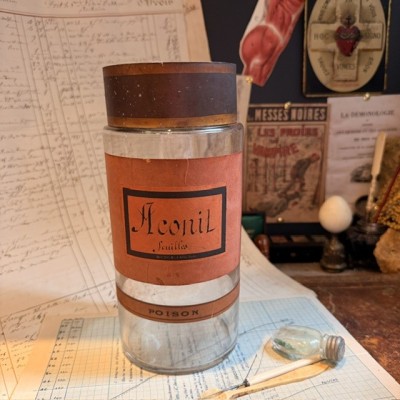
Aconit leaves - POISON
Antique pharmacy bottle - Wide-mouth apothecary jar.
19th-century mouth-blown glass
Red POISON label
Signaling to the pharmacist that it is imperative to keep apart the other substances in the cabinet of toxic substances, the famous poison cabinet.
A fascinating testimony to pharmacology
It comes from an old cellar-laboratory in a Parisian pharmacy. The bottles had not moved since the late 1950s on the shelves. The cellar had served as a laboratory for medical analyses and a laboratory for magistral preparations of the pharmacy from 1900 until around 1950.

Racine de Ratanhia - Para Rhatany
Pharmacy jar - Herbalism - Apothecary bottle
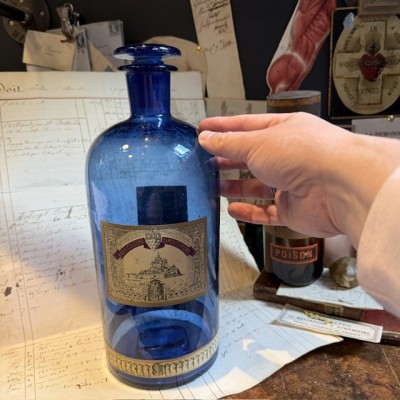
Eau de Cologne du Mont St Michel
Antique BLUE glass pharmacy bottle
EMPTY

Iodure de Sodium
Antique pharmacy bottle
End of the 19th century—very beginning of the 20th century: circa 1890-1910
EMPTY
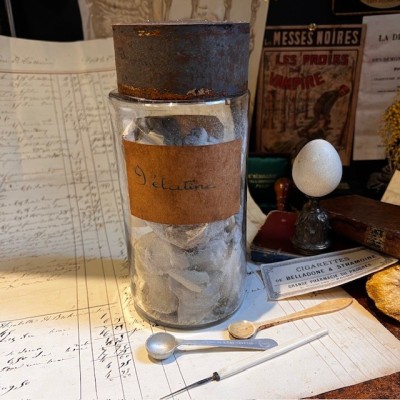
Gelatine
Antique pharmacy bottle - Wide-mouth apothecary jar.
19th-century mouth-blown glass
There is still some product left inside
A fascinating artifact from the history of pharmacology
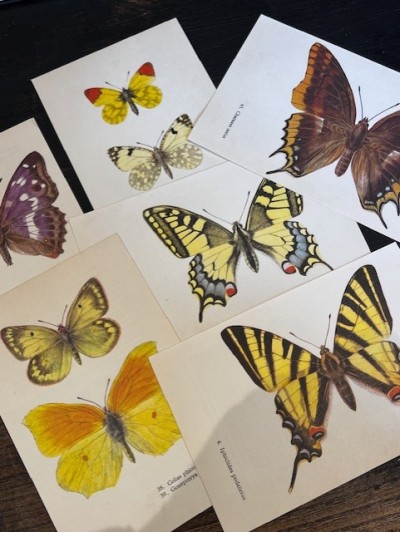
Butterfly - Natural History color plate
Entomology
You buy 1 plate, not the whole set
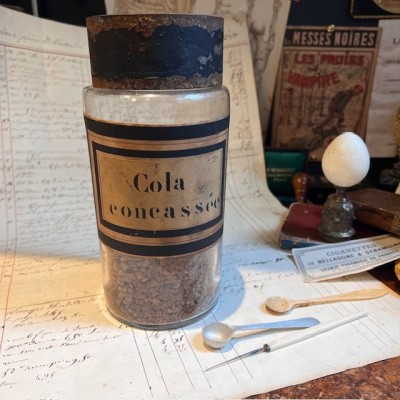
Crushed cola nuts
Antique pharmacy bottle - Wide-mouth apothecary jar.
19th-century mouth-blown glass
There is still some product left inside
A fascinating artifact from the history of pharmacology
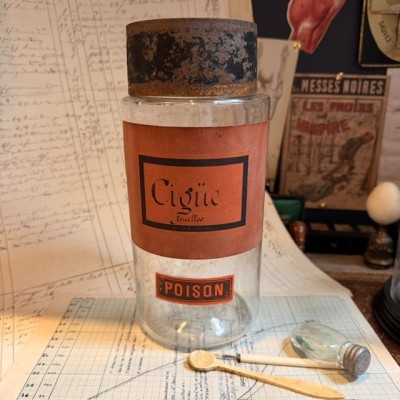
Hemlock leaves - POISON
Antique pharmacy bottle - Wide-mouth apothecary jar.
19th-century mouth-blown glass
Red POISON label
Signaling to the pharmacist that it is imperative to keep apart the other substances in the cabinet of toxic substances, the famous poison cabinet.
A fascinating testimony to pharmacology
It comes from an old cellar-laboratory in a Parisian pharmacy. The bottles had not moved since the late 1950s on the shelves. The cellar had served as a laboratory for medical analyses and a laboratory for magistral preparations of the pharmacy from 1900 until around 1950.
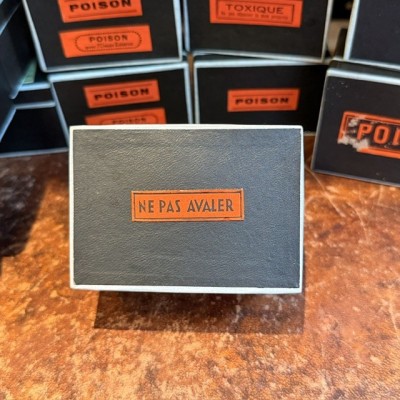
Antique labels in a pharmacy box for cures made of canvas cardboard
Do not swallow label
The pharmacist used his boxes of medicine to put away the labels he would then put on the bottles that he would resell to his customers.
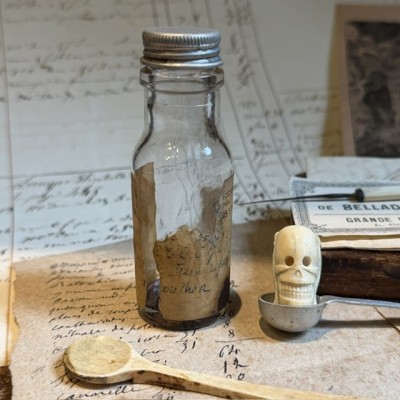
A avaler aux repas To be taken with meals (as far as can be made out from the torn label)
Antique pharmacy bottle
Torn label
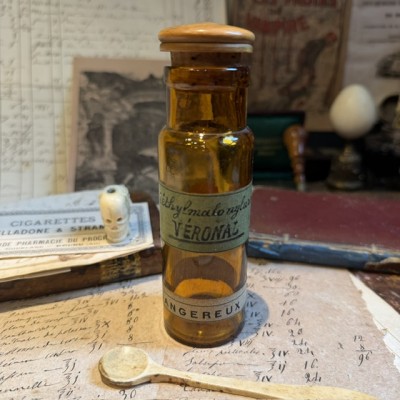
Veronal - Barbiturates - Diethylmalonylurea
Antique amber glass bottle, with a boxwood and cork stopper.
Label: DANGEROUS
Indicating to the pharmacist that it must be stored separately from other substances in the cabinet for toxic substances, the famous ‘poison cabinet’.
It comes from the former cellar-laboratory of a Parisian pharmacy. The bottles had not been moved from the shelves since the late 1950s. The cellar had served as a medical analysis laboratory and a laboratory for the pharmacy’s compounded preparations from 1900 until around 1950.
EMPTY
Metal box of breath mints with cocaine
Box of Dr BENGUE Dragees
1920's
It is recommended to suck 8 to 10 lozenges per day, allowing them to melt in the mouth...
EMPTY