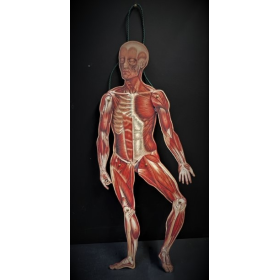





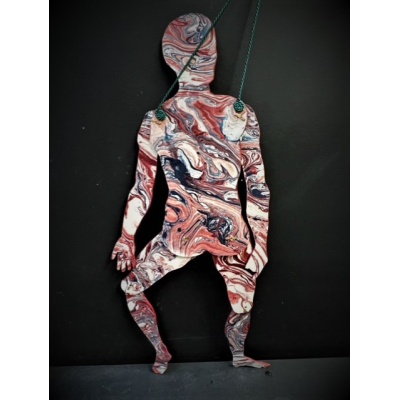


Anatomical articulated skinning
Paper-cardboard articulated mannequin
Human skeleton
Anatomical articulated skinning - Paper-cardboard articulated mannequin
The mannequin is entirely handmade by an artisan working with paper.
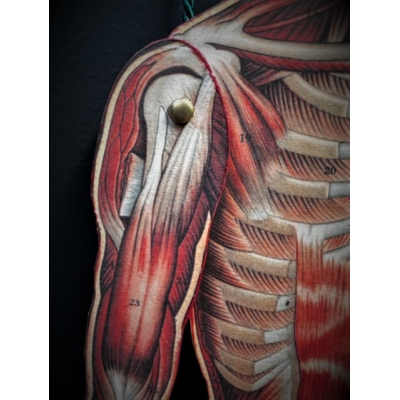
The paper is glued on a rigid paper-cardboard, the edges are worked and colored in red and reinforced with glue.
The back is decorated with beautiful marbled paper
The skeleton can be suspended thanks to its cord
Materials: cut paper - paper-cardboard - glue - marbled paper
Height: 67cm
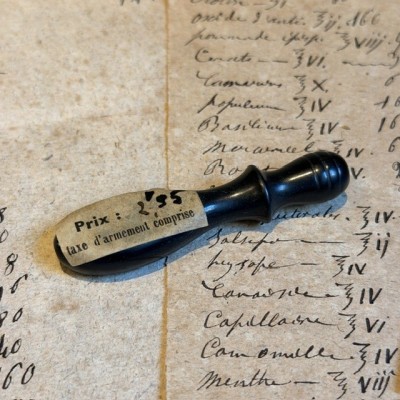
Ebonite cannula tip
Tips for enema or medical irrigation cannulas. New Old Stock
Marketed between May 1939 and sometime in 1940
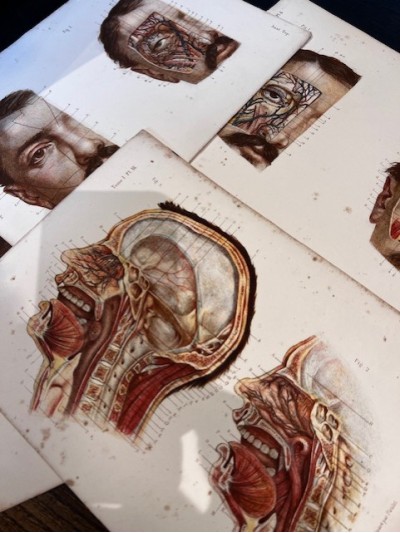
Anatomical chart by Paulet and Sarazin
From the Traité d'anatomie topographique (Treatise on topographical anatomy)
Published in 1867-1870
Chromolithography
You buy 1 plate, not the whole set
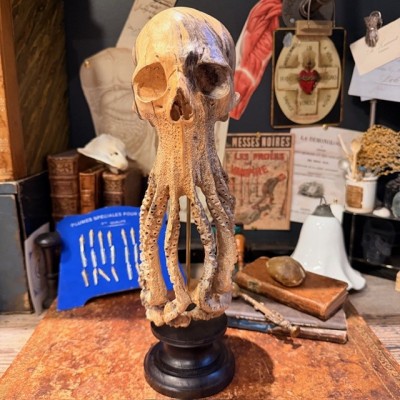
Cthulhu - Pirate Skull on Tentacles - Tamarind wood sculpture on base - Octopus
Material: Tamarind wood
Origin: Indonesia
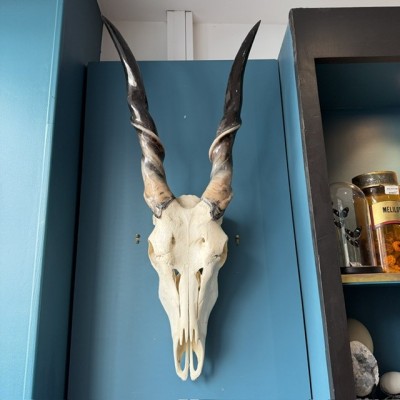
Polished Southern Eland Skull for Hanging - Wall Trophy
South African Antelope - Taurotragus oryx
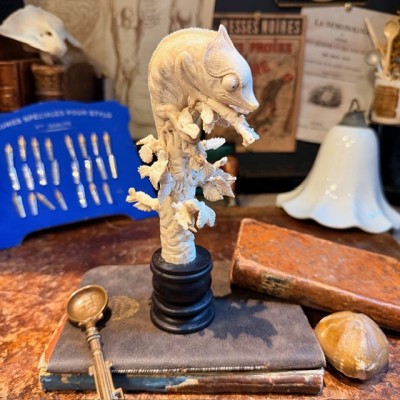
Chameleon on branch and leaves
Sculpture on deer antlers
Unique piece
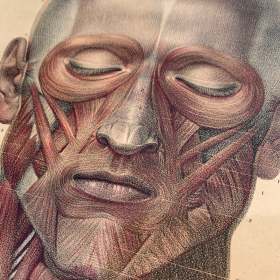
Anatomical plate: "L'Anatomie de L'Homme" by Dr Bourgery and draughtsman Jacob -1837/1843
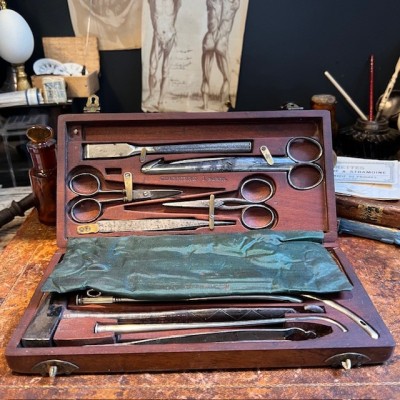
Portable autopsy kit from the mid-19th century
Maison Charrière in Paris, circa 1845–1870
Mahogany case for autopsy and dissection
Small portable mahogany case containing a set of autopsy instruments: hook hammer, bone chisel, enterotome scissors, probes, hooks and suture needles. Used by forensic scientists and anatomists for opening and examining bodies.
Charrière, a major 19th-century Parisian manufacturer, was a pioneer in the design of high-precision surgical and anatomical instruments.
Mahogany and polished steel: 23 × 11 cm
Please note: crack in the wood under the case
A beautiful object, very rare to find
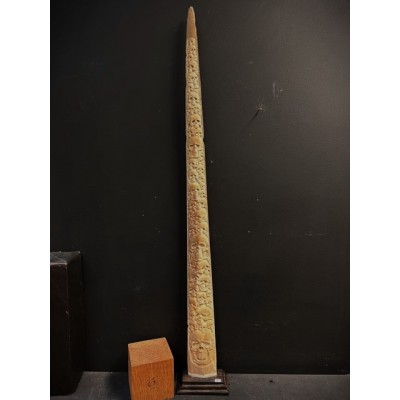
Carved swordfish rostrum: Unique piece
Skulls motifs
Indonesian craftsmanship
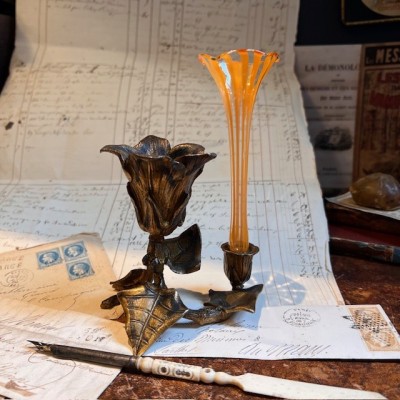
Elegant Art Nouveau glass vase and bronze candlestick
Made of cast bronze with a patina finish, decorated with naturalistic plant motifs and hand-finished with a file.
Art Nouveau decorative object combining patinated bronze and orange glass in a fluid, asymmetrical plant motif characteristic of the late 19th century.
Circa 1895–1905
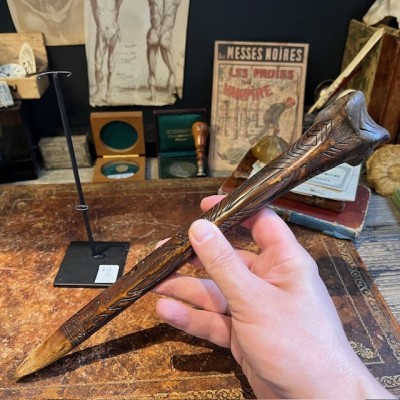
Papuan dagger in engraved cassowary bone
Papuan handicraft
Ref B
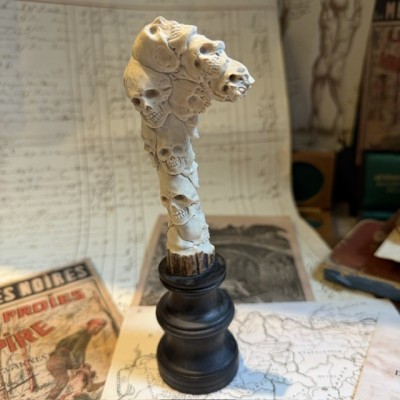
Deer antler sculpture - Totem Skulls on pedestal
Material : Antler
Origin: Hand-carved in Indonesia
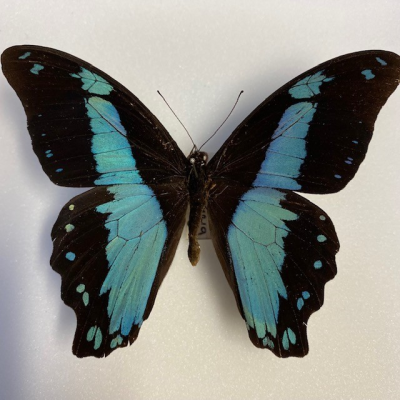
Entomological box
Species: Papilio Bromus butterfly
Pick-up in store in Paris only
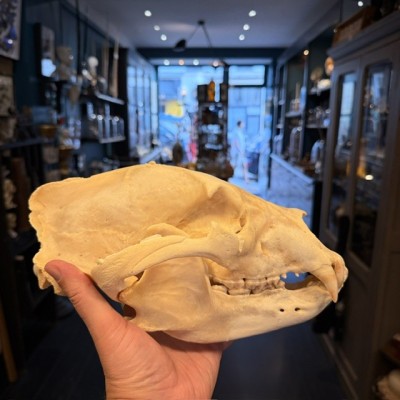
Black Bear Skull from Canada
Ursus americanus
You must live in the European Union to buy this skull
Not for sale outside the European Union
Sold with its CITES import permit
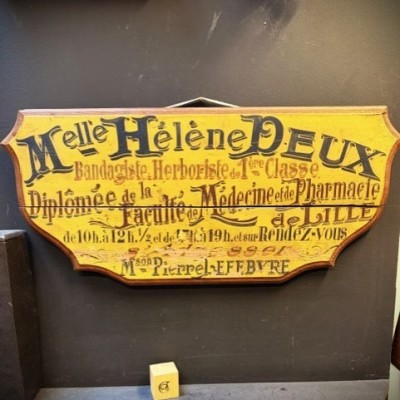
Rare and authentic wall sign panel
Pharmacy and fitting brand - Miss Hélène Deux, Bandagiste & 1st class Herbalist
Officine sign panel in painted wood from the 19th-20th century hinge: 1890-1920.
The sign is made of 2 reinforced wood panels at the back. There is a space between the 2 panels.
The sign features a superb art lettering entirely made freehand by a letter painter (superb contrasts of blue and brown, neat full and loose)
Witness to the history of pharmacy and ancient orthopaedics: the bandagist shaping leather and frames for corsets and restraints, and the herbalist 1st class, a profession that has disappeared since the abolition of the diploma in 1941.
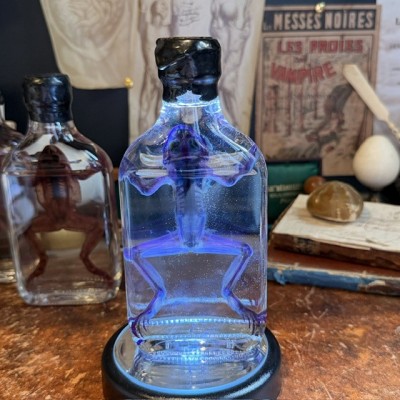
Diaphanization of a frog - Pelophylax ridibundus crossbred INRA (RIVAN92 strain)
Biological preparation
The aim of diaphanization is to render the tissues transparent through a chemical process, and specific dyes are used to highlight the skeleton.
You can see the bones through the skin! You can even see the circulatory system!
Not a protected species
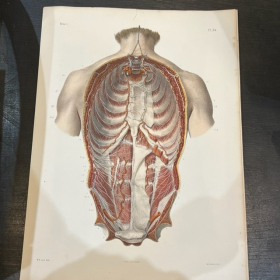
Anatomic lithography: "Traité complet de l'Anatomie de l'Homme"
by Dr Bourgery and draughtsman Jacob
Volume 3 - 1844
Anatomical articulated skinning
Paper-cardboard articulated mannequin
Human skeleton