
- New
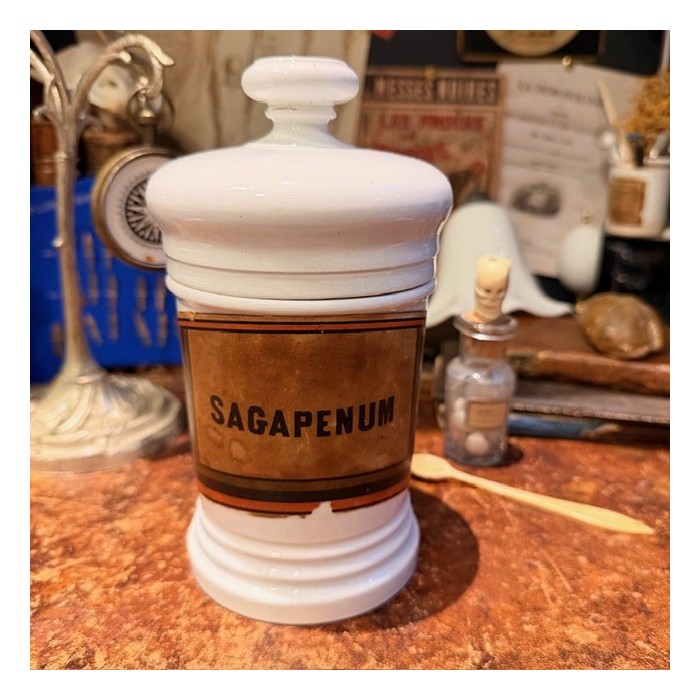
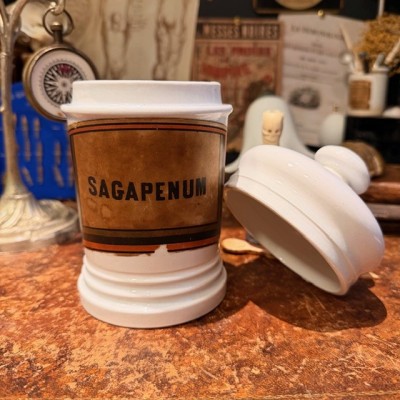
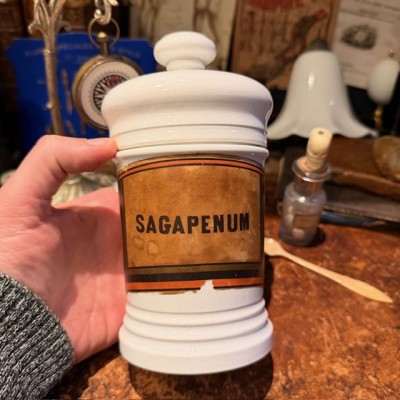
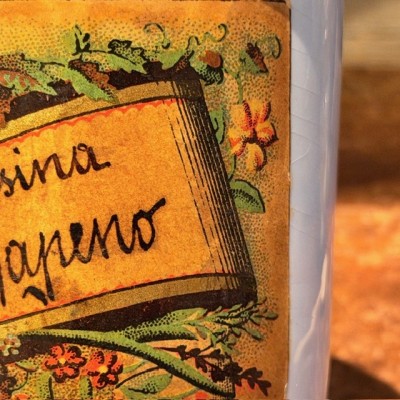
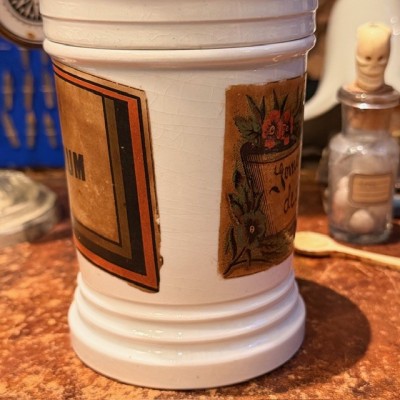
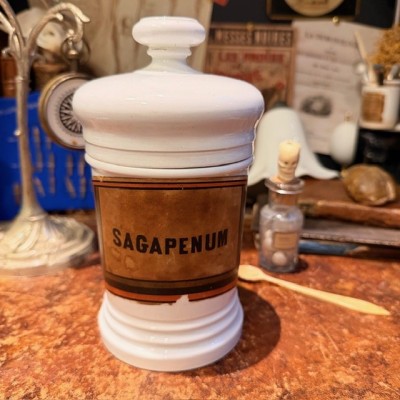
Sagapenum - Gum Resin
Earthenware apothecary jar
Herbalism - Apothecary
Dating: Late 19th century for the jar; the Spanish label is slightly later, in Art Nouveau style around 1890-1920
Sagapenum - Gum Resin
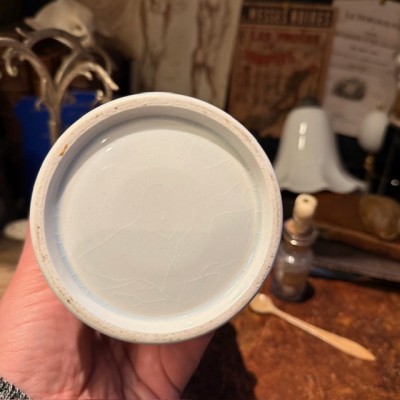
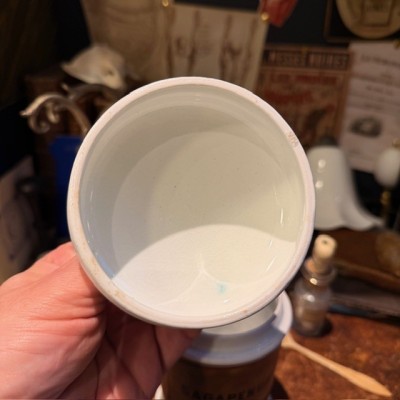
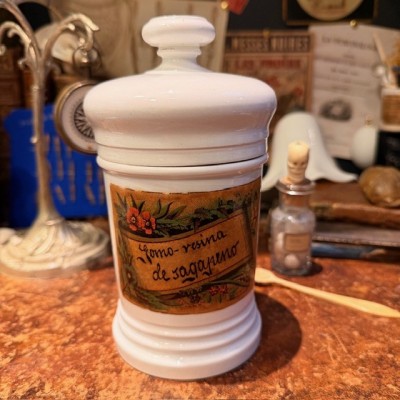
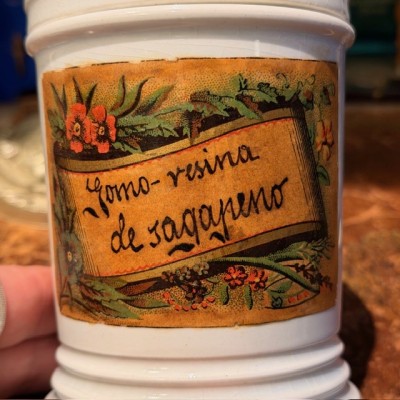
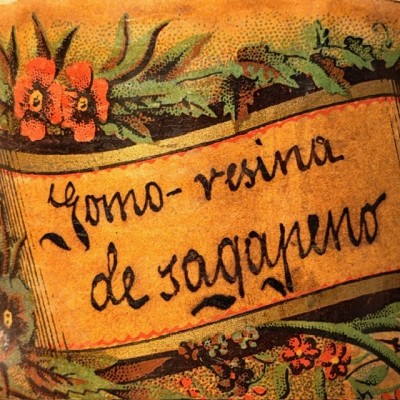
19th-century antique white earthenware apothecary jar with double labeling "Sagapenum" / "Gomo-resina de sagapeno"
Its distinctive feature lies in its double labeling, placed on two opposite sides and illustrating the history of its use in a dispensary.
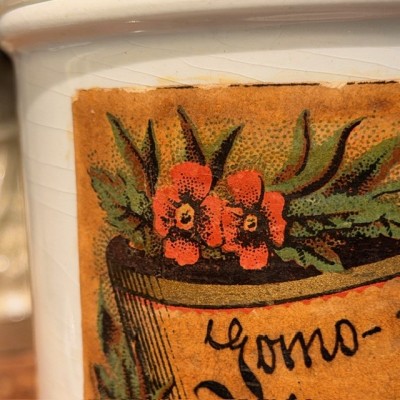
Beautiful original labels: a Latin one of classic use in French Pharmacy in black, red, and gold, and on the back, a Belle Époque-style chromolithographed label with polychrome floral decoration (red flowers and foliage) surrounding a cartouche hand-calligraphed with Gomo-resina de sagapeno in Spanish.
Also called seraphic gum, sagapenum is an aromatic gum resin with a strong garlic odor extracted from umbelliferous plants native to Persia.
Used from Antiquity until the 19th century in traditional pharmacopoeia, it notably entered into the composition of theriac, mithridate, antispasmodic pills, and certain plasters; it gradually disappeared from dispensaries in the early 20th century.
Dating: Late 19th century for the jar; the Spanish label is slightly later, in Art Nouveau style around 1890-1920.
Height: 17cm - Diameter: 8.5cm - Weight: 360g

Mercury Proto-Iodide - Syphilis Treatment
Antique pharmacy bottle.
Red ‘POISON’ label
Indicating to the pharmacist that it must be stored separately from other substances in the cabinet for toxic substances, the famous "poison cabinet".
It comes from the former cellar-laboratory of a Parisian pharmacy. The bottles had not been moved from the shelves since the late 1950s. The cellar had served as a medical analysis laboratory and a laboratory for the pharmacy’s compounded preparations from 1900 until around 1950.
Period: Late 19th century - Very early 20th century (circa 1890–1910)
EMPTY
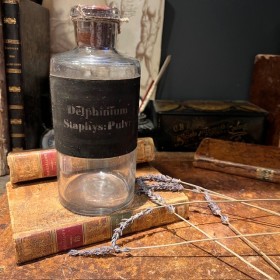
Delphinium staphisagria - Stavesacre
Pharmacy jar - Herbalism - Apothecary bottle
Late 19th century, early 20th century.
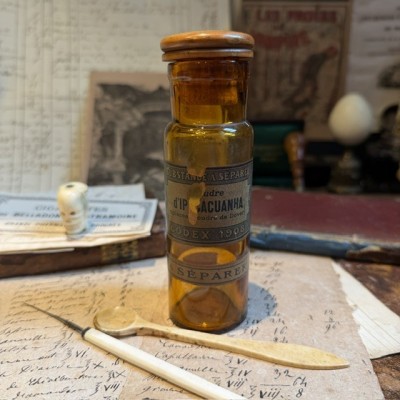
Ipecacuanha Opiate Powder - Dover's Powder
Antique amber glass bottle, with a boxwood and cork stopper.
Green label: SUBSTANCE TO BE STORED SEPARATELY – CODEX 1908
Indicating to the pharmacist that it must be stored separately from other substances in the cabinet for toxic substances, the famous ‘poison cabinet’.
It comes from the former cellar-laboratory of a Parisian pharmacy. The bottles had not been moved from the shelves since the late 1950s. The cellar had served as a medical analysis laboratory and a laboratory for the pharmacy’s compounded preparations from 1900 until around 1950.
EMPTY
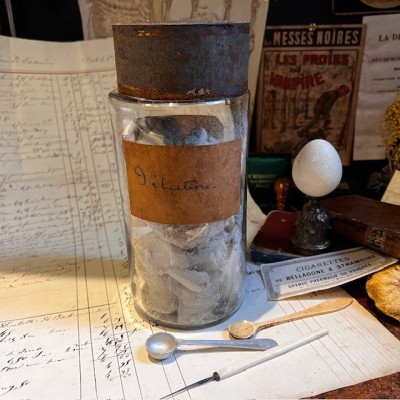
Gelatine
Antique pharmacy bottle - Wide-mouth apothecary jar.
19th-century mouth-blown glass
There is still some product left inside
A fascinating artifact from the history of pharmacology
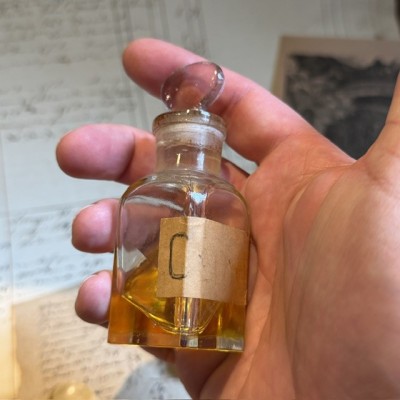
Cèdre - Cedarwood Oil
Antique pharmacy bottle
There is some product left, but the stopper is stuck
The writing has faded, but in oblique light one can make out CEDRE
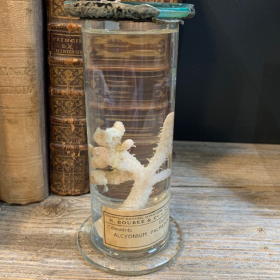
Museum jar - Wet specimen
Soft coral Alcyonium palmatum

Bibliothèque Choisie de Médecine - Volume 8
Selected Library of Medicine
By François PLANQUE - 1750
Complete original edition with 10 fold-out plates
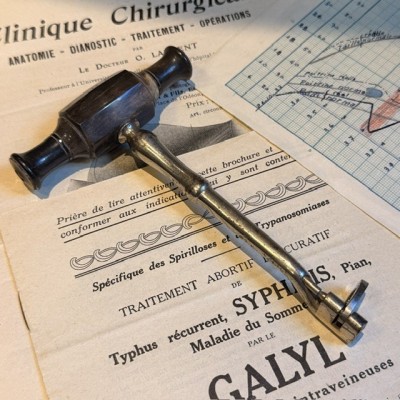
Garengeot Dental Key
Used from the 19th century through the 1930s
Date: Date: 19th century (c. 1840–1880) - Made of wrought iron and ebony
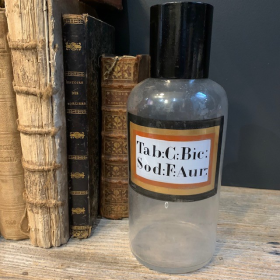
Antique pharmacy jar: Sodium bicarbonate and Gold Flower tablets
Glass pharmacy bottle - XIXth century
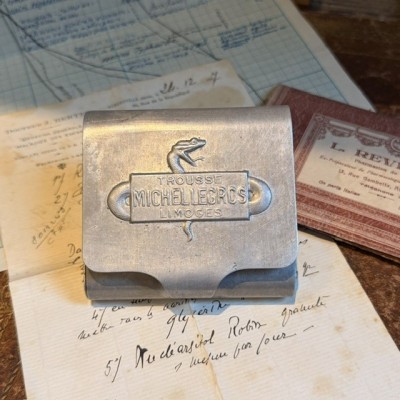
Antique First aid kit for the healing of snake bites
Glass syringe and 2 vintage doses of vaccine
Vintage quack remedy!
Beautiful snake illustration on the aluminium box
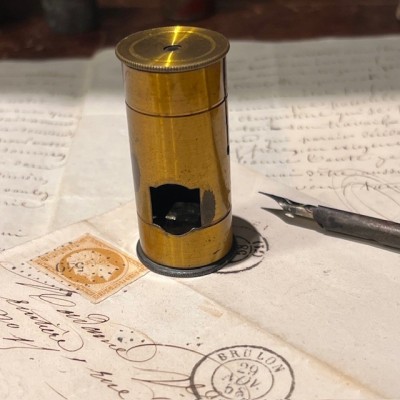
Floroscope
Botanist's microscope
Pocket microscope Late 19th - early 20th century
Warning: Here composed of 2 Stanhope lenses
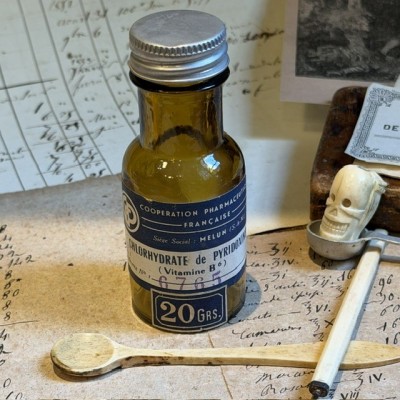
Pyridoxine hydrochloride - Vitamin B6
Antique pharmacy bottle
EMPTY
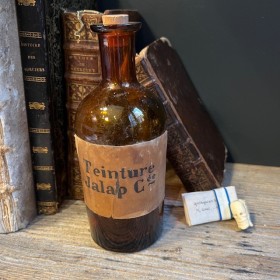
Tincture of Jalap Compound also known as German brandy
A purgative powder is extracted from the Jalap plant.
Antique pharmacy bottle
Apothecary vial
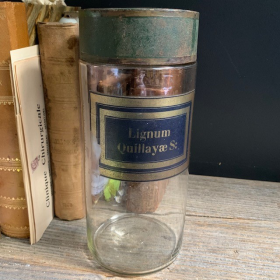
Antique pharmacy jar: Lignum Quillayae Saponaria
Panama wood - 19th century jar
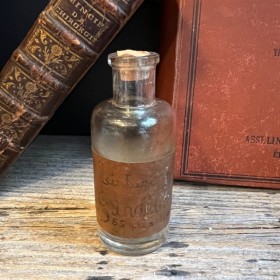
Grindelia Tincture
Antique medicine bottle
Apothecary
Sagapenum - Gum Resin
Earthenware apothecary jar
Herbalism - Apothecary
Dating: Late 19th century for the jar; the Spanish label is slightly later, in Art Nouveau style around 1890-1920