
- New
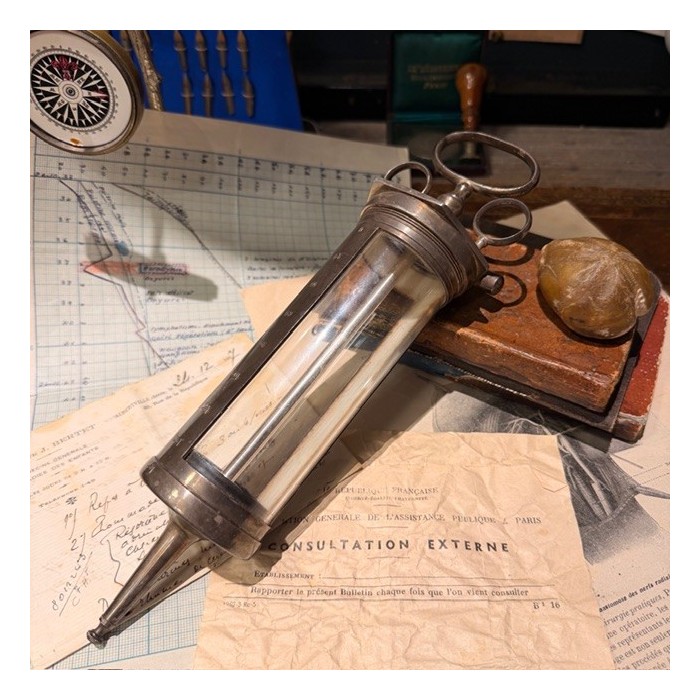
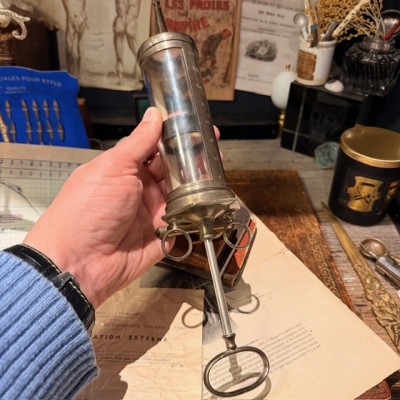
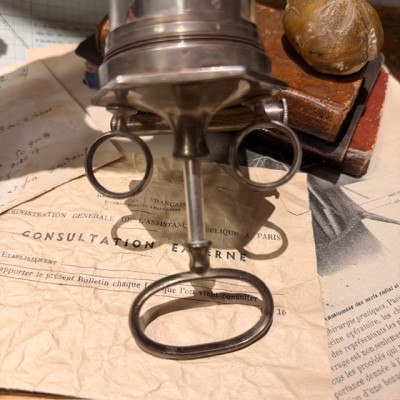
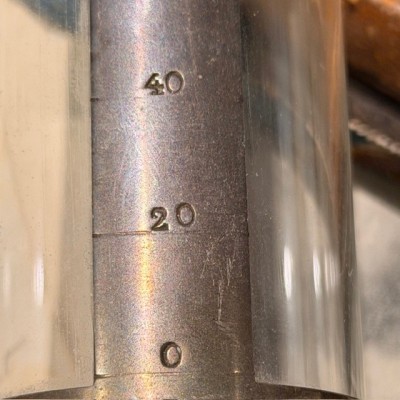
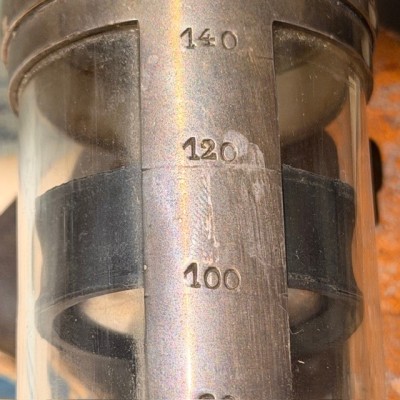
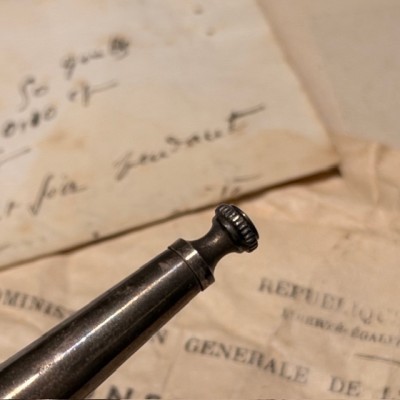
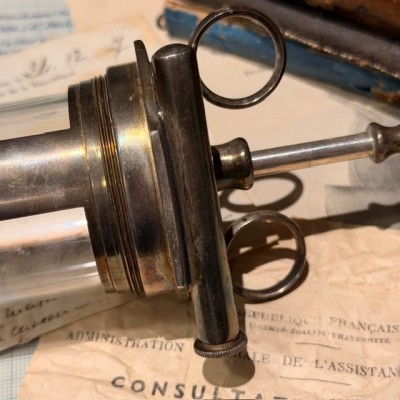
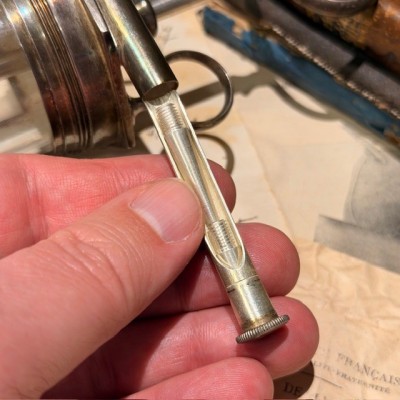
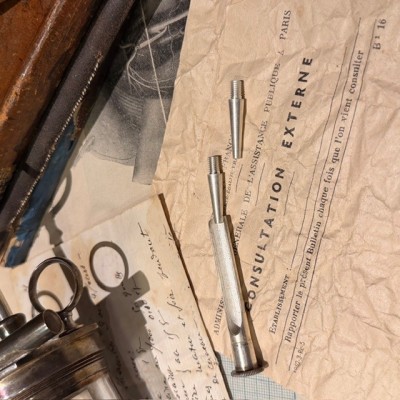
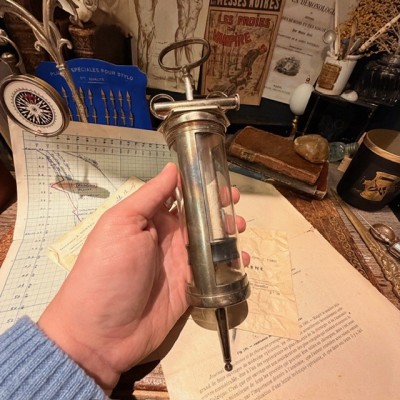
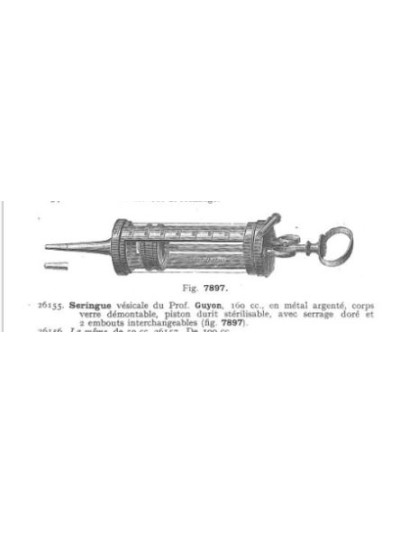
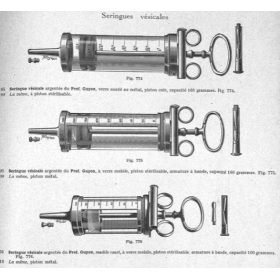
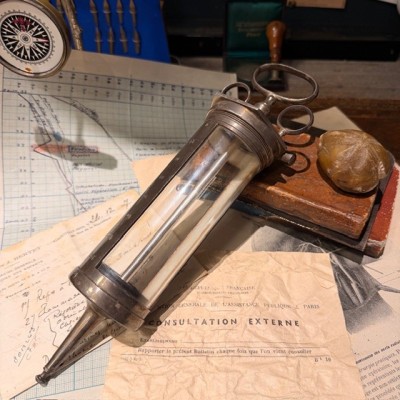
Guyon bladder syringe by the manufacturer Niédrée in Paris
Late 19th century: 1860-1885
This syringe is used to perform bladder instillations, for bladder washes.
Guyon’s vesical syringe
NIEDREE engraving on the metal body
From the manufacturer Niédrée. Jean-Baptiste Niédrée in Paris. The engraving bearing only the name Niédrée (without mention of a successor), this syringe most likely dates from the period 1860–1885.
This syringe is used to perform bladder instillations, used for bladder washes during urinary tract disorders. Connect the tip of the syringe to a bladder catheter, using your fingers in the handles of the tip and the ring on the plunger to apply pressure to inject the liquid.
Dimensions of the closed syringe: Length 25cm Diameter of the body: 4.5cm
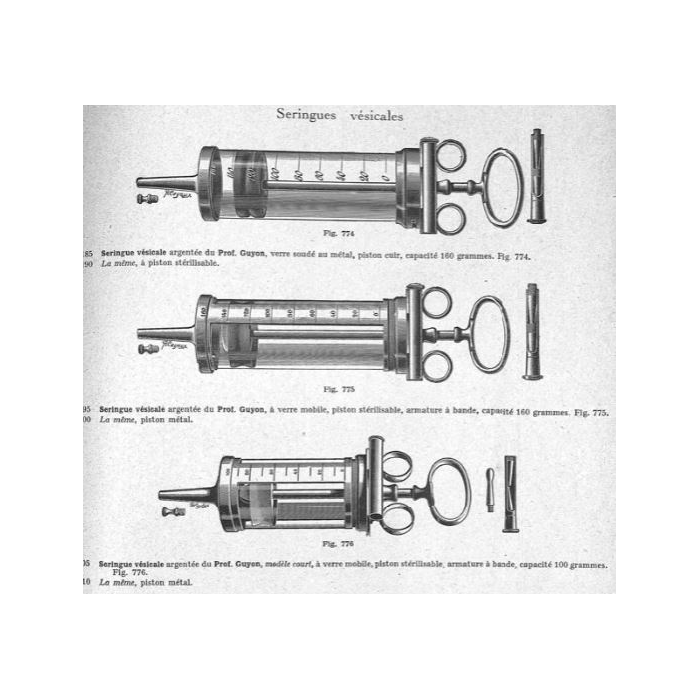
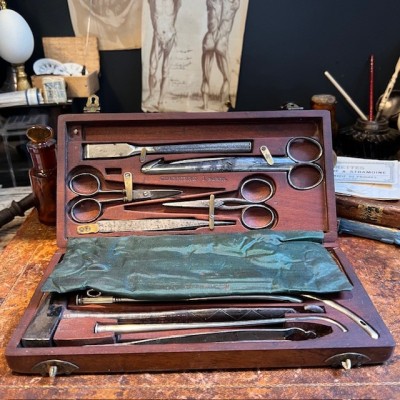
Portable autopsy kit from the mid-19th century
Maison Charrière in Paris, circa 1845–1870
Mahogany case for autopsy and dissection
Small portable mahogany case containing a set of autopsy instruments: hook hammer, bone chisel, enterotome scissors, probes, hooks and suture needles. Used by forensic scientists and anatomists for opening and examining bodies.
Charrière, a major 19th-century Parisian manufacturer, was a pioneer in the design of high-precision surgical and anatomical instruments.
Mahogany and polished steel: 23 × 11 cm
Please note: crack in the wood under the case
A beautiful object, very rare to find
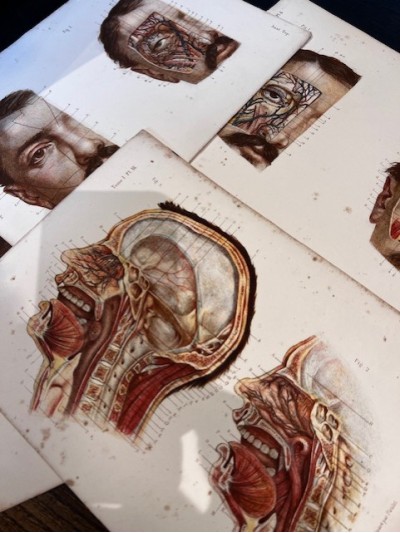
Anatomical chart by Paulet and Sarazin
From the Traité d'anatomie topographique (Treatise on topographical anatomy)
Published in 1867-1870
Chromolithography
You buy 1 plate, not the whole set
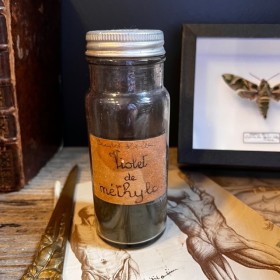
Violet de Méthyle
Antique pharmacy bottle - Droguerie - Apothicaire
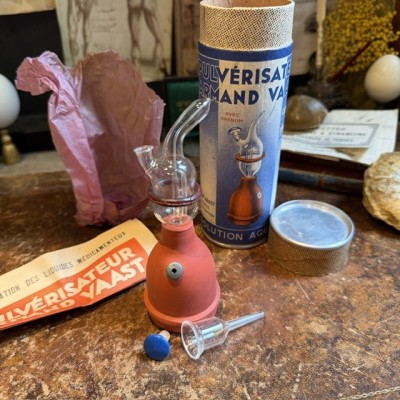
Armand Vaast nasal spray - Oil vaporizer - Antique remedy
In its box
Used in otolaryngology, it was intended for nasal or oral sprays in the treatment of colds and antiseptic treatment of the respiratory tract.
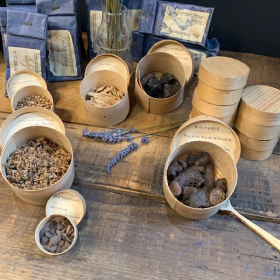
Antique wooden box for herbal medicine - Samples of plants, seeds, bark etc.
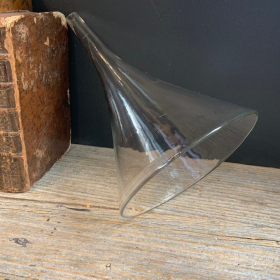

Mercury Proto-Iodide - Syphilis Treatment
Antique pharmacy bottle.
Red ‘POISON’ label
Indicating to the pharmacist that it must be stored separately from other substances in the cabinet for toxic substances, the famous "poison cabinet".
It comes from the former cellar-laboratory of a Parisian pharmacy. The bottles had not been moved from the shelves since the late 1950s. The cellar had served as a medical analysis laboratory and a laboratory for the pharmacy’s compounded preparations from 1900 until around 1950.
Period: Late 19th century - Very early 20th century (circa 1890–1910)
EMPTY
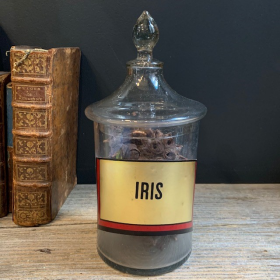
19th century Herbalist's or Pharmacy crystal jar
Iris
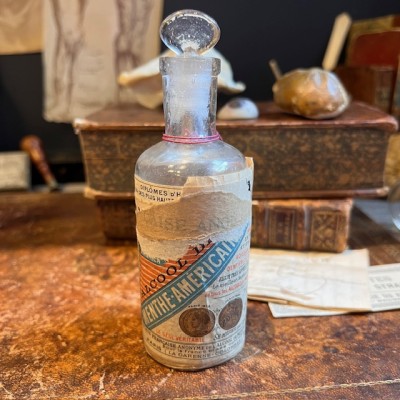
American mint alcohol
Antique pharmacy bottle
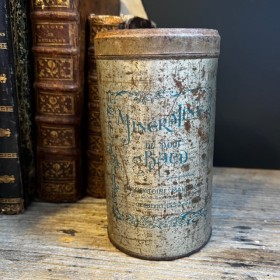
Mineraline by Dr C. Baud
Antique tin pharmacy box
Powder or talcum powder for children's toiletries

Aqua Piris - Pear water
Antique pharmacy jar
Apothecary
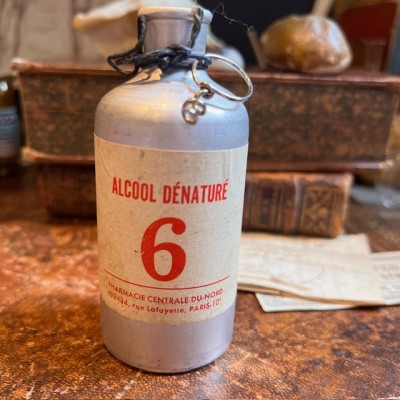
Alcool dénaturé - Alcool à brûler
Denatured alcohol - Methylated spirits
Antique pharmacy bottle - Apothecary
Empty
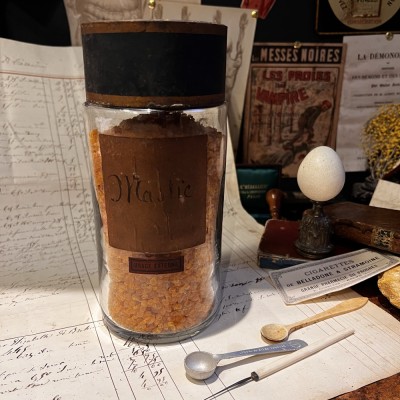
Mastic of Chios
Antique pharmacy bottle - Wide-mouth apothecary jar.
19th-century mouth-blown glass
There is still some product left inside
A fascinating artifact from the history of pharmacology
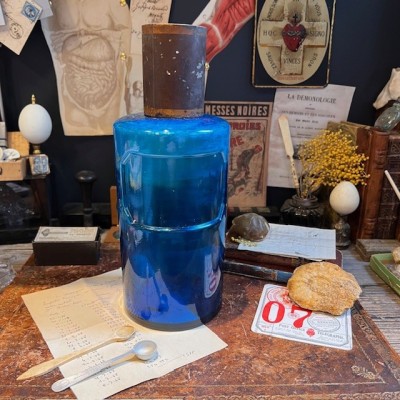
Very Large cobalt blue glass pharmacy bottle - Apothecary - Shouldered - H27.5cm - 19th century
Shouldered apothecary bottle - Antique pharmacy bottle
Mouth-blown glass - Cobalt blue color tinted throughout
This large-capacity jar was a storage jar intended for stockpiling
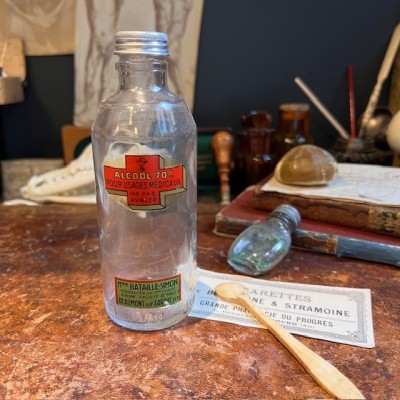
70° alcohol
Antique pharmacy bottle - Apothecary
Mrs Bataille-Simon, First Class Pharmacist in Beaumont sur Sarthe - Tel 9
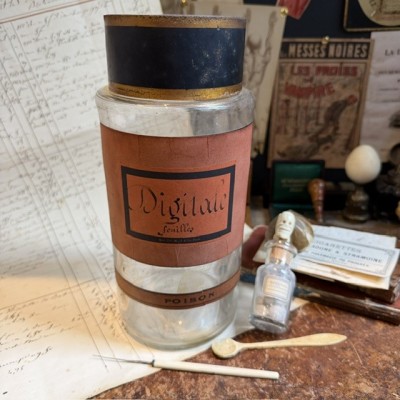
Foxglove leaves - POISON
Antique pharmacy bottle - 19th-century mouth-blown glass
Red POISON label
Signaling to the pharmacist that it is imperative to keep apart the other substances in the cabinet of toxic substances, the famous poison cabinet.
A fascinating testimony to pharmacology
It comes from an old cellar-laboratory in a Parisian pharmacy. The bottles had not moved since the late 1950s on the shelves. The cellar had served as a laboratory for medical analyses and a laboratory for magistral preparations of the pharmacy from 1900 until around 1950.
Guyon bladder syringe by the manufacturer Niédrée in Paris
Late 19th century: 1860-1885
This syringe is used to perform bladder instillations, for bladder washes.