

- New
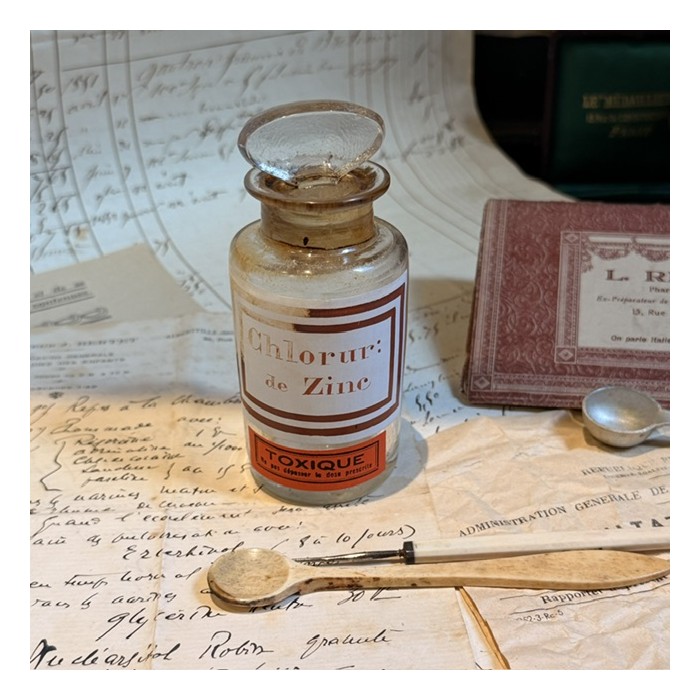
Zinc chloride
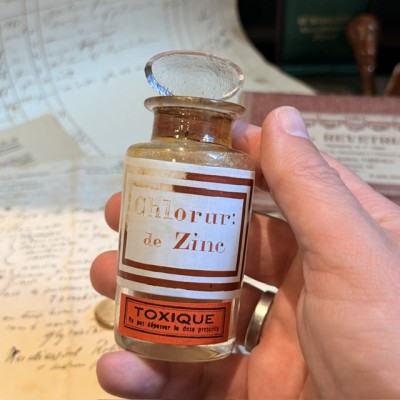
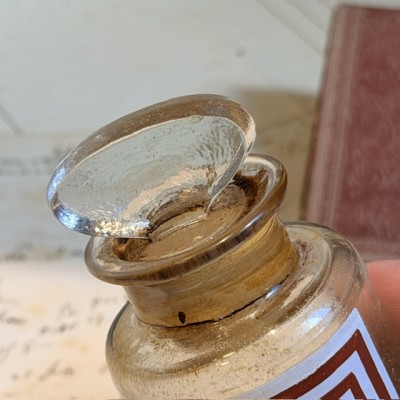
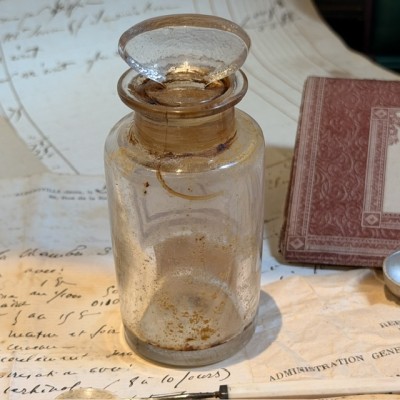
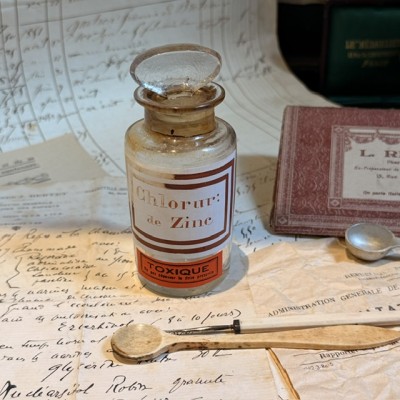
Antique pharmacy bottle made of blown glass and enameled painted label.
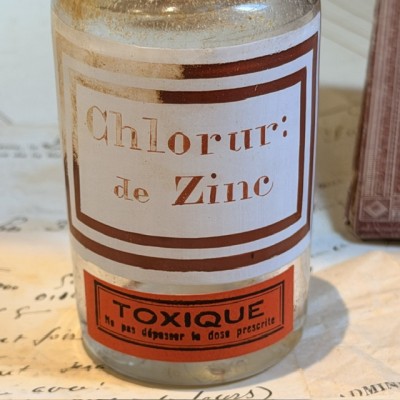
Red TOXIC label
Signaling to the pharmacist that it is imperative to keep apart the other substances in the cabinet of toxic substances, the famous poison cabinet.
Dating: 19th century
EMPTY
Zinc chloride
Antique pharmacy bottle made of blown glass and enameled painted label.
Red TOXIC label
Signaling to the pharmacist that it is imperative to keep apart the other substances in the cabinet of toxic substances, the famous poison cabinet.
Laboratory or pharmaceutical dispensary bottle, typical of the late nineteenth or early twentieth century.
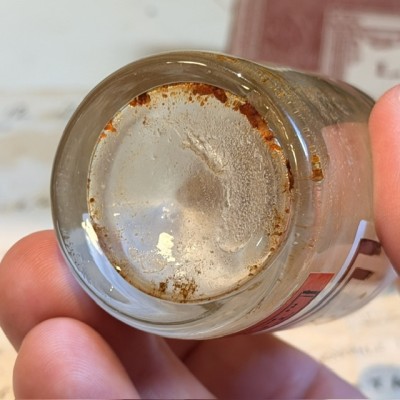
Made of blown transparent glass, it has a trace of pontil visible on the bottom, reflecting traditional artisanal manufacturing. It has its original cap honed with emery BUT the bottle is blocked and does not open, sealed by time.
Beautiful enamelled label stenciled surrounded by a brown/red border. This baked enamel technique guaranteed great resistance to handling and chemicals in the pharmacy. A red regulatory label marked "TOXIQUE" is applied at the bottom, indicating the poisonous nature of the substance.
Used in the 19th century as a major caustic agent, zinc chloride was notably a key ingredient in the famous "Canquoin's paste," used in surgery for destroying tumors, ulcers, and chancres.
With a strong affinity for water, this chemical substance severely dehydrated living tissues and ate into the flesh, causing deep eschars.
In cases of accidental ingestion, its corrosive violence destroyed the digestive mucous membranes and led to severe stomach perforations.
Height of the bottle: 12cm with blown glass cap - Diameter at the base: 4cm
Dating: 19th century
EMPTY
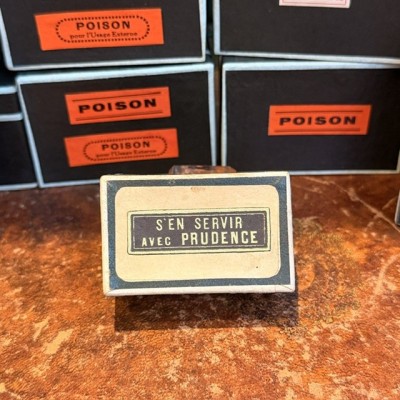
Antique labels in a pharmacy box for cures made of canvas cardboard
Use it with caution label
The pharmacist used his boxes of medicine to put away the labels he would then put on the bottles that he would resell to his customers.
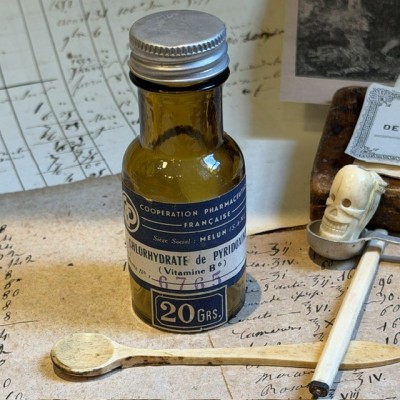
Pyridoxine hydrochloride - Vitamin B6
Antique pharmacy bottle
EMPTY
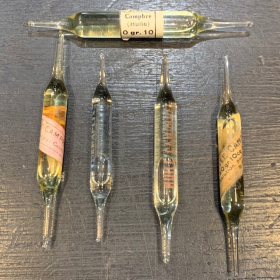
Bulb for hypodermic injection - Camphor (circa 1920)
various manufacturers
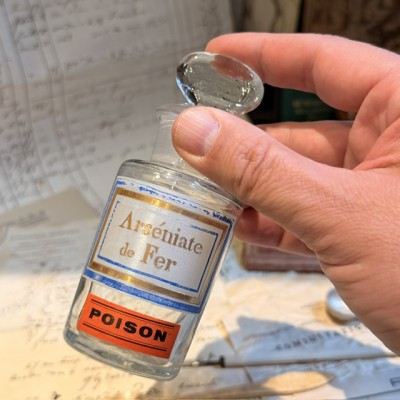
Arsenic - Iron arsenate
Antique pharmacy bottle made of blown glass and enameled painted label with golden blue threads
Red POISON label
Signaling to the pharmacist that it is imperative to keep apart the other substances in the cabinet of toxic substances, the famous poison cabinet.
Dating: 19th century
EMPTY
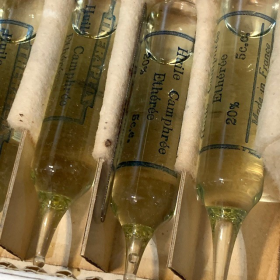
Bulb for hypodermic injection - Camphorated ethereal oil (circa 1920)
THERAPLIX

Essence of star anise
Antique pharmacy bottle
Apothecary vial
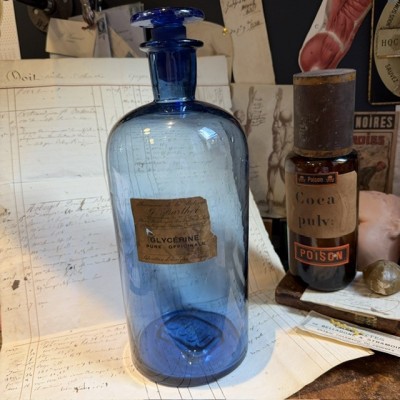
Glycérine pure officinale
Pure pharmaceutical-grade glycerine
Antique BLUE glass pharmacy bottle
EMPTY
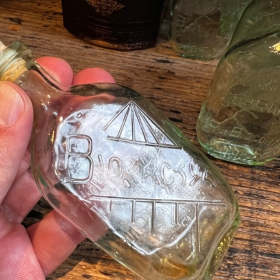
Antique pharmacy bottle
BIOLACTYL Ferment Fournier - Early 1900
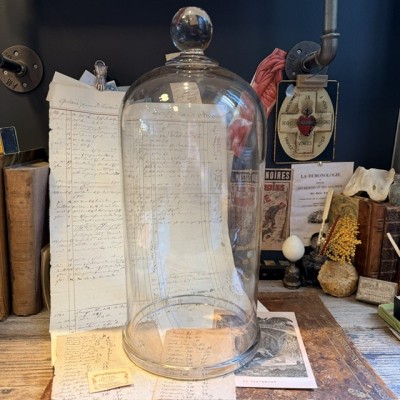
Protective laboratory bell jar - High form with knob in blown glass
Period: 1900 - Pharmacy - Apothecary
Used by the pharmacist to cover precision instruments or isolate preparations undergoing analysis
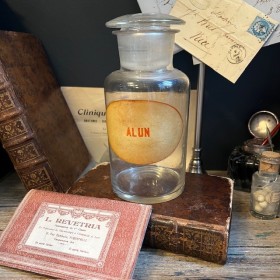
Alum
Antique pharmacy bottle
Apothecary vial
Color pigments have been added to the inside of the jar
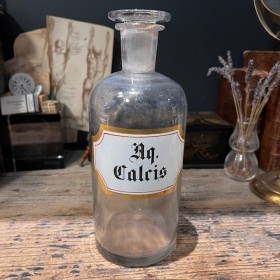
Aqua Calris - Hot water
Antique pharmacy jar
Apothecary
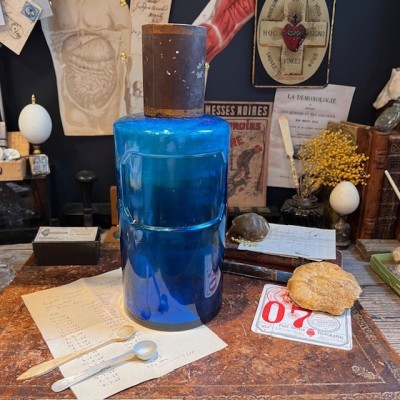
Large cobalt blue glass pharmacy bottle - Apothecary - Shouldered - H27.5cm - 19th century
Shouldered apothecary bottle - Antique pharmacy bottle
Mouth-blown glass - Cobalt blue color tinted throughout
This large-capacity jar was a storage jar intended for stockpiling
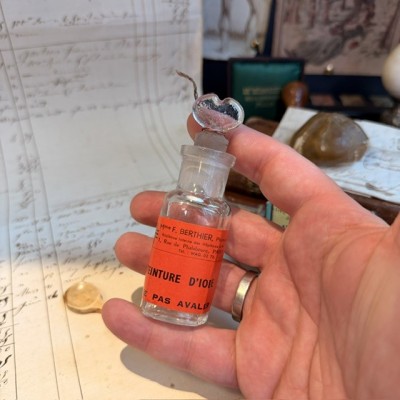
Iodine dye
Antique pharmacy bottle
With the inscription Teinture d'Iode molded in glass
EMPTY
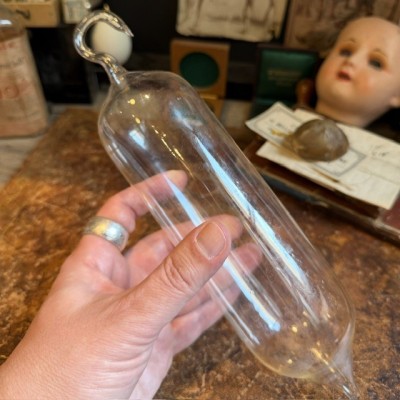
Antique sodium chloride infusion bulb
500cm3
in its original box - Still full
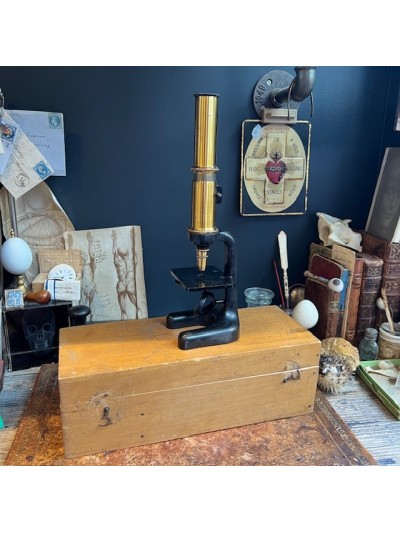
Antique brass and cast-iron rack-and-pinion microscope in wooden case
Late 19th century - Early 20th century
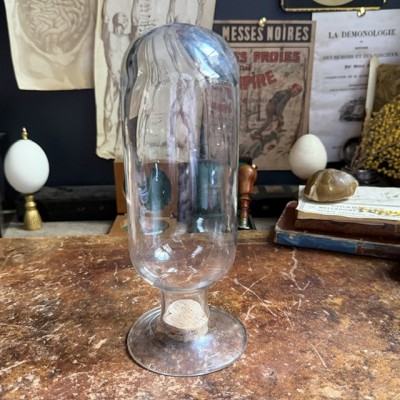
Specimen jar in blown glass – Inverted apothecary jar - Seed vase
Size M
A vintage laboratory or conservatory container designed for the display and preservation of biological or botanical specimens
Zinc chloride
Antique pharmacy bottle made of blown glass and enameled painted label.
Red TOXIC label
Signaling to the pharmacist that it is imperative to keep apart the other substances in the cabinet of toxic substances, the famous poison cabinet.
Dating: 19th century
EMPTY