

- New
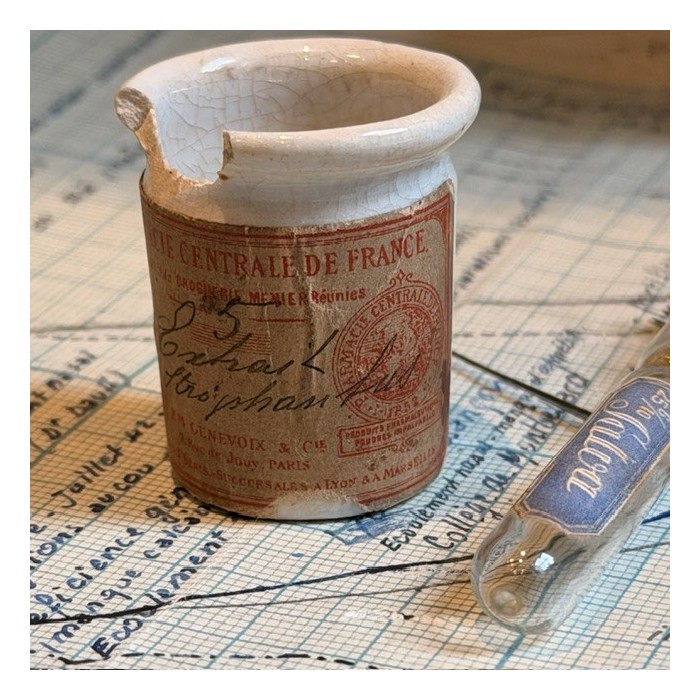
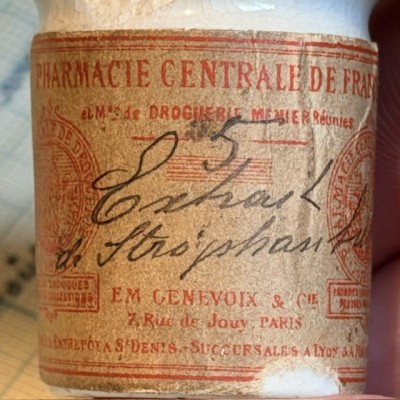
Excerpt from Strophanthus MENIER - TINY pot
Early/ mid-20th century pharmacy jar in white earthenware
Beautiful labels: Red POISON label with the famous skull and crossbones and the Poisonous Substances label
Signaling to the pharmacist that it is imperative to keep apart the other substances in the cabinet of toxic substances, the famous poison cabinet.
It comes from an old cellar-laboratory in a Parisian pharmacy. The bottles had not moved since the late 1950s on the shelves. The cellar had served as a laboratory for medical analyses and a laboratory for magistral preparations of the pharmacy from 1900 until around 1950.
EMPTY
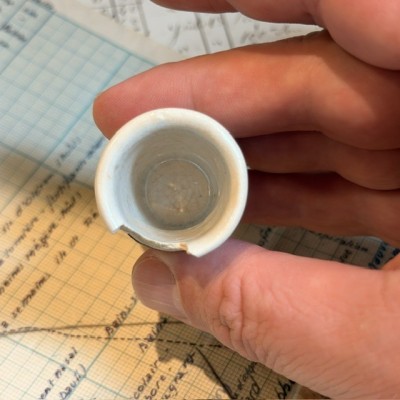
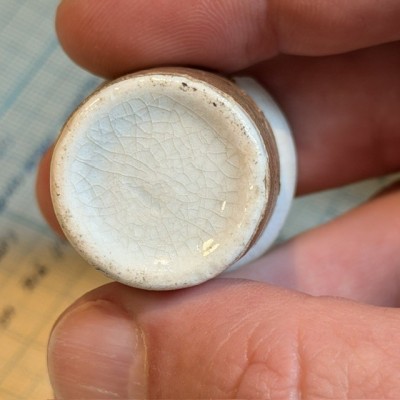
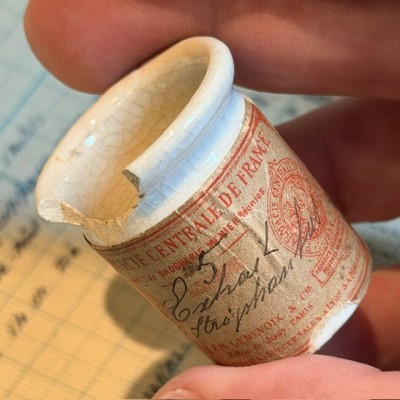
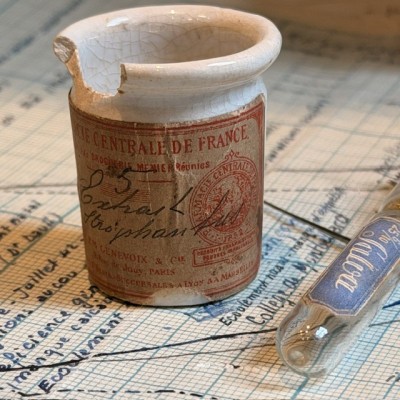
Excerpt from Strophanthus MENIER - TINY pot
Pharmacy jar in white earthenware - Period: 1881-1900
A true piece of industrial and medical history for this tiny pot of preparation in white earthenware from the late 19th or early 20th century.
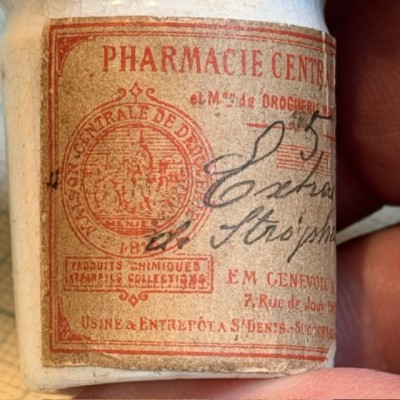
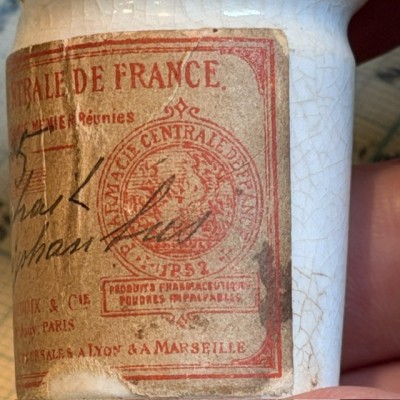
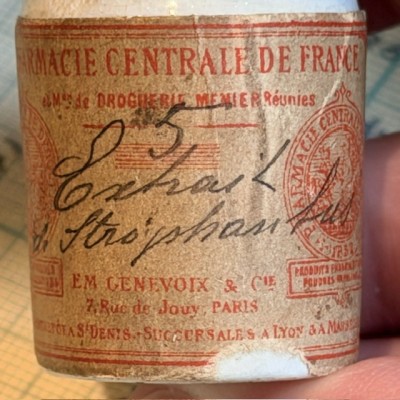
Coming from the warehouses of the Pharmacie Centrale de France, it bears witness to the historic merger in 1881 with the drugstore division of the famous Menier house (the chocolatiers, whose initial fortune was built on pharmaceutical drugstores).
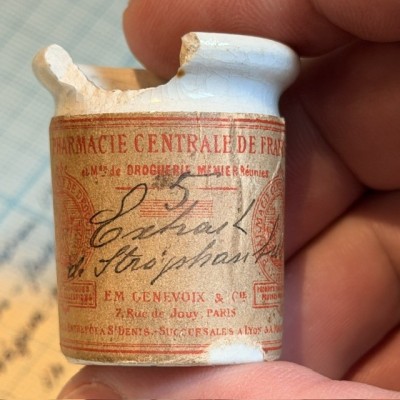
The label printed in red bears the original handwritten mention in black ink: "5 Extrait de Strophantus".
In other words, 5g of Strophantus extract.
This concentrated extract from the 19th century was used by pharmacists to formulate potions or granules for severe heart failure. The dangerousness of this substance was extreme.
Strophanthus is a tropical plant traditionally used as poison on poisoned arrows in Africa.
At the end of the 19th century, the chemist Léon Arnaud received from a famous traveler of the time, Bénédict-Henry Révoil, arrows coated with poison coming from Somalia.
In 1888, he isolated the element responsible for the effects of the poison, which he named ouabain, which became strophantine, a violent cardiac poison used for a time therapeutically as cardiotonic, but due to its toxicity, since abandoned in favor of more manageable synthetic molecules or digoxin.
In the late 19th century and the first half of the 20th century, this product was prescribed as a potent cardiac stimulant, mainly for treating acute heart failure and arrhythmias. It acted similar to digitalis, but with an action often considered faster.
But the strophantine tends to accumulate in the body if taken too close together. A patient who took his remedy without scrupulously following the prescription could, after a few days, reach unintentionally a total toxic dose in the blood, which led to a heart attack!
The perfect example of a product with a tiny therapeutic margin: the difference between the dose needed to save a failing heart and the toxic dose that stopped it was very (too much?) fine.
It comes from an old cellar-laboratory in a Parisian pharmacy. The bottles had not moved since the late 1950s on the shelves. The cellar had served as a laboratory for medical analyses and a laboratory for magistral preparations of the pharmacy from 1900 until around 1950.
Material: White earthenware without lid - Wide chipping
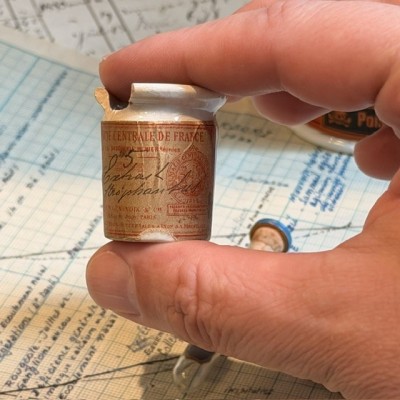
Dimensions: Height: 3.5 cm - Diameter: 2.5cm
Period: 1881-1900
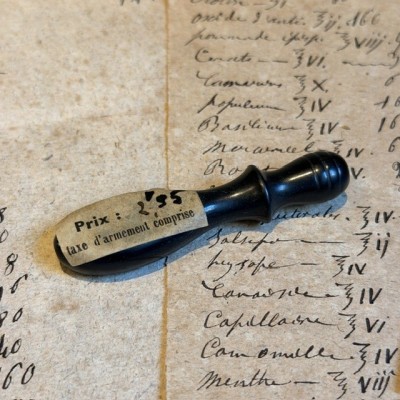
Ebonite cannula tip
Tips for enema or medical irrigation cannulas. New Old Stock
Marketed between May 1939 and sometime in 1940

Antique and large drum microscope
In it's mahogany wooden box
For botanist, entomologist
This is a larger model than those usually found on the market
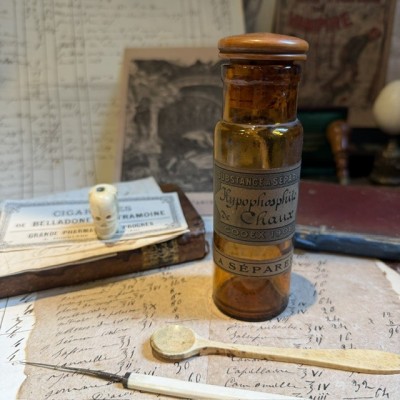
Calcium hypophosphite
Antique amber glass bottle, with a boxwood and cork stopper.
Green label: SUBSTANCE TO BE STORED SEPARATELY – CODEX 1908
Handwritten label, pen inscription, neat calligraphy, with its thick and thin strokes.
Indicating to the pharmacist that it must be stored separately from other substances in the cabinet for toxic substances, the famous ‘poison cabinet’.
It comes from the former cellar-laboratory of a Parisian pharmacy. The bottles had not been moved from the shelves since the late 1950s. The cellar had served as a medical analysis laboratory and a laboratory for the pharmacy’s compounded preparations from 1900 until around 1950.
EMPTY
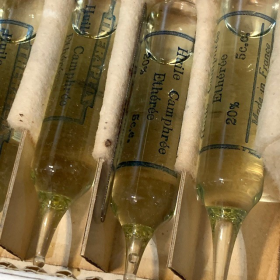
Bulb for hypodermic injection - Camphor (circa 1920)
THERAPLIX
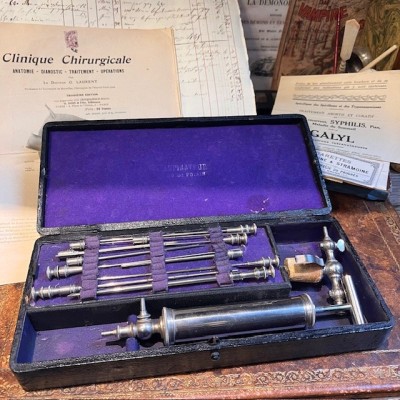
Dr Potain vacuum cleaner in its case
Late 19th century - 1870-1895
Antique medical instrument
However, the box comes from the Hôpital de la Charité in Paris, as indicated by the inscription on the top of the box, from the Bouillaud ward of the hospital.
non-functional
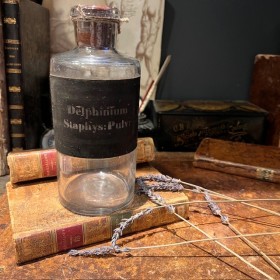
Delphinium staphisagria - Stavesacre
Pharmacy jar - Herbalism - Apothecary bottle
Late 19th century, early 20th century.
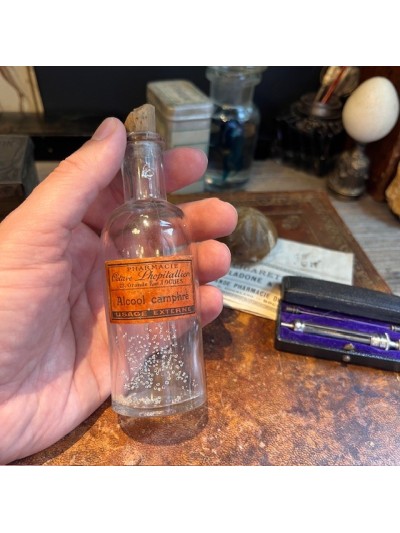
Camphorated alcohol
Antique pharmacy bottle
Apothecary vial
EMPTY
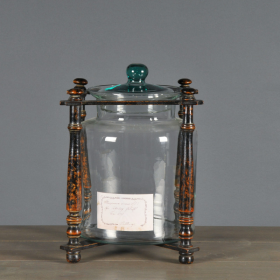
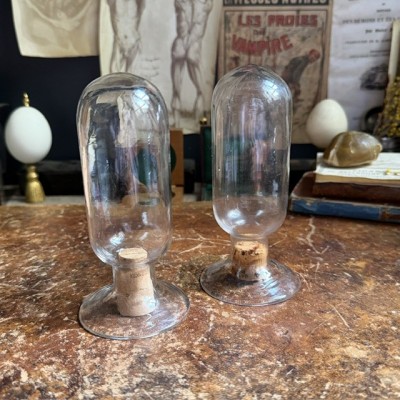
Specimen jar in blown glass - Inverted apothecary jar - Seed vase
Size S
A vintage laboratory or conservatory container designed for the display and preservation of biological or botanical specimens
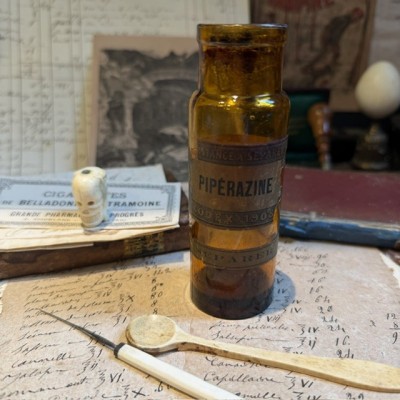
Piperazine
Antique amber glass bottle. The cap is missing
Green label: SUBSTANCE TO BE STORED SEPARATELY – CODEX 1908
Indicating to the pharmacist that it must be stored separately from other substances in the cabinet for toxic substances, the famous ‘poison cabinet’.
It comes from the former cellar-laboratory of a Parisian pharmacy. The bottles had not been moved from the shelves since the late 1950s. The cellar had served as a medical analysis laboratory and a laboratory for the pharmacy’s compounded preparations from 1900 until around 1950.
EMPTY
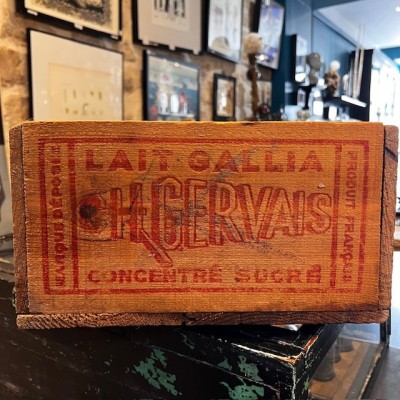
Antique wooden advertising crate for Gallia / Ch. Gervais infant milk concentrate
Found in Parisian cellars that served as laboratories and storage rooms for pharmacists preparing their masterful concoctions from 1900 to 1950.
It was used to store products, glass bottles, etc.
Period: Circa 1947–1955

Antique brown glass bottle
Huile camphrée
Apothecary - Pharmacy
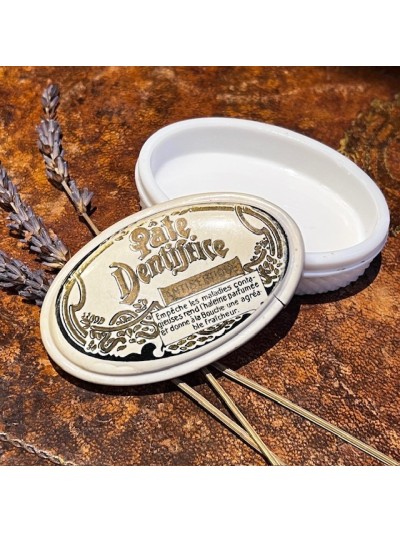
Toothpaste - Antique apothecary
Porcelain pot with illustrated plastic lid
Antiseptic
Early 20th century - Caution the lid is cracked
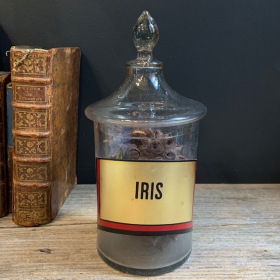
19th century Herbalist's or Pharmacy crystal jar
Iris

Grams / Tablespoons - Graduated bottle
in French: Grammes / Cuillères à soupe
Antique medicine bottle
Apothecary
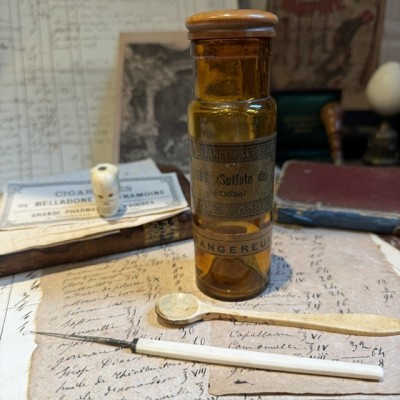
Pharmaceutical zinc sulphate
Antique amber glass bottle, with a boxwood and cork stopper.
Green label: SUBSTANCE TO BE STORED SEPARATELY – CODEX 1908
Indicating to the pharmacist that it must be stored separately from other substances in the cabinet for toxic substances, the famous ‘poison cabinet’.
It comes from the former cellar-laboratory of a Parisian pharmacy. The bottles had not been moved from the shelves since the late 1950s. The cellar had served as a medical analysis laboratory and a laboratory for the pharmacy’s compounded preparations from 1900 until around 1950.
EMPTY
Excerpt from Strophanthus MENIER - TINY pot
Early/ mid-20th century pharmacy jar in white earthenware
Beautiful labels: Red POISON label with the famous skull and crossbones and the Poisonous Substances label
Signaling to the pharmacist that it is imperative to keep apart the other substances in the cabinet of toxic substances, the famous poison cabinet.
It comes from an old cellar-laboratory in a Parisian pharmacy. The bottles had not moved since the late 1950s on the shelves. The cellar had served as a laboratory for medical analyses and a laboratory for magistral preparations of the pharmacy from 1900 until around 1950.
EMPTY