- New
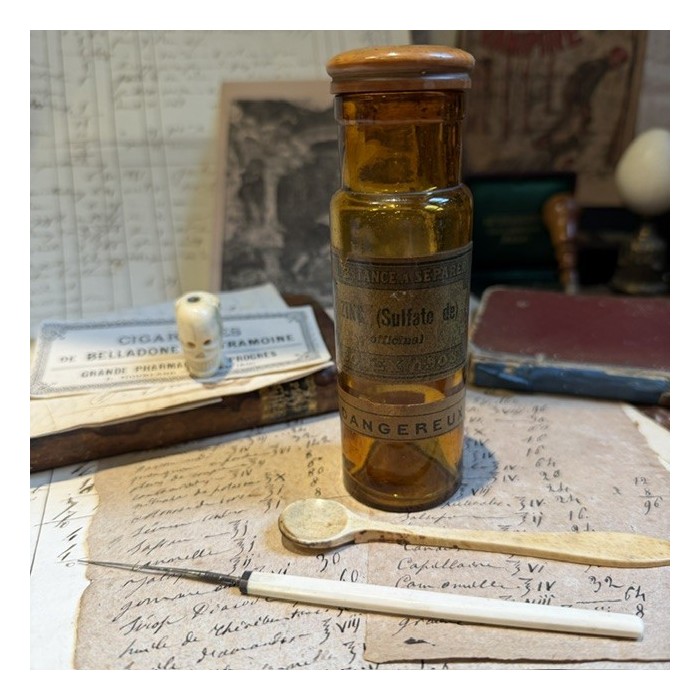
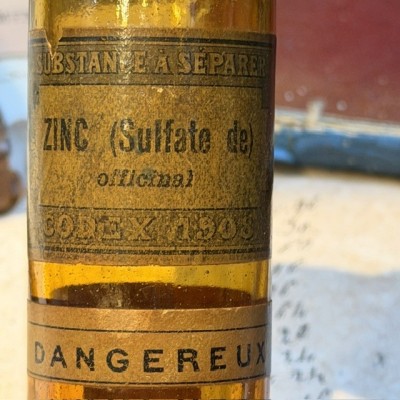
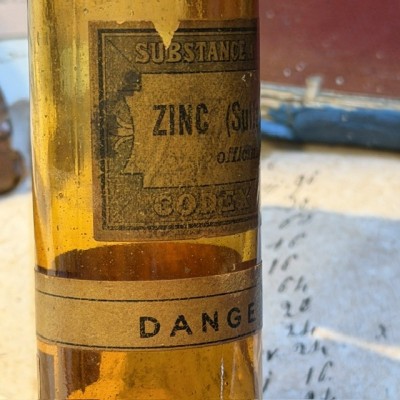
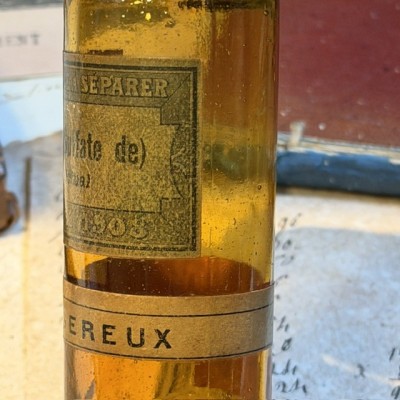
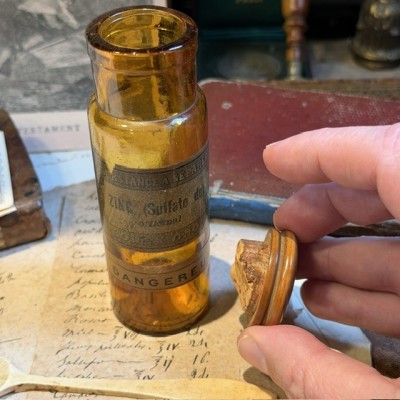
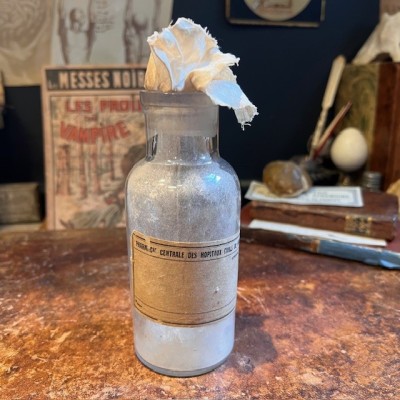
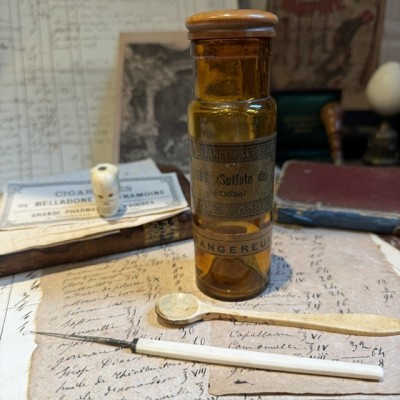
Pharmaceutical zinc sulphate
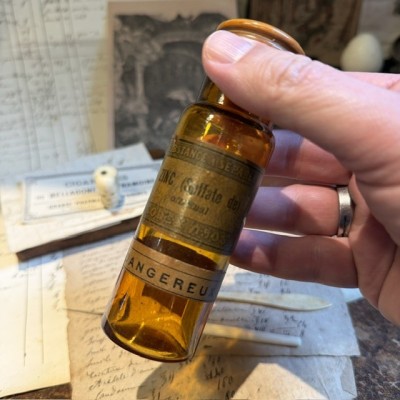
Antique amber glass bottle, with a boxwood and cork stopper.
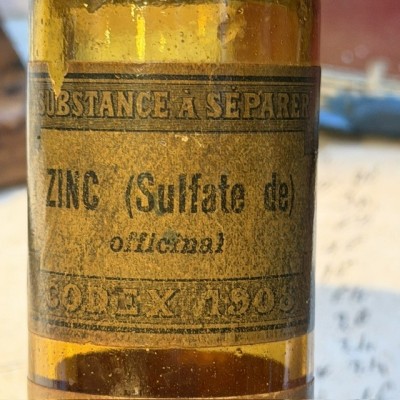
Green label: SUBSTANCE TO BE STORED SEPARATELY – CODEX 1908
Indicating to the pharmacist that it must be stored separately from other substances in the cabinet for toxic substances, the famous ‘poison cabinet’.
It comes from the former cellar-laboratory of a Parisian pharmacy. The bottles had not been moved from the shelves since the late 1950s. The cellar had served as a medical analysis laboratory and a laboratory for the pharmacy’s compounded preparations from 1900 until around 1950.
EMPTY
Pharmaceutical zinc sulphate
Antique amber glass bottle, with a boxwood and cork stopper.
Green label: SUBSTANCE TO BE STORED SEPARATELY – CODEX 1908
Indicating to the pharmacist that it must be stored separately from other substances in the cabinet for toxic substances, the famous ‘poison cabinet’.
Zinc sulphate is a powerful emetic (it causes violent vomiting) and can be corrosive to the digestive mucosa in high doses.
It was used either:
External Use (main): As an antiseptic and astringent, particularly in eye drops (in very dilute doses) or to treat skin problems and ulcers.
Internal use: Prescribed in minute doses for certain nervous disorders such as epilepsy or, paradoxically, to induce vomiting in cases of poisoning by other substances.
It comes from the former cellar-laboratory of a Parisian pharmacy. The bottles had not been moved from the shelves since the late 1950s. The cellar had served as a medical analysis laboratory and a laboratory for the pharmacy’s compounded preparations from 1900 until around 1950.
Height of the bottle: 12cm with stopper
EMPTY

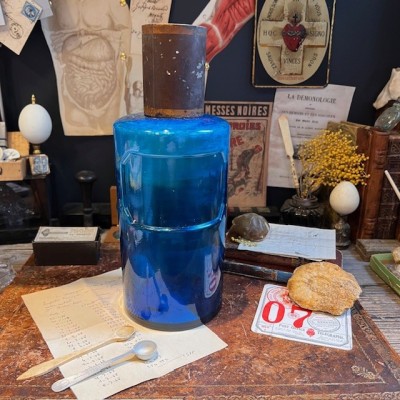
Specimen jar in blown glass - Inverted apothecary jar - Seed vase
Size S
A vintage laboratory or conservatory container designed for the display and preservation of biological or botanical specimens
Hypodermic Pravaz syringe - 19th century
Syringe in it's case
not functional
Dr Potain vacuum cleaner in its case
Late 19th century - 1885-1894
Antique medical instrument from manufacturer MATHIEU in Paris
non-functional
Racine de Ratanhia - Para Rhatany
Pharmacy jar - Herbalism - Apothecary bottle
Puldose Nasal Spray for aqueous solutions - Antique remedy
In its Plastic box
Used in otolaryngology, it was intended for nasal or oral sprays in the treatment of colds and antiseptic treatment of the respiratory tract.
Lower part of the lower mandible of a horse jaw
Antique model from Maison Auzoux in Paris
Paper-mâché pedagogical model
Model B - 1 year
Human jaws in porcelain mounted on a blackened wooden base
Anatomical dental model for dentists
19th century
Elixir 173
Antique pharmacy bottle - Apothecary
Empty
Strophanthus extract - Codex 1908
Early/ mid-20th century pharmacy jar in white earthenware
Beautiful labels: Red POISON label with the famous skull and crossbones and the Poisonous Substances label
Signaling to the pharmacist that it is imperative to keep apart the other substances in the cabinet of toxic substances, the famous poison cabinet.
It comes from an old cellar-laboratory in a Parisian pharmacy. The bottles had not moved since the late 1950s on the shelves. The cellar had served as a laboratory for medical analyses and a laboratory for magistral preparations of the pharmacy from 1900 until around 1950.
EMPTY
Bibliothèque Choisie de Médecine - Volume 6
Selected Library of Medicine
By François PLANQUE - 1749
Complete original edition with 5 fold-out plates
Violet de Méthyle
Antique pharmacy bottle - Droguerie - Apothicaire
An antique absinthe topette (decanter)
10 Beaded Topette
Solution N°153
Antique pharmacy bottle
Apothecary vial
Le Jardin des Plantes
Description and habits of the mammals in the menagerie and the Natural History Museum
By Boitard - Antique book circa 1851
A beautiful snapshot of the museum and its garden in the mid-19th century, featuring interiors of the museum that no longer exist today.
Antique apothecary bottle – Coca powder – Late 19th century/Early 20th century
POISON
Coca powder is the source of cocaine, which was the first effective local anaesthetic used in surgery and dentistry.
SOLD EMPTY
Pharmaceutical zinc sulphate
Antique amber glass bottle, with a boxwood and cork stopper.
Green label: SUBSTANCE TO BE STORED SEPARATELY – CODEX 1908
Indicating to the pharmacist that it must be stored separately from other substances in the cabinet for toxic substances, the famous ‘poison cabinet’.
It comes from the former cellar-laboratory of a Parisian pharmacy. The bottles had not been moved from the shelves since the late 1950s. The cellar had served as a medical analysis laboratory and a laboratory for the pharmacy’s compounded preparations from 1900 until around 1950.
EMPTY