- New
Kopé Opium Paste for Coughs
Antique tin medicine box - Pharmacy - Apothecary
Medical Confectionery: Circa 1920
Paradoxes of the antique pharmacy, where notorious poisons were presented in the guise of harmless sweets.
EMPTY
Kopé Opium Paste for Coughs
Antique tin medicine box – Pharmacy – Apothecary
Medical Confectionery: Circa 1920
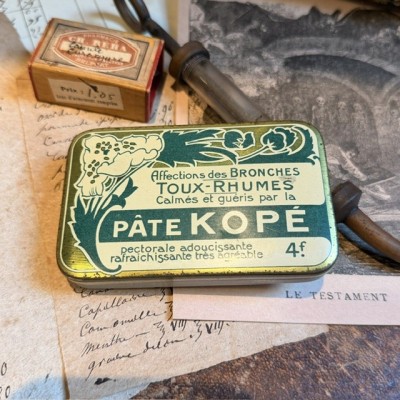
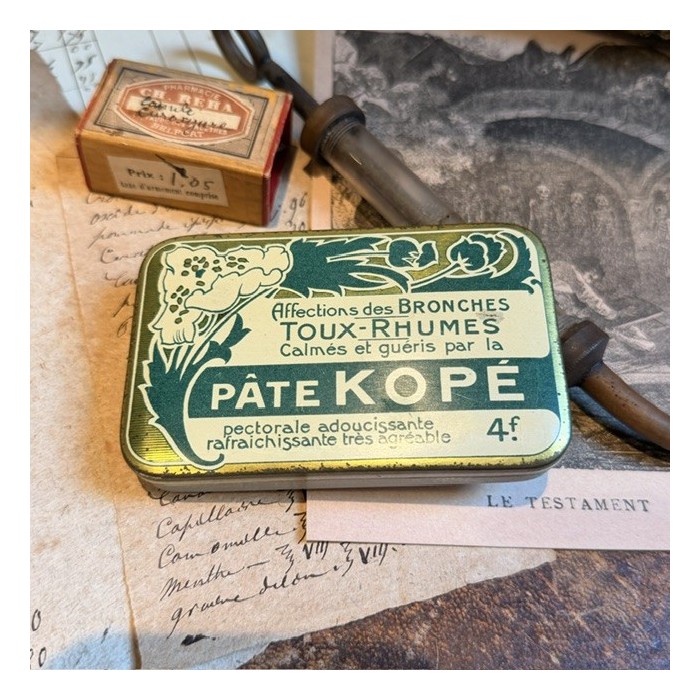
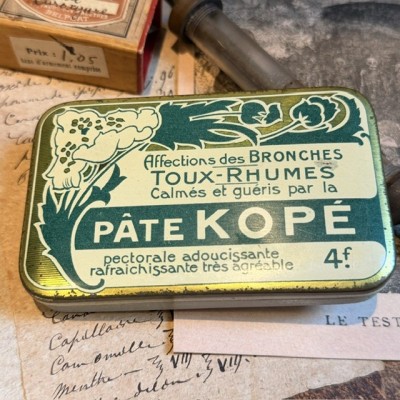
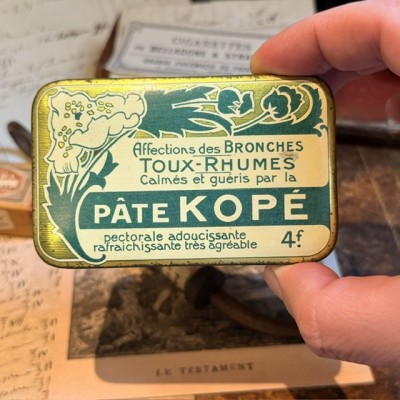
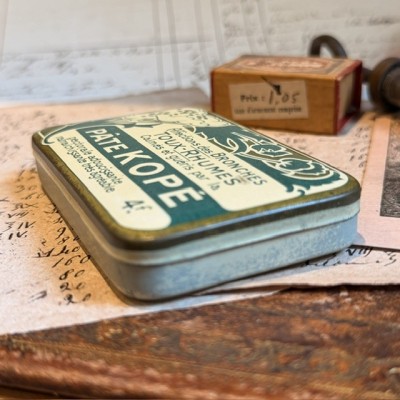
Lithographed metal advertising tin for Kopé Paste, a chest remedy for coughs.
It perfectly embodies the paradoxes of old-fashioned pharmacy, where notorious poisons were presented in the guise of harmless sweets.
Once again, it is Dr Salmon who manufactures them, already known before the war for Salmon’s Opium Lozenges.
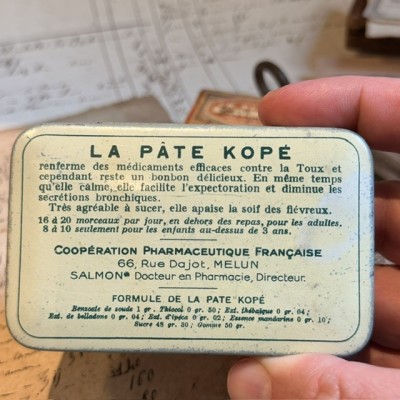
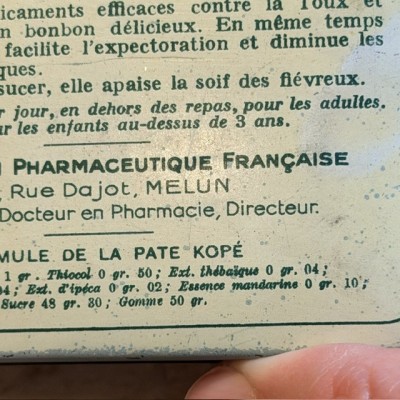
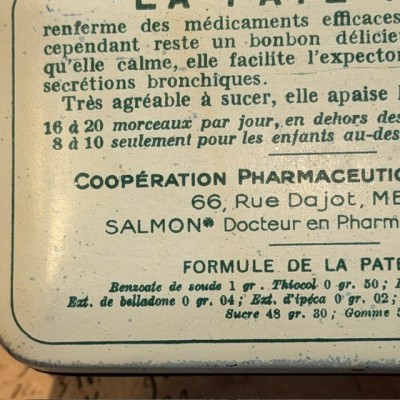
The back of the tin indicates that it was manufactured by the French Pharmaceutical Cooperative under the direction of Dr Salmon.
Kopé Paste marks the transition to industrial-scale production of his traditional pharmaceutical formulations.
The design is typical of late Art Nouveau, with its stylised plant motifs, whilst adopting a slightly more geometric structure that heralds the beginnings of Art Deco.
The “Opium & Belladonna” Cocktail
Whilst the box boasts a “delicious sweet” flavoured with mandarin essence designed to “quench the thirst of those with a fever”, its quantitative formula on the back reveals a formidable therapeutic arsenal.
Thebaine Extract (Opium): Present at a level of 0.04 g of the total weight of the formula. At the maximum recommended adult dosage (16 to 20 pieces per day), the patient consumed approximately 10 mg of opium per day. This regular intake acted as a powerful central sedative.
Belladonna extract: Also dosed at 0.04 g. This plant, rich in atropine, was used here as an antispasmodic to mechanically suppress the cough reflex and dry out the bronchial tubes.
Containing a lower dose of raw opiates than the old Salmon lozenges, Kopé Paste compensated for this with the combined effect of Opium and Belladonna.
This psychoactive cocktail, masked by the sweet taste of mandarin, provided immediate relief coupled with a ‘woolly-headed’ effect, encouraging compulsive consumption throughout the day: as many as 20 pieces a day...!
Specific Paediatric Note: The recommended dosage allowed for 8 to 10 pieces a day for children aged 3 and over, a practice unthinkable today.
Dimensions: 9.5x6cm
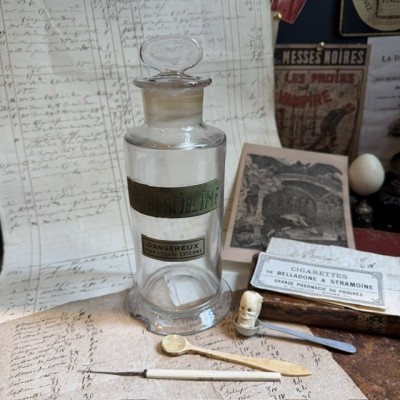
Iode Bi-Sublimé - Bi-Sublimated Iodine
Antique 19th-century blown-glass pharmacy jar
EMPTY
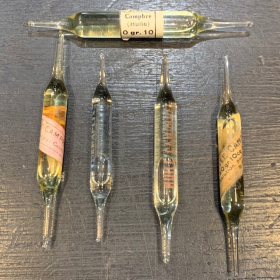
Bulb for hypodermic injection - Camphor (circa 1920)
various manufacturers
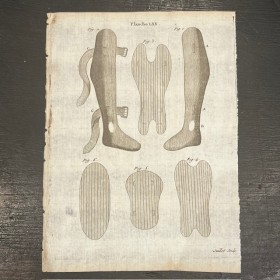
Antique surgical board
From Benjamin Bell's Complete Course in Surgery, published in 1796
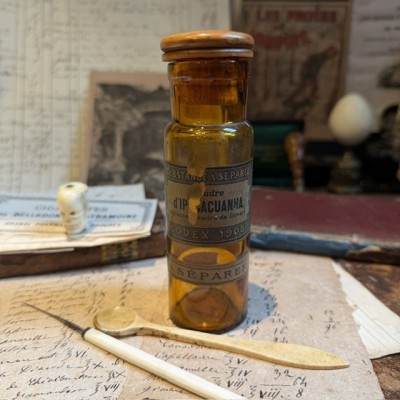
Ipecacuanha Opiate Powder - Dover's Powder
Antique amber glass bottle, with a boxwood and cork stopper.
Green label: SUBSTANCE TO BE STORED SEPARATELY – CODEX 1908
Indicating to the pharmacist that it must be stored separately from other substances in the cabinet for toxic substances, the famous ‘poison cabinet’.
It comes from the former cellar-laboratory of a Parisian pharmacy. The bottles had not been moved from the shelves since the late 1950s. The cellar had served as a medical analysis laboratory and a laboratory for the pharmacy’s compounded preparations from 1900 until around 1950.
EMPTY
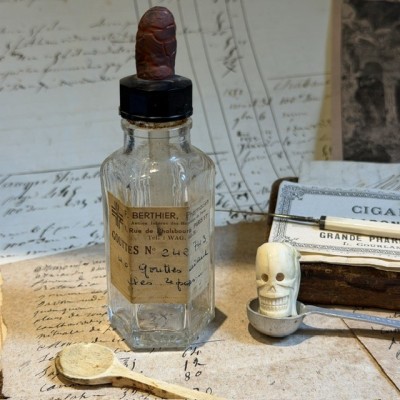
Dropper No. 242.743
Antique pharmacy bottle
EMPTY

Antique brown glass bottle with integrated pipette - Ref B
Apothecary - Pharmacy
The pipettes have either been broken or shortened because they are too short
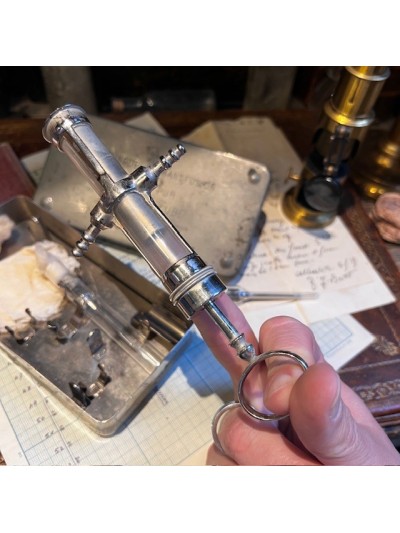
Doctor Louis Jubé pure blood transfusion syringe
For arm-to-arm transfusions
In its metal box
Around 1925/1930
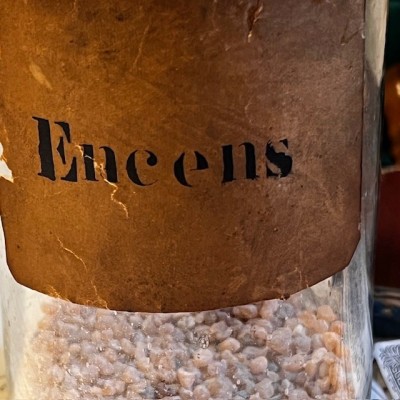
Incense
Antique pharmacy bottle - Wide-mouth apothecary jar.
19th-century mouth-blown glass
There are still some product inside.
A fascinating artifact from the history of pharmacology
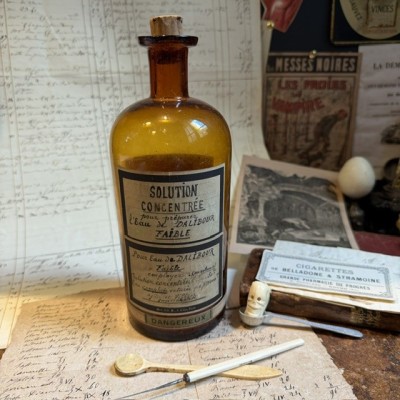
Eau de Dalibour
Antique pharmacy bottle
Beautiful handwritten labels from the period
EMPTY
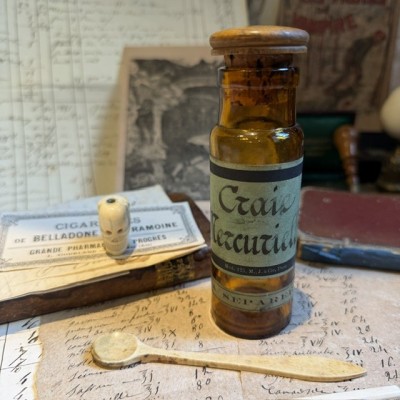
Mercury Chalk – Treatment for Syphilis
Antique amber glass bottle, with a boxwood and cork stopper.
Handwritten label, pen inscription ‘Mercurial Chalk’, neat calligraphy with its thick and thin strokes.
Bottom band ‘TO BE SEPARATED’, instructing the pharmacist to store it in the cabinet for toxic substances, the famous poison cabinet.
It comes from the former cellar-laboratory of a Parisian pharmacy. The bottles had not been moved from the shelves since the late 1950s. The cellar had served as a medical analysis laboratory and a laboratory for the pharmacy’s compounded preparations from 1900 until around 1950.
Period: Judging by the handwriting, late 19th century
EMPTY
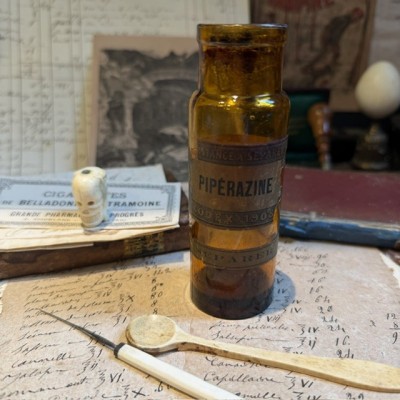
Piperazine
Antique amber glass bottle. The cap is missing
Green label: SUBSTANCE TO BE STORED SEPARATELY – CODEX 1908
Indicating to the pharmacist that it must be stored separately from other substances in the cabinet for toxic substances, the famous ‘poison cabinet’.
It comes from the former cellar-laboratory of a Parisian pharmacy. The bottles had not been moved from the shelves since the late 1950s. The cellar had served as a medical analysis laboratory and a laboratory for the pharmacy’s compounded preparations from 1900 until around 1950.
EMPTY
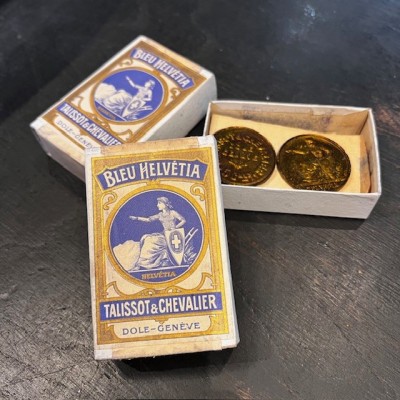
Antique Laundry blue box - Helvetia Blue from Talissot & Chevalier in Dôle and Geneva
Period: 1890-1905
Box containing 6 gold-plated “coins” made of blue wash, resembling the iconography of Swiss coins and medals from the late 19th and early 20th centuries.
Beautiful blue and gold illustration on the box.
Your box will be sealed: never opened in 120 years
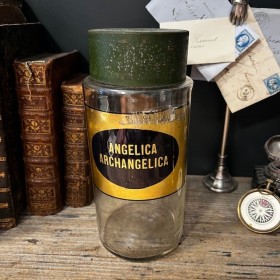
Angelica Archangelica
Pharmacy jar - Herbalism - Apothecary bottle
Late 19th century, early 20th century
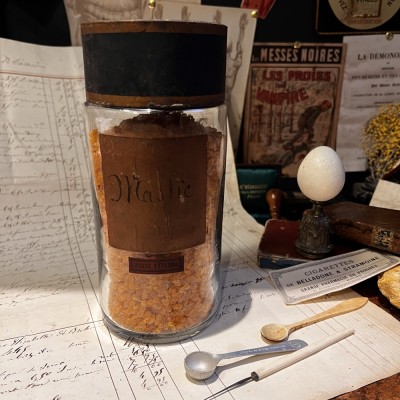
Mastic of Chios
Antique pharmacy bottle - Wide-mouth apothecary jar.
19th-century mouth-blown glass
There is still some product left inside
A fascinating artifact from the history of pharmacology

Antipyrina Knorr
Named after its German discoverer: Ludwig Knorr
Pharmacy jar - Herbalism - Apothecary bottle
Late 19th century
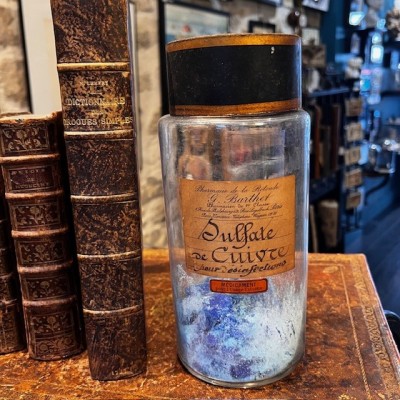
Copper Sulfate
Antique pharmacy bottle - Wide-mouth apothecary jar.
19th-century mouth-blown glass
There are still some beautiful blue crystals inside.
A fascinating artifact from the history of pharmacology
Kopé Opium Paste for Coughs
Antique tin medicine box - Pharmacy - Apothecary
Medical Confectionery: Circa 1920
Paradoxes of the antique pharmacy, where notorious poisons were presented in the guise of harmless sweets.
EMPTY