

- New
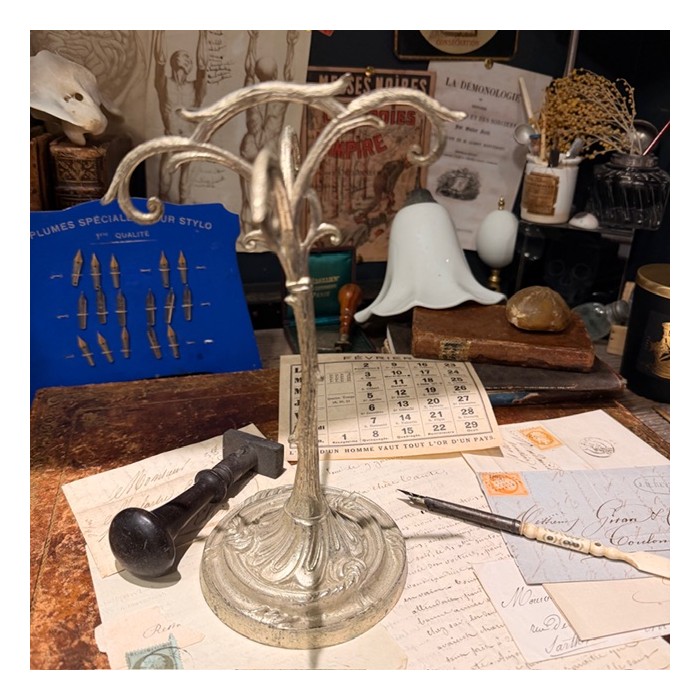
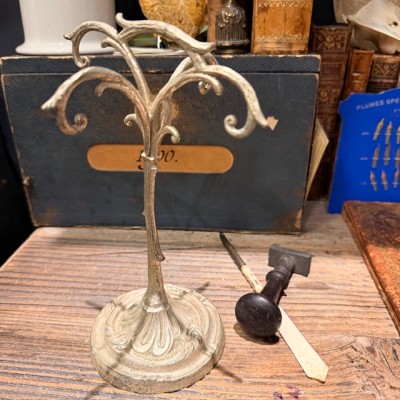
4-Branch Pocket Watch Stand - Watch Hutch
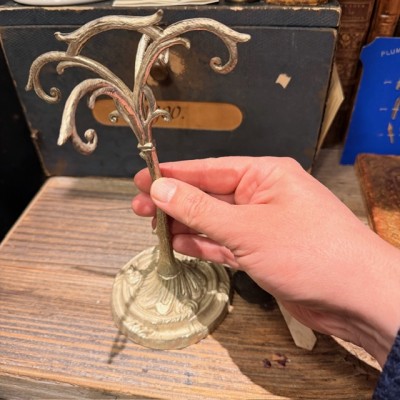
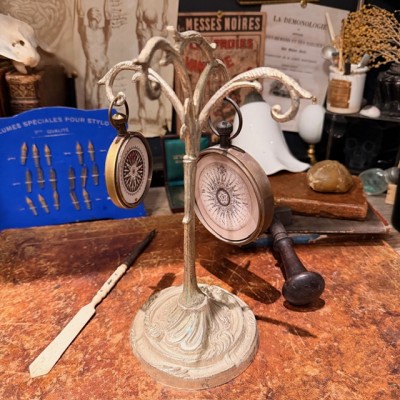
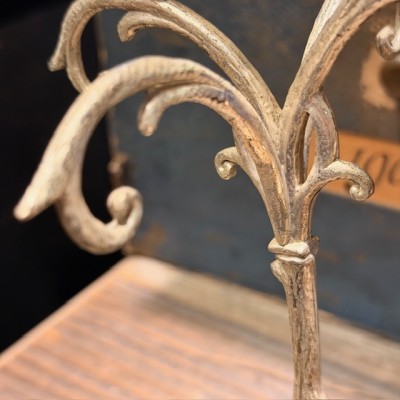
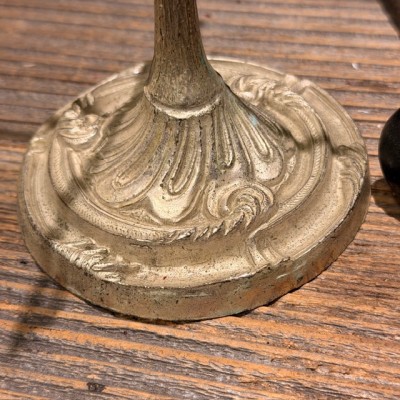
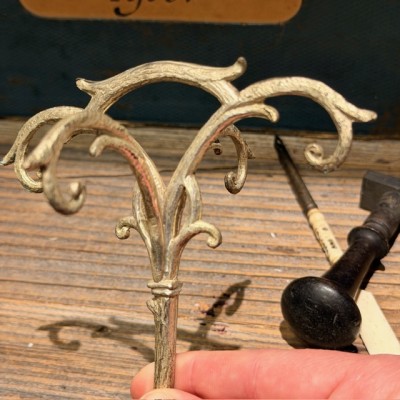
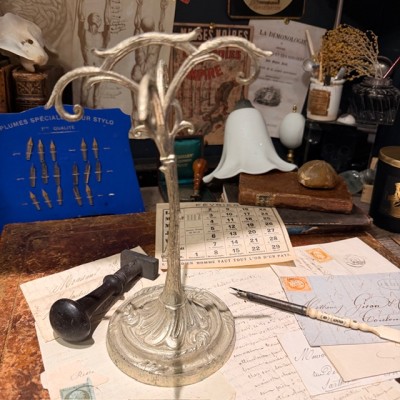
Watch stand and jewelry holder dating from the late 19th or early 20th century, in the Art Nouveau / Rocaille style.
In silvered spelter
Art Nouveau: Late 19th – early 20th century
4-Branch Pocket Watch Stand - Watch Hutch
Watch stand and jewelry holder dating from the late 19th or early 20th century, in the Art Nouveau / Rocaille style.
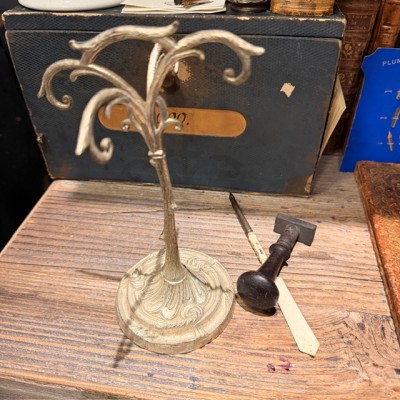
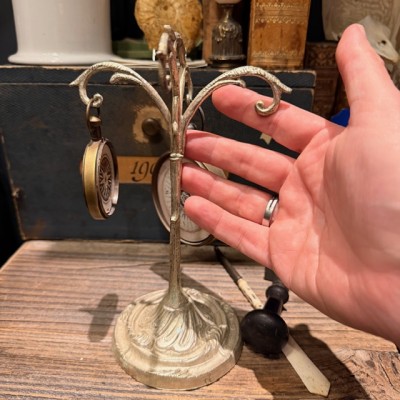
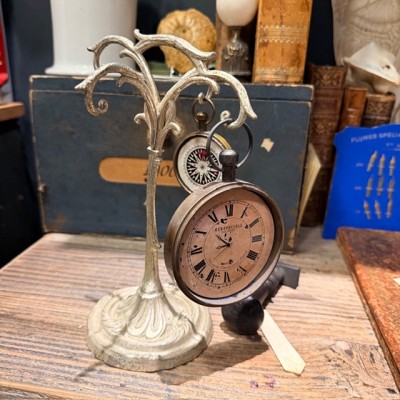
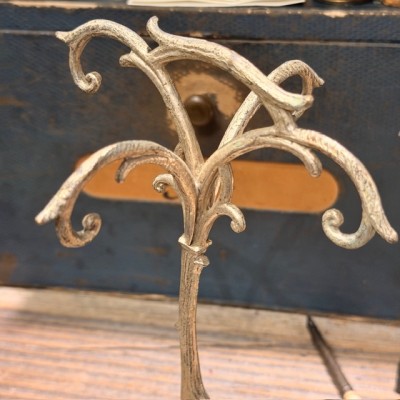
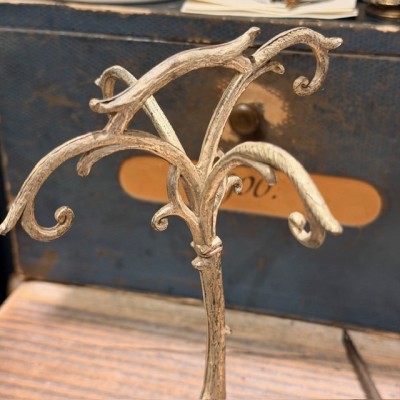
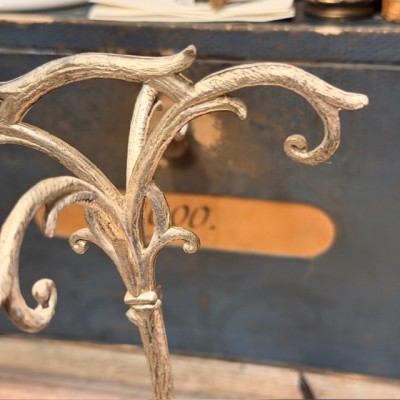
The central stem resembles a textured branch opening at the top into four curved scrolls forming hanging hooks. The circular base is decorated with raised botanical and rocaille motifs.
Material: Spelter (régule) with an original silvered patina, showing light wear from use and natural oxidation that highlights the reliefs.
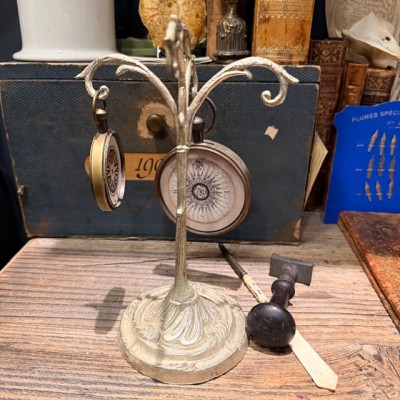
Use: Originally designed to hang pocket watches on a desk or bedside table, it also serves as a display stand for pocket compasses, rings, necklaces, or small curiosities to hang.
Period: Art Nouveau: Botanical motif. Late 19th – early 20th century.
Dimensions: Height: 21 cm – Base diameter: 9.8 cm.
Note: The pocket watch and compass shown in the photographs are staging props and are not included with the stand. Stand sold alone.
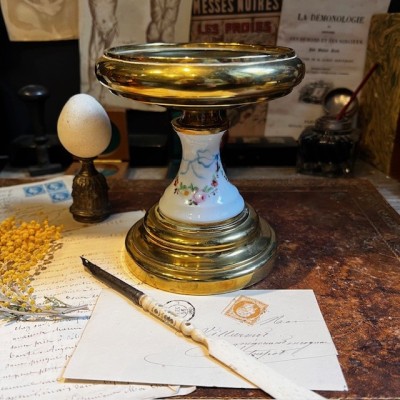
19th century oil or paraffin lamp stand
Made of brass with a Paris porcelain body painted with rose and ribbon motifs
Can be used as a support, pedestal or candle holder
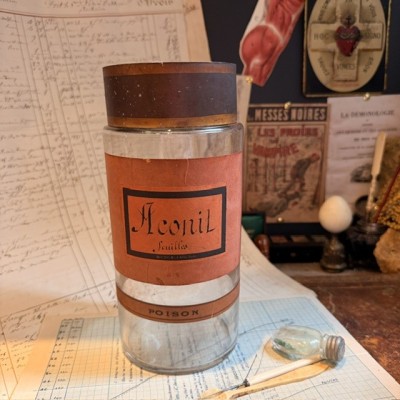
Aconit leaves - POISON
Antique pharmacy bottle - Wide-mouth apothecary jar.
19th-century mouth-blown glass
Red POISON label
Signaling to the pharmacist that it is imperative to keep apart the other substances in the cabinet of toxic substances, the famous poison cabinet.
A fascinating testimony to pharmacology
It comes from an old cellar-laboratory in a Parisian pharmacy. The bottles had not moved since the late 1950s on the shelves. The cellar had served as a laboratory for medical analyses and a laboratory for magistral preparations of the pharmacy from 1900 until around 1950.

Antipyrina Knorr
Named after its German discoverer: Ludwig Knorr
Pharmacy jar - Herbalism - Apothecary bottle
Late 19th century
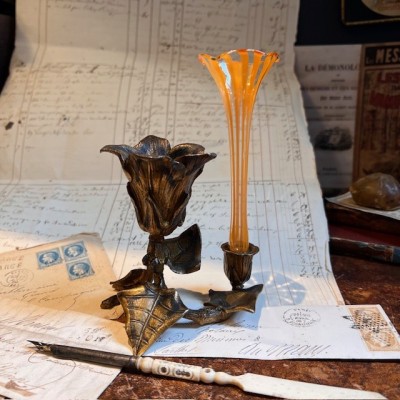
Elegant Art Nouveau glass vase and bronze candlestick
Made of cast bronze with a patina finish, decorated with naturalistic plant motifs and hand-finished with a file.
Art Nouveau decorative object combining patinated bronze and orange glass in a fluid, asymmetrical plant motif characteristic of the late 19th century.
Circa 1895–1905
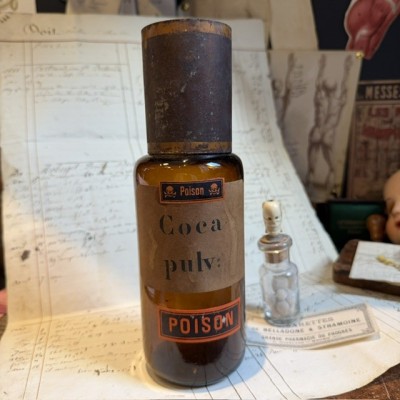
Antique apothecary bottle – Coca powder – Late 19th century/Early 20th century
POISON
Coca powder is the source of cocaine, which was the first effective local anaesthetic used in surgery and dentistry.
SOLD EMPTY
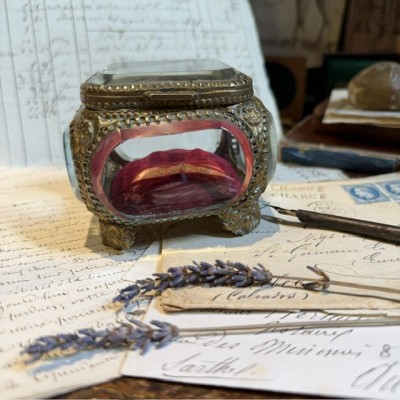
Reliquary box - 19th century
Jewelry box
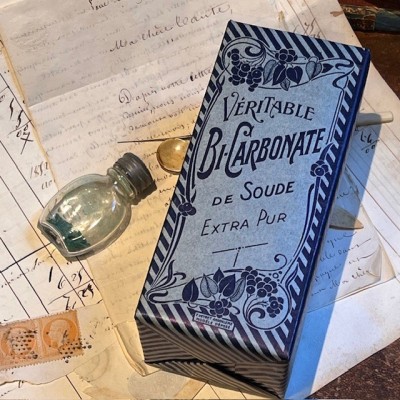
Bi-Carbonate de Soude - Sodium bicarbonate
Antique cardboard pharmacy box
Beautiful typography typical of the Belle Époque: circa 1910-1920
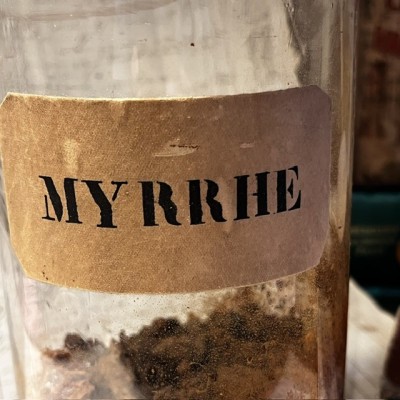
Myrrh
Antique pharmacy bottle - Wide-mouth apothecary jar.
19th-century mouth-blown glass
There is still some product left inside
A fascinating artifact from the history of pharmacology
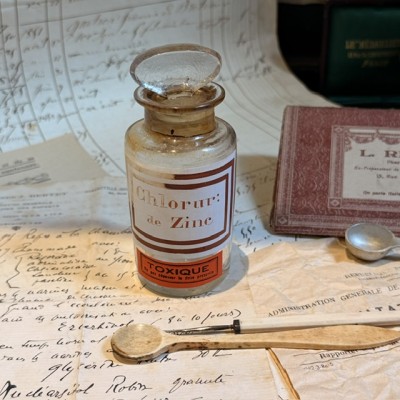
Zinc chloride
Antique pharmacy bottle made of blown glass and enameled painted label.
Red TOXIC label
Signaling to the pharmacist that it is imperative to keep apart the other substances in the cabinet of toxic substances, the famous poison cabinet.
Dating: 19th century
EMPTY
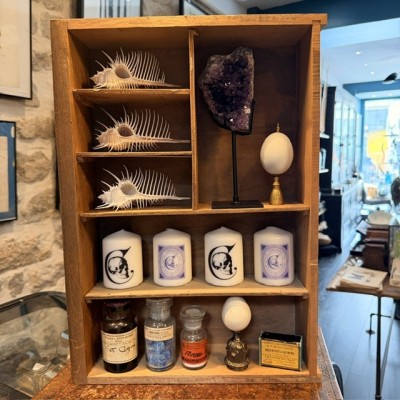
Large antique wooden pharmacy drawer with compartments
6 compartments
Curiosity shelf
Ref C - 48x34.5cm - Thickness 9.5cm
Can be used as a presentation furniture
SOLD EMPTY WITHOUT ACCESSORIES
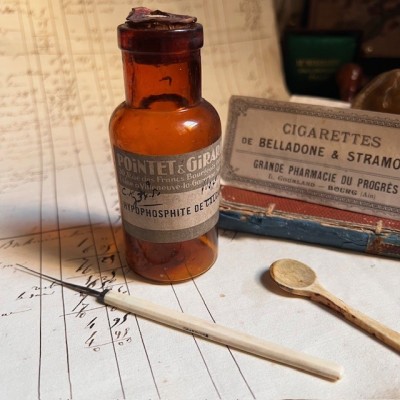
Hypophosphite de Calcium
Antique pharmacy bottle
EMPTY
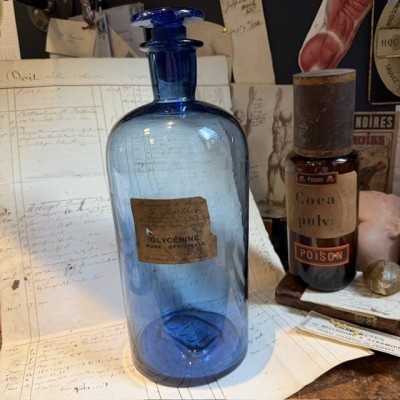
Glycérine pure officinale
Pure pharmaceutical-grade glycerine
Antique BLUE glass pharmacy bottle
EMPTY
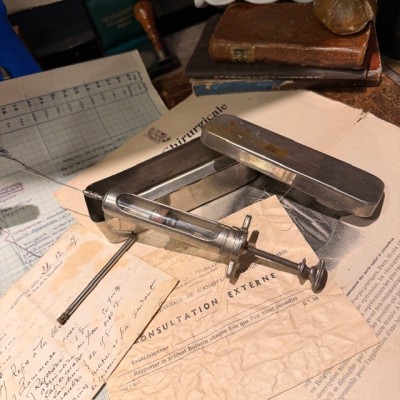
Syringe for antidiphtheria serum: Dr Roux's method
Metal box containing a syringe - Early 20th century
With 1 needle holder for 2 needles.
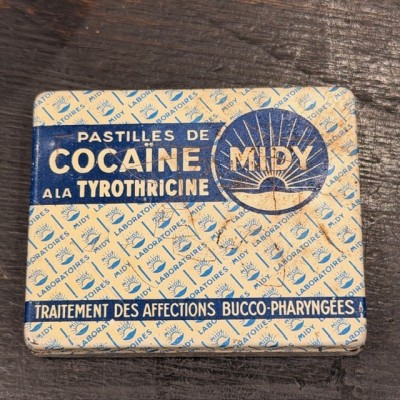
Box of Cocaine tablets covered by Social Security!
From MIDY laboratories - Reimbursed by Social Security!
10 to 12 lozenges a day, to be sucked slowly... nevertheless...
EMPTY
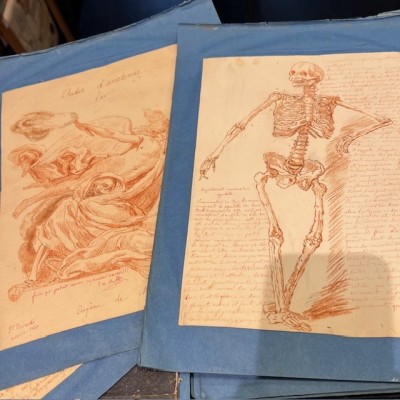
Red chalk drawing- Anatomical drawing
Anatomical study
Drawn by Eugène de Montchoisy in Saint-Brieuc in November 1840
These are not reproductions but original period drawings in red chalk.
You are purchasing one plate, not the entire set of plates
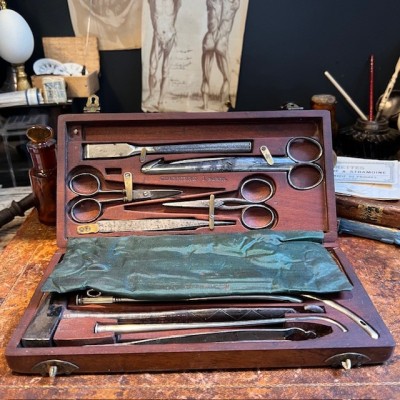
Portable autopsy kit from the mid-19th century
Maison Charrière in Paris, circa 1845–1870
Mahogany case for autopsy and dissection
Small portable mahogany case containing a set of autopsy instruments: hook hammer, bone chisel, enterotome scissors, probes, hooks and suture needles. Used by forensic scientists and anatomists for opening and examining bodies.
Charrière, a major 19th-century Parisian manufacturer, was a pioneer in the design of high-precision surgical and anatomical instruments.
Mahogany and polished steel: 23 × 11 cm
Please note: crack in the wood under the case
A beautiful object, very rare to find
4-Branch Pocket Watch Stand - Watch Hutch
Watch stand and jewelry holder dating from the late 19th or early 20th century, in the Art Nouveau / Rocaille style.
In silvered spelter
Art Nouveau: Late 19th – early 20th century