

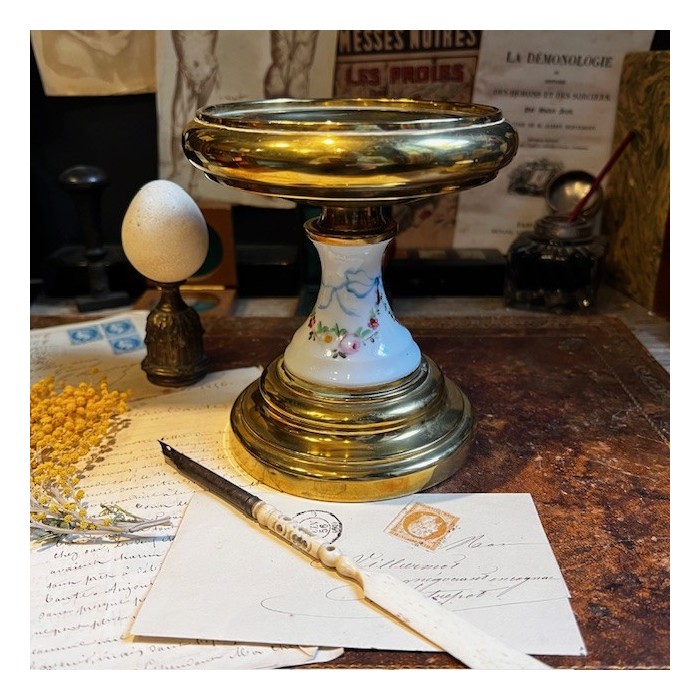
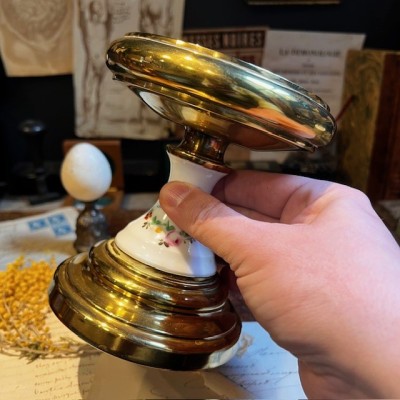
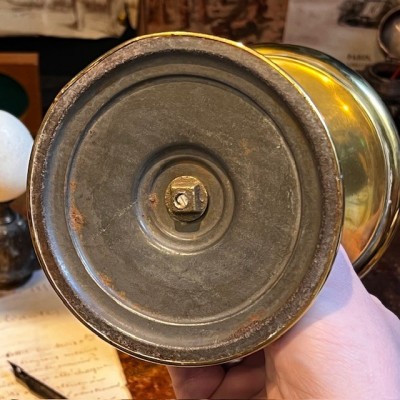
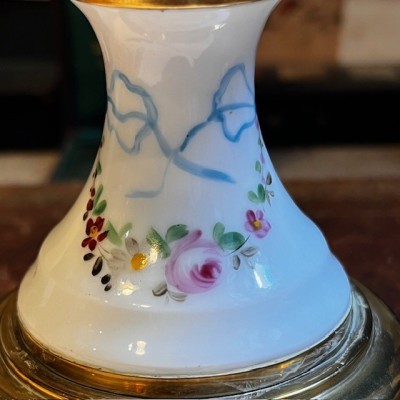
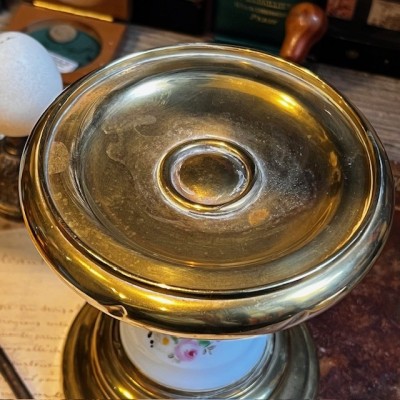
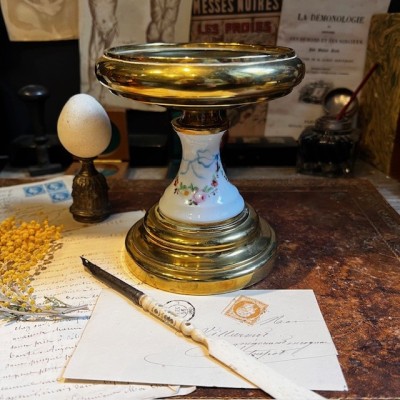
19th century oil or paraffin lamp stand
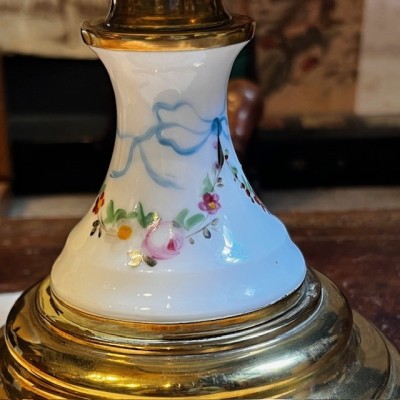
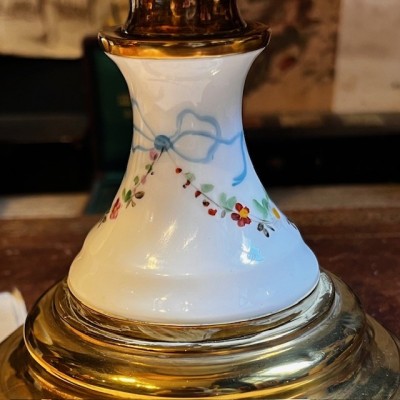
Made of brass with a Paris porcelain body painted with rose and ribbon motifs
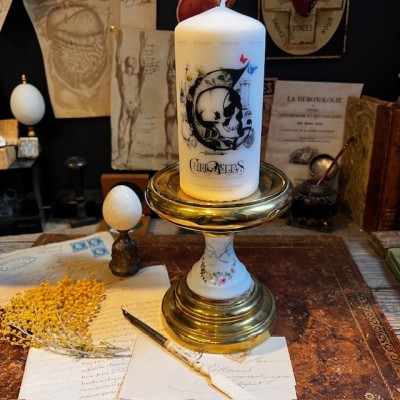
Can be used as a support, pedestal or candle holder
19th century oil or paraffin lamp stand
Late 19th/early 20th century
Oil lamps were placed on these stands
Made of brass with a Paris porcelain body painted with rose and ribbon motifs
Can be used as a support, pedestal or candle holder
Height: 14 cm
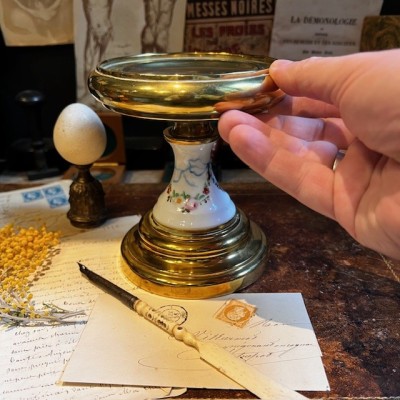
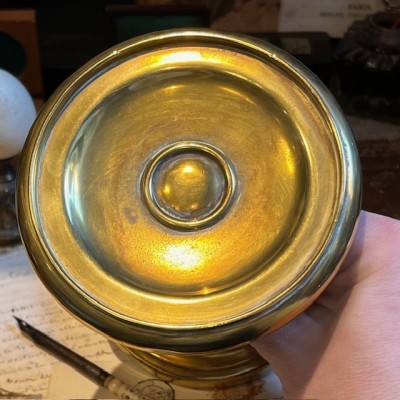
Base diameter: 11.5 cm - Useful diameter at the top: 11 cm
Two small dents on the upper part of the brass. Porcelain intact. Stain on the top: see photos
Without candle
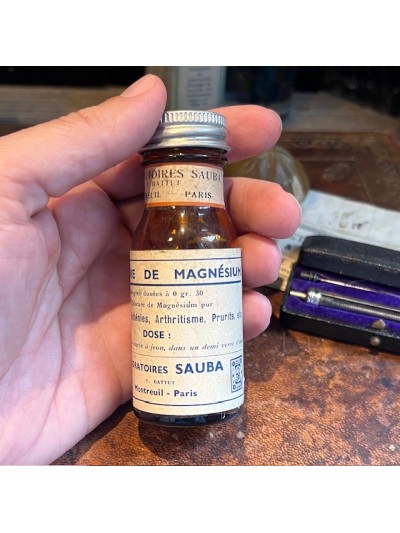
Chlorure de magnésium
Antique pharmacy bottle
Apothecary vial
EMPTY
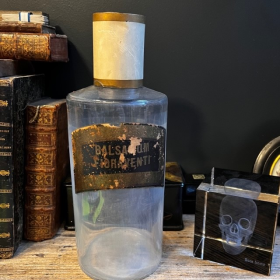
Antique pharmacy bottle from the 19th century
Balsamum Fioravanti - Balm of Fioravanti
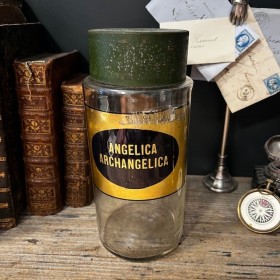
Angelica Archangelica
Pharmacy jar - Herbalism - Apothecary bottle
Late 19th century, early 20th century
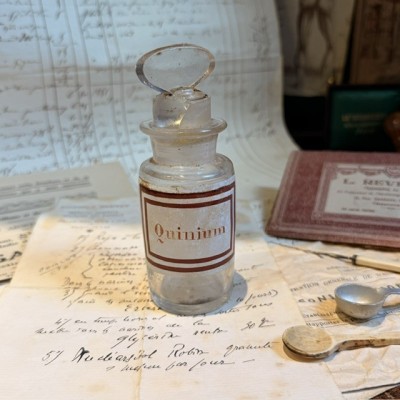
Quinium
Antique pharmacy blown-glass bottle - XIXth century
EMPTY - Blocked cap
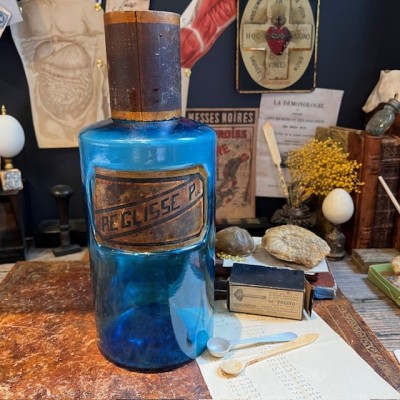
Poudre de réglisse - Licorice powder
Large cobalt blue glass pharmacy bottle - Apothecary - Shouldered - H28cm - 19th century
Shouldered apothecary bottle - Antique pharmacy bottle
Mouth-blown glass - Cobalt blue color tinted throughout
This large-capacity jar was a storage jar intended for stockpiling
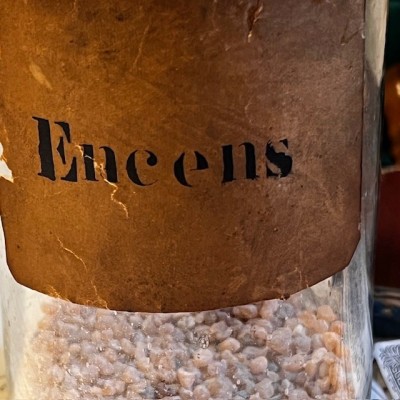
Incense
Antique pharmacy bottle - Wide-mouth apothecary jar.
19th-century mouth-blown glass
There are still some product inside.
A fascinating artifact from the history of pharmacology
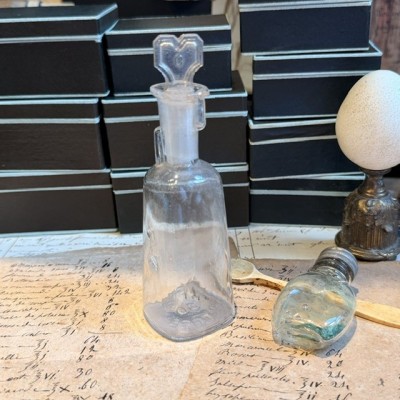
Square Section Dropper Bottle
Antique pharmacy bottle - 1920-30's
Glass stopper honed in the shape of a heart for better grip
EMPTY
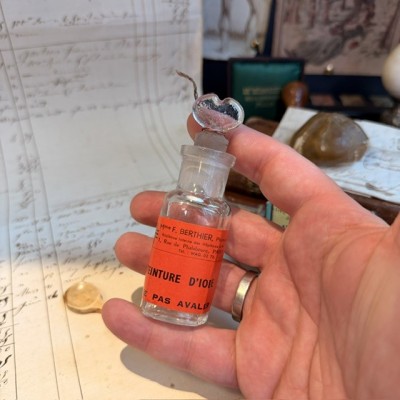
Iodine dye
Antique pharmacy bottle
With the inscription Teinture d'Iode molded in glass
EMPTY
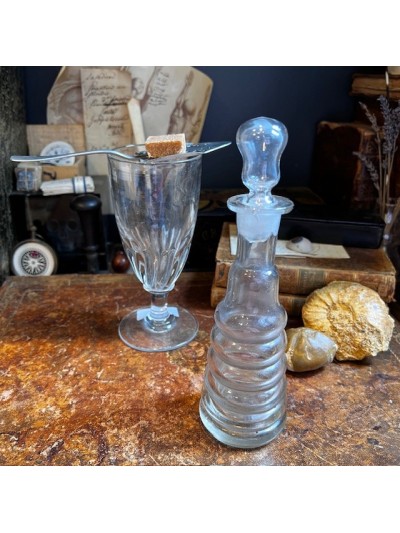
An antique absinthe topette (decanter)
6 Beaded Topette
Residue in the bottom of the carafe
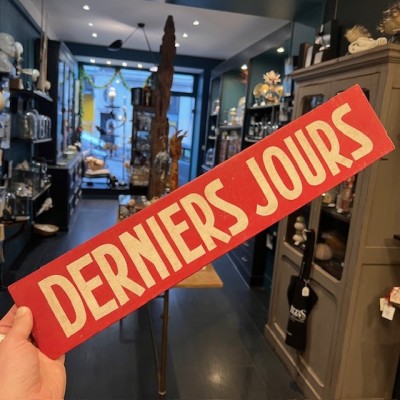
DERNIERS JOURS - LAST DAYS
Antique Cinema painted plywood sign
Cinema sign announcing the final days of a film's run

Crin de Florence - Antique suture thread
Catgut
Natural suture thread obtained from the caterpillar of the Bombyx mori butterfly.
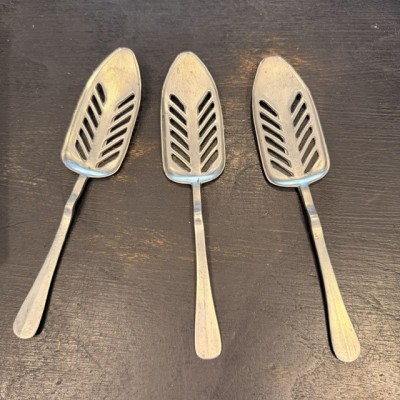
Antique Absinthe Spoon
The spoons have been used, are scratched, badly oxidized, etc.
You buy 1 spoon, not the whole lot

Lower part of the lower mandible of a horse jaw
Antique model from Maison Auzoux in Paris
Paper-mâché pedagogical model
Model A - 9 months

Anatomy - Antique chart by D'Orbigny - 1869
In colors
Atlas of the Universal Dictionary of Natural History
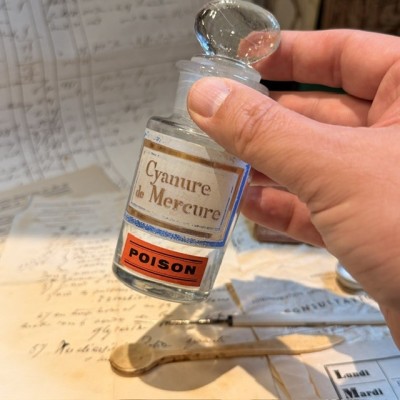
Mercuric cyanide
Antique pharmacy bottle made of blown glass and enameled painted label with golden blue threads
Red POISON label
Signaling to the pharmacist that it is imperative to keep apart the other substances in the cabinet of toxic substances, the famous poison cabinet.
Dating: 19th century
EMPTY
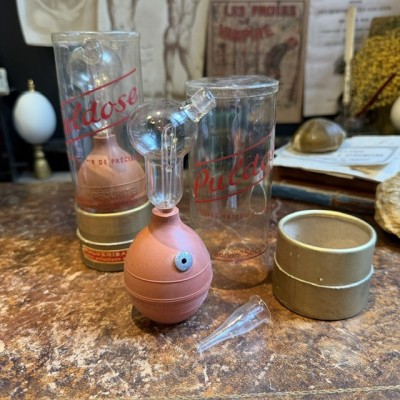
Puldose Nasal Spray for aqueous solutions - Antique remedy
In its Plastic box
Used in otolaryngology, it was intended for nasal or oral sprays in the treatment of colds and antiseptic treatment of the respiratory tract.
19th century oil or paraffin lamp stand
Made of brass with a Paris porcelain body painted with rose and ribbon motifs
Can be used as a support, pedestal or candle holder