

- New
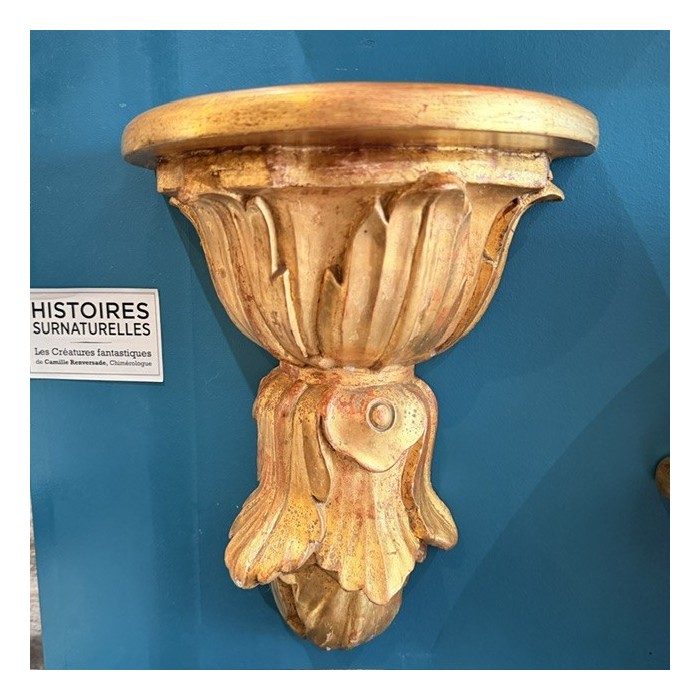
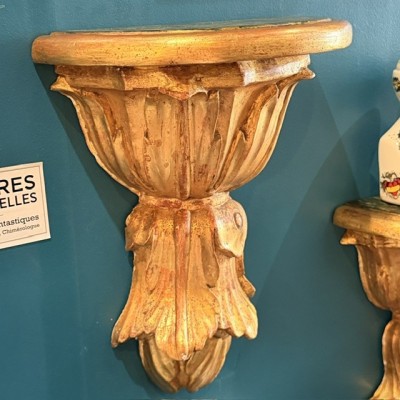
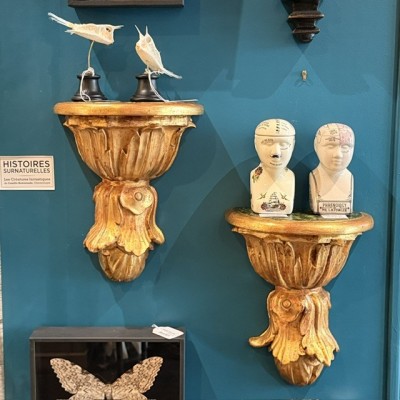
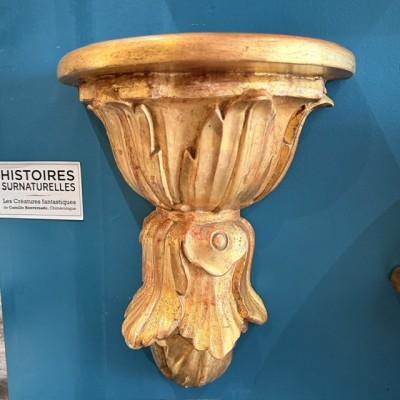
Cul-de-lampe Wall Bracket Console - Stuccoed and Gilded Wood - Italy (Tuscany), 19th Century
Early 19th-century wall console
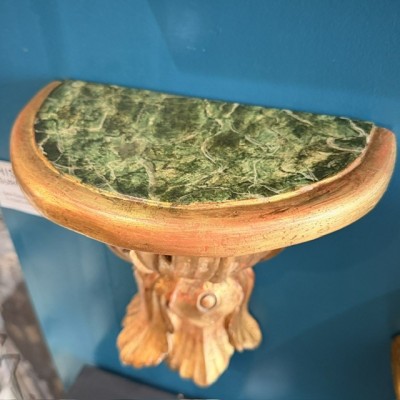
Gilded wood and stucco with painted faux antique green marble
Cul-de-lampe Wall Bracket Console - Stuccoed and Gilded Wood - Italy (Tuscany), 19th Century
Early 19th-century wall console
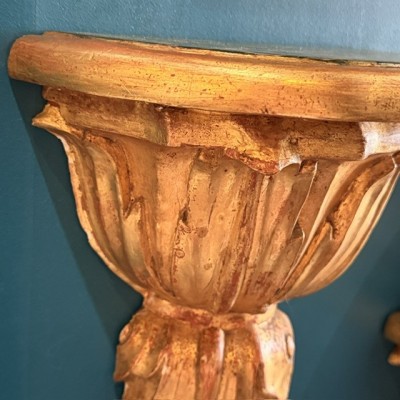
Cul-de-lampe wall bracket console of Italian origin, sourced from Tuscany, dating to the 19th century.
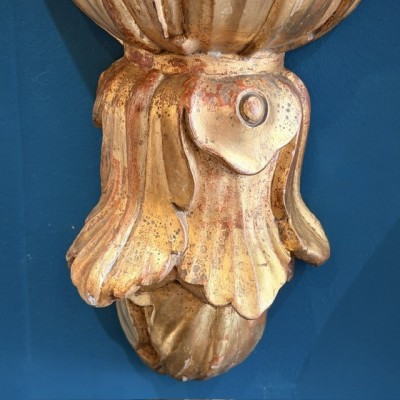
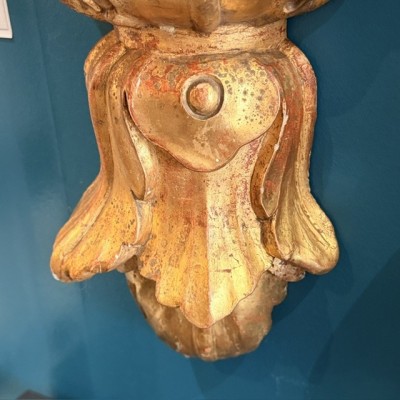
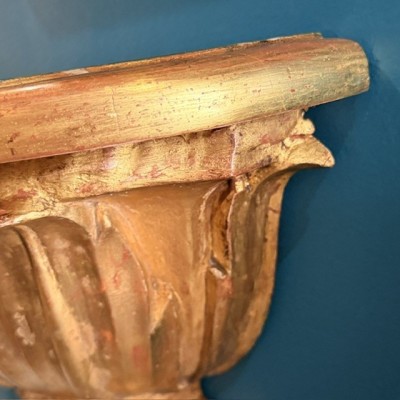
It reflects the fine tradition of Tuscan gilding workshops, featuring a carved softwood (fir) structure coated with a gesso primer that shapes the relief of generous acanthus leaves.
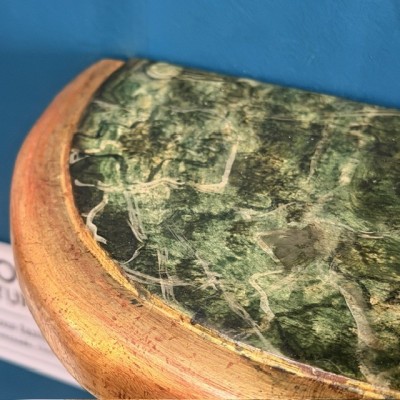
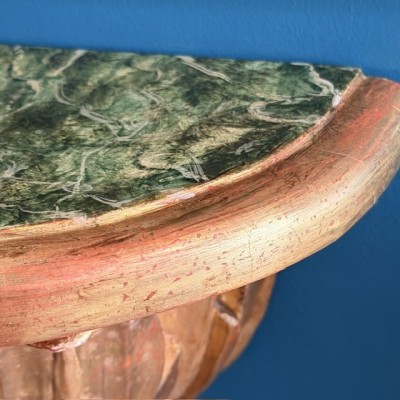
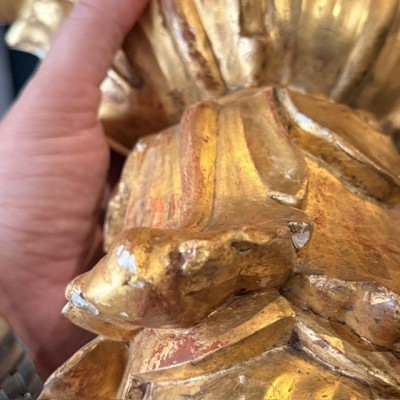
The original gold leaf gilding exhibits a lovely patina of age, revealing areas of the underlying red bole (Armenian bole). The top shelf is painted in faux antique green marble, creating a beautiful contrast with the gilding.
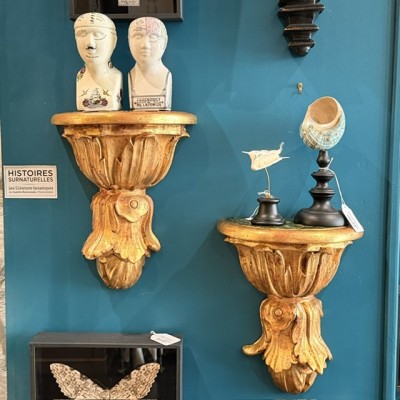
With its proportions and dramatic relief, this console serves as an ideal wall support for displaying collectibles, busts, sculptures, or other curiosity cabinet pieces.
Origin: Italy (Tuscany)
Period: 19th century
Materials: Carved softwood (fir/spruce), gesso (plaster primer), gold leaf gilding over red bole (Armenian bole), top painted in faux antique green marble
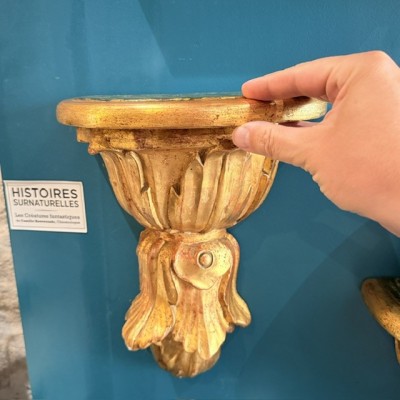
Dimensions: Height: 31 cm – Maximum width: 25 cm
Weight: 1.23 kg
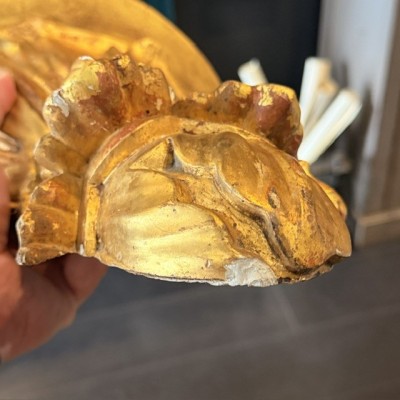
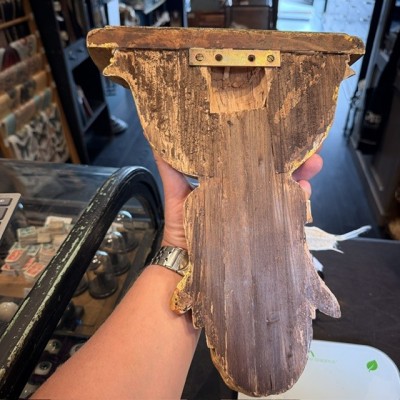
Condition: Antique condition with original patina and signs of age. Small old stucco chips on the lower tip of the foliage (see photos). Over time, small areas of gesso have chipped, exposing the white undercoat beneath the gilding.
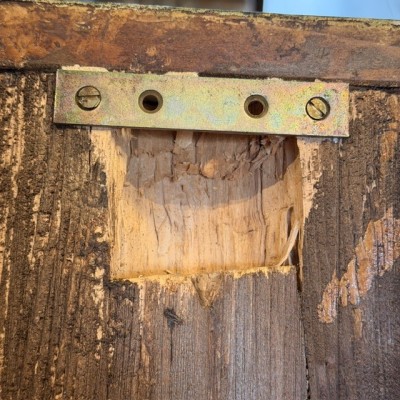
Mounting: Metal reinforcing plate added to the back for secure wall hanging.
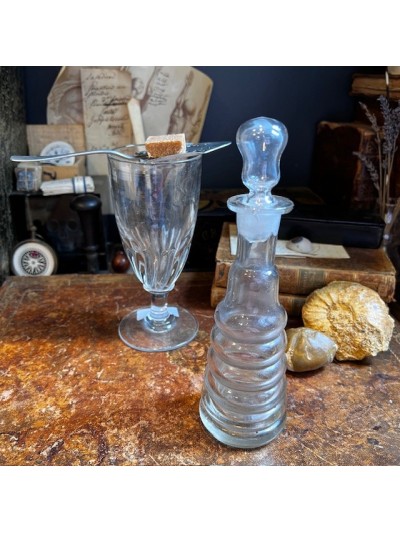
An antique absinthe topette (decanter)
6 Beaded Topette
Residue in the bottom of the carafe
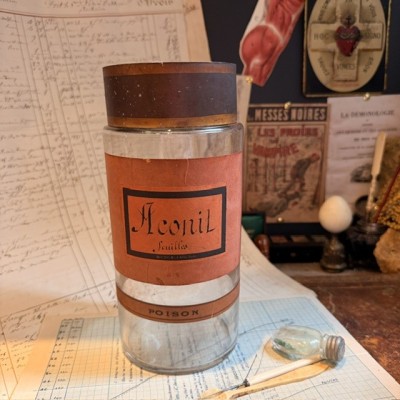
Aconit leaves - POISON
Antique pharmacy bottle - Wide-mouth apothecary jar.
19th-century mouth-blown glass
Red POISON label
Signaling to the pharmacist that it is imperative to keep apart the other substances in the cabinet of toxic substances, the famous poison cabinet.
A fascinating testimony to pharmacology
It comes from an old cellar-laboratory in a Parisian pharmacy. The bottles had not moved since the late 1950s on the shelves. The cellar had served as a laboratory for medical analyses and a laboratory for magistral preparations of the pharmacy from 1900 until around 1950.
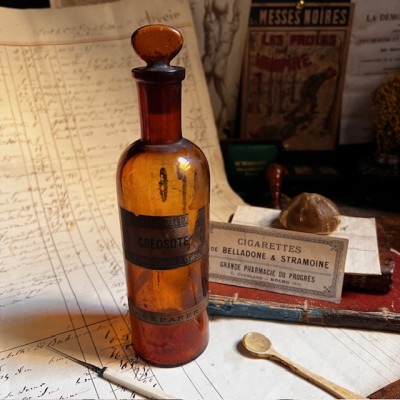
Créosote
Antique pharmacy bottle
Green label: SUBSTANCE TO BE SEPARATED - CODEX 1908
This means that this bottle had to be kept separate from the others because it was dangerous in high doses
EMPTY
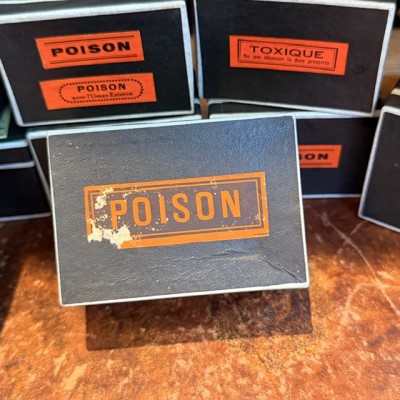
Antique labels in a pharmacy box for cures made of canvas cardboard
Poison label - Ref A
The pharmacist used his boxes of medicine to put away the labels he would then put on the bottles that he would resell to his customers.
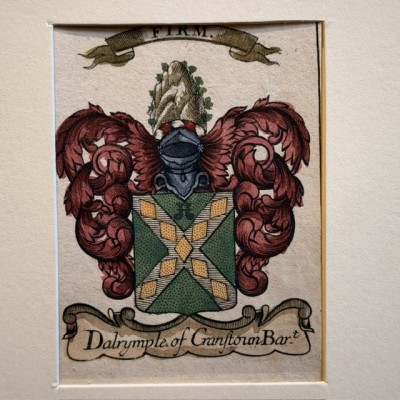
Original heraldic engraving on copper (1722) in colour - A System of Heraldry - By Alexander Nisbet
The vignette was cut from an original folio sheet and then hand-enhanced with a subtle watercolor painting.
The event is presented under a modern passe-partout
Coat of arms of the family: Dalrymple of Cranstoun
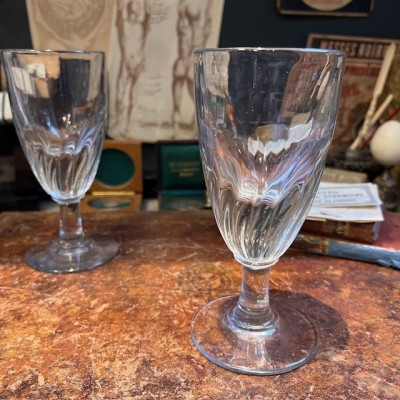
Antique twisted glass for Absinthe
Ref A
The twists on the glass are used to measure out the absinthe liquor and then pour the water over the sugar on the absinthe spoon on the glass to soften the bitterness of the drink.
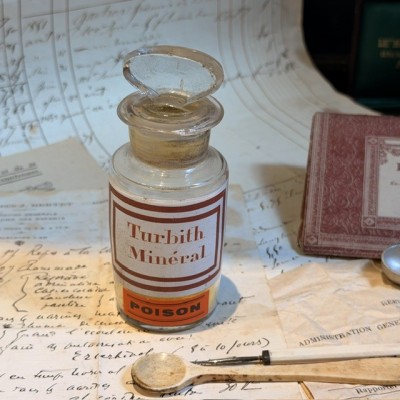
Turbith Minéral - Mercury
Antique pharmacy bottle made of blown glass and enameled painted label.
Red POISON label
Signaling to the pharmacist that it is imperative to keep apart the other substances in the cabinet of toxic substances, the famous poison cabinet.
Dating: 19th century
There is still some product inside but the cap is blocked and does not open.
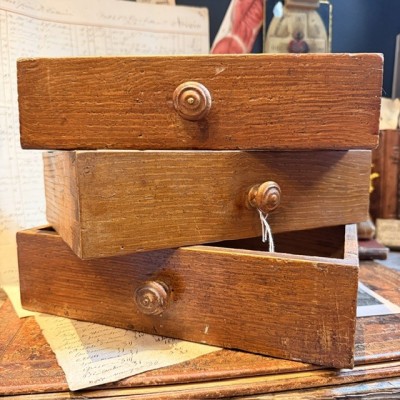
The Apothecary’s Little Drawer
Small antique wooden apothecary’s drawer that can be used as a storage box – Trade drawer
To be diverted on the shelf or niche for your curiosities
Handcrafted using traditional methods, with dovetail joints and a turned wooden handle
Width: 26cm - Length: 15.5cm - Height: 5.5cm
All the drawers are different, with stains and varying signs of age on each one
Sold empty, without accessories
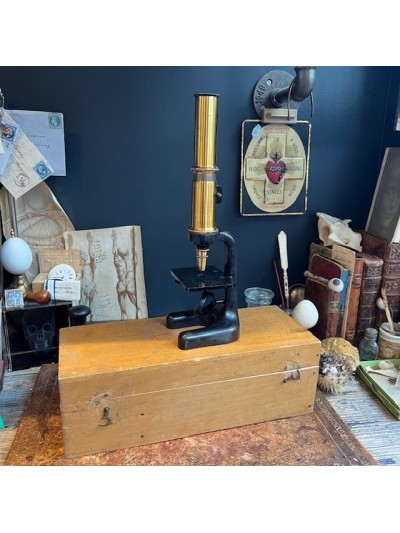
Antique brass and cast-iron rack-and-pinion microscope in wooden case
Late 19th century - Early 20th century
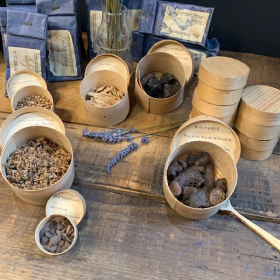
Antique wooden box for herbal medicine - Samples of plants, seeds, bark etc.
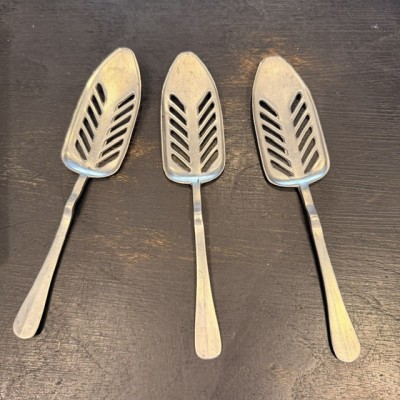
Antique Absinthe Spoon
The spoons have been used, are scratched, badly oxidized, etc.
You buy 1 spoon, not the whole lot
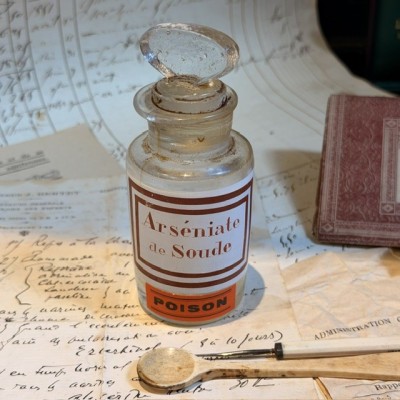
Arsenic - Sodium arsenate
Antique pharmacy bottle made of blown glass and enameled painted label. Yes, it is indeed the arsenic you know!
Red POISON label
Signaling to the pharmacist that it is imperative to keep apart the other substances in the cabinet of toxic substances, the famous poison cabinet.
Dating: 19th century
EMPTY but the cap is blocked and does not open.
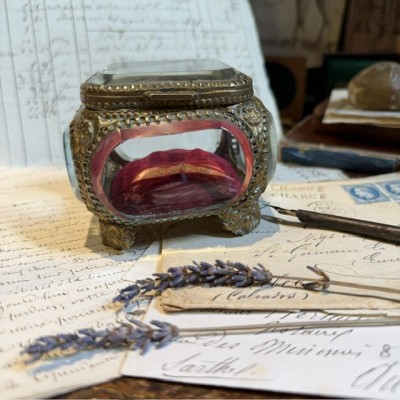
Reliquary box - 19th century
Jewelry box
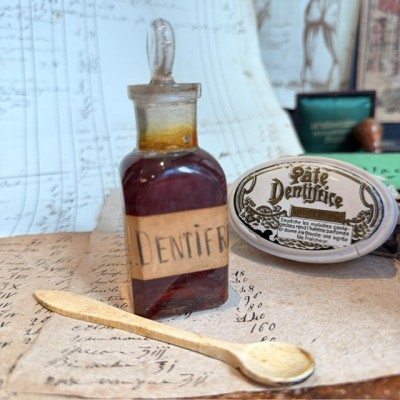
Toothpaste elixir
Antique pharmacy bottle
Handwritten label with pen
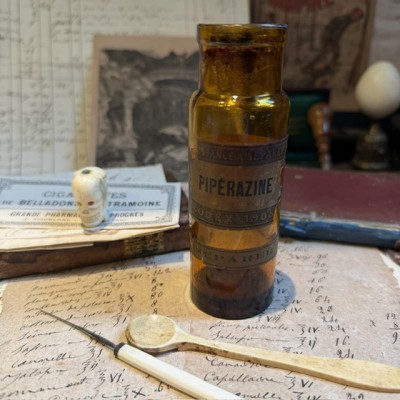
Piperazine
Antique amber glass bottle. The cap is missing
Green label: SUBSTANCE TO BE STORED SEPARATELY – CODEX 1908
Indicating to the pharmacist that it must be stored separately from other substances in the cabinet for toxic substances, the famous ‘poison cabinet’.
It comes from the former cellar-laboratory of a Parisian pharmacy. The bottles had not been moved from the shelves since the late 1950s. The cellar had served as a medical analysis laboratory and a laboratory for the pharmacy’s compounded preparations from 1900 until around 1950.
EMPTY
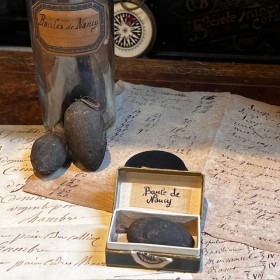
Boule de Nancy - Genuine Mars Vulnerary Ball - Steel Ball
This iron-containing ball was once considered a miracle cure for many ailments and injuries.
The Boule de Nancy is sold individually in a small antique drugstore box
Unavailable today
Cul-de-lampe Wall Bracket Console - Stuccoed and Gilded Wood - Italy (Tuscany), 19th Century
Early 19th-century wall console
Gilded wood and stucco with painted faux antique green marble