
- New
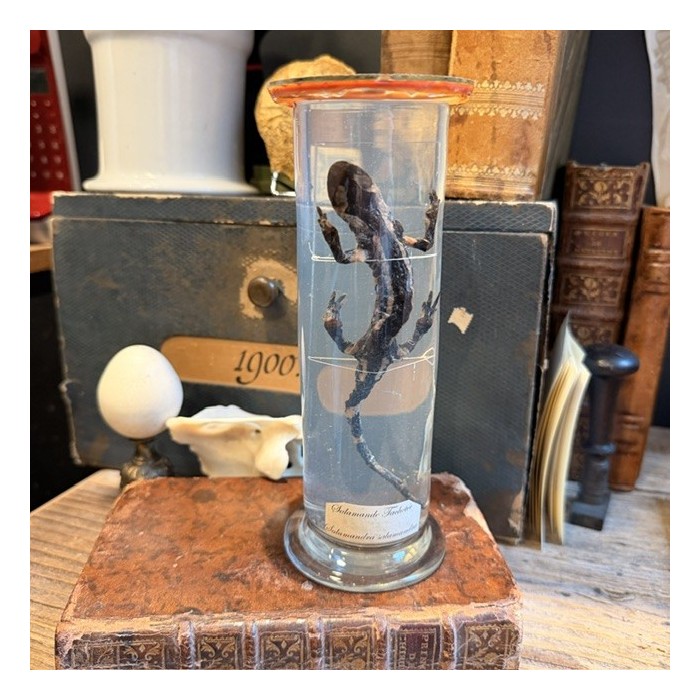
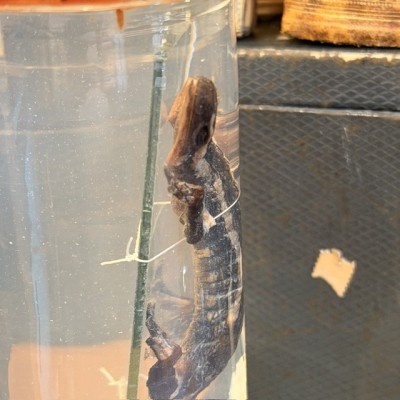
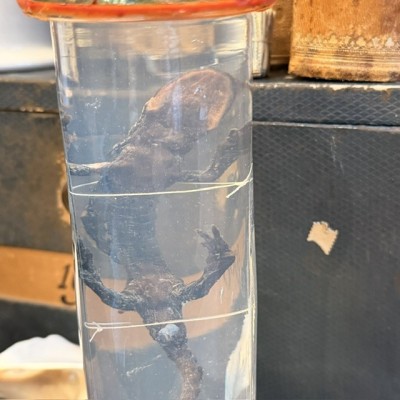
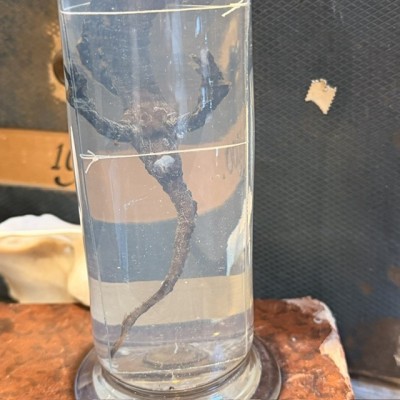
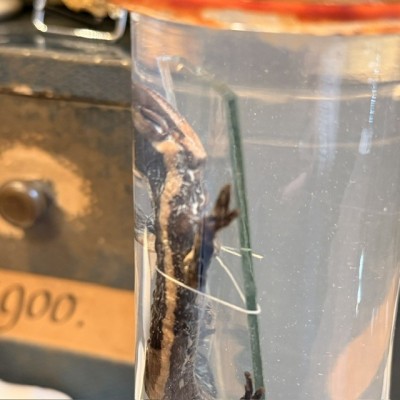
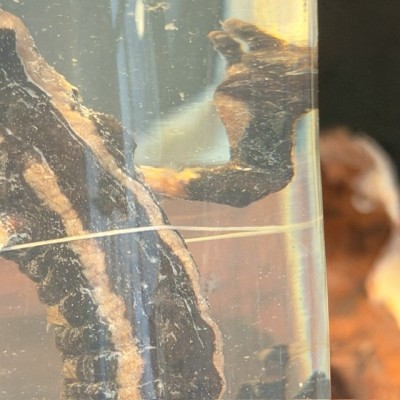
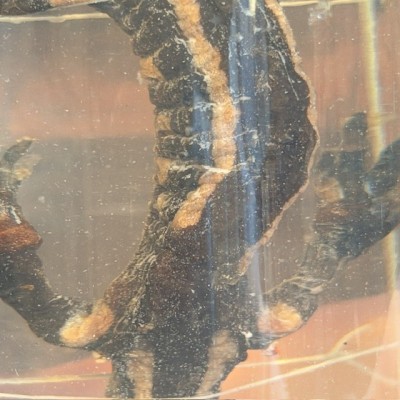
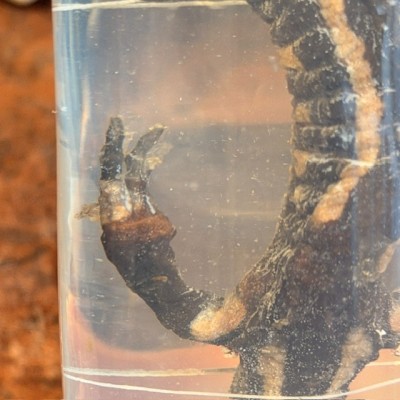
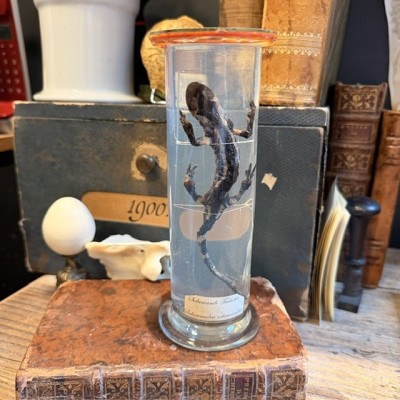
Specimen: Fire Salamander - Salamandra salamandra
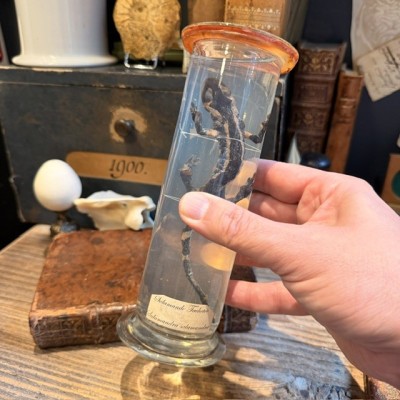
Museum jar, also known as a Museum specimen tube.
Wet specimen
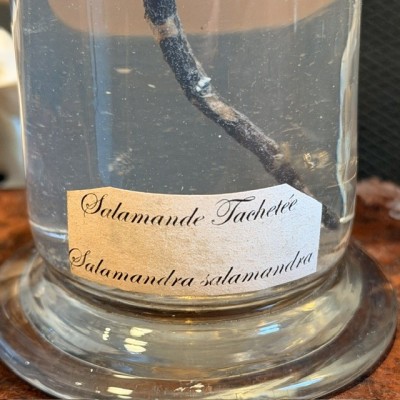
Specimen: Fire Salamander - Salamandra salamandra
Museum jar, also known as a Museum specimen tube. Wet specimen.
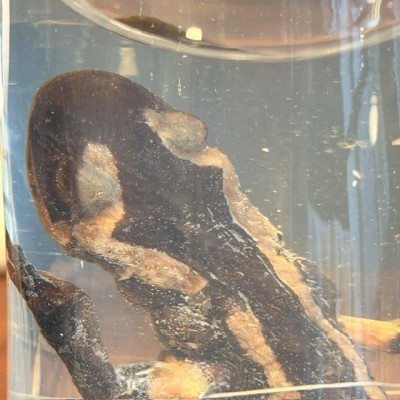
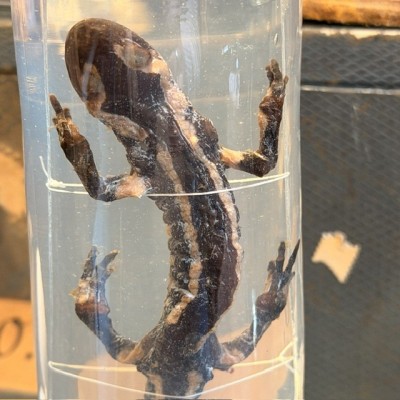
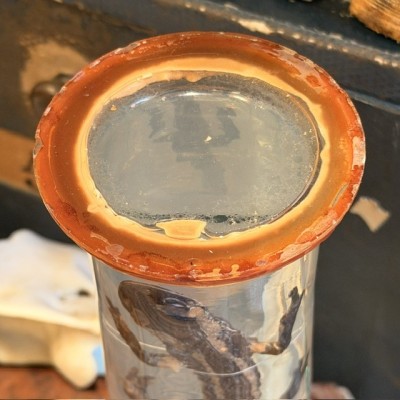
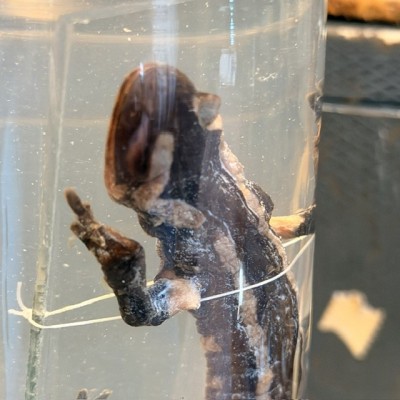
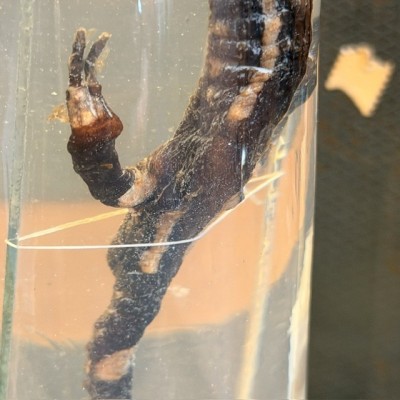
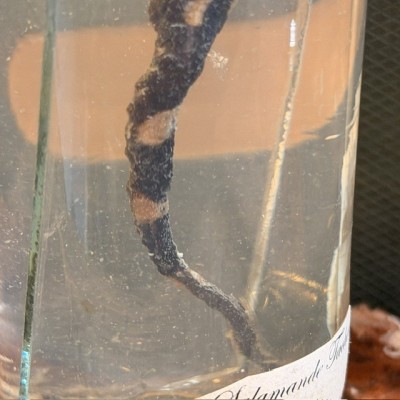
The specimen is displayed upright, secured with threads to a transparent glass plate in the center of the tube. The jar is originally sealed with wax and has a glass lid.
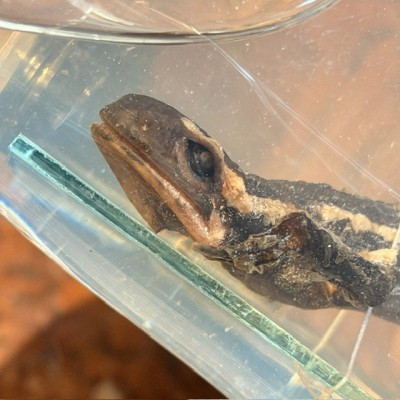
The species is distinguished by its characteristic morphology and its imposing parotoid glands located at the back of the skull. These glands secrete a skin-based venom composed of alkaloids (salamandrin), which serves as a passive defense mechanism against predators by causing severe burns to the mucous membranes, while also protecting the amphibian’s skin from bacterial infections.
Since ancient times—notably in the writings of the Roman Pliny the Elder and throughout the Middle Ages—the salamander has enjoyed a legendary reputation.
It was believed that this amphibian could walk through flames without getting burned, and even extinguish fire thanks to the coolness of its skin.
Symbolically, the salamander embodied the mastery of passions, unshakable courage, and the ability to withstand the most destructive trials.
This museum jar dates from the 1900s–1920s and was used as teaching material in schools, for example.
In fact, this type of liquid specimen became widespread in French schools and universities following educational reforms in the late 19th century. The introduction of “object lessons” made the direct observation of animals in the classroom mandatory. The sealed flask format allowed amphibians to be handled and studied from all angles without damaging the tissue.
Antique glass jar filled with formalin or alcohol. Hermetically sealed. No leaks; liquid level at maximum.
Very fine specimen of a Fire Salamander
A glass plate inside the flute prevents the specimen from floating and also allows for better examination by pressing the specimen against the walls.
Label added
Height: 18.5 cm
Base diameter: 7 cm. Tube diameter: 5 cm
NO SHIPPING
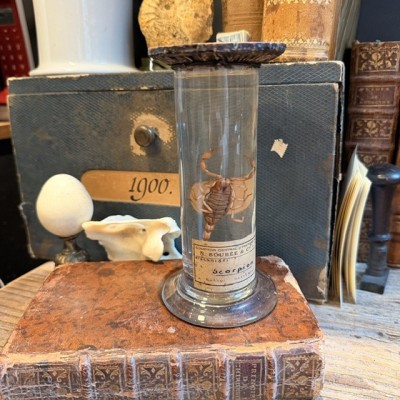
Specimen: Languedoc Scorpion - Buthus occitanus
Museum jar, also known as a Museum specimen tube.
Wet specimen
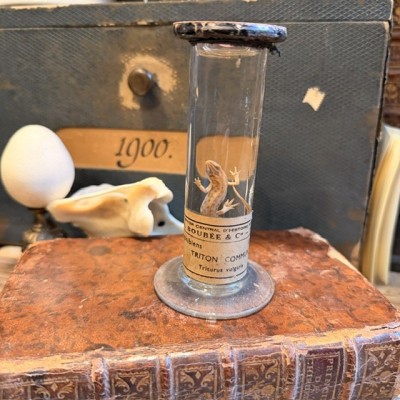
Specimen: Common Newt - Triturus vulgaris
Museum jar, also known as a Museum specimen tube.
Wet specimen

Common cuttlefish
Wet specimen in fluid
Sepia officinalis
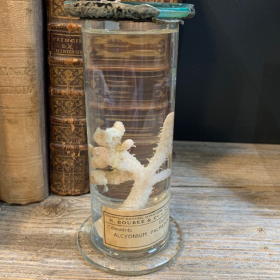
Museum jar - Wet specimen
Soft coral Alcyonium palmatum
Specimen: Fire Salamander - Salamandra salamandra
Museum jar, also known as a Museum specimen tube.
Wet specimen