
- New
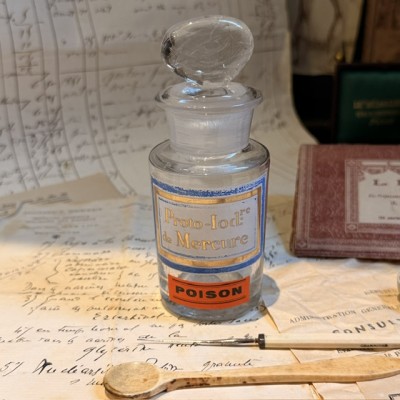
Mercurous iodide
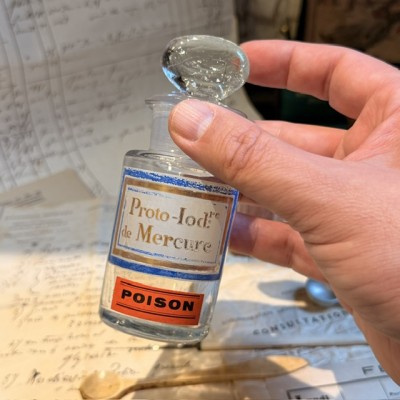
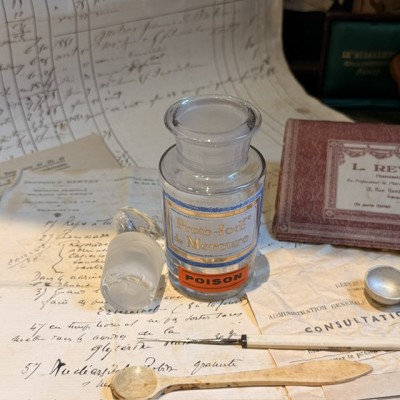
Antique pharmacy bottle made of blown glass and enameled painted label with golden blue threads
Red POISON label
Signaling to the pharmacist that it is imperative to keep apart the other substances in the cabinet of toxic substances, the famous poison cabinet.
Dating: 19th century
EMPTY
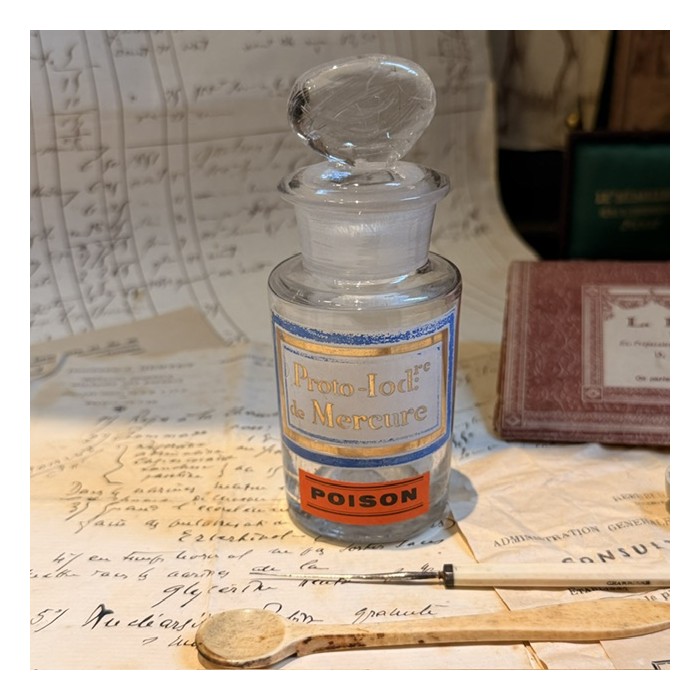
Mercurous iodide
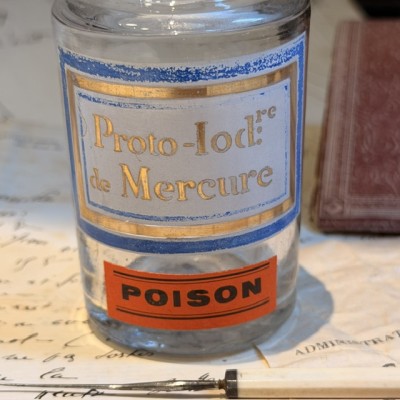
Antique pharmacy bottle made of blown glass and enameled painted label with golden blue threads
Red POISON label
Signaling to the pharmacist that it is imperative to keep apart the other substances in the cabinet of toxic substances, the famous poison cabinet.
Laboratory or pharmaceutical dispensary bottle, typical of the late nineteenth or early twentieth century.
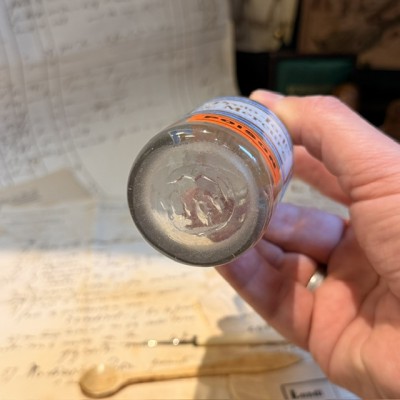
Made of blown transparent glass, it has a trace of pontil visible on the bottom, reflecting traditional artisanal manufacturing. It is equipped with its original cap honed with emery, ensuring a perfect fit with the neck of the bottle.
Beautiful enamelled label stenciled with golden highlights, framed by a blue and gold net. This baked enamel technique guaranteed great resistance to handling and chemicals in the pharmacy. A red regulatory label marked "POISON" is applied at the bottom, indicating the poisonous nature of the substance.
In the nineteenth and early twentieth centuries, this bottle contained Mercurous iodide, a heavy salt combining mercury and iodine.
Very present in the therapeutic arsenal of pharmacies, it was mainly prescribed in the form of pills or ointments to treat resistant skin conditions as well as manifestations of syphilis.
A truly lethal placebo in ancient medicine, it was administered to reassure the patient and give the illusion of a curative action by temporarily reversing visible symptoms, while exposing the patient to the ravages of chronic mercury toxicity because it was actually a remedy worse than the disease, the treatment leaving patients to deal with devastating neurological and physical sequelae with loosening of the teeth and progressive destruction of the jaw bone.
Height of the bottle: 12cm with blown glass cap - Diameter at the base: 4cm
Dating: 19th century
EMPTY
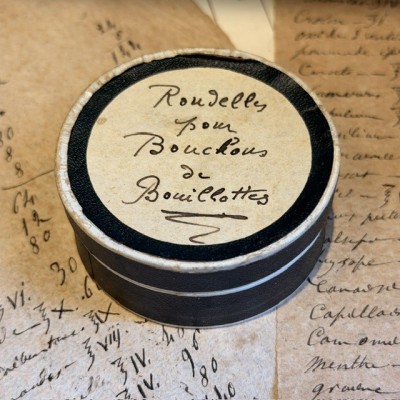
Box of rubber washers for hot water bottles
In its original cardboard box
1939/1940
New Old Stock
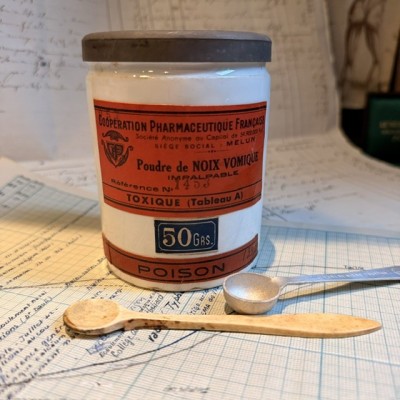
Impalpable Nux Vomica powder
White earthenware pot
Red POISON and TOXIC label
Signaling to the pharmacist that it is imperative to keep apart the other substances in the cabinet of toxic substances, the famous poison cabinet.
It comes from an old cellar-laboratory in a Parisian pharmacy. The bottles had not moved since the late 1950s on the shelves. The cellar had served as a laboratory for medical analyses and a laboratory for magistral preparations of the pharmacy from 1900 until around 1950.
EMPTY
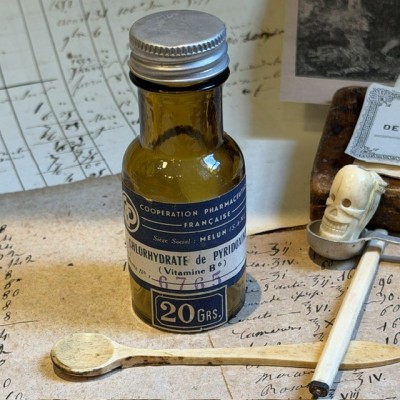
Pyridoxine hydrochloride - Vitamin B6
Antique pharmacy bottle
EMPTY
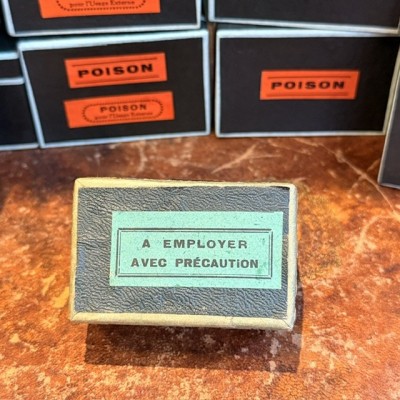
Antique labels in a pharmacy box for cures made of canvas cardboard
To be used with care label
The pharmacist used his boxes of medicine to put away the labels he would then put on the bottles that he would resell to his customers.
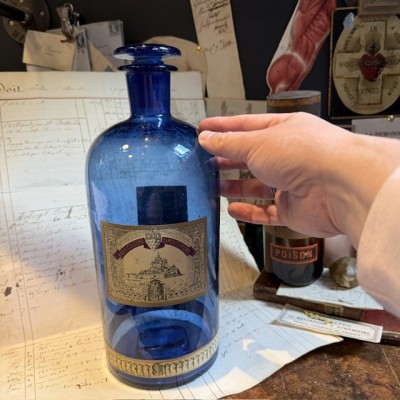
Eau de Cologne du Mont St Michel
Antique BLUE glass pharmacy bottle
EMPTY
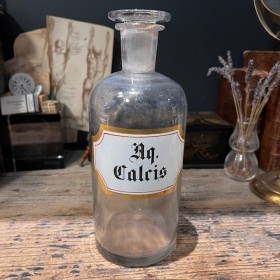
Aqua Calris - Hot water
Antique pharmacy jar
Apothecary
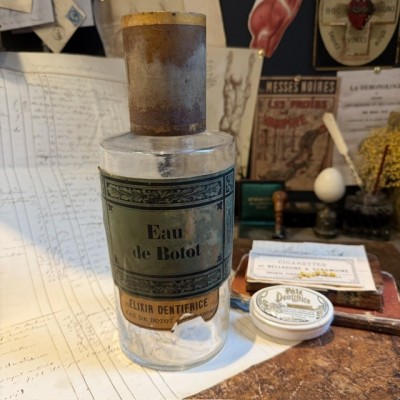
Eau de Botot - Tooth-cleansing Elixir
CODEX 1884
Antique 19th-century pharmacy bottle
EMPTY
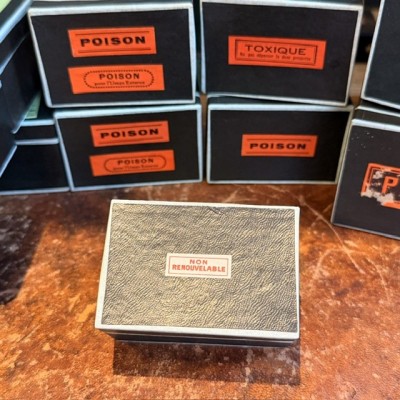
Antique labels in a pharmacy box for cures made of canvas cardboard
Non-renewable label
The pharmacist used his boxes of medicine to put away the labels he would then put on the bottles that he would resell to his customers.
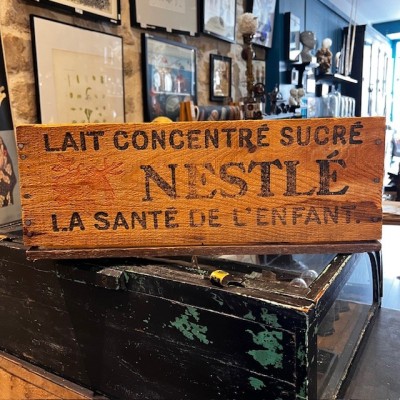
Antique wooden advertising case for Nestlé concentrated infant milk
Found in Parisian cellars that served as laboratories and storage rooms for pharmacists preparing their masterful concoctions from 1900 to 1950.
It was used to store products, glass bottles, etc.
Period: Circa 1910–1930
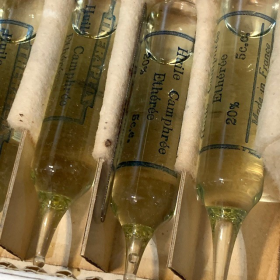
Bulb for hypodermic injection - Camphorated ethereal oil (circa 1920)
THERAPLIX
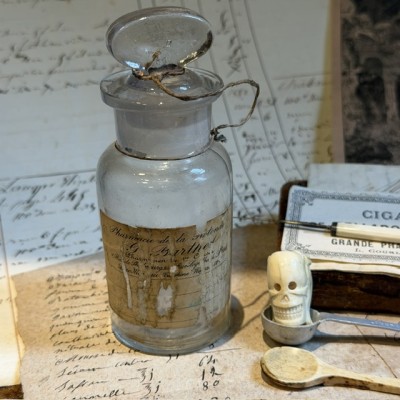
Berthet - Pharmacie de la Rotonde
Antique pharmacy bottle
EMPTY
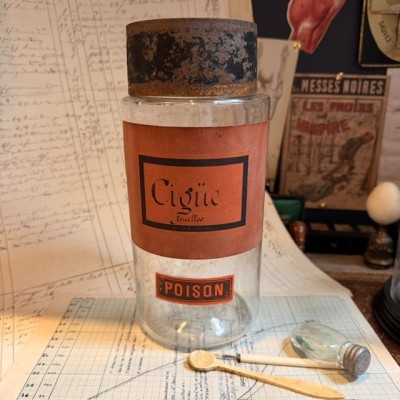
Hemlock leaves - POISON
Antique pharmacy bottle - Wide-mouth apothecary jar.
19th-century mouth-blown glass
Red POISON label
Signaling to the pharmacist that it is imperative to keep apart the other substances in the cabinet of toxic substances, the famous poison cabinet.
A fascinating testimony to pharmacology
It comes from an old cellar-laboratory in a Parisian pharmacy. The bottles had not moved since the late 1950s on the shelves. The cellar had served as a laboratory for medical analyses and a laboratory for magistral preparations of the pharmacy from 1900 until around 1950.
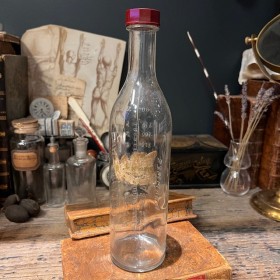
Horseradish syrup
Grams / Tablespoons - Graduated bottle
in French: Grammes / Cuillères à soupe
Antique medicine bottle
Apothecary
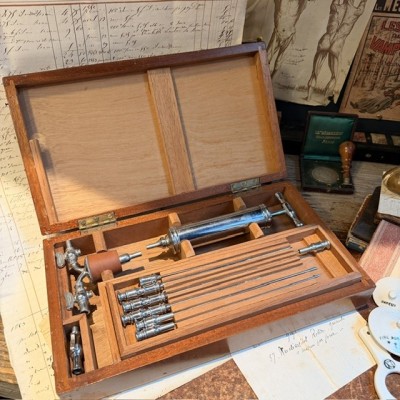
Potain’s Aspirator in its Light Wood Case
Beginning of 20th century
English maker: THACKRAY LEEDS ENGLAND
non-functional

Antique and large drum microscope
In it's mahogany wooden box
For botanist, entomologist
This is a larger model than those usually found on the market
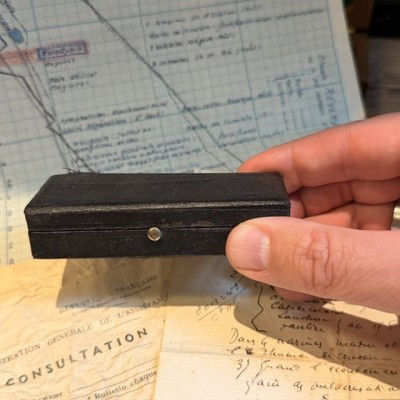
Antique Pravaz hypodermic injection syringe - 19th century
Syringe in it's case
not functional
Mercurous iodide
Antique pharmacy bottle made of blown glass and enameled painted label with golden blue threads
Red POISON label
Signaling to the pharmacist that it is imperative to keep apart the other substances in the cabinet of toxic substances, the famous poison cabinet.
Dating: 19th century
EMPTY