

- New
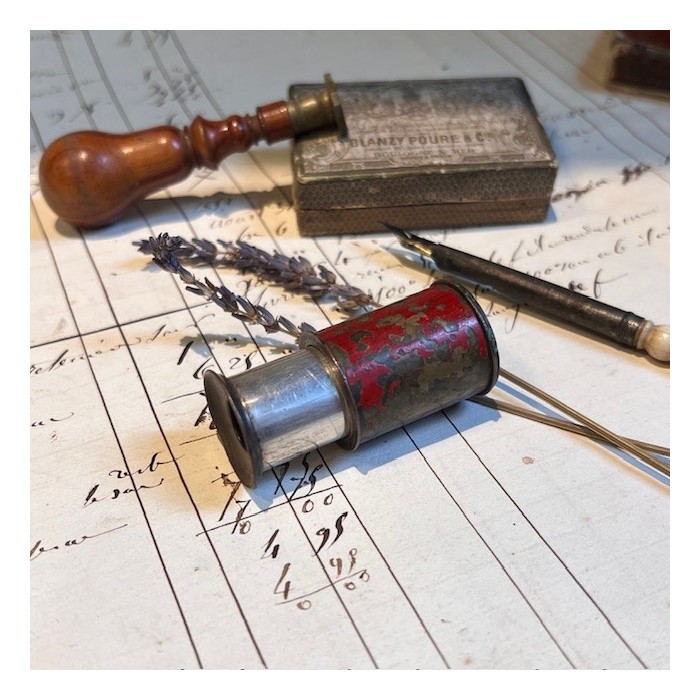
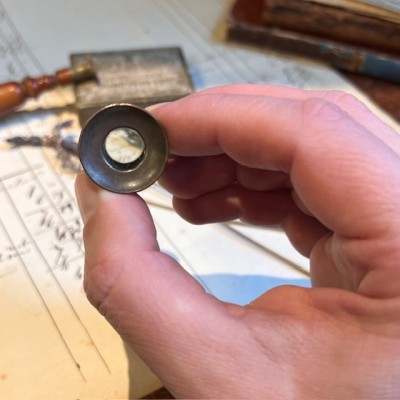

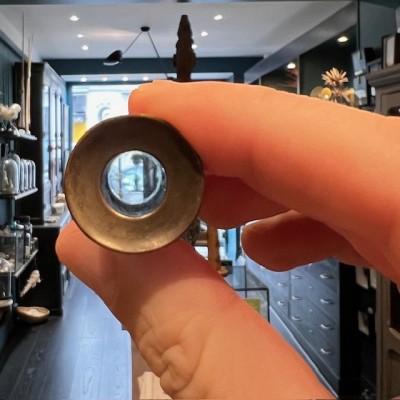
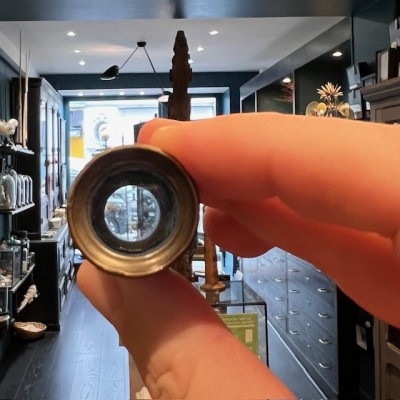
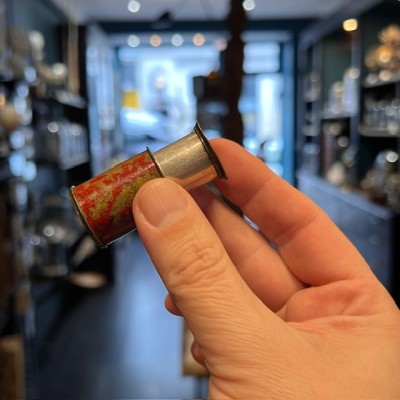
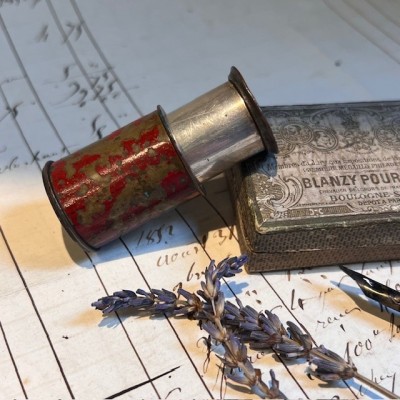
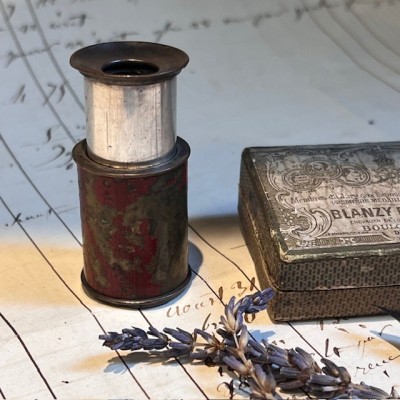
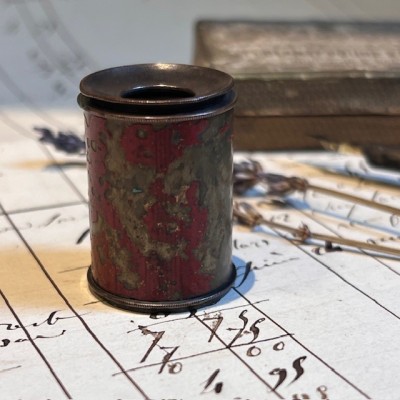
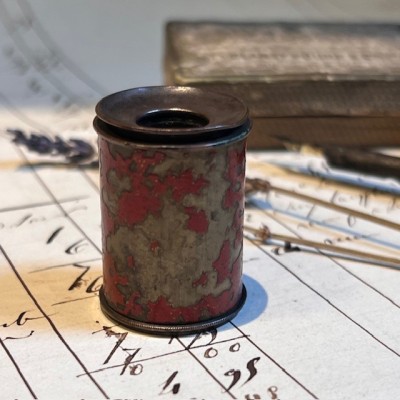
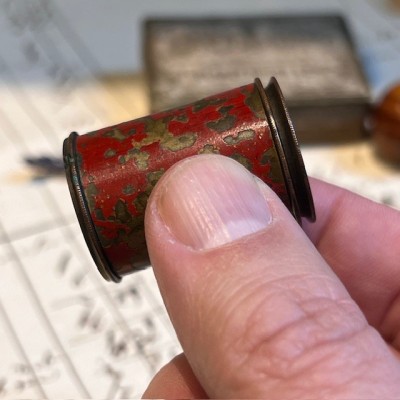
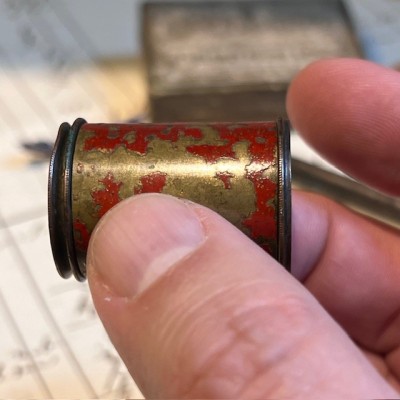
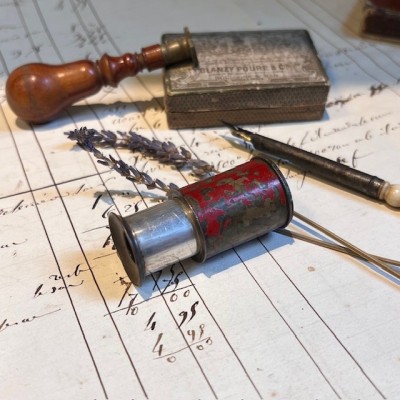
Antique telescopic monocular – Late 19th century
Small antique pocket monocular, dating from the late 19th/early 20th century.
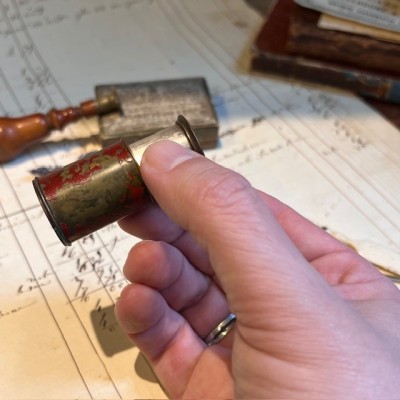
Originally used to see the stage better at the theater or opera, compact and practical to slip into a pocket, with an elegant and discreet look.
Antique telescopic monocular – Late 19th century
Small antique pocket monocular, dating from the late 19th/early 20th century.
Originally used to see the stage better at the theater or opera, compact and practical to slip into a pocket, with an elegant and discreet appearance.
Body in red lacquered metal, with a sliding mechanism for focusing.
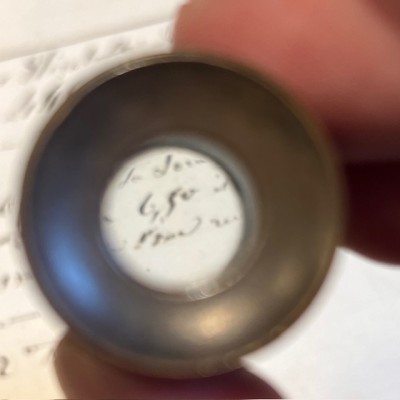
The instrument is equipped with two glass lenses, cleaned and perfectly transparent: the optics are functional and the image is sharp for this type of antique object.
The paint shows significant wear, revealing the patina of the metal, which gives it an authentic charm and bears witness to its age. A simple, unsigned object, typical of the theater or walking glasses used at the time.
Condition: good antique condition, signs of use and wear consistent with age. It still works, the lenses are very clear, and the sliding mechanism is smooth.
Period: circa 1880–1910
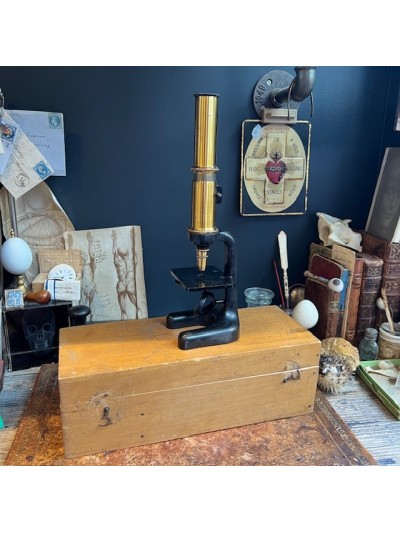
Antique brass and cast-iron rack-and-pinion microscope in wooden case
Late 19th century - Early 20th century
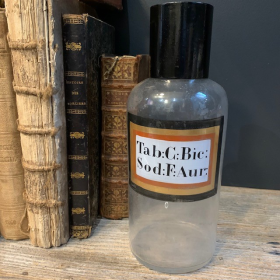
Antique pharmacy jar: Sodium bicarbonate and Gold Flower tablets
Glass pharmacy bottle - XIXth century
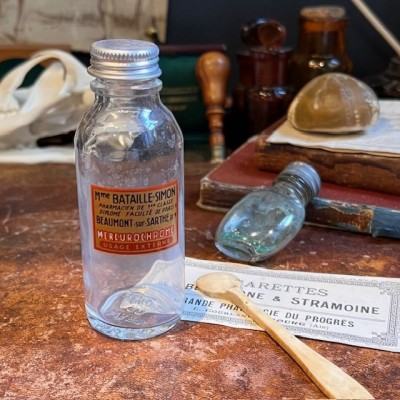
Mercurochrome
Antique pharmacy bottle - Apothecary
Mrs Bataille-Simon, First Class Pharmacist in Beaumont sur Sarthe - Tel 9
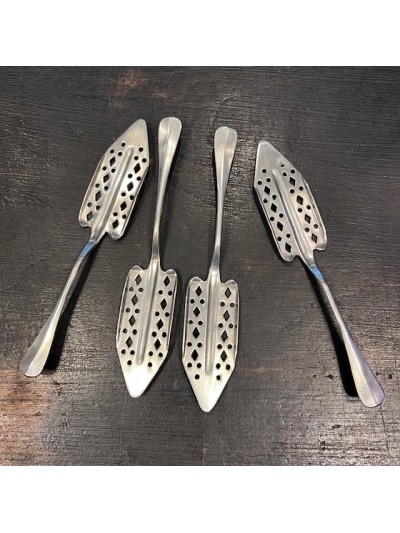
Antique Absinthe Spoon
Marking with a cross
The spoons have been used, are scratched, badly oxidized, etc.
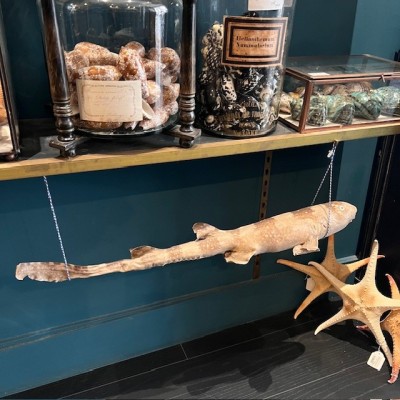
Brownbanded bamboo shark
Naturalized
Chiloscyllium punctatum
Unprotected species - Old taxidermy: visible suture under the belly and on the left side near the mouth

Cours d'opérations de chirurgie, démontrées au Jardin Royal
Course of surgical operations, demonstrated in the Royal Garden
Published in 1751 in Paris, by d'Houry, sole printer and bookseller to Monseigneur le Duc d'Orléans
Fourth edition
Illustrated with numerous plates and engravings in the text, including the famous plate of Poor Malabou and her scrotal elephantiasis on page 112/113, which the author mentions on page 373.

Grams / Tablespoons - Graduated bottle
in French: Grammes / Cuillères à soupe
Antique medicine bottle
Apothecary
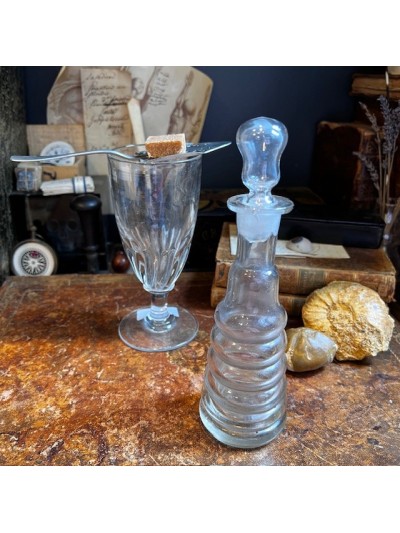
An antique absinthe topette (decanter)
6 Beaded Topette
Residue in the bottom of the carafe
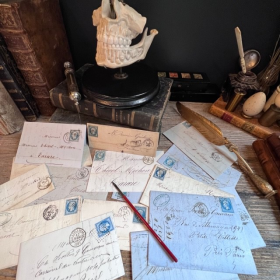
Stamped letter-envelope of the Second Empire
Dated from 1852-1870

Botany plate by Édouard-Adolphe Duchesne
From the Atlas du Répertoire des plantes utiles et des plantes du globe published in 1846
19th-century color lithograph
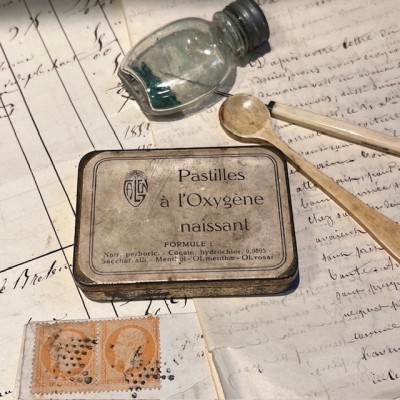
Box of nascent oxygen and cocaine tablets
From the 1900s to the 1950s it was not uncommon to see cocaine as an ingredient in some lozenges, especially for throat ailments!
EMPTY
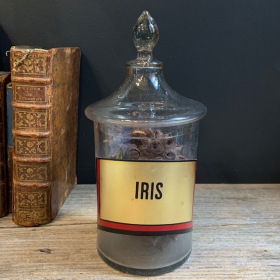
19th century Herbalist's or Pharmacy crystal jar
Iris
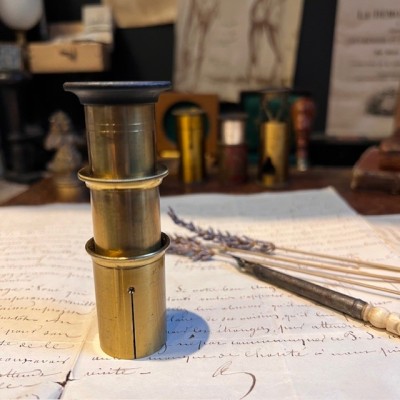
Brücke achromatic magnifying glass with engraved linear reticle
Portable scientific instrument — 19th century
Used in ophthalmology, surgery, dissection, histology, botany and mineralogy.

Anatomy of Man by Cloquet
Anatomical lithography in black and white
The plates date from circa 1852
Stamp of the Franco-Belgian Literary and Artistic Convention of 22 August 1852
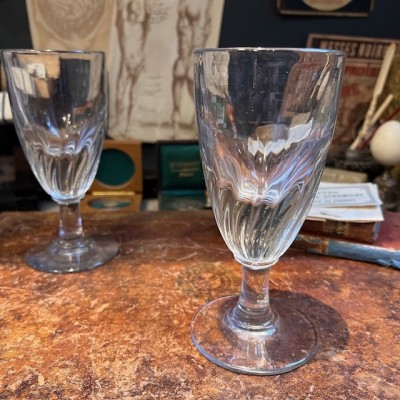
Antique twisted glass for Absinthe
Ref A
The twists on the glass are used to measure out the absinthe liquor and then pour the water over the sugar on the absinthe spoon on the glass to soften the bitterness of the drink.
Antique telescopic monocular – Late 19th century
Small antique pocket monocular, dating from the late 19th/early 20th century.
Originally used to see the stage better at the theater or opera, compact and practical to slip into a pocket, with an elegant and discreet look.