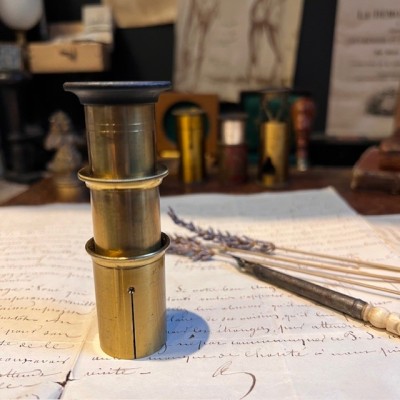


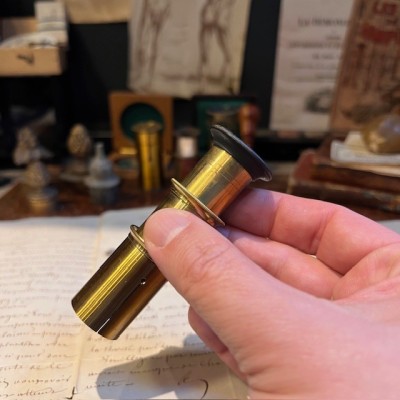
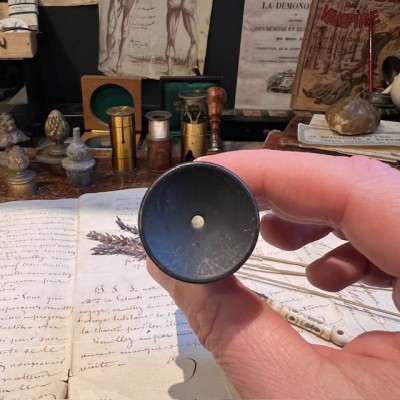
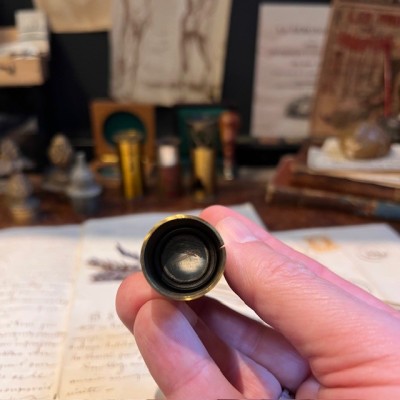
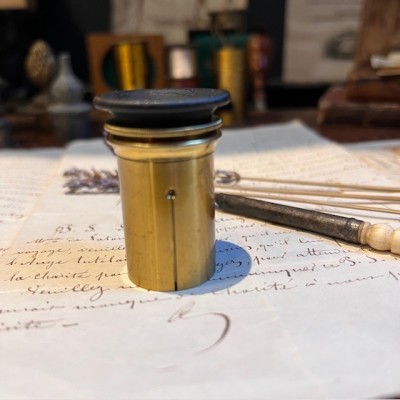
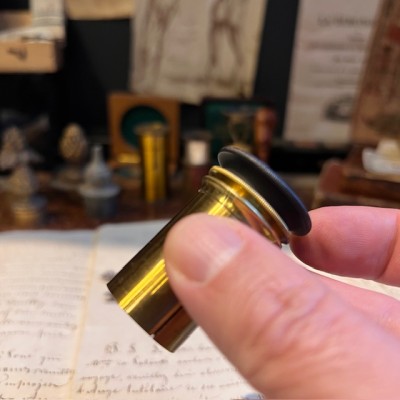
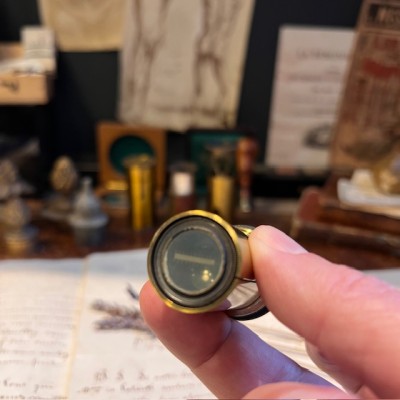
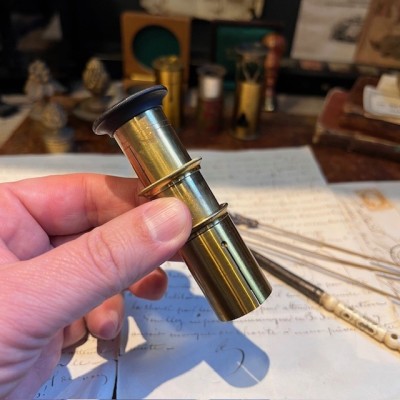
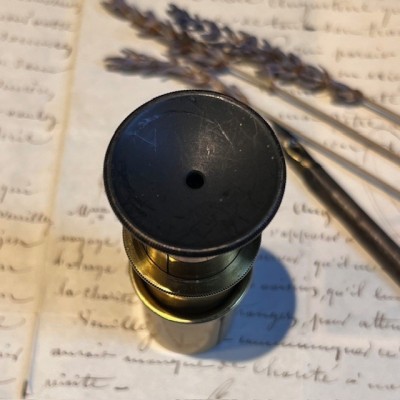
Brücke achromatic magnifying glass with engraved linear reticle
Portable scientific instrument — 19th century
Used in ophthalmology, surgery, dissection, histology, botany and mineralogy.
Brücke achromatic magnifying glass with engraved linear reticle
19th-century portable scientific instrument
Used in ophthalmology, surgery, dissection, histology, botany and mineralogy
Foldable brass scientific magnifying glass, Brücke type, equipped with achromatic optics and a linear reticle engraved directly into the glass.
The reticle, composed of superimposed parallel lines forming a scale, allows for comparative observation and dimensional estimation of fine structures.
The instrument unfolds using sliding tubes.
The eyepiece is made of black-painted brass, characteristic of scientific laboratory instruments from the second half of the 19th century.
Carefully crafted, with no visible markings.
Used in histology, botany, mineralogy and physiology, this magnifying glass was used for rapid examination and relative measurement of fibres, striations, veins and other structures, often in conjunction with a microscope.
Material: brass
Optics: achromatic to avoid aberrations due to magnification
Reticle: linear scale engraved in the glass
Mechanism: foldable with telescopic tubes
Condition: good antique condition, patina from use
Circa 1860–1890
Authentic 19th-century scientific instrument, somewhere between an achromatic magnifying glass and an optical measuring tool.
Rare item
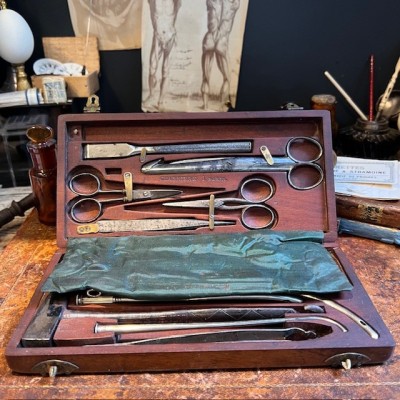
Portable autopsy kit from the mid-19th century
Maison Charrière in Paris, circa 1845–1870
Mahogany case for autopsy and dissection
Small portable mahogany case containing a set of autopsy instruments: hook hammer, bone chisel, enterotome scissors, probes, hooks and suture needles. Used by forensic scientists and anatomists for opening and examining bodies.
Charrière, a major 19th-century Parisian manufacturer, was a pioneer in the design of high-precision surgical and anatomical instruments.
Mahogany and polished steel: 23 × 11 cm
Please note: crack in the wood under the case
A beautiful object, very rare to find
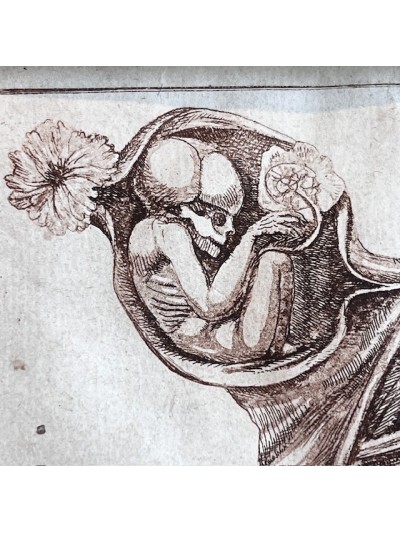
L'art de procréer les sexes à volonté - The art of procreating sexes at will
By Millot - With illustrated plates
Antique book from 1802 (Year X of the Republic) - Third edition
The author explains how to procreate boys and girls, and gives his recipes for treating sterility and malformations...
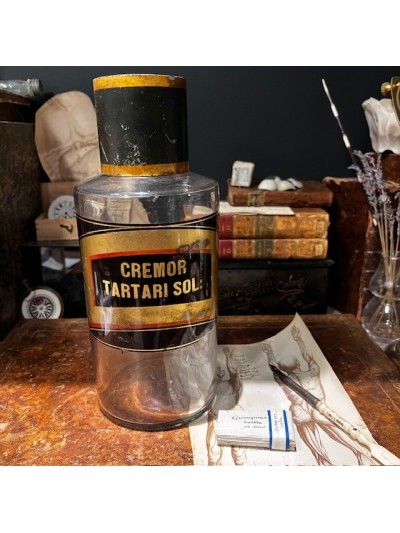
Cremor tartari sol - Cream of tartar
Potassium bitartrate
Pharmacy jar - Herbalism - Apothecary bottle
Late 19th century
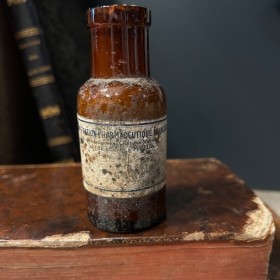
Unknown bottle from Coopération Pharmaceutique Française
Antique pharmacy bottle
Apothecary vial
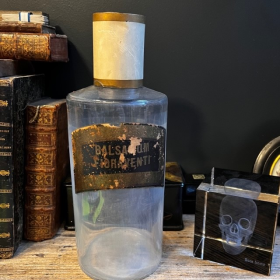
Antique pharmacy bottle from the 19th century
Balsamum Fioravanti - Balm of Fioravanti
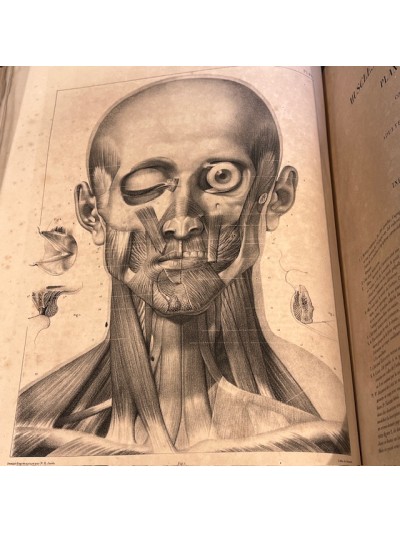
Anatomie de L'Homme - 1831
Anatomy of Man
Volume 2 with its black and white Atlas - 99 lithography
By Dr Bourgery and the illustrator Jacob
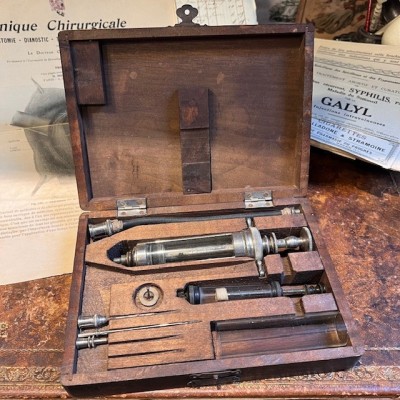
Syringe for diphtheria serum – Dr Roux method
Wooden box
Label from instrument manufacturer H. Hauptner in Berlin on the box and marking on the large syringe
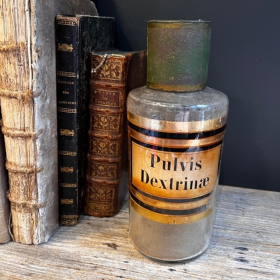
Dextrin powder - Starch - Pulvis Dextrinae
Antique pharmacy bottle
Blown glass
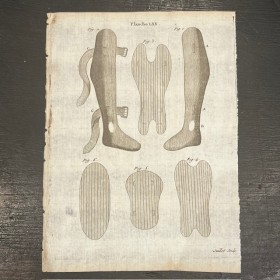
Antique surgical board
From Benjamin Bell's Complete Course in Surgery, published in 1796
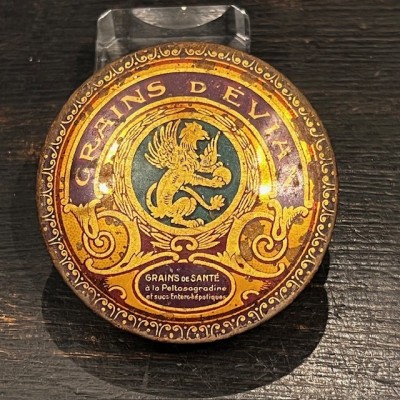
Evian grains - Health pills
Antique tin box - Early 20th century
The sweetest laxative
Defects: paint chips, dents, difficult to open
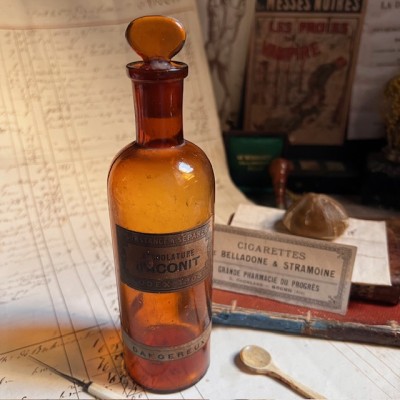
Gaïacol liquide
Antique pharmacy bottle
Green label: SUBSTANCE TO BE SEPARATED - CODEX 1908
This means that this bottle had to be kept separate from the others because it was dangerous in high doses- POISON
EMPTY
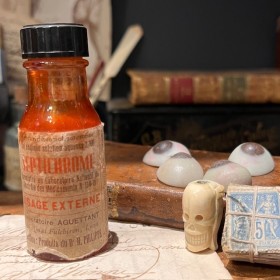
Septichrome
Antique pharmacy bottle
Apothecary vial
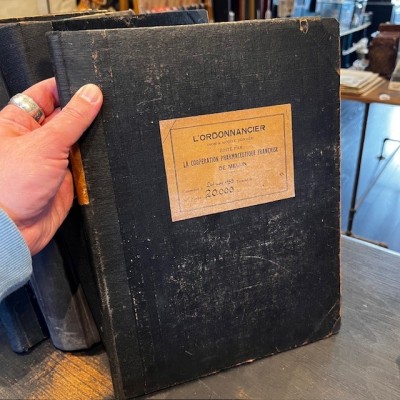
Prescription book of the Berthier Pharmacy in Paris
Volume 3: from 1953 to 1962
Volume 3 of 4 available from these official registers, originating from a former Parisian pharmacy, which trace twenty-five years of medical history, from the Liberation to the 1970s. Far from being ceremonial documents, these prescription books are authentic working tools, marked by the urgency of everyday life and the evolution of pharmaceutical science.
You are purchasing 1 volume, not all 4 volumes

Cours d'opérations de chirurgie, démontrées au Jardin Royal
Course of surgical operations, demonstrated in the Royal Garden
Published in 1751 in Paris, by d'Houry, sole printer and bookseller to Monseigneur le Duc d'Orléans
Fourth edition
Illustrated with numerous plates and engravings in the text, including the famous plate of Poor Malabou and her scrotal elephantiasis on page 112/113, which the author mentions on page 373.
Brücke achromatic magnifying glass with engraved linear reticle
Portable scientific instrument — 19th century
Used in ophthalmology, surgery, dissection, histology, botany and mineralogy.