
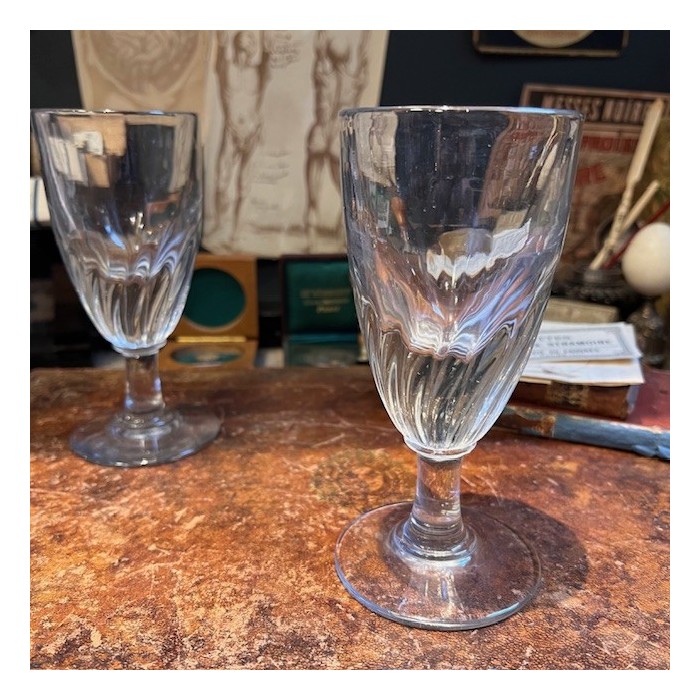
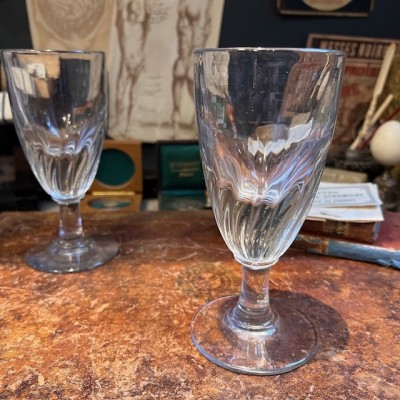
Antique twisted glass for Absinthe
Ref A
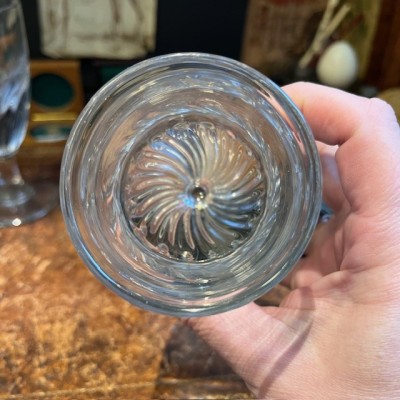
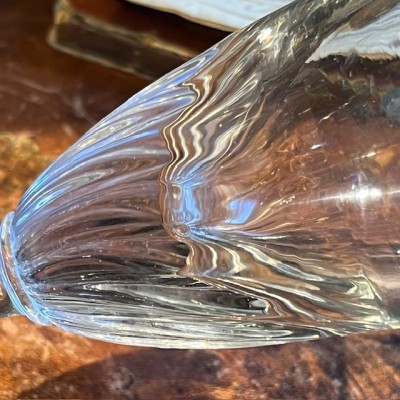
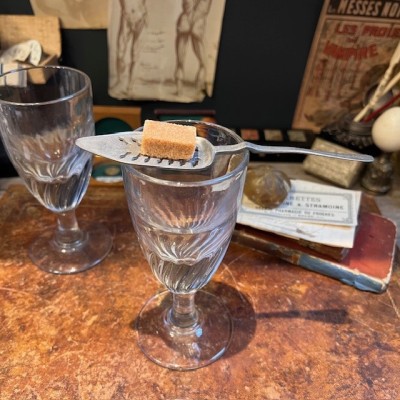
The twists on the glass are used to measure out the absinthe liquor and then pour the water over the sugar on the absinthe spoon on the glass to soften the bitterness of the drink.
Antique twisted glass for Absinthe
The glass thickens in the lower part, where the absinthe dose was.
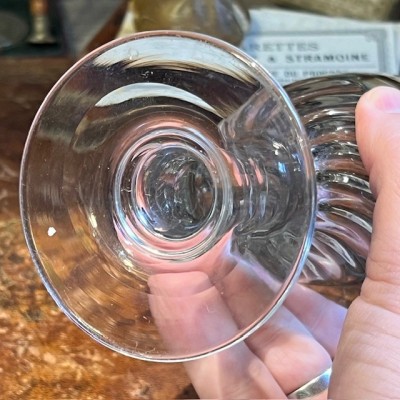
Presence of bubbles in the glass. Scratches from use. Blown glass, there is still the trace of the pontil underneath.
The twists on the glass are used to measure out the absinthe liquor and then pour the water over the sugar on the absinthe spoon on the glass to soften the bitterness of the drink.
Quite a ceremony!
You can find other models of glasses and absinthe spoons on the site or in the shop.
Dimensions:
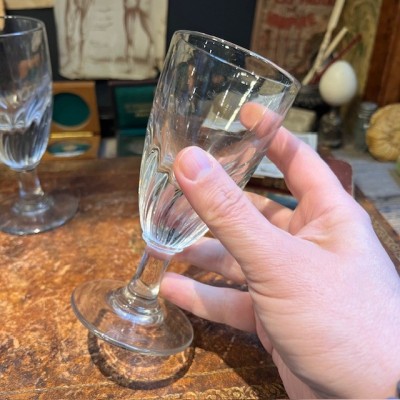
Height approx. 15.5 cm - Weight approx. 420/430 g
You buy 1 glass
All glasses are slightly different, they are not exactly the same size or diameter, some are smaller than others or heavier than others.
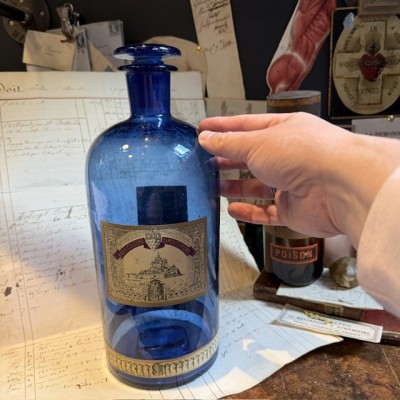
Eau de Cologne du Mont St Michel
Antique BLUE glass pharmacy bottle
EMPTY
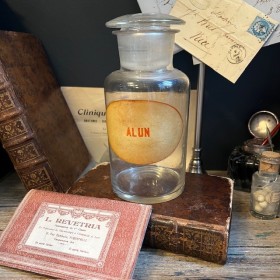
Alum
Antique pharmacy bottle
Apothecary vial
Color pigments have been added to the inside of the jar
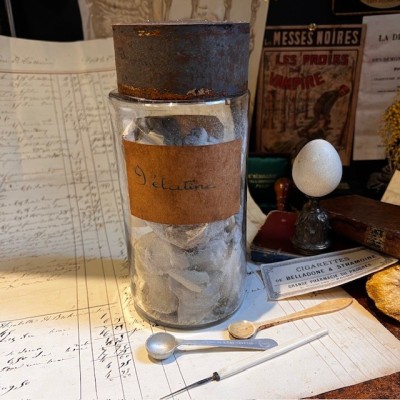
Gelatine
Antique pharmacy bottle - Wide-mouth apothecary jar.
19th-century mouth-blown glass
There is still some product left inside
A fascinating artifact from the history of pharmacology
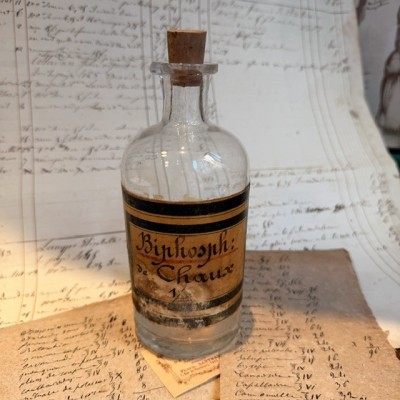
Biphosphate de Chaux
Antique pharmacy bottle
EMPTY
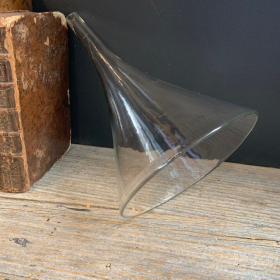
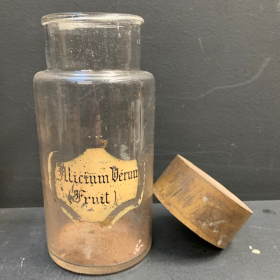
Antique pharmacy jar: Illicium verum (Fruit) / Star anise
Glass pharmacy bottle - XIXth century
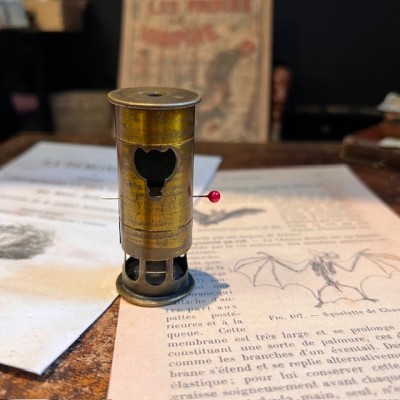
Pocket microscope
Floroscope - Insectoscope in brass
1850's - 1930's
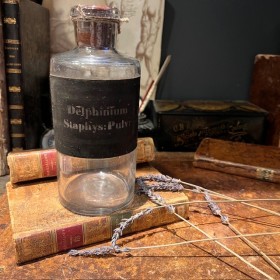
Delphinium staphisagria - Stavesacre
Pharmacy jar - Herbalism - Apothecary bottle
Late 19th century, early 20th century.
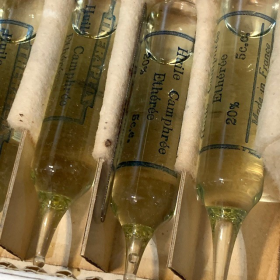
Bulb for hypodermic injection - Camphorated ethereal oil (circa 1920)
THERAPLIX
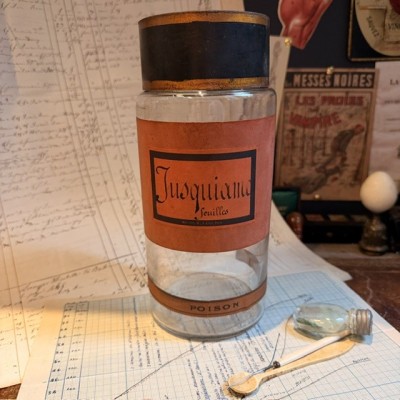
Jusquiame leaves - POISON
Antique pharmacy bottle - Wide-mouth apothecary jar.
19th-century mouth-blown glass
Red POISON label
Signaling to the pharmacist that it is imperative to keep apart the other substances in the cabinet of toxic substances, the famous poison cabinet.
A fascinating testimony to pharmacology
It comes from an old cellar-laboratory in a Parisian pharmacy. The bottles had not moved since the late 1950s on the shelves. The cellar had served as a laboratory for medical analyses and a laboratory for magistral preparations of the pharmacy from 1900 until around 1950.
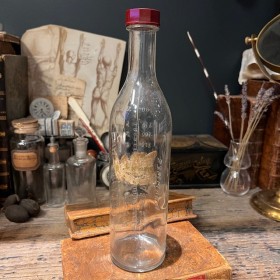
Horseradish syrup
Grams / Tablespoons - Graduated bottle
in French: Grammes / Cuillères à soupe
Antique medicine bottle
Apothecary
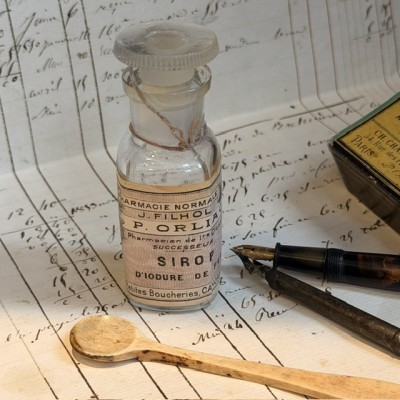
Sirop d'Iodure de Fer
Antique pharmacy bottle
EMPTY
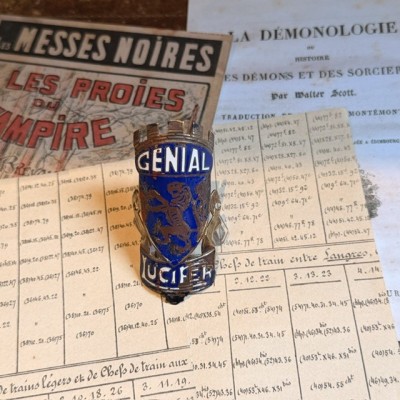
"Génial Lucifer"- Vintage bicycle headbadge
Brass & Blue Enamel to be placed on the bicycle tube at the front
The 1930s
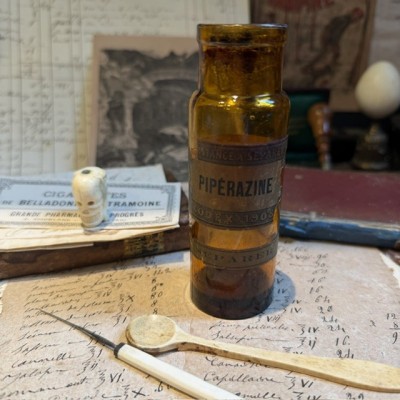
Piperazine
Antique amber glass bottle. The cap is missing
Green label: SUBSTANCE TO BE STORED SEPARATELY – CODEX 1908
Indicating to the pharmacist that it must be stored separately from other substances in the cabinet for toxic substances, the famous ‘poison cabinet’.
It comes from the former cellar-laboratory of a Parisian pharmacy. The bottles had not been moved from the shelves since the late 1950s. The cellar had served as a medical analysis laboratory and a laboratory for the pharmacy’s compounded preparations from 1900 until around 1950.
EMPTY
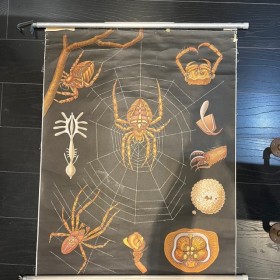
School canvas poster
Spider
Hagemann educational material publishing house in Düsseldorf
Printed in 1977
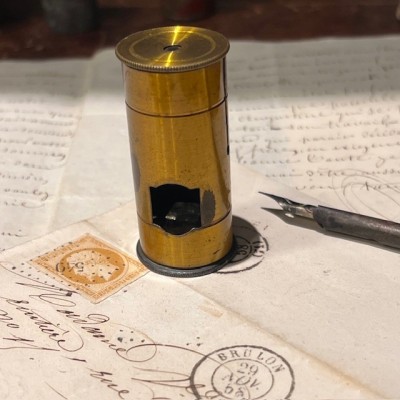
Floroscope
Botanist's microscope
Pocket microscope Late 19th - early 20th century
Warning: Here composed of 2 Stanhope lenses
Antique twisted glass for Absinthe
Ref A
The twists on the glass are used to measure out the absinthe liquor and then pour the water over the sugar on the absinthe spoon on the glass to soften the bitterness of the drink.