
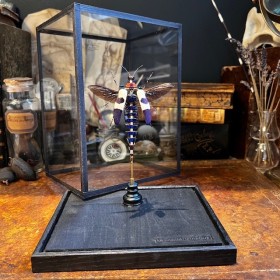
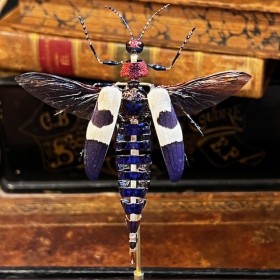
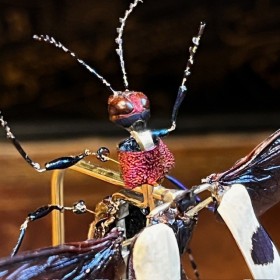
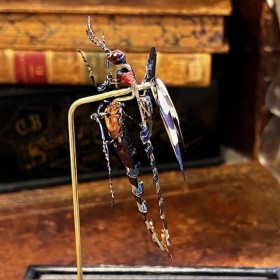
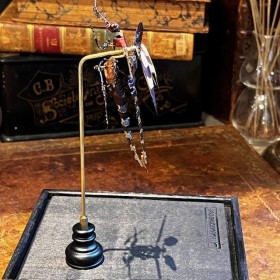
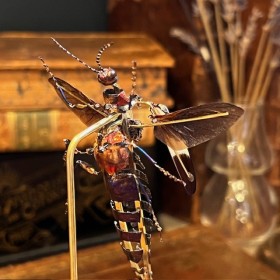
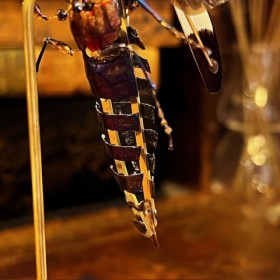
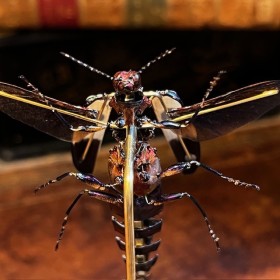
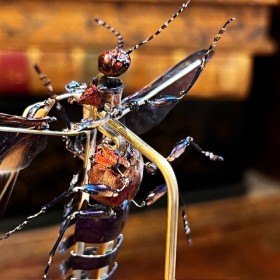
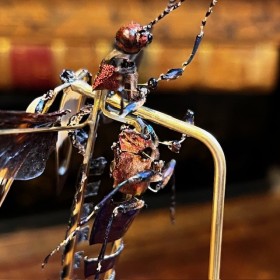
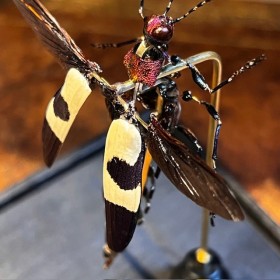
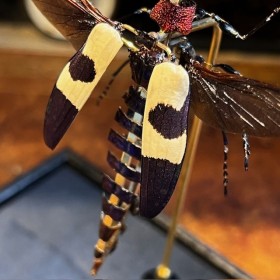

Entomological shattering at La Beauchêne under glass case
Chrysochroa buqueti - the jewel beetle
The red speckled jewel beetle
By La Thanatothèque
Entomological shattering at La Beauchêne under glass case
Chrysochroa buqueti - The red speckled jewel beetle
Entomological shattering at La Beauchêne
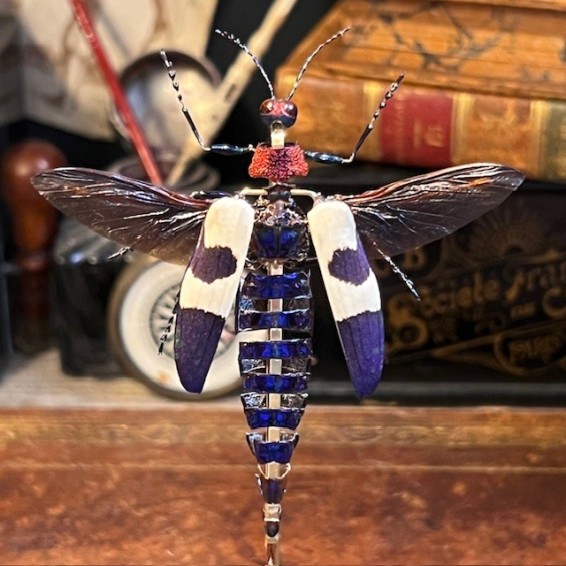
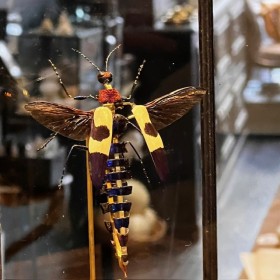
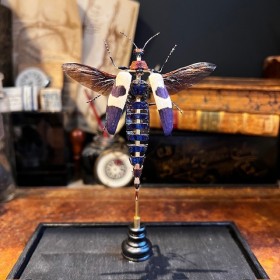
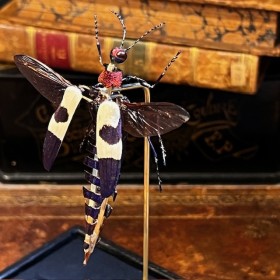
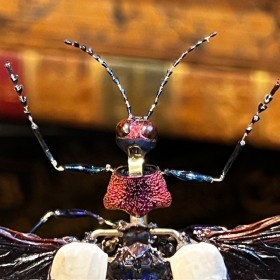
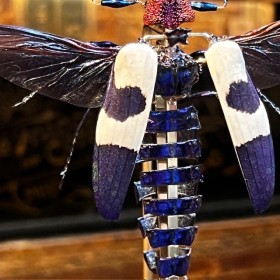
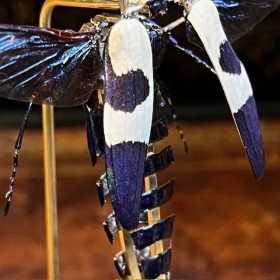
The technique consists in disassembling each part of the insect one by one, then reassembling them in an exploded view to observe each element and its relationship to the others, but also to appreciate the specimen as a whole, since the parts are placed in anatomical connection.
This is a jewel beetle: Chrysochroa buqueti, with its magnificent metallic sheen.
Note that the smaller the specimen, the greater the difficulty!
Beautiful entomological work by La Thanatothèque
Each part of the insect has been disassembled and mounted on fine brass rods to be reconstituted as an exploded piece, a long and precise job.
Edmé François Chauvot de Beauchêne is the inventor of the disarticulated or exploded human skull used for medical teaching, known as the Beauchêne exploded skull.
This technique, with brass wire joints, is used here, but applied to natural specimens.
A superb piece.
Available in shop only - No shipping
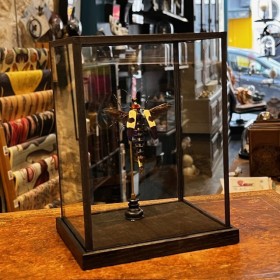
Dimensions of the wooden and glass display case: 16.5x13cm Height: 21cm
The display case can be lifted and removed for cleaning, it is not sealed
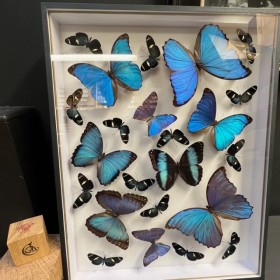
Entomological box
Composition with South American butterflies
Morpho and heliconius
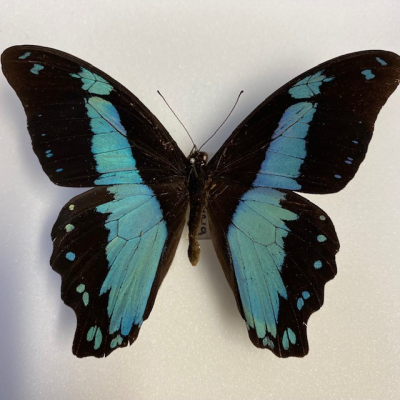
Entomological box
Species: Papilio Bromus butterfly
Pick-up in store in Paris only
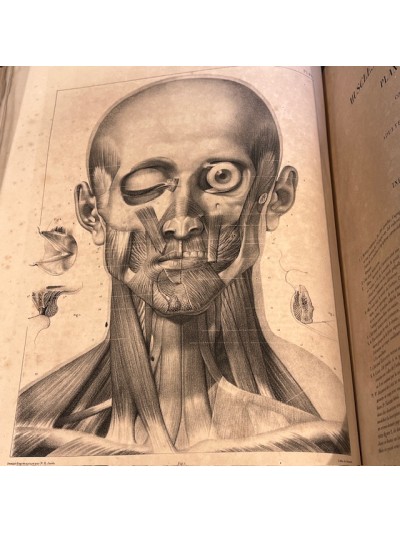
Anatomie de L'Homme - 1831
Anatomy of Man
Volume 2 with its black and white Atlas - 99 lithography
By Dr Bourgery and the illustrator Jacob
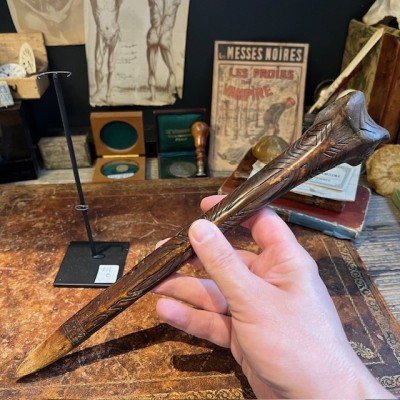
Papuan dagger in engraved cassowary bone
Papuan handicraft
Ref B
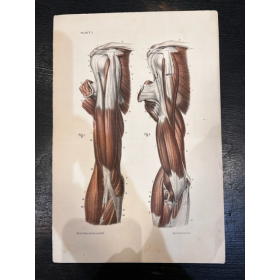
Atlas of descriptive anatomy of the human body
Anatomy board
By Doctors Bonamy and Paul Broca
Draftsman: Emile BEAU
Published on July 1st 1854
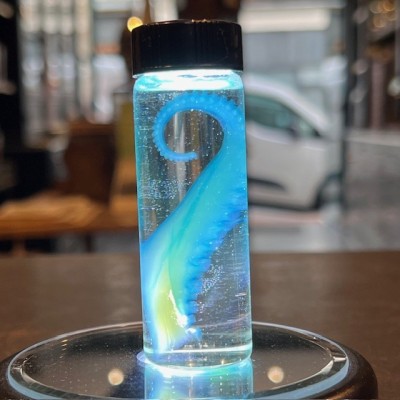
Octopus Tentacle Diaphanisation - Octopus vulgaris
Biological preparation
The purpose of diaphanisation is to make fabrics transparent. The fabrics are made transparent using a chemical process, and specific dyes are used.
The flesh is made transparent and the dyes attach themselves to the skin
All tentacles are different: illustrative photos
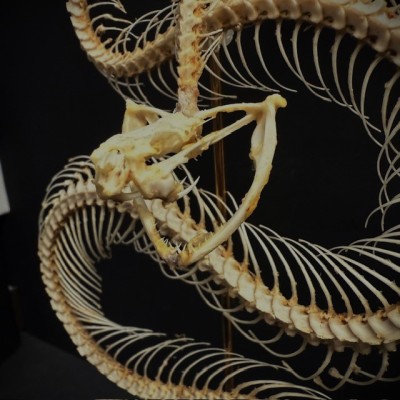
Skeleton of an Indonesian pit viper under a globe
Species: Trimeresurus insularis
Bell height: 38 cm
No shipping
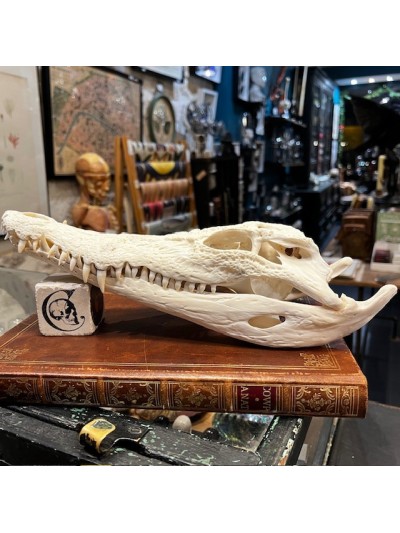
Australian saltwater crocodile skull: Crocodylus porosus
Estuary crocodile
With its CITES permit
32cm
Can only be sold in the European Union- Shengen Area
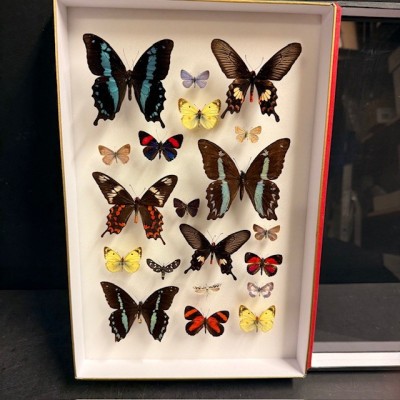
Entomological box
Composition with 20 Butterflies
Dimensions: 39x26cm
Box hand-bound by a craftsman bookbinder in Anjou
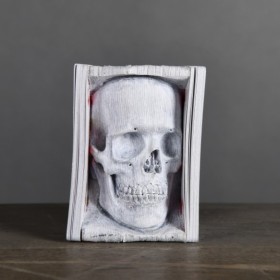
Memento Mori sculpted from a deck of cards - Poker
Size M
RED color
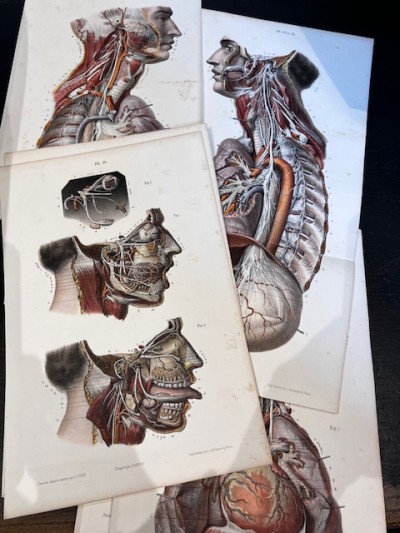
Anatomical chart by Ludovic Hirschfeld drawn by Léveillé
From Traité et iconographie du système nerveux et des organes des sens de l'homme avec leur mode de préparation
Published in 1866
Lithography
You buy 1 plate, not the whole set
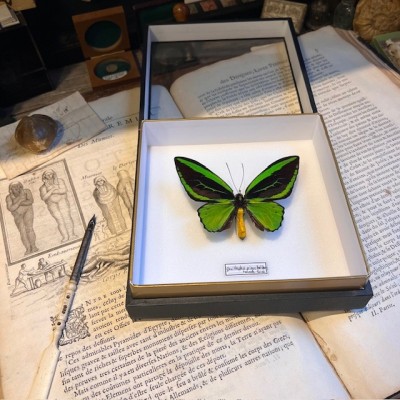
Superb butterfly Ornithoptera Priamus Poseidon - Common Green Birdwing
From Papua New Guinea
NO SHIPPING
Entomological box hand-bound by an artisan bookbinder in Anjou
Sold with its CITES certificate - Can only be sold in the European Union
People living outside the European Union can't buy this species
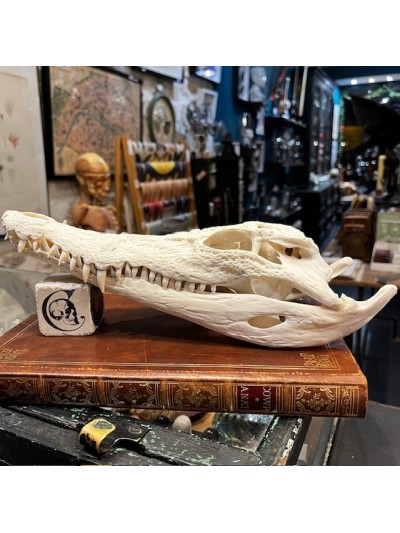
Australian saltwater crocodile skull: Crocodylus porosus
Estuary crocodile
With its CITES permit
33cm
Can only be sold in the European Union- Shengen Area
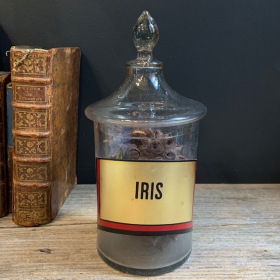
19th century Herbalist's or Pharmacy crystal jar
Iris
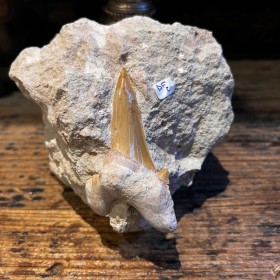
Shark tooth fossil
Otodus Obliquus dating from the Ypresian: 50 million years ago
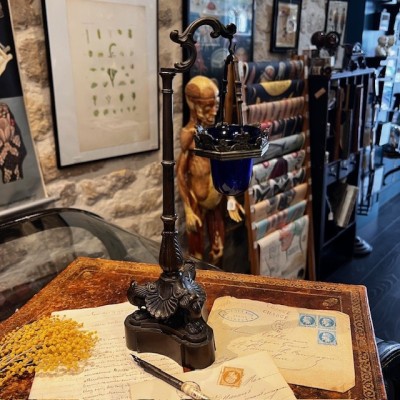
Louis Philippe period hanging table lamp
Period: July Monarchy around 1835-1845, still in transition from Rococo to the previous Restoration period.
Bronze with medal patina and cobalt blue blown glass.
Former oil night lamp.
Beautiful presence and intact patina, complete system.
Entomological shattering at La Beauchêne under glass case
Chrysochroa buqueti - the jewel beetle
The red speckled jewel beetle
By La Thanatothèque