
- New
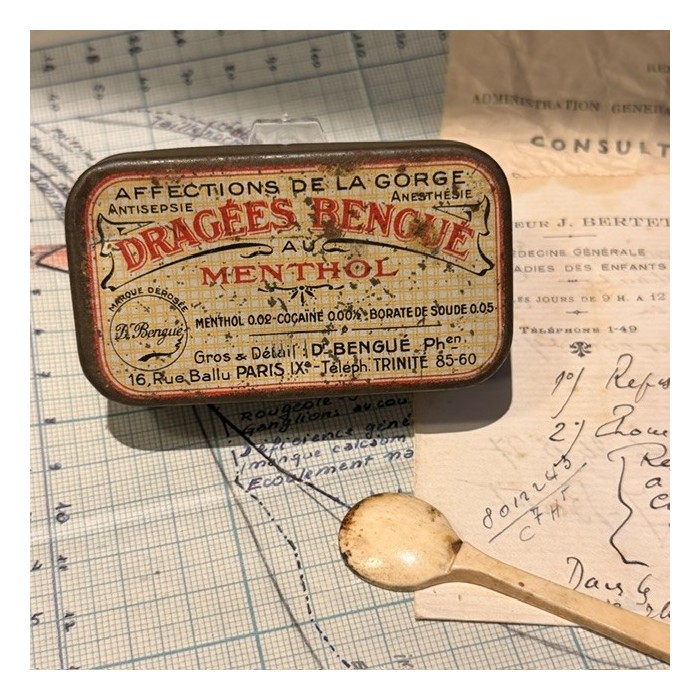
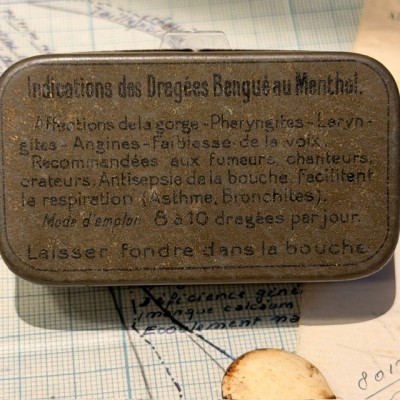
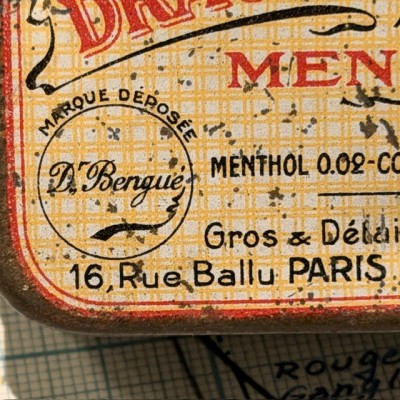
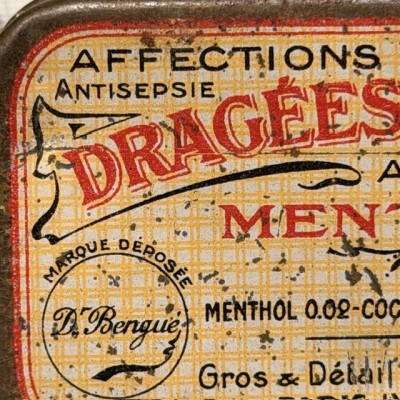
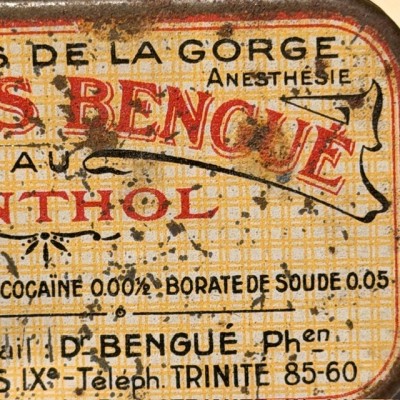
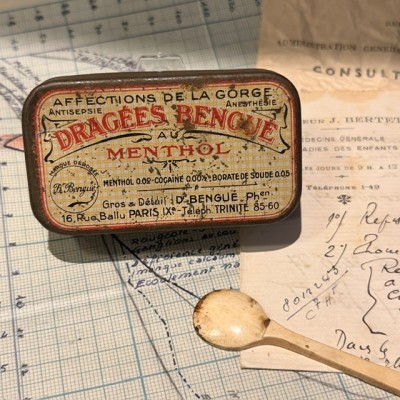
Metal box of breath mints with cocaine
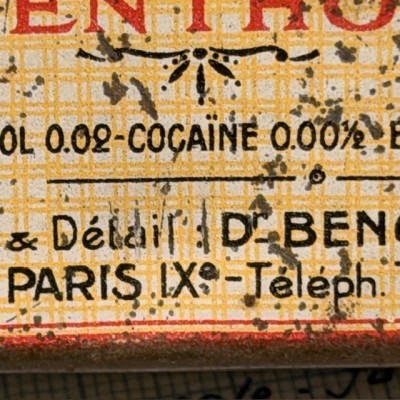
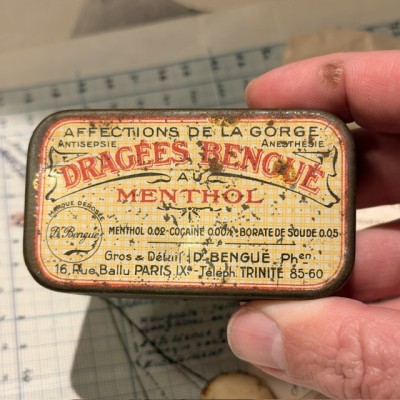
Box of Dr BENGUE Dragees
1920's
It is recommended to suck 8 to 10 lozenges per day, allowing them to melt in the mouth...
EMPTY
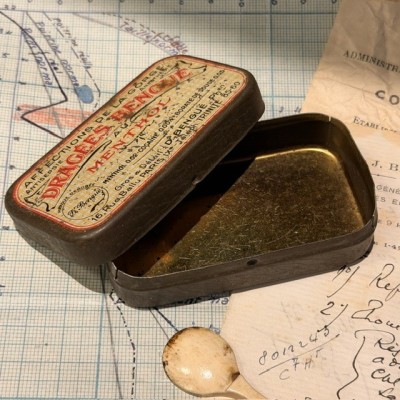
Metal box of breath mints with cocaine.
Box of Dr BENGUE Dragees
Between 1900s in 1950 it was not rare to see the cocaine as ingredient in tablets, particulary for the affections of the throat.
Here it's a 1920 box with a beautiful typical typography of this period.
It is recommended to suck 8 to 10 lozenges per day, allowing them to melt in the mouth... Recommended for smokers, singers and public speakers.
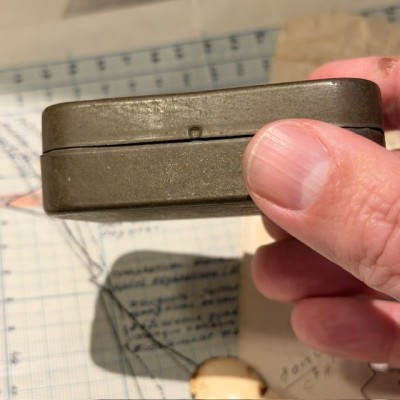
Dimensions: 7.5x4x2.5cm
EMPTY
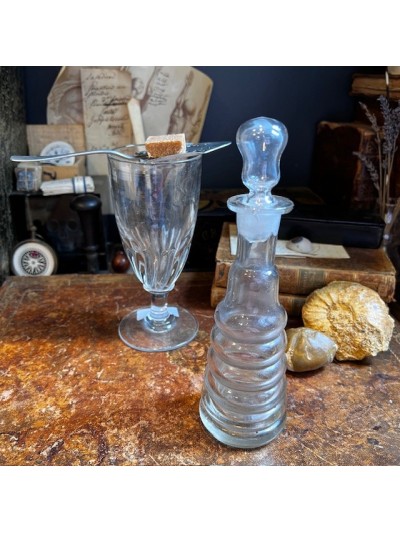
An antique absinthe topette (decanter)
6 Beaded Topette
Residue in the bottom of the carafe
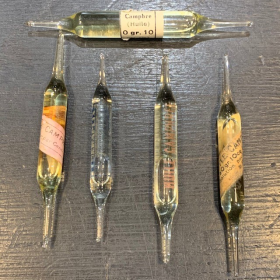
Bulb for hypodermic injection - Camphor (circa 1920)
various manufacturers
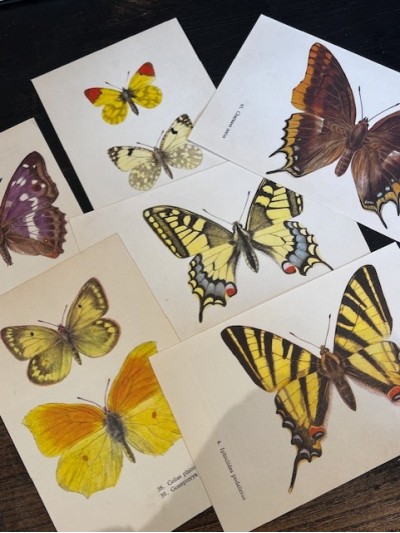
Butterfly - Natural History color plate
Entomology
You buy 1 plate, not the whole set

Tétra-chlorure de Carbone - Carbon Tetrachloride
Antique pharmacy bottle with old label POULENC FRERES circa 1928
It comes from an old cellar-laboratory in a Parisian pharmacy. The bottles had not moved since the late 1950s on the shelves. The cellar had served as a laboratory for medical analyses and a laboratory for magistral preparations of the pharmacy from 1900 until around 1950.
EMPTY
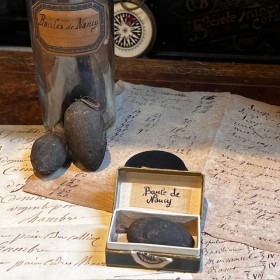
Boule de Nancy - Genuine Mars Vulnerary Ball - Steel Ball
This iron-containing ball was once considered a miracle cure for many ailments and injuries.
The Boule de Nancy is sold individually in a small antique drugstore box
Unavailable today
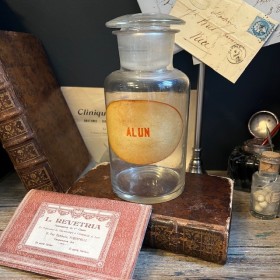
Alum
Antique pharmacy bottle
Apothecary vial
Color pigments have been added to the inside of the jar
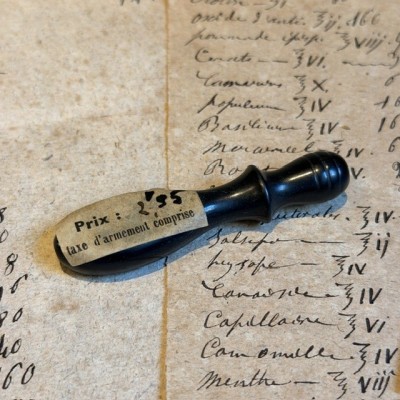
Ebonite cannula tip
Tips for enema or medical irrigation cannulas. New Old Stock
Marketed between May 1939 and sometime in 1940
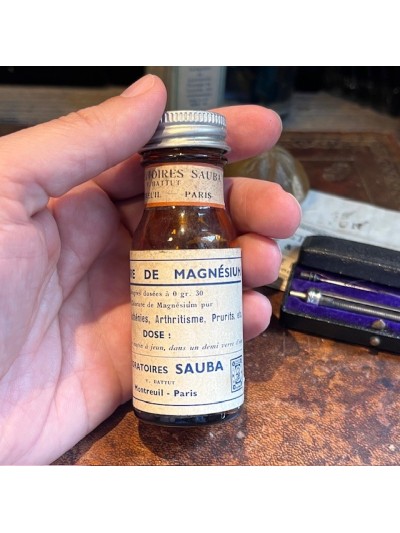
Chlorure de magnésium
Antique pharmacy bottle
Apothecary vial
EMPTY
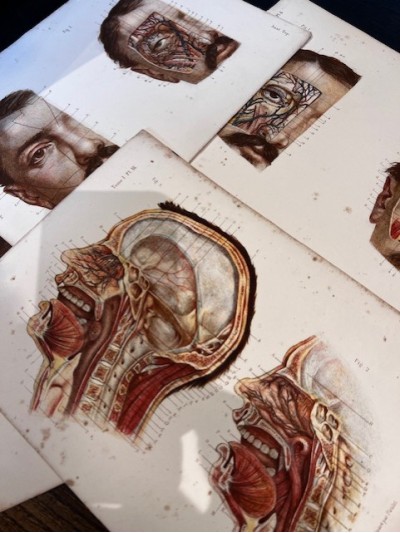
Anatomical chart by Paulet and Sarazin
From the Traité d'anatomie topographique (Treatise on topographical anatomy)
Published in 1867-1870
Chromolithography
You buy 1 plate, not the whole set
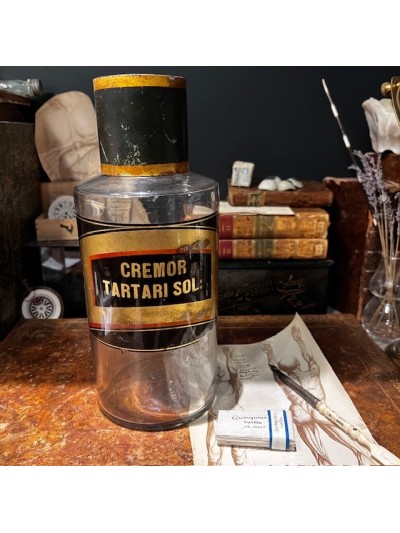
Cremor tartari sol - Cream of tartar
Potassium bitartrate
Pharmacy jar - Herbalism - Apothecary bottle
Late 19th century
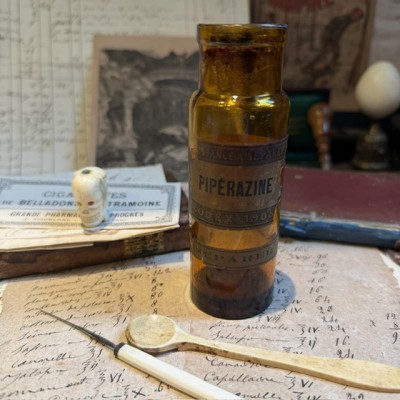
Piperazine
Antique amber glass bottle. The cap is missing
Green label: SUBSTANCE TO BE STORED SEPARATELY – CODEX 1908
Indicating to the pharmacist that it must be stored separately from other substances in the cabinet for toxic substances, the famous ‘poison cabinet’.
It comes from the former cellar-laboratory of a Parisian pharmacy. The bottles had not been moved from the shelves since the late 1950s. The cellar had served as a medical analysis laboratory and a laboratory for the pharmacy’s compounded preparations from 1900 until around 1950.
EMPTY
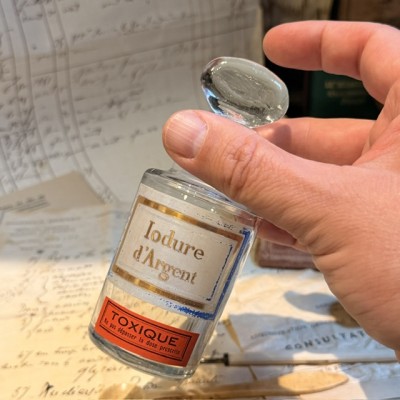
Silver iodide
Antique pharmacy bottle made of blown glass and enameled painted label with golden blue threads
Red TOXIC label
Signaling to the pharmacist that it is imperative to keep apart the other substances in the cabinet of toxic substances, the famous poison cabinet.
Dating: 19th century
EMPTY
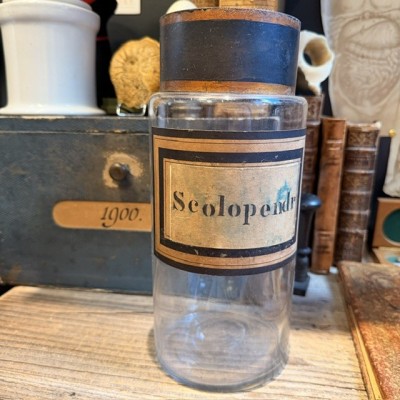
Scolopendre
Pharmacy jar - Herbalism - Apothecary Mouth-blown glass bottle
Late 19th century - Beginning of the 20th
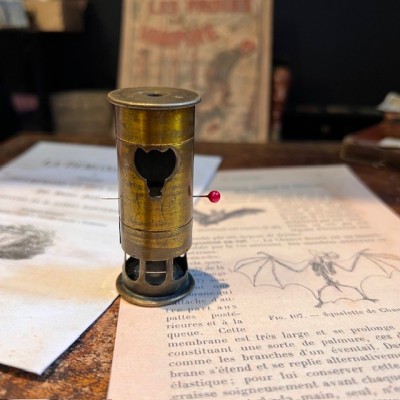
Pocket microscope
Floroscope - Insectoscope in brass
1850's - 1930's
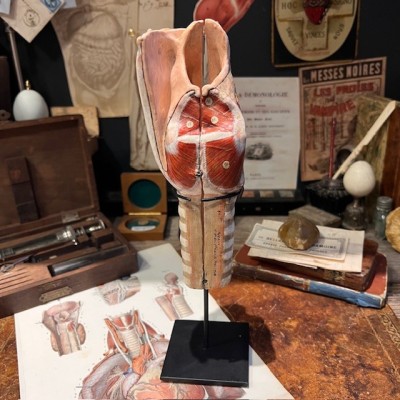
Antique anatomical model of the larynx and trachea made of painted papier-mâché.
Produced by Établissements Auzoux and manually dated 1938.
Model can be dismantled lengthwise, numbered, used for medical teaching.
Please note: one removable side piece is missing. The model remains stable and highly decorative. Authentic piece.
Handwritten inscription from the period: Larynx - Auzoux à St-Aubin-d’Écrosville Eure 1938
Placed in a metal base, it can be easily removed to hold it in your hand.
Metal box of breath mints with cocaine
Box of Dr BENGUE Dragees
1920's
It is recommended to suck 8 to 10 lozenges per day, allowing them to melt in the mouth...
EMPTY