
- New
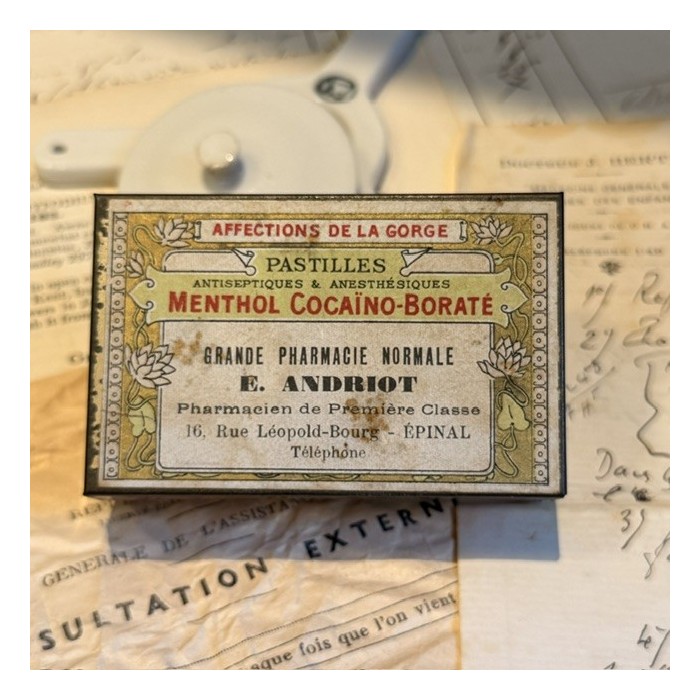
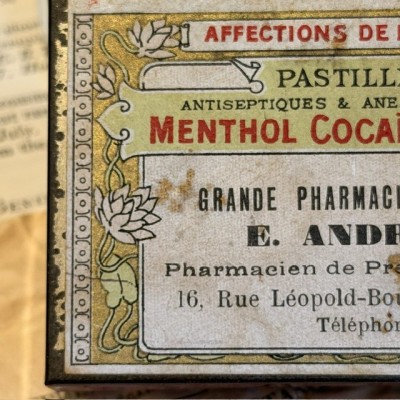
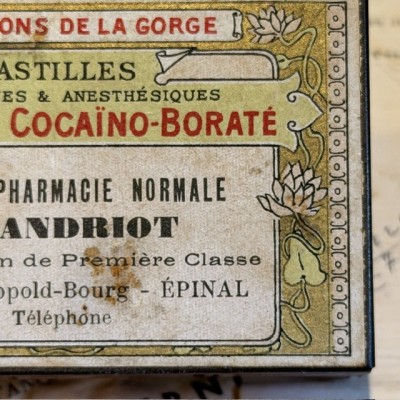
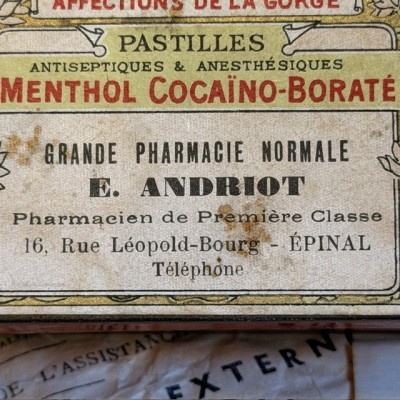
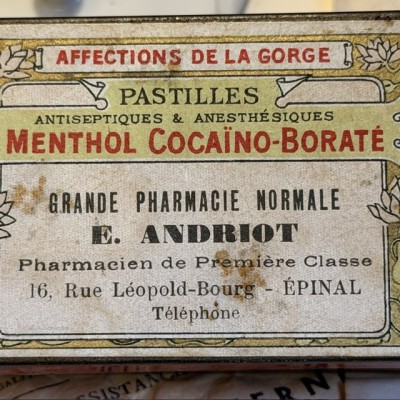
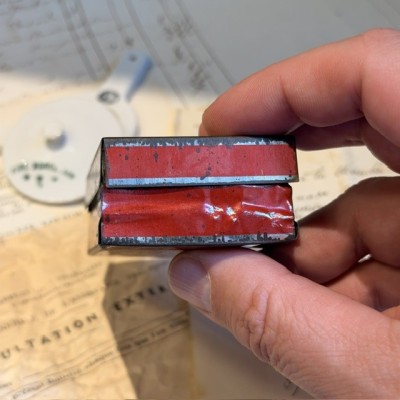
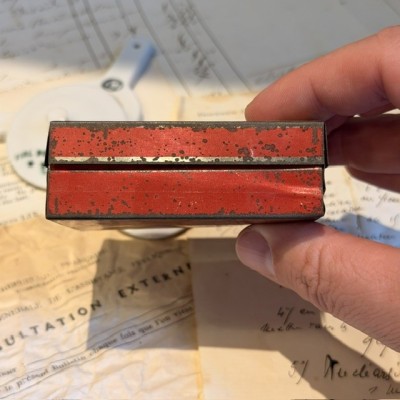
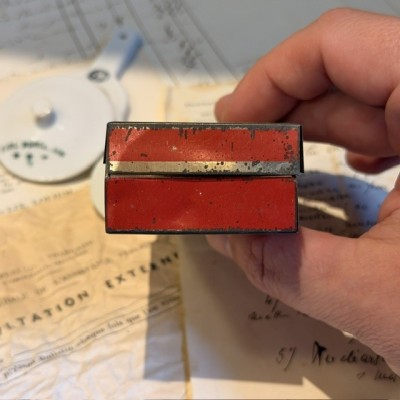
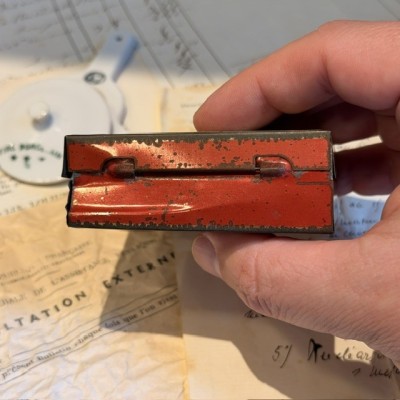
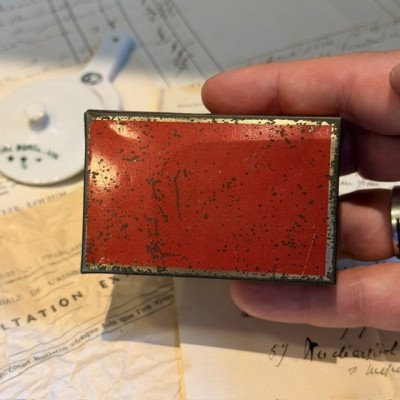
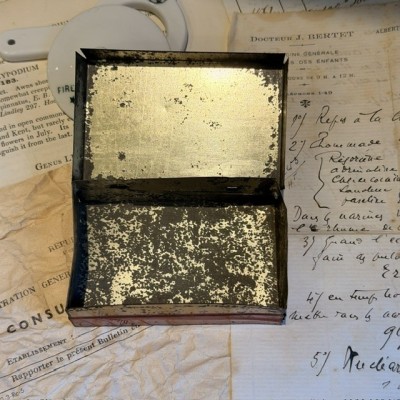
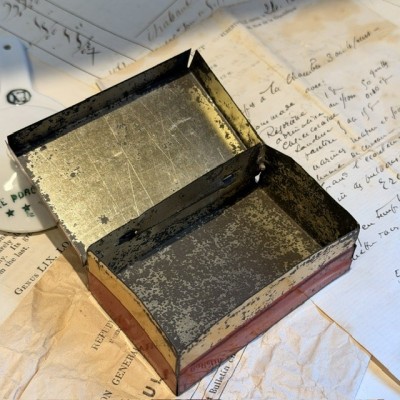
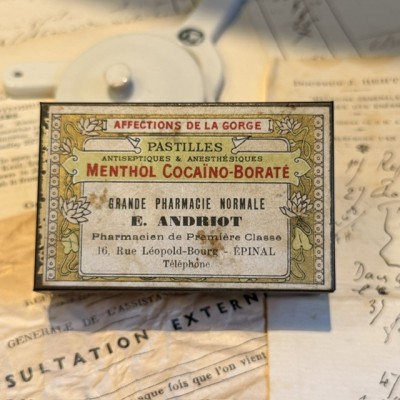
Box of cocaine lozenges
Menthol - Cocaïno - Boraté by the Pharmacist Holler in Maubeuge
Magnificent lid typical of Art Nouveau: 1900-1910
EMPTY
Box of cocaine lozenges
Menthol - Cocaïno - Borate
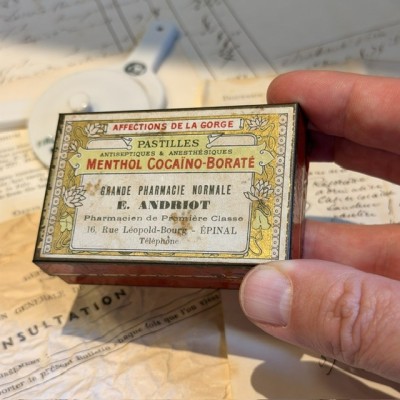
Antique pharmacy box made of lithographed sheet metal.
This box comes from Dr. ANDRIOT’s pharmacy at 16, rue Léopold-Bourg in Epinal.
Its lid features a typical Art Nouveau graphic (period 1900-1910).
From 1900 to 1950 it was not uncommon to see cocaine as an ingredient in certain pastilles, notably for throat ailments.
Dimensions: 7.5cmx4.5cm
Condition: The sheet metal bent but the box closes, see photos
EMPTY
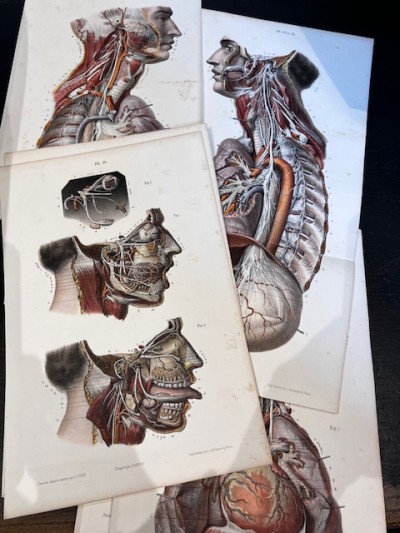
Anatomical chart by Ludovic Hirschfeld drawn by Léveillé
From Traité et iconographie du système nerveux et des organes des sens de l'homme avec leur mode de préparation
Published in 1866
Lithography
You buy 1 plate, not the whole set
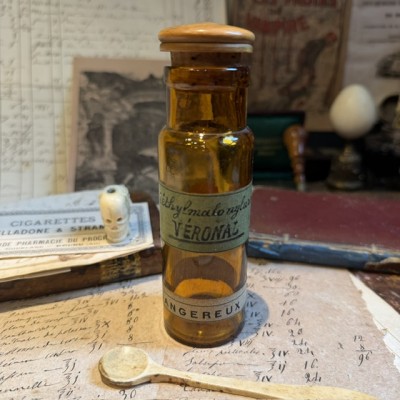
Veronal - Barbiturates - Diethylmalonylurea
Antique amber glass bottle, with a boxwood and cork stopper.
Label: DANGEROUS
Indicating to the pharmacist that it must be stored separately from other substances in the cabinet for toxic substances, the famous ‘poison cabinet’.
It comes from the former cellar-laboratory of a Parisian pharmacy. The bottles had not been moved from the shelves since the late 1950s. The cellar had served as a medical analysis laboratory and a laboratory for the pharmacy’s compounded preparations from 1900 until around 1950.
EMPTY
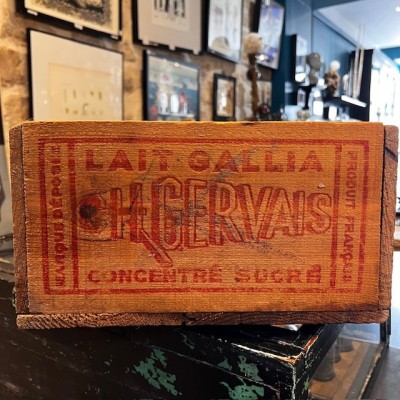
Antique wooden advertising crate for Gallia / Ch. Gervais infant milk concentrate
Found in Parisian cellars that served as laboratories and storage rooms for pharmacists preparing their masterful concoctions from 1900 to 1950.
It was used to store products, glass bottles, etc.
Period: Circa 1947–1955
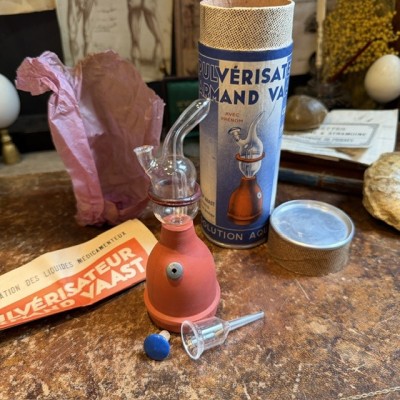
Armand Vaast nasal spray - Oil vaporizer - Antique remedy
In its box
Used in otolaryngology, it was intended for nasal or oral sprays in the treatment of colds and antiseptic treatment of the respiratory tract.
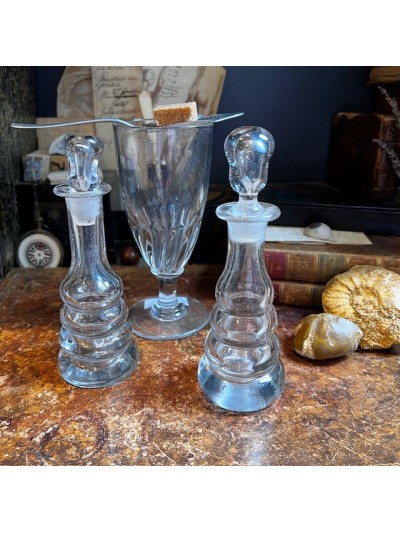
An antique absinthe topette (decanter)
4 Beaded Topette

Chloroform
Pharmacy jar - Herbalism - Apothecary bottle
Late 19th century - Beginning of the 20th
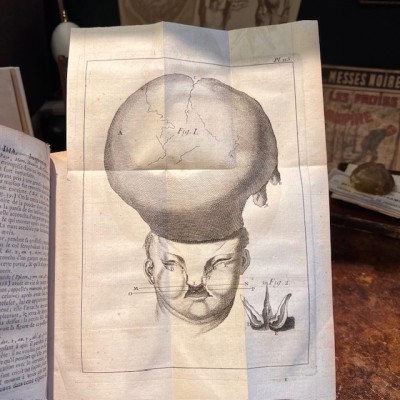
Bibliothèque Choisie de Médecine - Volume 16
Selected Library of Medicine
By François PLANQUE - 1761
Complete original edition with 10 fold-out plates
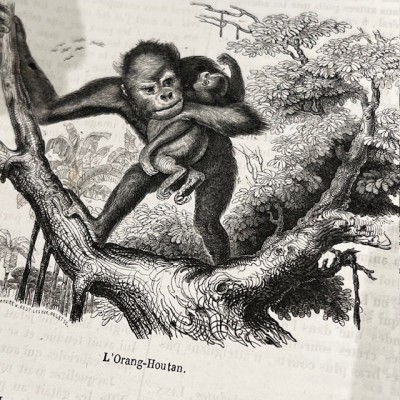
Le Jardin des Plantes
Description and habits of the mammals in the menagerie and the Natural History Museum
By Boitard - Antique book circa 1851
A beautiful snapshot of the museum and its garden in the mid-19th century, featuring interiors of the museum that no longer exist today.
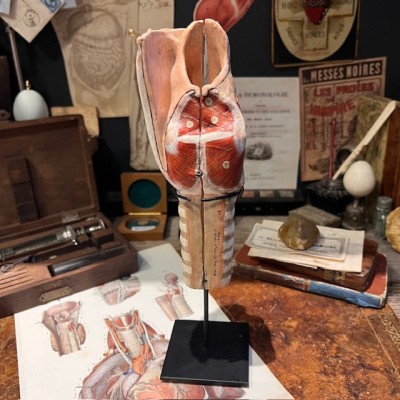
Antique anatomical model of the larynx and trachea made of painted papier-mâché.
Produced by Établissements Auzoux and manually dated 1938.
Model can be dismantled lengthwise, numbered, used for medical teaching.
Please note: one removable side piece is missing. The model remains stable and highly decorative. Authentic piece.
Handwritten inscription from the period: Larynx - Auzoux à St-Aubin-d’Écrosville Eure 1938
Placed in a metal base, it can be easily removed to hold it in your hand.
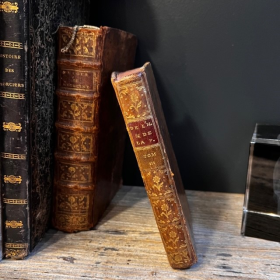
De l'Homme et de la Femme (Of Man and Woman)
By M. de Lignac - Volume 3
Anatomy of procreation - 1779
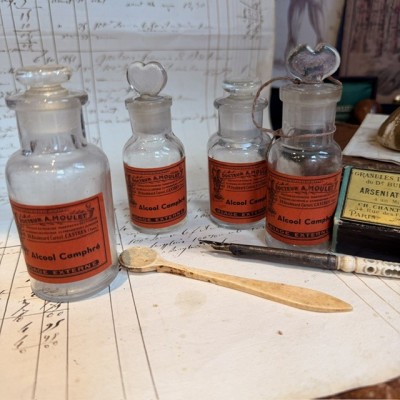
Alcool camphrée
Antique pharmacy bottle
EMPTY
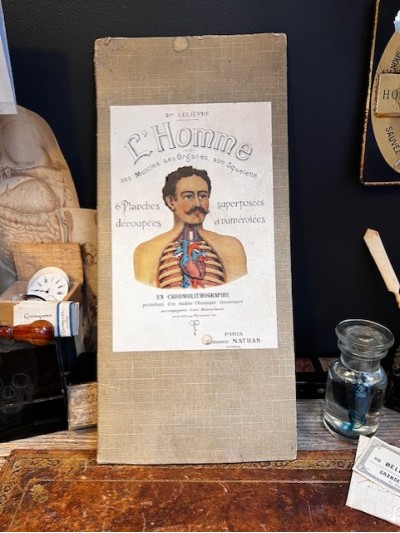
Man - Anatomical chart that can be disassembled
By Fernand Nathan Editeur publisher
Coloured chart with movable, cut-out and superimposed leaves
There are defects on the superimposed boards; the outer board, which was the man's torso, is missing, as are the lungs, which were above the heart. The left hand is missing, the arm being torn.
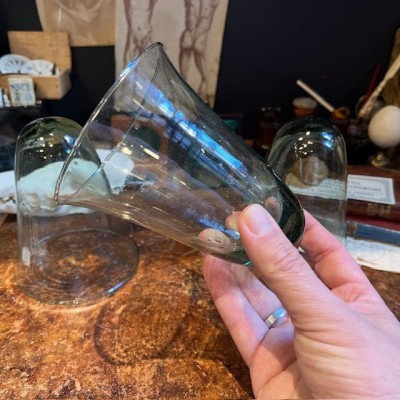
Antique glass bell jar
Apothecary / Laboratory
Thin glass, light green in color and darker at the top, with bubbles
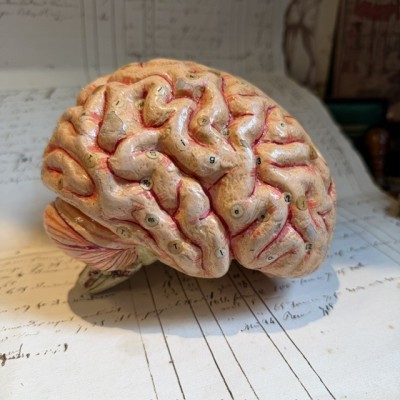
Painted papier-mâché anatomical model of the brain
Produced by Établissements Auzoux
Model No. 12 from the 1874 catalogue
Dismantlable, numbered model, used for medical teaching.
A rare item in excellent working condition
This is a 1:1 scale model of the brain, sold separately at the time as a demonstration model; it is not a brain that was found inside anatomical manikins.
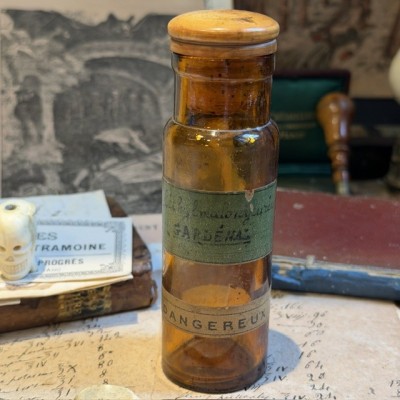
Gardénal - Phenobarbital - Barbiturates
Phényléthylmalonylurée
Antique amber glass bottle, with a boxwood and cork stopper.
Label: DANGEROUS
Indicating to the pharmacist that it must be stored separately from other substances in the cabinet for toxic substances, the famous ‘poison cabinet’.
It comes from the former cellar-laboratory of a Parisian pharmacy. The bottles had not been moved from the shelves since the late 1950s. The cellar had served as a medical analysis laboratory and a laboratory for the pharmacy’s compounded preparations from 1900 until around 1950.
EMPTY
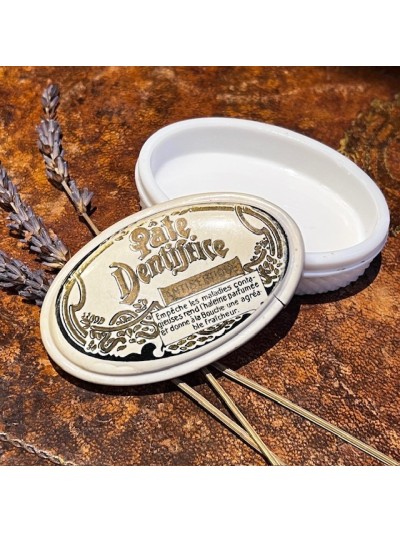
Toothpaste - Antique apothecary
Porcelain pot with illustrated plastic lid
Antiseptic
Early 20th century - Caution the lid is cracked
Box of cocaine lozenges
Menthol - Cocaïno - Boraté by the Pharmacist Holler in Maubeuge
Magnificent lid typical of Art Nouveau: 1900-1910
EMPTY