

- New
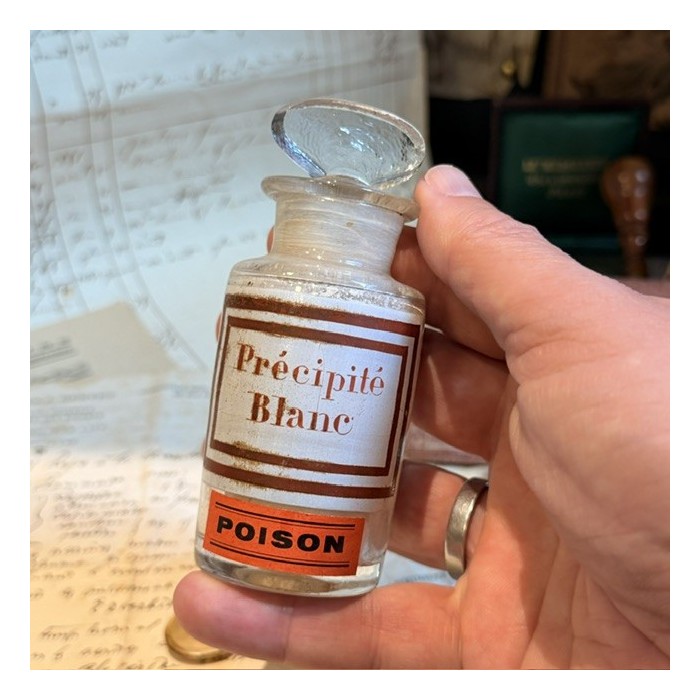
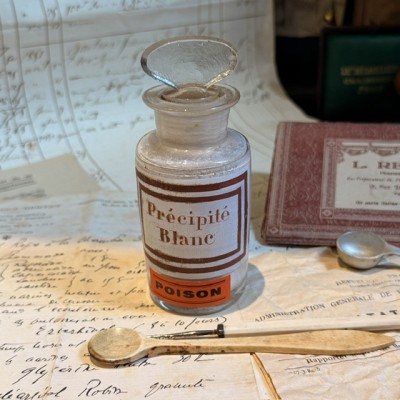
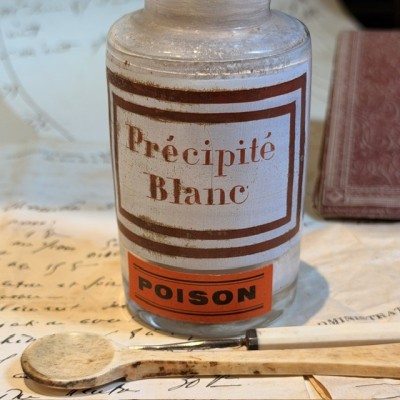
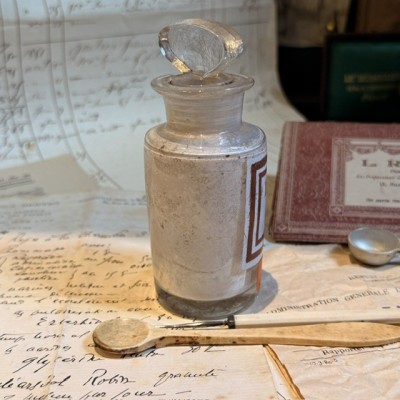
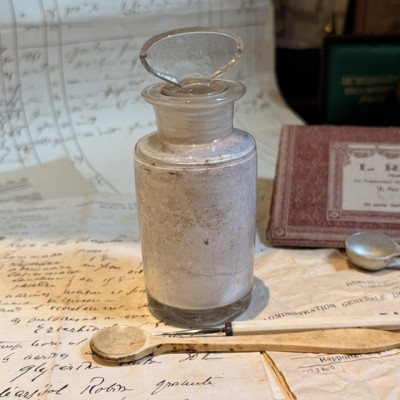
White Precipitate - Mercury
Antique pharmacy bottle made of blown glass and enameled painted label.
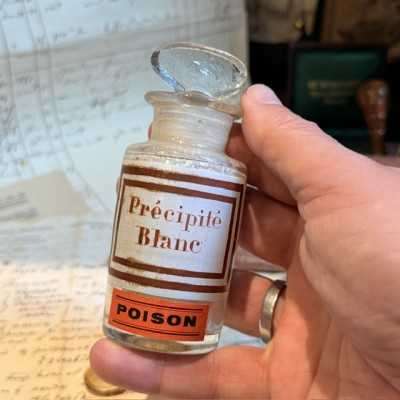
Red POISON label
Signaling to the pharmacist that it is imperative to keep apart the other substances in the cabinet of toxic substances, the famous poison cabinet.
Dating: 19th century
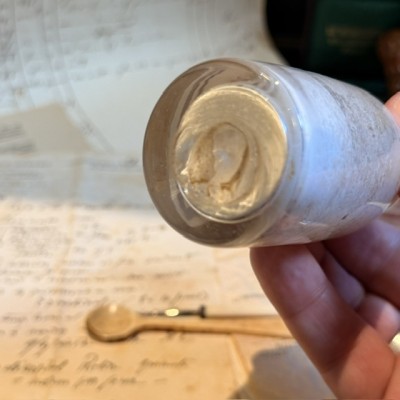
There is still some product inside but the cap is blocked and does not open.
White Precipitate - Mercury
Antique pharmacy bottle made of blown glass and enameled painted label.
Red POISON label
Signaling to the pharmacist that it is imperative to keep apart the other substances in the cabinet of toxic substances, the famous poison cabinet.
Laboratory or pharmaceutical dispensary bottle, typical of the late nineteenth or early twentieth century.
Made of blown transparent glass, it has a trace of pontil visible on the bottom, reflecting traditional artisanal manufacturing. It has its original cap honed with emery BUT the bottle is blocked and does not open, sealed by time.
Beautiful enamelled label stenciled surrounded by a brown/red border. This baked enamel technique guaranteed great resistance to handling and chemicals in the pharmacy. A red regulatory label marked "POISON" is applied at the bottom, indicating the poisonous nature of the substance.
Made from mercury and ammonia, White Precipitate (amido-mercuric chloride) was one of the leading remedies in 19th-century dermatology.
Used as an ointment against ringworm, scabies, or syphilitic chancres, it was also sought after, at one's own risk and peril, for its skin-lightening properties.
Highly toxic, this mercurial salt caused, in the event of overdose or accidental ingestion, irreversible kidney destruction and the usual ravages of mercury: uncontrollable salivation, ulcero-necrotic gingivitis, tooth loss, tremors, and severe neurological disorders.
It is an extremely toxic mercury salt. Even when applied to the skin, repeated use caused mercury to cross the epidermal barrier. When taken orally, it is a violently corrosive poison for the entire digestive system.
Height of the bottle: 11cm with blown glass cap - Diameter at the base: 4cm
Dating: 19th century
There is still some product inside but the cap is blocked and does not open.
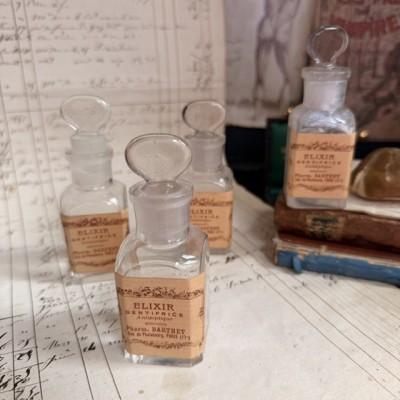
Toothpaste elixir
Antique pharmacy bottle
EMPTY
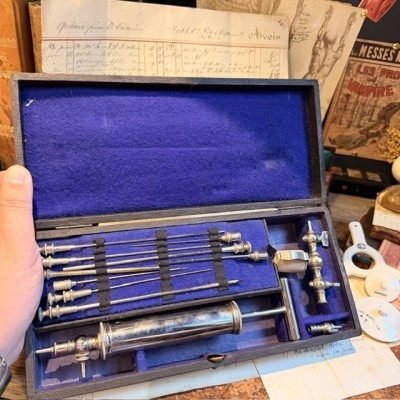
Dr. Potain’s aspirator set in its felt-lined box
Late 19th century, circa 1880
Antique medical instrument maker without manufacturer marking
non-functional

Bibliothèque Choisie de Médecine - Volume 8
Selected Library of Medicine
By François PLANQUE - 1750
Complete original edition with 10 fold-out plates
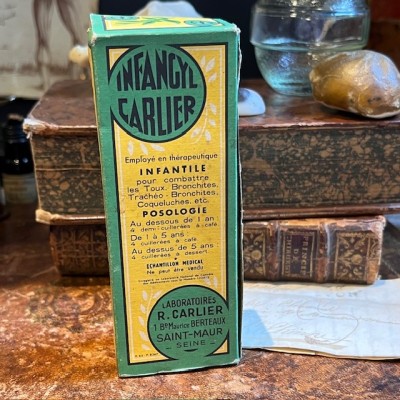
Infangyl Carlier
Antique pharmacy bottle - Apothecary
The box still contains its full, sealed bottle and instructions

Lower part of the lower mandible of a horse jaw
Antique model from Maison Auzoux in Paris
Paper-mâché pedagogical model
Model A - 9 months
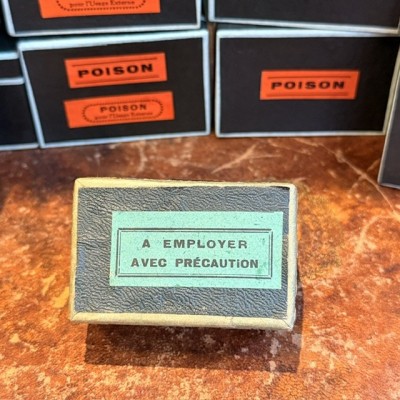
Antique labels in a pharmacy box for cures made of canvas cardboard
To be used with care label
The pharmacist used his boxes of medicine to put away the labels he would then put on the bottles that he would resell to his customers.
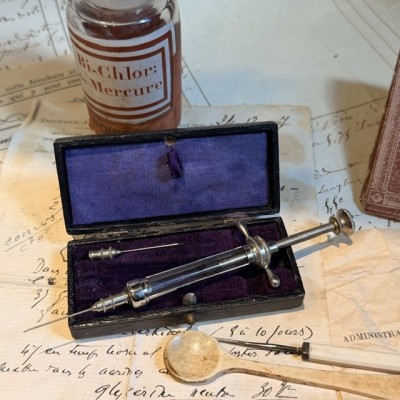
Antique hypodermic Pravaz syringe with ear cups - 19th century
Syringe in it's case
The small difference is that here it is the model with earbuds for a better grip during injection.
not functional
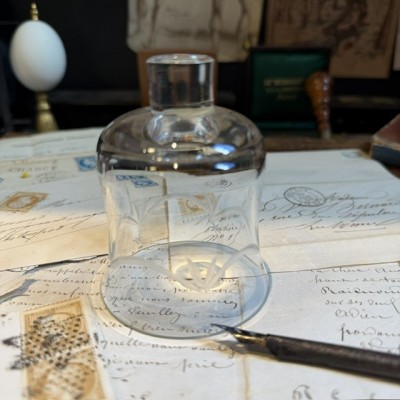
Small antique engraved glass bell
I believe these are antique glass pieces that were originally intended to be placed on a stand.
Repurpose them as small bells to showcase your small objects, such as a small skull, as shown here.
Sold individually
EMPTY
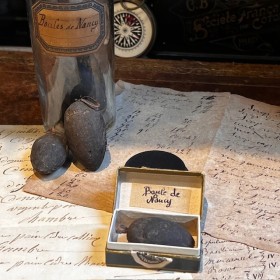
Boule de Nancy - Genuine Mars Vulnerary Ball - Steel Ball
This iron-containing ball was once considered a miracle cure for many ailments and injuries.
The Boule de Nancy is sold individually in a small antique drugstore box
Unavailable today
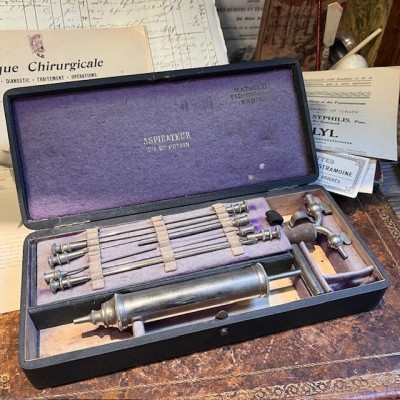
Dr Potain vacuum cleaner in its case
Late 19th century - 1885-1894
Antique medical instrument from manufacturer MATHIEU in Paris
non-functional
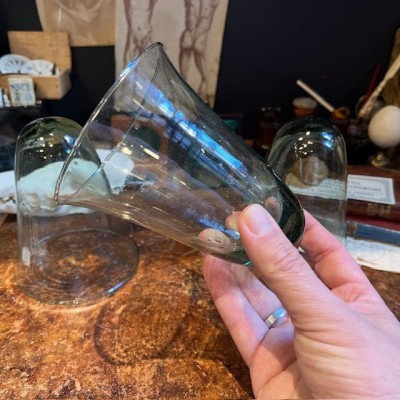
Antique glass bell jar
Apothecary / Laboratory
Thin glass, light green in color and darker at the top, with bubbles

Mercury Proto-Iodide - Syphilis Treatment
Antique pharmacy bottle.
Red ‘POISON’ label
Indicating to the pharmacist that it must be stored separately from other substances in the cabinet for toxic substances, the famous "poison cabinet".
It comes from the former cellar-laboratory of a Parisian pharmacy. The bottles had not been moved from the shelves since the late 1950s. The cellar had served as a medical analysis laboratory and a laboratory for the pharmacy’s compounded preparations from 1900 until around 1950.
Period: Late 19th century - Very early 20th century (circa 1890–1910)
EMPTY
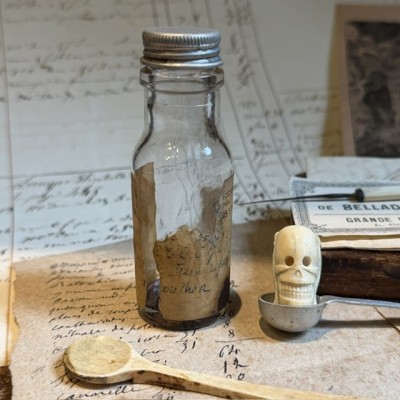
A avaler aux repas To be taken with meals (as far as can be made out from the torn label)
Antique pharmacy bottle
Torn label
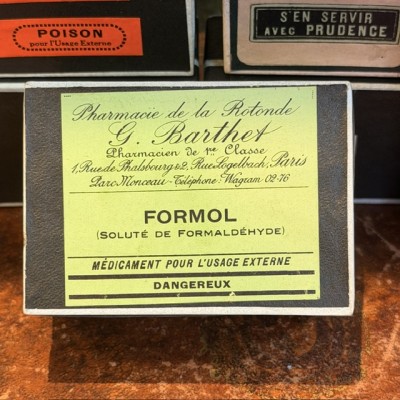
Antique labels in a pharmacy box for cures made of canvas cardboard
Formalin label
The pharmacist used his boxes of medicine to put away the labels he would then put on the bottles that he would resell to his customers.
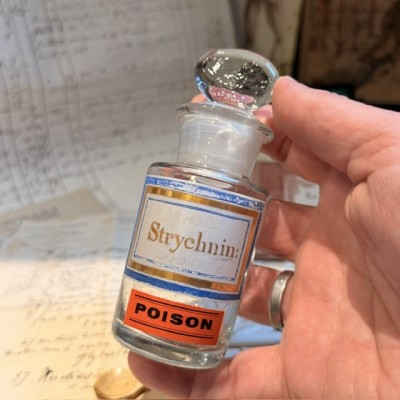
Strychnine
Antique pharmacy bottle made of blown glass and enameled painted label with golden blue threads
Red POISON label
Signaling to the pharmacist that it is imperative to keep apart the other substances in the cabinet of toxic substances, the famous poison cabinet.
Dating: 19th century
EMPTY
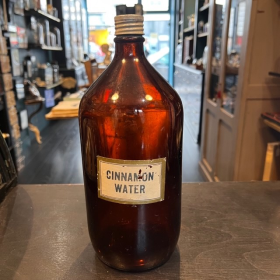
Cinnamon Water
Antique and large brown English pharmacy bottle
White Precipitate - Mercury
Antique pharmacy bottle made of blown glass and enameled painted label.
Red POISON label
Signaling to the pharmacist that it is imperative to keep apart the other substances in the cabinet of toxic substances, the famous poison cabinet.
Dating: 19th century
There is still some product inside but the cap is blocked and does not open.