
- New
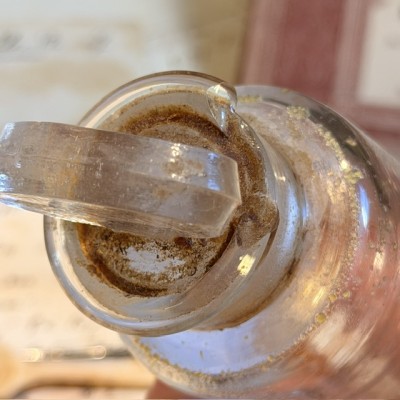
Chloral hydrate
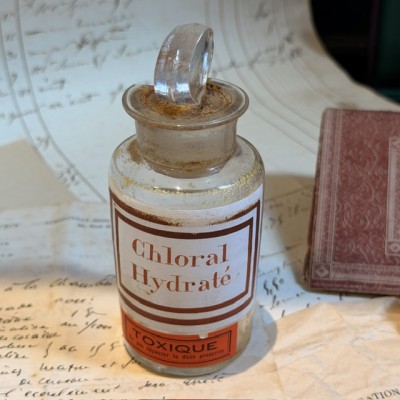
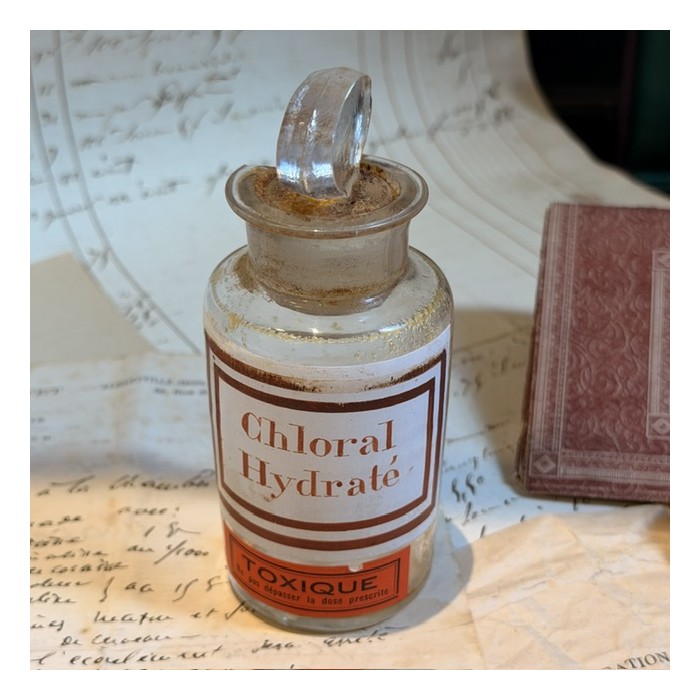
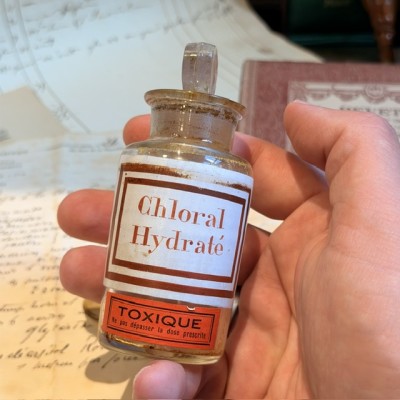
Antique pharmacy bottle made of blown glass and enameled painted label
Red TOXIC label
Signaling to the pharmacist that it is imperative to keep apart the other substances in the cabinet of toxic substances, the famous poison cabinet.
Dating: 19th century
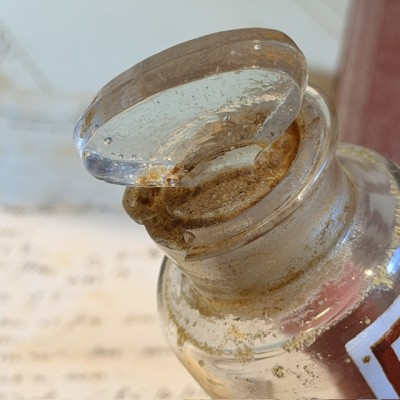
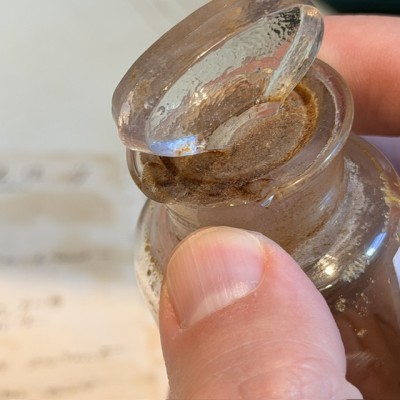
EMPTY - The glass collar has a significant vintage sheen on the stopper, and its original ground-glass cap is blocked and sealed with time.
Chloral hydrate
Antique pharmacy bottle made of blown glass and enameled painted label with golden blue threads
Red TOXIC label
Signaling to the pharmacist that it is imperative to keep apart the other substances in the cabinet of toxic substances, the famous poison cabinet.
Laboratory or pharmaceutical dispensary bottle, typical of the late nineteenth or early twentieth century.
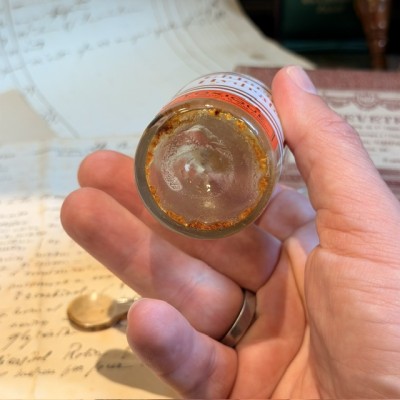
Made of blown transparent glass, it has a trace of pontil visible on the bottom, reflecting traditional artisanal manufacturing. The glass collar has a significant vintage sheen on the stopper, and its original ground-glass cap is blocked and sealed with time.
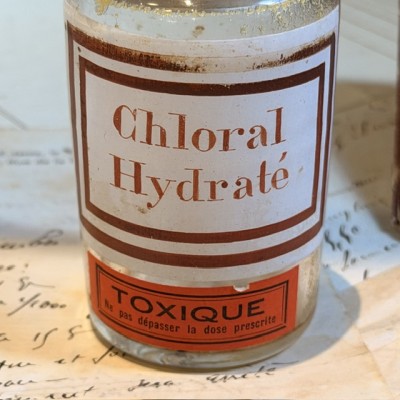
Beautiful enamelled label stenciled surrounded by a brown/red border. This baked enamel technique guaranteed great resistance to handling and chemicals in the pharmacy. A red regulatory label marked "TOXIQUE" is applied at the bottom, indicating the poisonous nature of the substance.
Introduced in the 19th century, chloral hydrate was the very first sedative and hypnotic of pharmacopoeia synthesis.
Used in medicine to overcome severe insomnia, calm psychiatric agitation and the famous delirium tremens or control seizures, this product required an extremely precise dosage.
Indeed, in high doses, it caused respiratory and cardiac depression leading to death, while repeated use led to devastating dependence: chloralism.
Easily concealable and tasteless, it also became famous for its criminal embezzlement under the name of "Mickey Finn", poured without the knowledge of the victims in their glass to put them to sleep quickly and rob them. The use of Mickey Finn appears in a number of novels and films from the 1930s, notably with Agatha Christie in her novel: "Les Pendules".
Height of the bottle: 12cm with blown glass cap - Diameter at the base: 4cm
Attention please: The glass collar has a significant vintage sheen on the stopper, and its original ground-glass cap is blocked and sealed with time.
Dating: 19th century
EMPTY
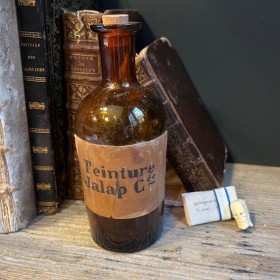
Tincture of Jalap Compound also known as German brandy
A purgative powder is extracted from the Jalap plant.
Antique pharmacy bottle
Apothecary vial
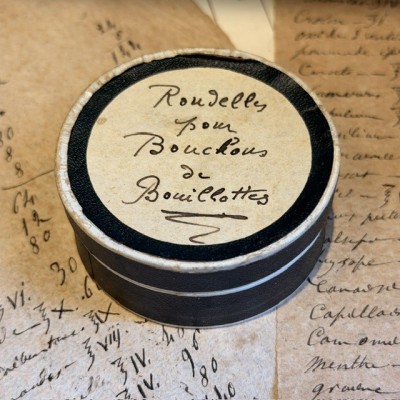
Box of rubber washers for hot water bottles
In its original cardboard box
1939/1940
New Old Stock
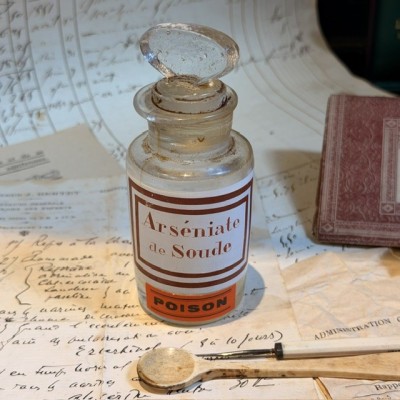
Arsenic - Sodium arsenate
Antique pharmacy bottle made of blown glass and enameled painted label. Yes, it is indeed the arsenic you know!
Red POISON label
Signaling to the pharmacist that it is imperative to keep apart the other substances in the cabinet of toxic substances, the famous poison cabinet.
Dating: 19th century
EMPTY but the cap is blocked and does not open.
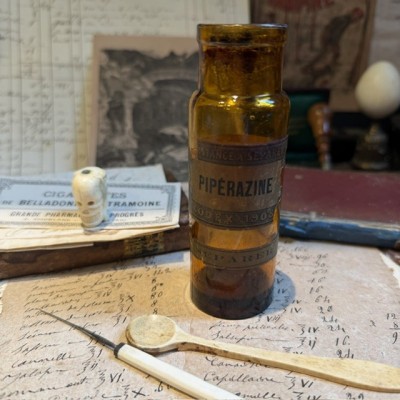
Piperazine
Antique amber glass bottle. The cap is missing
Green label: SUBSTANCE TO BE STORED SEPARATELY – CODEX 1908
Indicating to the pharmacist that it must be stored separately from other substances in the cabinet for toxic substances, the famous ‘poison cabinet’.
It comes from the former cellar-laboratory of a Parisian pharmacy. The bottles had not been moved from the shelves since the late 1950s. The cellar had served as a medical analysis laboratory and a laboratory for the pharmacy’s compounded preparations from 1900 until around 1950.
EMPTY
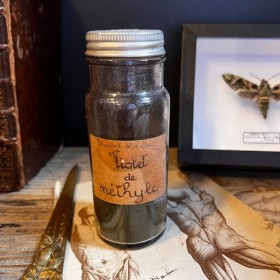
Violet de Méthyle
Antique pharmacy bottle - Droguerie - Apothicaire
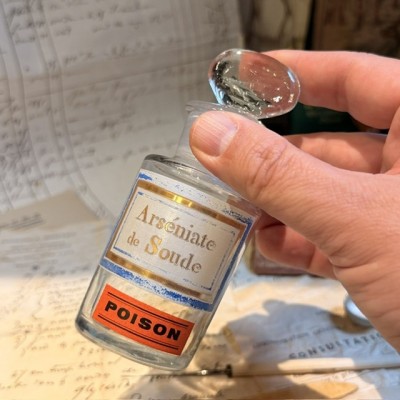
Arsenic - Sodium arsenate
Antique pharmacy bottle made of blown glass and enameled painted label with golden blue threads
Red POISON label
Signaling to the pharmacist that it is imperative to keep apart the other substances in the cabinet of toxic substances, the famous poison cabinet.
Dating: 19th century
EMPTY
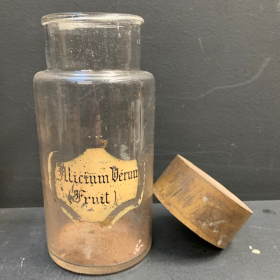
Antique pharmacy jar: Illicium verum (Fruit) / Star anise
Glass pharmacy bottle - XIXth century
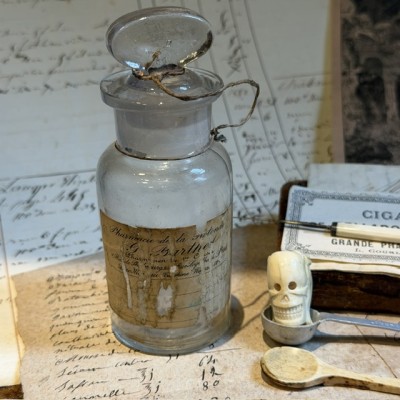
Berthet - Pharmacie de la Rotonde
Antique pharmacy bottle
EMPTY
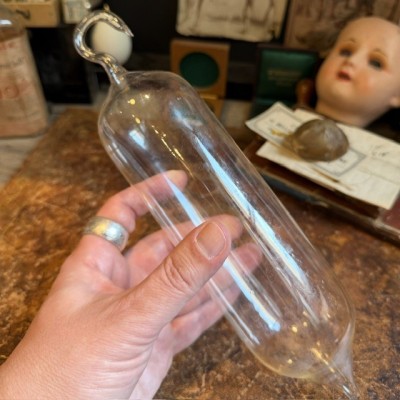
Antique sodium chloride infusion bulb
500cm3
in its original box - Still full
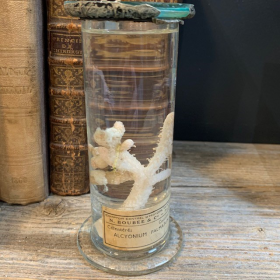
Museum jar - Wet specimen
Soft coral Alcyonium palmatum
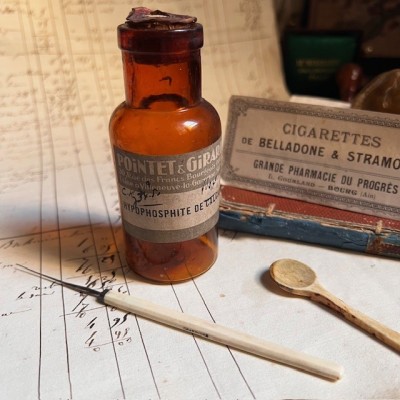
Hypophosphite de Calcium
Antique pharmacy bottle
EMPTY
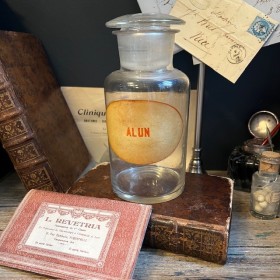
Alum
Antique pharmacy bottle
Apothecary vial
Color pigments have been added to the inside of the jar
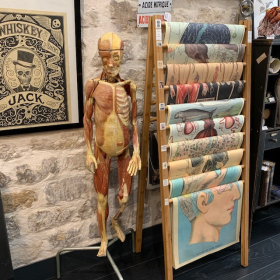
Clastic Mannequin - Dr. Auzoux's anatomical skinned
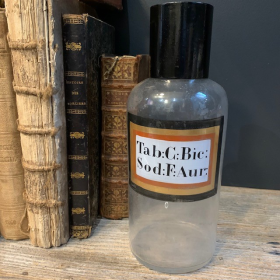
Antique pharmacy jar: Sodium bicarbonate and Gold Flower tablets
Glass pharmacy bottle - XIXth century
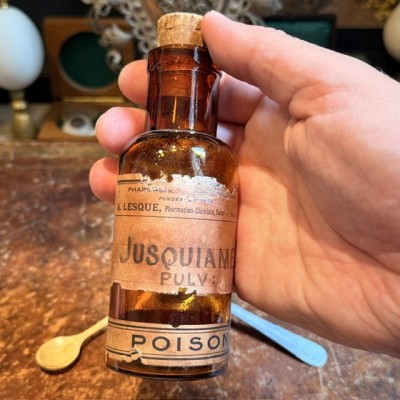
Jusquiame - Henbane
Antique pharmacy bottle.
Red ‘POISON’ label
Indicating to the pharmacist that it must be stored separately from other substances in the cabinet for toxic substances, the famous ‘poison cabinet’.
It comes from the former cellar-laboratory of a Parisian pharmacy. The bottles had not been moved from the shelves since the late 1950s. The cellar had served as a medical analysis laboratory and a laboratory for the pharmacy’s compounded preparations from 1900 until around 1950.
Date: Begining of 20th century
EMPTY
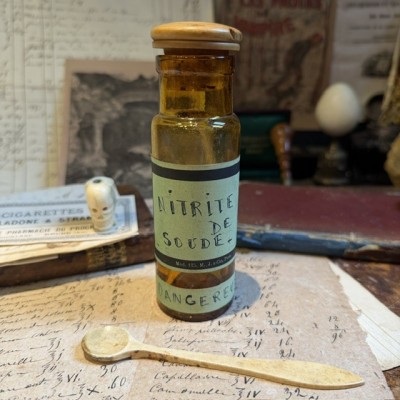
Sodium Nitrite
Antique amber glass bottle, with a boxwood and cork stopper.
Label: DANGEROUS
Indicating to the pharmacist that it must be stored separately from other substances in the cabinet for toxic substances, the famous ‘poison cabinet’.
It comes from the former cellar-laboratory of a Parisian pharmacy. The bottles had not been moved from the shelves since the late 1950s. The cellar had served as a medical analysis laboratory and a laboratory for the pharmacy’s compounded preparations from 1900 until around 1950.
EMPTY
Chloral hydrate
Antique pharmacy bottle made of blown glass and enameled painted label
Red TOXIC label
Signaling to the pharmacist that it is imperative to keep apart the other substances in the cabinet of toxic substances, the famous poison cabinet.
Dating: 19th century
EMPTY - The glass collar has a significant vintage sheen on the stopper, and its original ground-glass cap is blocked and sealed with time.