
- New
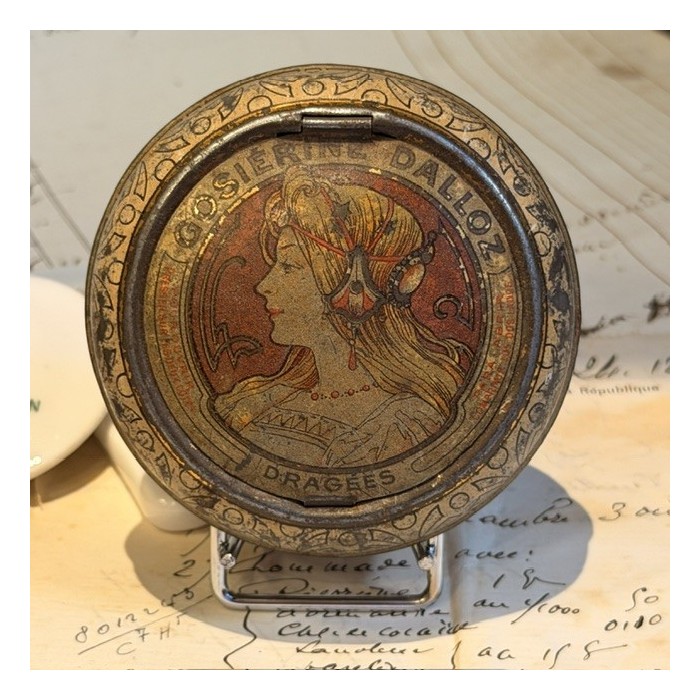
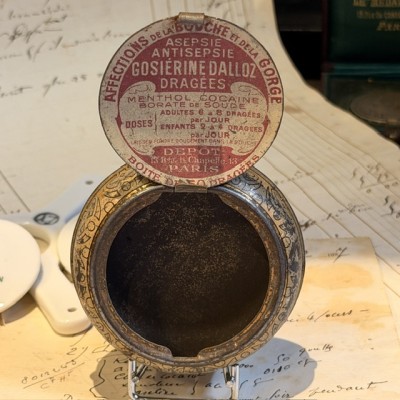
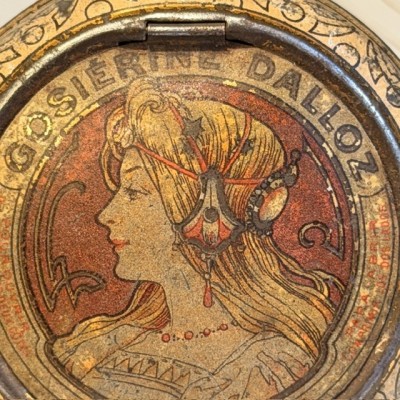
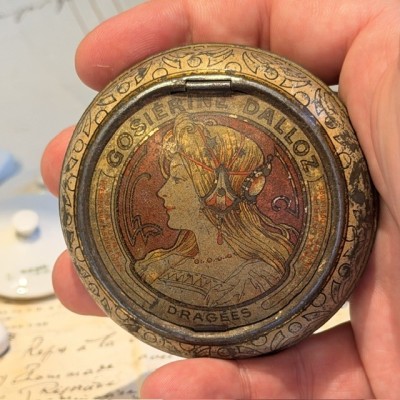
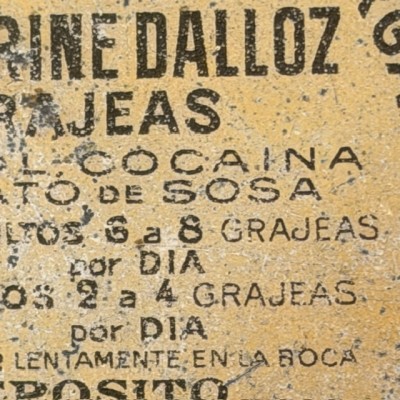
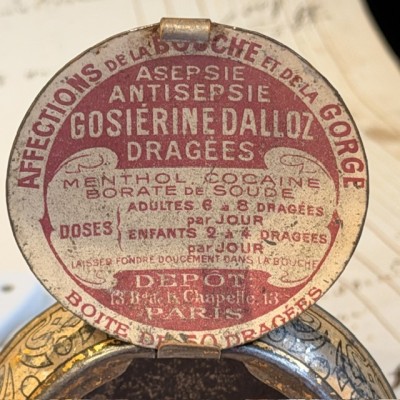
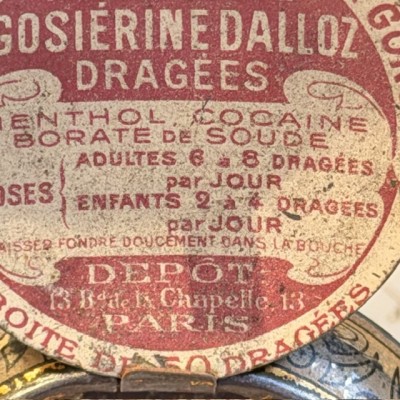
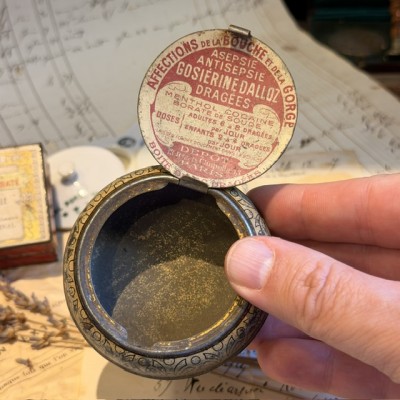
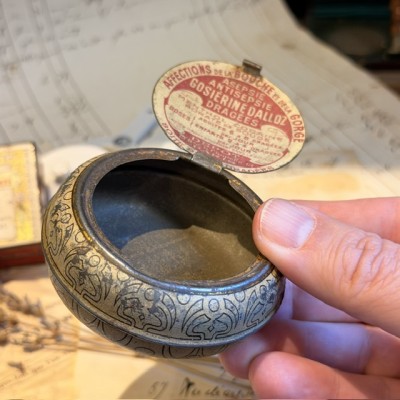
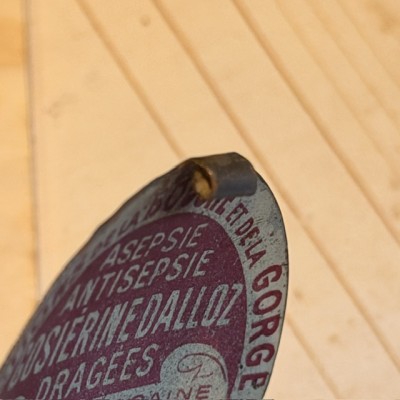
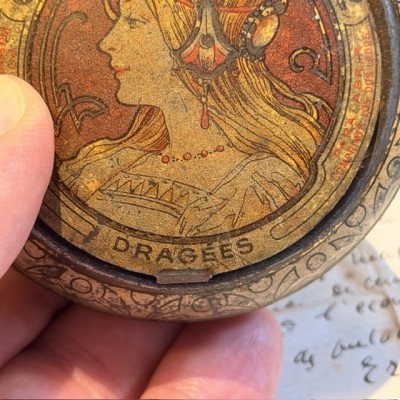
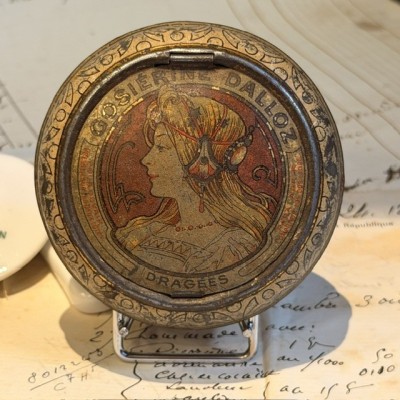
Box of Cocaine Dragees - Gosiérine DALLOZ - Art Nouveau
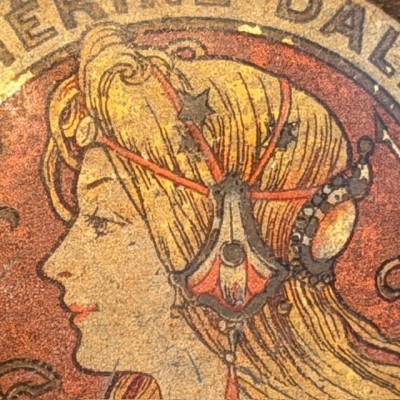
From the 1910-1920s with a typical Art Nouveau illustration inspired by Alphonse Mucha
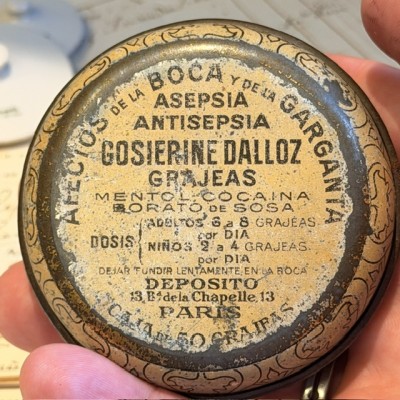
It is advisable to suck 6 to 8 dragees a day and 2 to 4 dragees for children to let melt gently in the mouth.
EMPTY
Cocaine Throat Lozenges Tin — Gosiérine DALLOZ
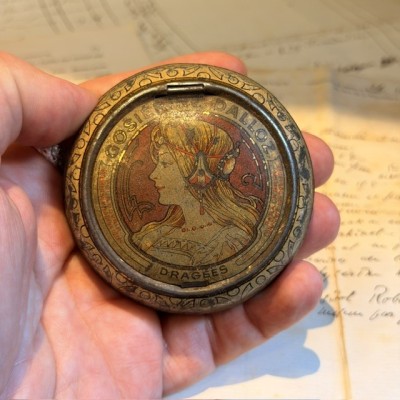
Antique lithographed tin pocket box for Gosiérine Dalloz, dating from the Art Nouveau period (circa 1900–1910).
This vintage pharmacy container originally held antiseptic throat lozenges formulated with menthol, sodium borate, and cocaine.
Designed to soothe throat ailments, Gosiérine Dalloz was distributed in France and exported to Spanish-speaking markets—hence the Spanish text printed on the bottom of the tin.
The use of cocaine as a local anesthetic in throat lozenges remained a reality in pharmacy practice throughout much of the 20th century, from the 1900s through the 1950s.
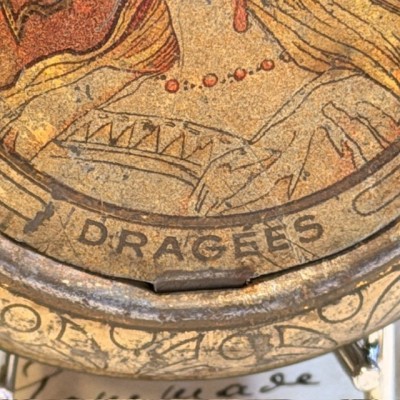
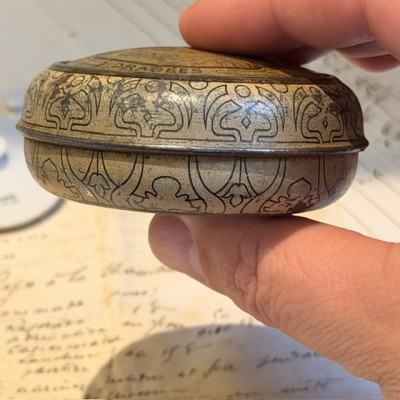
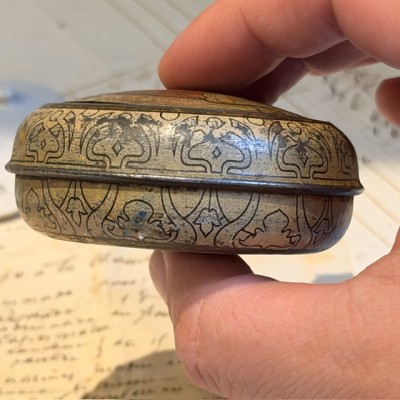
The lid features a stunning profile portrait of a woman, directly inspired by the style of Alphonse Mucha, the undisputed master of Art Nouveau. The figure embodies the ideal feminine allegory favoured in 1900s advertising. The decoration is completed by typographic compositions and embossed botanical ornamental friezes along the sides of the tin.
Historical directions for use: 6 to 8 lozenges daily for adults, and 2 to 4 for children, allowed to melt slowly in the mouth.
Antique empty tin for 50 lozenges.
Features a mechanical "push-open" mechanism (opens by applying lateral pressure to the sides of the tin). As this is a vintage mechanism, it requires pressing firmly in the right spot to release.
Diameter: 7 cm
EMPTY
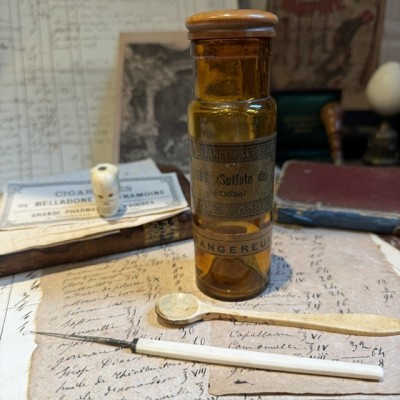
Pharmaceutical zinc sulphate
Antique amber glass bottle, with a boxwood and cork stopper.
Green label: SUBSTANCE TO BE STORED SEPARATELY – CODEX 1908
Indicating to the pharmacist that it must be stored separately from other substances in the cabinet for toxic substances, the famous ‘poison cabinet’.
It comes from the former cellar-laboratory of a Parisian pharmacy. The bottles had not been moved from the shelves since the late 1950s. The cellar had served as a medical analysis laboratory and a laboratory for the pharmacy’s compounded preparations from 1900 until around 1950.
EMPTY

Antique Guyon bladder syringe in bakelite
Beginning of XXth century
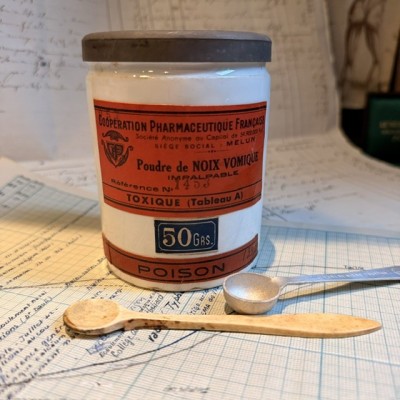
Impalpable Nux Vomica powder
White earthenware pot
Red POISON and TOXIC label
Signaling to the pharmacist that it is imperative to keep apart the other substances in the cabinet of toxic substances, the famous poison cabinet.
It comes from an old cellar-laboratory in a Parisian pharmacy. The bottles had not moved since the late 1950s on the shelves. The cellar had served as a laboratory for medical analyses and a laboratory for magistral preparations of the pharmacy from 1900 until around 1950.
EMPTY

Antique and large drum microscope
In it's mahogany wooden box
For botanist, entomologist
This is a larger model than those usually found on the market
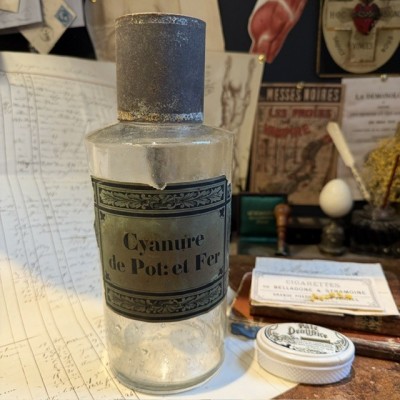
Potassium Cyanide and Iron
Also known as yellow potassium prussiate
Antique 19th-century pharmacy bottle
EMPTY
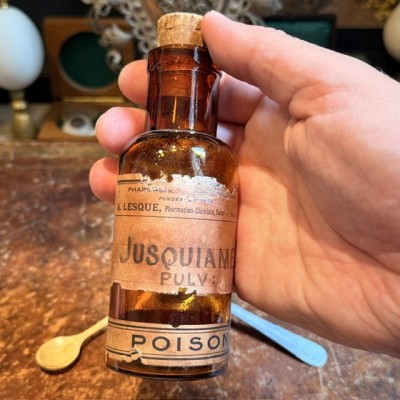
Jusquiame - Henbane
Antique pharmacy bottle.
Red ‘POISON’ label
Indicating to the pharmacist that it must be stored separately from other substances in the cabinet for toxic substances, the famous ‘poison cabinet’.
It comes from the former cellar-laboratory of a Parisian pharmacy. The bottles had not been moved from the shelves since the late 1950s. The cellar had served as a medical analysis laboratory and a laboratory for the pharmacy’s compounded preparations from 1900 until around 1950.
Date: Begining of 20th century
EMPTY
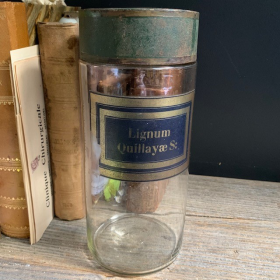
Antique pharmacy jar: Lignum Quillayae Saponaria
Panama wood - 19th century jar
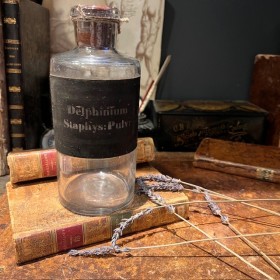
Delphinium staphisagria - Stavesacre
Pharmacy jar - Herbalism - Apothecary bottle
Late 19th century, early 20th century.
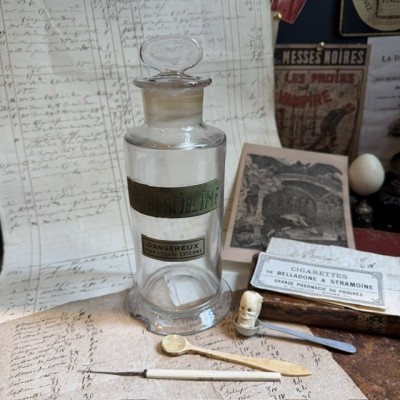
Iode Bi-Sublimé - Bi-Sublimated Iodine
Antique 19th-century blown-glass pharmacy jar
EMPTY

Lower part of the lower mandible of a horse jaw
Antique model from Maison Auzoux in Paris
Paper-mâché pedagogical model
Model A - 9 months
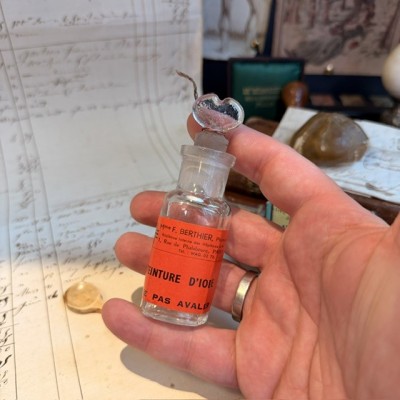
Iodine dye
Antique pharmacy bottle
With the inscription Teinture d'Iode molded in glass
EMPTY
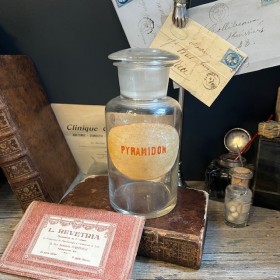
Pyramidon
Antique pharmacy bottle
Apothecary vial
Color pigments have been added to the inside of the jar
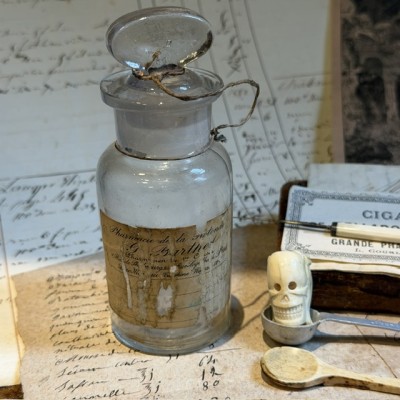
Berthet - Pharmacie de la Rotonde
Antique pharmacy bottle
EMPTY
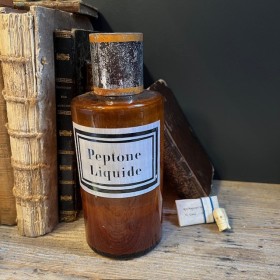
Antique pharmacy jar
Liquid Peptone
Raw meat product very fashionable in the first half of the 20th century.
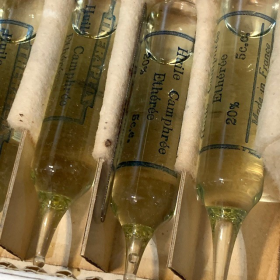
Bulb for hypodermic injection - Camphorated ethereal oil (circa 1920)
THERAPLIX
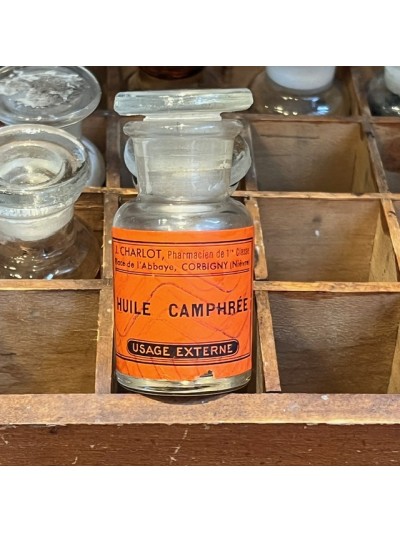
Camphorated oil
Antique pharmacy bottle
Apothecary vial
EMPTY but cap is blocked and bottle will not open
Box of Cocaine Dragees - Gosiérine DALLOZ - Art Nouveau
From the 1910-1920s with a typical Art Nouveau illustration inspired by Alphonse Mucha
It is advisable to suck 6 to 8 dragees a day and 2 to 4 dragees for children to let melt gently in the mouth.
EMPTY