
- New
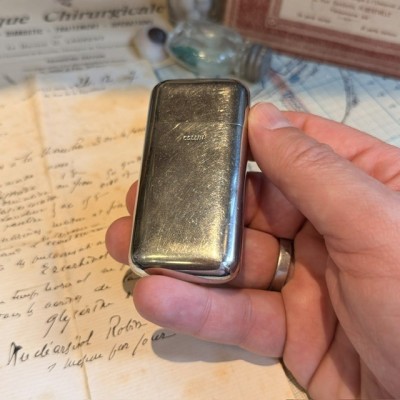
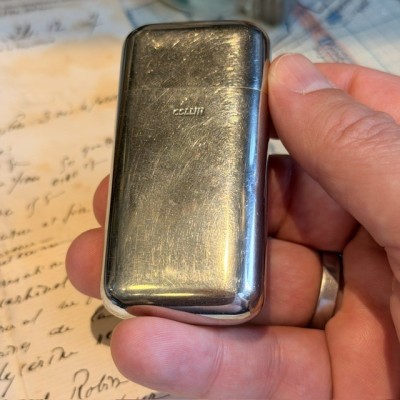
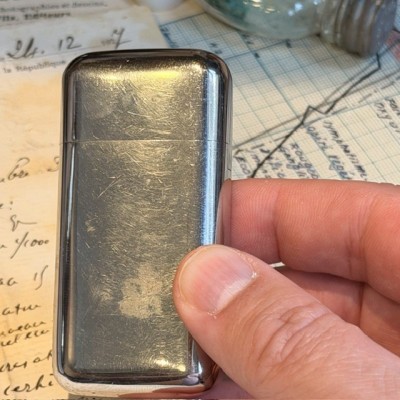
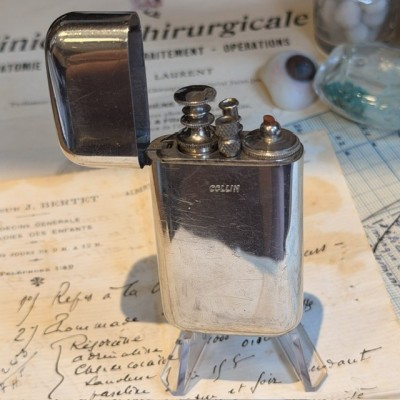
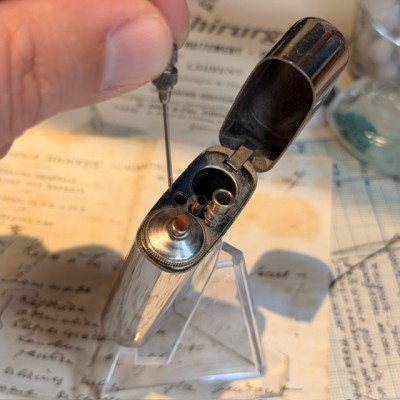
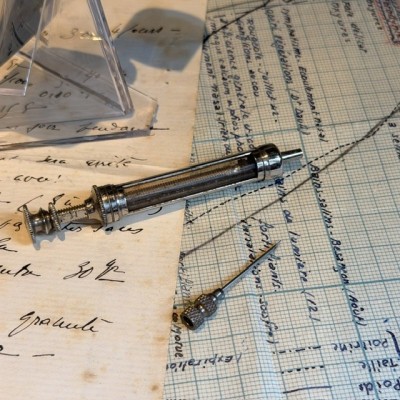
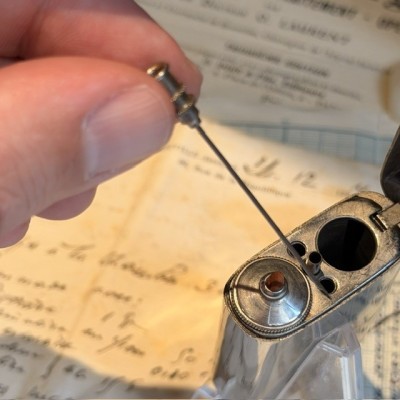
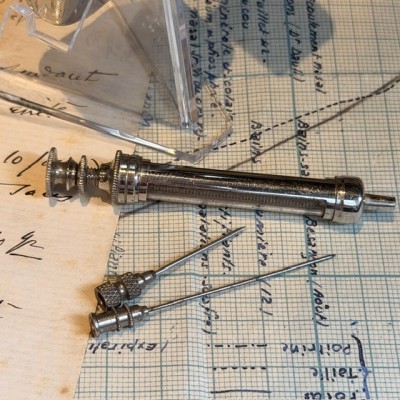
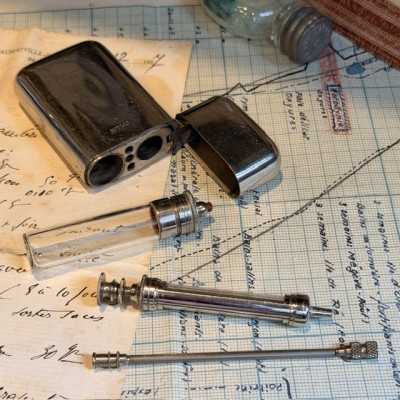
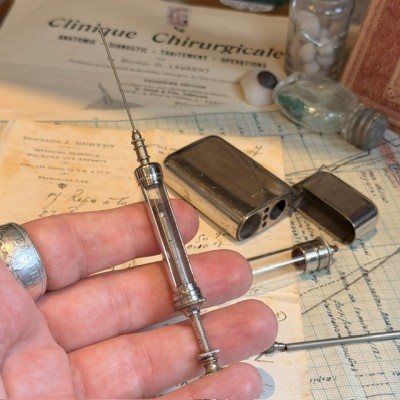
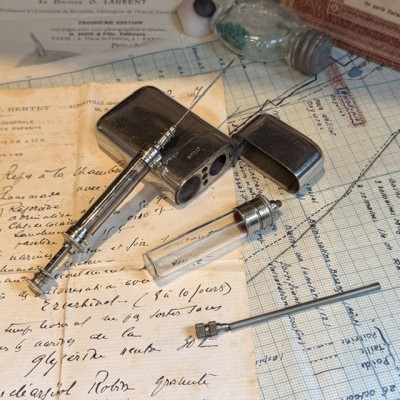
COLLIN medical pouch for hypodermic injection with Pravaz syringe - 1895/1910
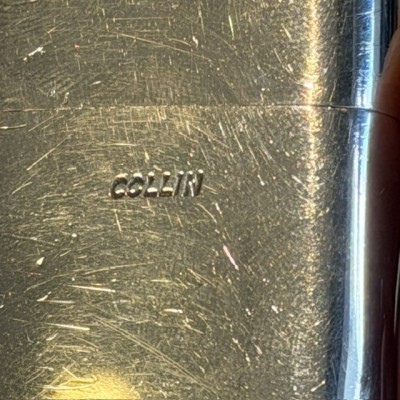
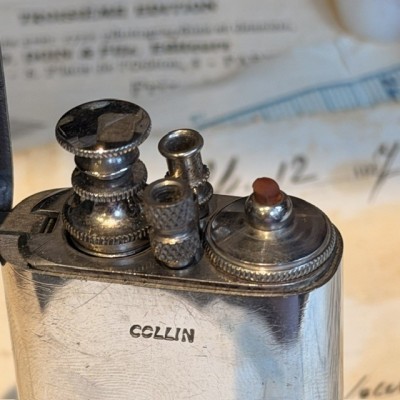
Manufacturer: Maison Collin, Paris (engraved stamp "COLLIN" on the case), successor of Maison Charrière
Period: Late 19th – early 20th century (Belle Époque) - 1895/1910
Morphine kit
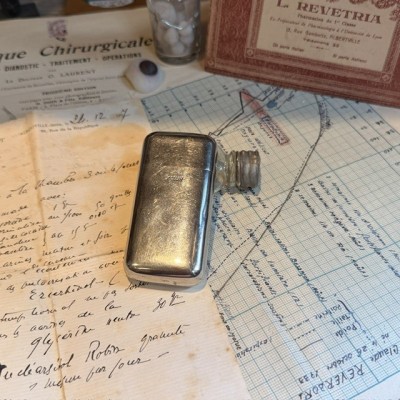
COLLIN medical pouch for hypodermic injection with Pravaz syringe - 1895/1910
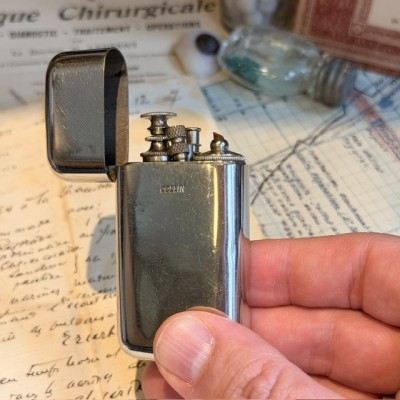
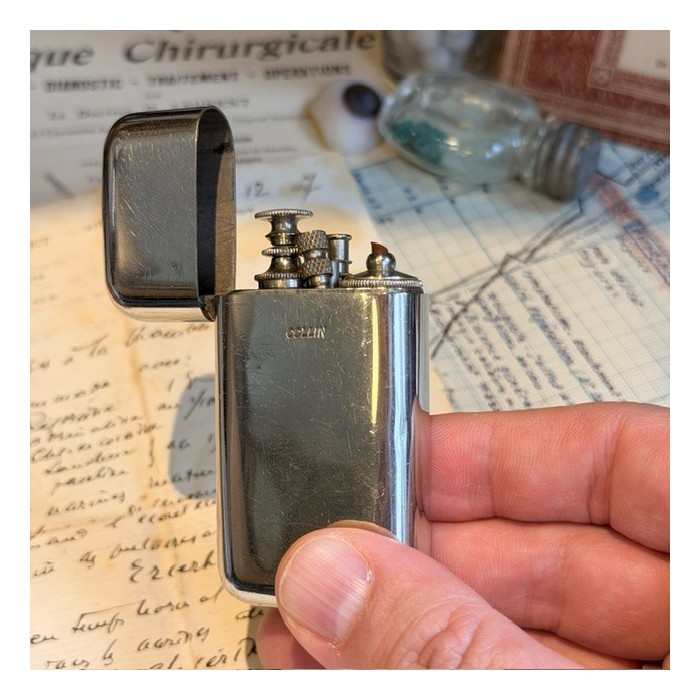
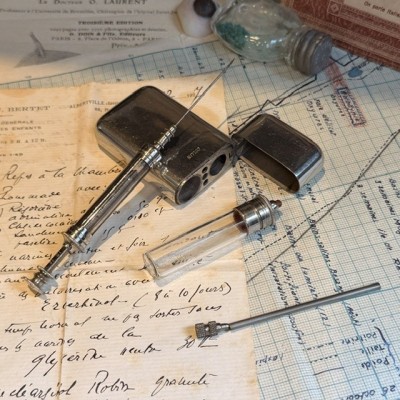
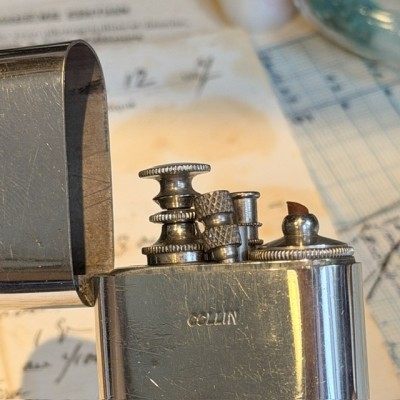
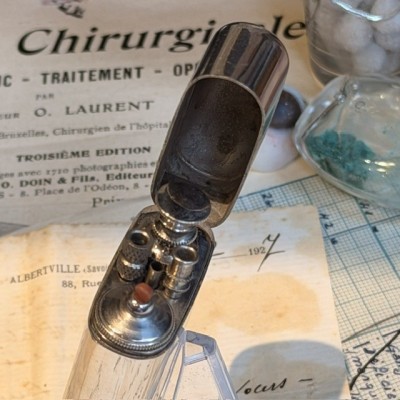
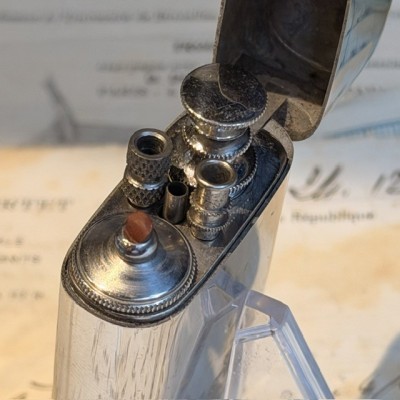
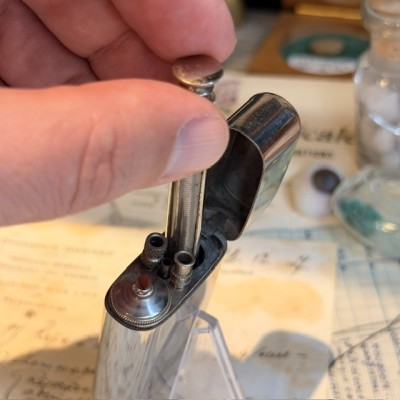
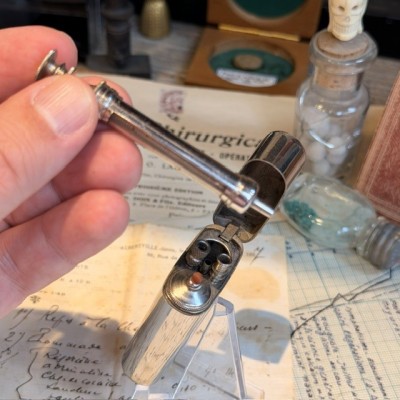
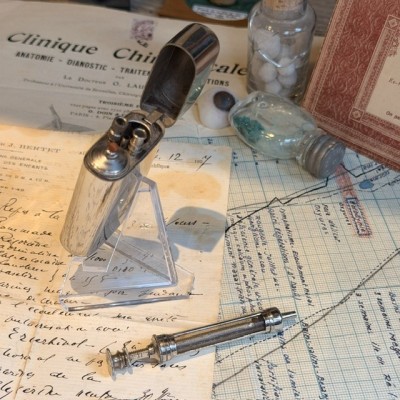
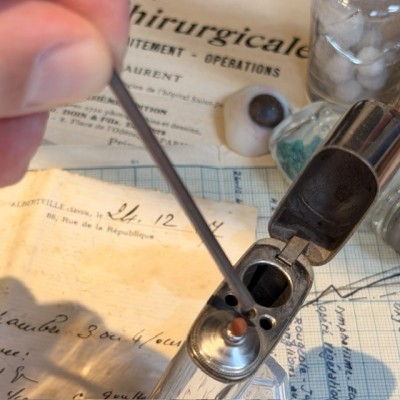
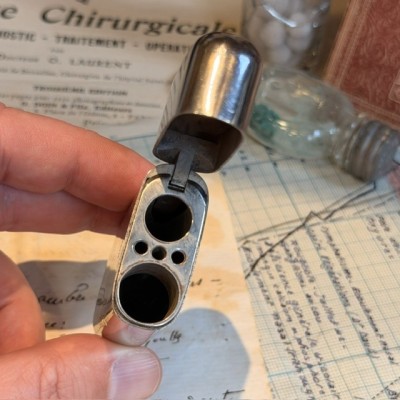
This hypodermic injection kit adopts the shape and hinged-valve opening mechanism of a lighter. In an exceptionally compact volume with a smooth finish, it gathers:
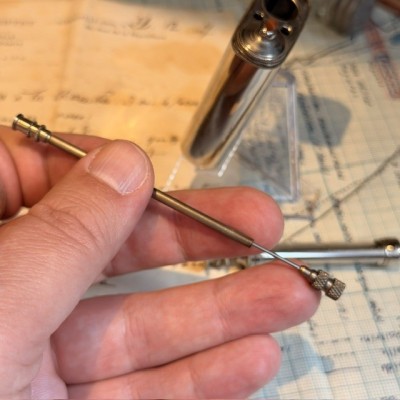
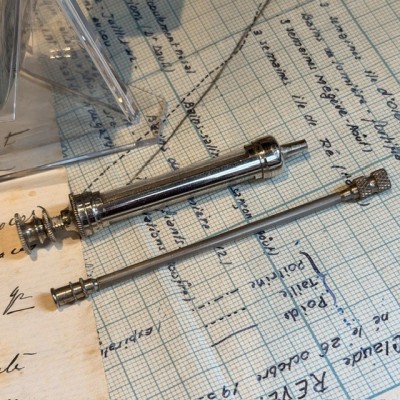
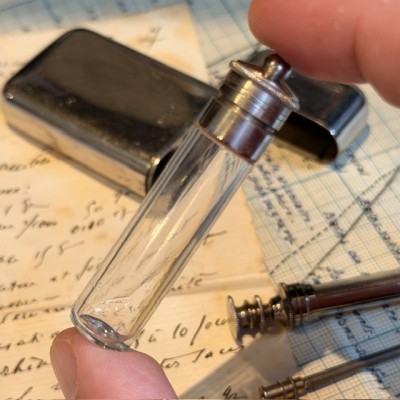
- A Pravaz syringe with a glass measuring body and a metal frame with a rotary piston.
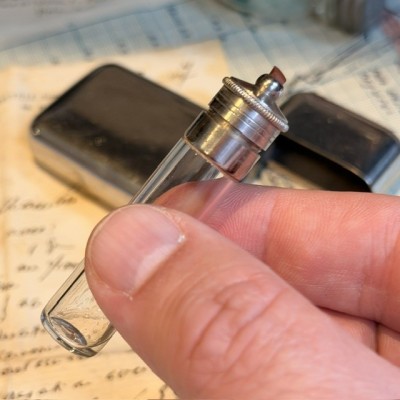
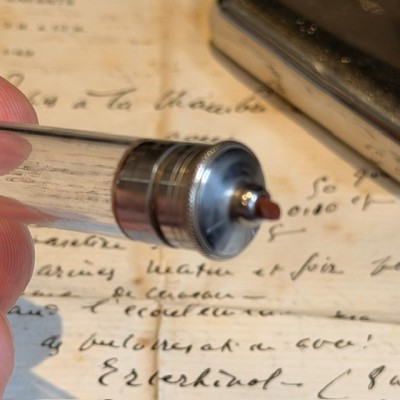
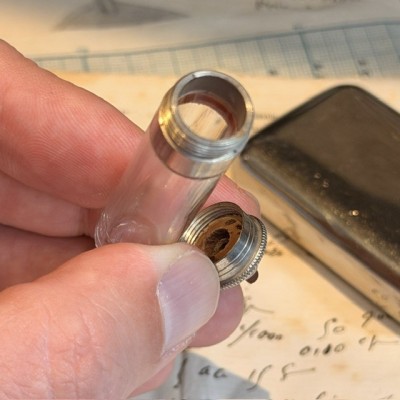
- A waterproof glass bottle, with a threaded metal ring and a screw cap fitted with its original seal.
- Two integrated vertical cubicles accommodating two needles of different lengths on their threaded tips.
- A small protective tube or sleeve housed in the center of the case
Designed at the turn of the twentieth century, this pocket-sized case was the ideal tool for general practitioners to visit. Its compactness made it easy to carry in the pocket of a vest or in a bag.
During the Belle Époque, the 1 gram (or 1 cm3) bottle most often contained a solution of morphine or cocaine. This choice was explained by two main reasons:
Immediate analgesic action: Before the invention of modern synthetic painkillers, morphine was the only effective medical response to instantly treat intolerable pain (fractures, renal colic, trauma) during home visits. Cocaine, on the other hand, was the first effective local anaesthetic in minor surgery.
The small bottle could also be used to transport other liquid solutions such as atropine, camphor, ether or ergotine.
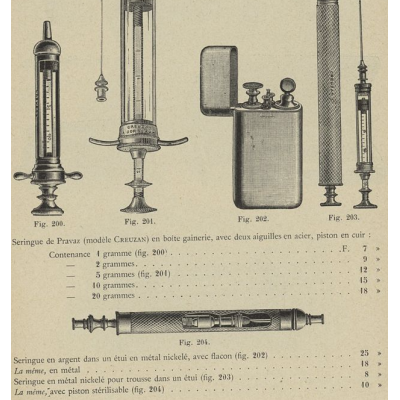
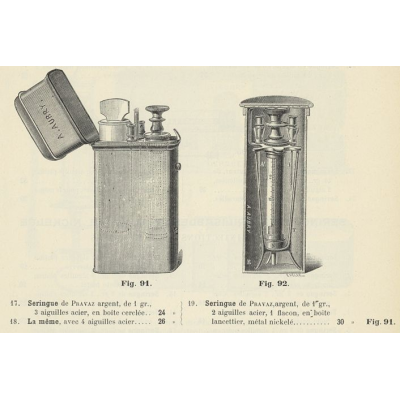
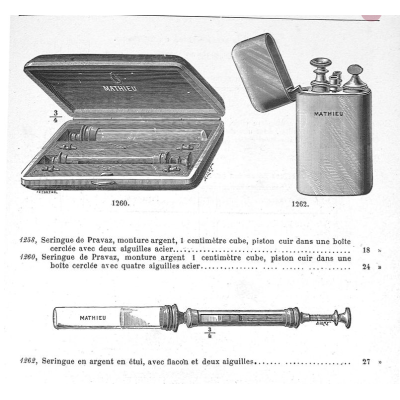
This type of case in lighter format can be found at most major manufacturers of medical equipment during the Belle Époque (Maison Mathieu, A. Aubry, Creuzan in Bordeaux, etc.).
However, if it appears in good place in the catalogs between 1900 and 1910, it disappears almost completely from the editions of the 1920s/1930s for several reasons:
The evolution of aseptic standards: The generalization of hot sterilization and boiling required completely removable and washable equipment. The leather-lined pistons and the fixed housing cases disappeared in front of the rectangular stainless steel sterilization boxes with racks and the all-glass Luer syringes.
The generalization of glass ampoules: In the 1910s, the appearance of sterile and pre-dosed medicinal ampoules made the integrated solution bottle unnecessary.
Last but not least, the regulatory framework: The Narcotics Control Act of 1916 ended the free transport of prepared opiate solutions.
Morphine set:
Indeed, beyond its medical use, this object is at the heart of the history of social morphinomania at the end of the 19th century.
During this period, the encounter between the Pravaz syringe and morphine was accompanied by a diversion within high society and artistic circles. The refined object, discreet and close to jewelry, went beyond its simple surgical function to become an intimate instrument, often carried daily by people prone to opioid addiction.
Manufacturer: Maison Collin, Paris (engraved stamp "COLLIN" on the case), successor of Maison Charrière
Period: Late 19th – early 20th century (Belle Époque) - 1895/1910
Dimensions: 7.5 × 3.5 cm
Materials: Nickel-plated metal
Maison Collin: heir of the Maison Charrière and of Parisian excellence
Historically founded in 1820 by Joseph-Frédéric-Benoît Charrière, one of the most famous surgical cutlery makers to whom we owe the improvement of the first Pravaz syringes, the company located at 6 rue de l'École-de-Médecine was taken over in 1871 by Anatole Collin.
Under the name of Maison Collin (1871–1957), the firm established itself as the official supplier to the Faculty of Medicine in Paris, hospitals and the Navy.
Renowned worldwide for the precision and rigor of execution of its instruments, the house Collin signed here a high-end object, representative of the Parisian surgical know-how of the Belle Époque.
Complete object in its original state of preservation, with a beautiful patina of use on the smooth case. Intact glass bottle with its screw cap.
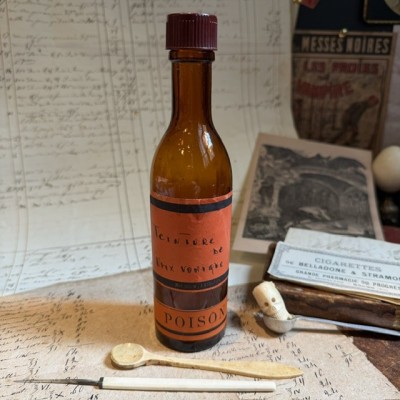
Nux Vomica Tincture – Strychnine
Antique amber glass bottle
Red ‘POISON’ label
Indicating to the pharmacist that it must be stored separately from other substances in the cabinet for toxic substances, the famous ‘poison cabinet’.
It comes from the former cellar-laboratory of a Parisian pharmacy. The bottles had not been moved from the shelves since the late 1950s. The cellar had served as a medical analysis laboratory and a laboratory for the pharmacy’s compounded preparations from 1900 until around 1950.
EMPTY
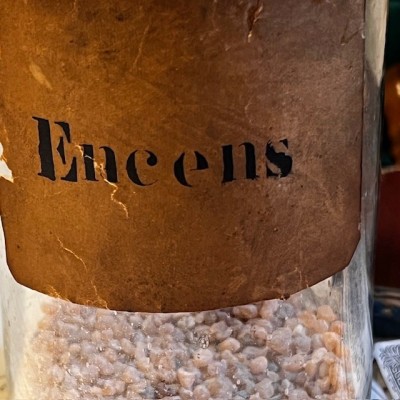
Incense
Antique pharmacy bottle - Wide-mouth apothecary jar.
19th-century mouth-blown glass
There are still some product inside.
A fascinating artifact from the history of pharmacology
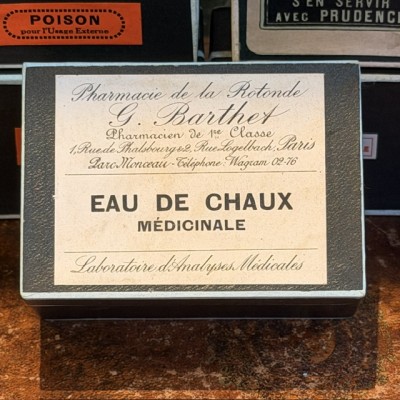
Antique labels in a pharmacy box for cures made of canvas cardboard
Label: Eau de Chaux Médicinale
The pharmacist used his boxes of medicine to put away the labels he would then put on the bottles that he would resell to his customers.
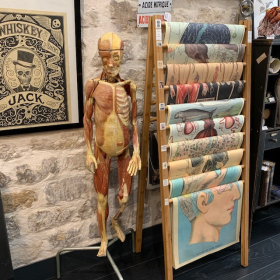
Clastic Mannequin - Dr. Auzoux's anatomical skinned
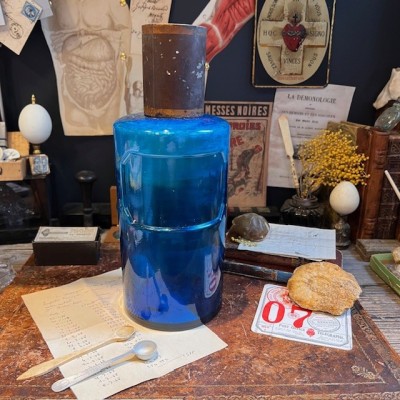
Very Large cobalt blue glass pharmacy bottle - Apothecary - Shouldered - H27.5cm - 19th century
Shouldered apothecary bottle - Antique pharmacy bottle
Mouth-blown glass - Cobalt blue color tinted throughout
This large-capacity jar was a storage jar intended for stockpiling
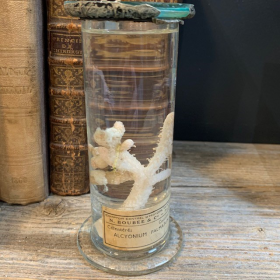
Museum jar - Wet specimen
Soft coral Alcyonium palmatum
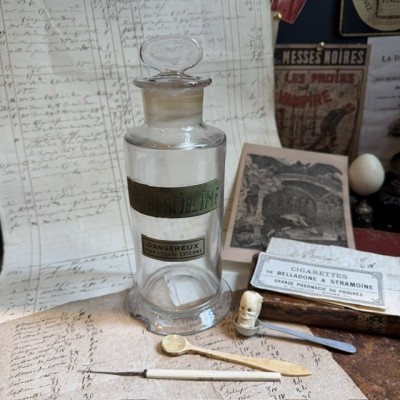
Iode Bi-Sublimé - Bi-Sublimated Iodine
Antique 19th-century blown-glass pharmacy jar
EMPTY
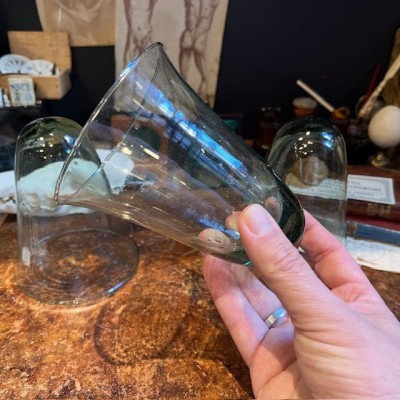
Antique glass bell jar
Apothecary / Laboratory
Thin glass, light green in color and darker at the top, with bubbles
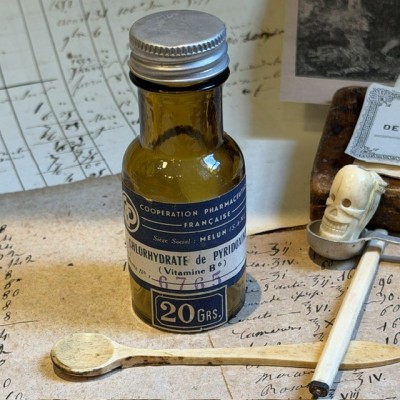
Pyridoxine hydrochloride - Vitamin B6
Antique pharmacy bottle
EMPTY
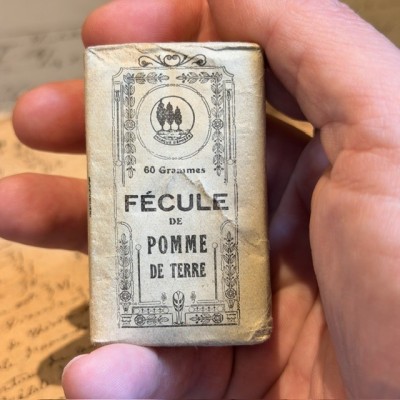
Packet of Potato Starch
Circa 1920
New old stock
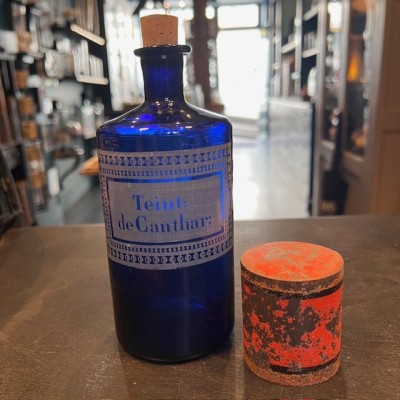
Teinture de Cantharides - POISON
Lytta vesicatoria - Spanish fly
Antique blue glass pharmacy bottle - Apothecary
Early 20th century - Blown glass.
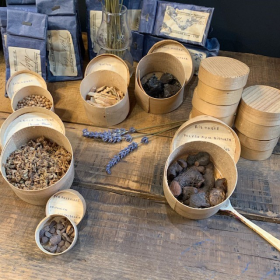
Antique wooden box for herbal medicine - Samples of plants, seeds, bark etc.
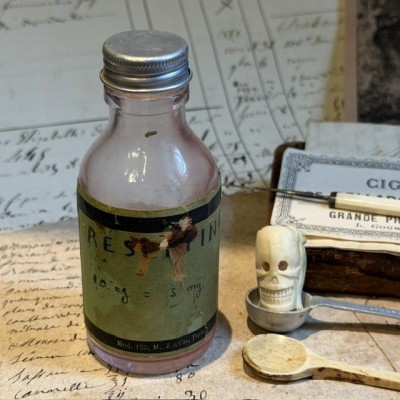
Reseptine
Antique pharmacy bottle
EMPTY
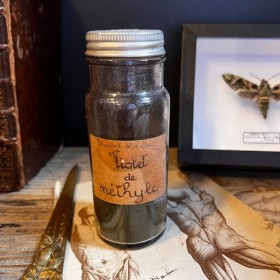
Violet de Méthyle
Antique pharmacy bottle - Droguerie - Apothicaire
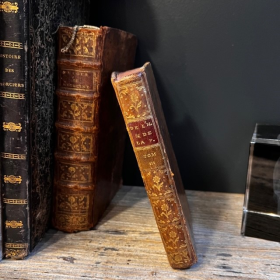
De l'Homme et de la Femme (Of Man and Woman)
By M. de Lignac - Volume 3
Anatomy of procreation - 1779
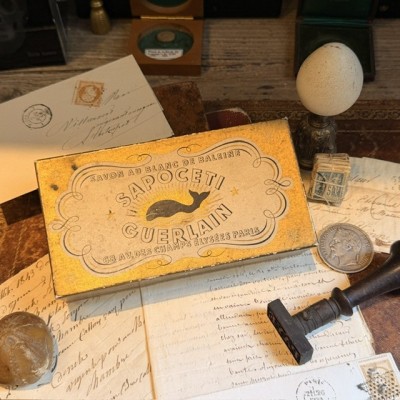
Soap box SAPOCETI GUERLAIN
Whale white soap
Decor 1920-130 with the stylized whale - Art Deco
Sold empty, without the soaps
COLLIN medical pouch for hypodermic injection with Pravaz syringe - 1895/1910
Manufacturer: Maison Collin, Paris (engraved stamp "COLLIN" on the case), successor of Maison Charrière
Period: Late 19th – early 20th century (Belle Époque) - 1895/1910
Morphine kit